Table of Contents
In this guide:
- Introduction
- How Dragon Fruit Flowering Works
- Cause 1: No Pollination
- Cause 2: The Wrong Variety
- Cause 3: The Plant Is Too Young or Too Small
- Cause 4: Not Enough Light
- Cause 5: Heat, Cold and Stress
- Cause 6: Feeding and Watering
- How to Fix It When Dragon Fruit Flowers but No Fruit: A Simple Checklist
- When to Expect Fruit
- Frequently Asked Questions
- Conclusion: Fixing Dragon Fruit Flowers but No Fruit
Introduction
Few things are more frustrating for a dragon fruit grower than a plant covered in big, beautiful flowers that all drop off without setting a single fruit. The plant looks healthy, the flowers open at night, and by morning they are wilting, and a few days later they fall. If your dragon fruit flowers but no fruit sets, the cause is usually pollination, the variety you are growing, or the conditions around the plant, and each of those causes has a fix.
This guide explains how dragon fruit flowering actually works, why flowers fail to set fruit, and how to fix each cause step by step, from hand pollination to choosing the right variety and fixing light, feeding and watering. Most plants where dragon fruit flowers but no fruit sets can be fixed in a single season once you know which cause is yours.
How Dragon Fruit Flowering Works
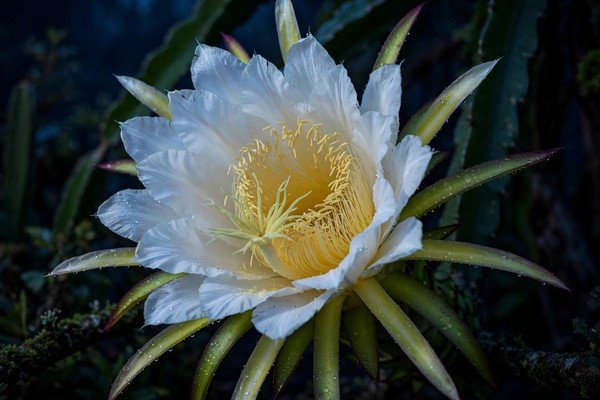
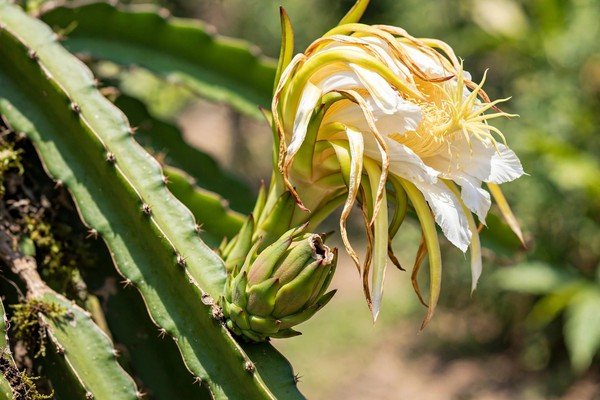
Dragon fruit flowers are large, white and strongly scented, and they open for a single night. They usually open in the evening, stay open through the night, and close by late morning. That short window is the whole story, because pollination has to happen during those few hours, and if it does not, the flower drops and no fruit forms.
In the wild, dragon fruit flowers are pollinated at night by bats and moths, which carry pollen from one flower to another. In a garden, those pollinators may not visit, especially in a city, on a balcony or in a greenhouse, so the flowers open and close without ever being pollinated. When dragon fruit flowers but no fruit sets, the flower was not pollinated, however healthy the plant is.
There is a second detail that catches many growers. Some dragon fruit varieties are self-fertile, which means their own pollen can fertilise their own flowers, and some are self-sterile, which means they need pollen from a different variety to set fruit. If you grow a single self-sterile plant, it can flower for years and never set a single fruit, because there is no compatible pollen anywhere near it. Knowing which type your variety is changes everything, and it is the first thing to check. The University of Florida IFAS publication on growing pitaya (dragonfruit) explains which cultivars are self-incompatible and need cross-pollination.
Cause 1: No Pollination
The most common cause when dragon fruit flowers but no fruit sets is simply that the flowers were never pollinated. The flower opened, no pollinator visited, and the flower dropped.
The signs are clear. The flowers open normally, look healthy, and then wilt and drop within a few days without swelling at the base. The plant itself looks healthy, with strong green stems and new growth. If your dragon fruit flowers but no fruit sets, pollination is the first suspect.
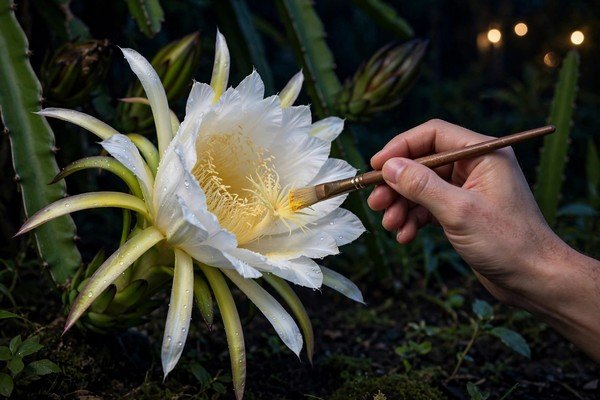
The fix is hand pollination, and it works on the same night the flower opens. In the evening, when the flower is fully open, take a small soft brush or a cotton bud and collect the yellow pollen from the anthers, the ring of pollen-covered stalks around the centre of the flower. Then dab that pollen onto the stigma, the single central stalk that stands above the anthers. Use pollen from a different flower on the same plant if your variety is self-fertile, and pollen from a different variety if yours is self-sterile. Do it in the evening or at night, while the flower is open, and do it gently so you do not damage the flower.
Hand pollination takes a few minutes per flower, and it turns a plant that never fruits into a plant that fruits reliably. If you have many flowers, pollinate them all on the night they open, because a flower that has closed will not accept pollen the next day.
Cause 2: The Wrong Variety
If you hand pollinate and the flowers still drop, the variety may be the problem. Some popular varieties are self-sterile, and they need pollen from a different, compatible variety to set fruit. A single plant of such a variety will keep flowering, so dragon fruit flowers but no fruit sets, year after year.
The fix is to grow a second variety alongside the first. Plant a known self-fertile variety, or a variety known to cross-pollinate with yours, within a few metres, and hand pollinate between the two when both are flowering. Ask the nursery where you bought the plant which variety it is, and whether it is self-fertile or self-sterile, because that one answer saves years of guessing.
If you do not know the variety, the practical test is simple. Hand pollinate with pollen from another dragon fruit plant, ideally a different variety, and see whether fruit sets. If it does, your plant is self-sterile and needs a partner plant. If it still does not set, the cause is elsewhere, and the rest of this guide covers the other possibilities.
Cause 3: The Plant Is Too Young or Too Small
When dragon fruit flowers but no fruit sets on a young plant, the plant is often flowering before it is ready to carry fruit, and those early flowers drop. The plant is testing its flowering, but it does not yet have the roots, the stem mass or the stored energy to support fruit.
The signs are a plant that is less than two years old from a cutting, or a plant with thin, short stems and little branching. A cutting usually takes one to two years to fruit, and a plant grown from seed takes much longer, often four to seven years. If your plant is young, the flowers dropping is normal, not a fault.
The fix is patience and feeding the plant rather than the flowers. Give it a strong support to climb, plenty of light, and regular feeding through the growing season, and let it build thick, mature stems. A plant with several thick, branching stems will hold fruit far better than a plant with one thin stem. Do not prune hard while the plant is young, and do not expect fruit in the first year from a small cutting. Our guide to why dragon fruit cuttings are not rooting covers the early stages, when weak roots are the limiting factor rather than pollination.
Cause 4: Not Enough Light
Dragon fruit is a sun-loving cactus, and it needs strong light to flower well and to hold its fruit. A plant in shade will often produce flowers, because flowering is triggered by day length and maturity, but it will not have the energy to set and carry fruit, so dragon fruit flowers but no fruit sets and the flowers drop.
The signs are a plant in partial shade, on a shaded balcony or under a tree, with pale, stretched stems that reach towards the light. Stems that are thin and stretched, rather than thick and three-sided, are telling you the plant is short of light.
The fix is to move the plant, or the pot, into the sunniest spot you have, with at least six hours of direct sun a day. A plant in a pot is easy to move, so try it in the sunniest place for a season and watch the difference. A plant in the ground is harder to move, so prune back anything shading it, and consider whether the spot is right for dragon fruit at all. In very hot climates, a little afternoon shade is fine, but the plant still needs strong morning sun to fruit well.
Cause 5: Heat, Cold and Stress
Dragon fruit flowers are sensitive to temperature, and a hot or cold spell at flowering time can mean dragon fruit flowers but no fruit sets, even when pollination was fine.
Heat is the more common problem. Temperatures well above 35 degrees Celsius during flowering can damage the pollen and the flower, so even a hand-pollinated flower fails to set. Cold is the other side: a cold night below about 10 degrees can damage buds and young flowers, and a frost will kill them outright. Our guide to why your dragon fruit plant has brown spots covers cold and sun damage on the stems, which often appears in the same season as flower problems.
The fix is timing and protection. You cannot change the weather, but you can water the plant well before a hot spell, so it is not stressed as well as hot, and you can shade the flowers during the hottest part of the day. For cold, cover the plant on cold nights, or move a potted plant under cover. If your climate has a short, very hot summer, the flowers that open in the cooler weeks of the season are the ones most likely to set, so pollinate those carefully and do not worry about the ones that drop in a heatwave.
Cause 6: Feeding and Watering
Too much nitrogen fertiliser is a quiet cause of dragon fruit flowers but no fruit. Nitrogen pushes soft, leafy growth, and a plant fed heavily on nitrogen will grow stems fast and flower poorly, and the flowers it does produce are weak and drop easily. The plant looks lush and healthy, which makes this cause easy to miss.
The signs are fast, soft, dark green growth, lots of new stems, and flowers that open and drop without setting. If you are feeding often with a high-nitrogen fertiliser, or with fresh manure, this is a likely cause.
The fix is to change the feeding. Stop high-nitrogen feeding once the plant is established, and switch to a balanced fertiliser, or one higher in potassium and phosphorus, during the flowering and fruiting season. Potassium supports flowering and fruiting, and phosphorus supports root growth. Feed little and often through the growing season rather than in one heavy dose, and do not feed at all in winter when the plant is resting.
Watering matters too. A plant that is very dry at flowering time will drop its flowers to save water, and a plant that is waterlogged will have weak roots and the same result. Water deeply and then let the soil dry out before watering again, and make sure the pot or the ground drains freely. A dragon fruit plant in wet, heavy soil will struggle to fruit whatever else you do.
How to Fix It When Dragon Fruit Flowers but No Fruit: A Simple Checklist
Work through this checklist in order, and you will find your cause without guessing.
First, hand pollinate every flower on the night it opens, using pollen from a different flower, and preferably from a different variety. If fruit sets, pollination was the problem, and you have your fix.
Second, check the variety. If hand pollination with your own plant’s pollen fails but pollen from another variety works, your plant is self-sterile and needs a partner plant.
Third, check the plant’s age and size. A young plant with thin stems needs another season of growth, not a treatment.
Fourth, check the light. Less than six hours of direct sun a day is not enough to hold fruit.
Fifth, check the feeding. Too much nitrogen, or no feeding at all on a hungry plant, both cause flower drop. Switch to a balanced feed in the growing season.
Sixth, check the water and the weather. A dry plant, a waterlogged plant, a heatwave or a cold snap can each make flowers drop, and each has a simple fix.
Most plants where dragon fruit flowers but no fruit sets have one main cause, and it is usually pollination or the variety. Fix that one cause, and the plant will fruit in the same season.
When to Expect Fruit
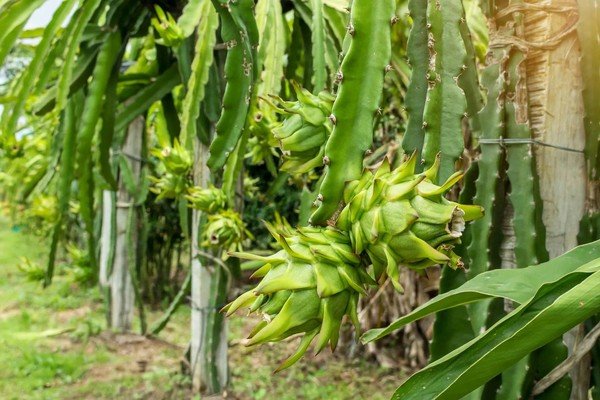
Once pollination works, the timeline is fast. A pollinated flower wilts within a day or two, and the base of the flower swells into a small green fruit. The fruit grows over the next four to six weeks, changing colour as it ripens, and it is ready to pick when the skin is fully coloured and the fruit gives slightly when pressed gently.
Even once you have fixed dragon fruit flowers but no fruit, do not expect every flower to become a fruit. A healthy plant will drop some flowers naturally, because it cannot carry them all, and that is normal. A plant that sets one fruit in three flowers is doing well. The goal is not to save every flower, but to get a steady set of fruit through the season, and hand pollination plus the right variety will get you there.
Frequently Asked Questions
Why do my dragon fruit flowers fall off without fruit?
When dragon fruit flowers but no fruit sets, the most common reason is that the flowers were not pollinated, because they open for one night and no pollinator visited. Hand pollinate on the night the flower opens, and check whether your variety is self-sterile and needs pollen from a different variety.
How do I hand pollinate dragon fruit?
In the evening, when the flower is fully open, collect yellow pollen from the anthers with a soft brush or cotton bud, then dab it onto the central stigma. Use pollen from a different flower, and from a different variety if yours is self-sterile. Do it the same night, because a closed flower will not accept pollen.
How long does it take for dragon fruit to fruit after flowering?
A cutting usually takes one to two years before it fruits, and a plant grown from seed takes much longer. Once a mature plant is pollinated, the fruit takes about four to six weeks to ripen.
Do I need two dragon fruit plants to get fruit?
It depends on the variety. Self-fertile varieties can fruit alone, though they often fruit better with cross-pollination. Self-sterile varieties need pollen from a different variety, so you need a second plant.
Why does my dragon fruit flower but the fruit stays small?
Small fruit usually means weak pollination, a young plant, or not enough light and feeding. Hand pollinate thoroughly, make sure the plant gets at least six hours of sun, and feed it through the growing season. Thin the fruit if the plant is carrying too many, so the ones that remain grow bigger.
Conclusion: Fixing Dragon Fruit Flowers but No Fruit
When dragon fruit flowers but no fruit sets, the plant is usually telling you one thing: the flowers were not pollinated, the variety needs a partner, or the plant is too young, too shaded, too hot or too heavily fed on nitrogen to hold its fruit. Hand pollination on the night the flower opens is the single most effective fix, and it works in the same season. A second variety solves the self-sterile problem for good. Light, feeding and watering fix the rest.
Start with hand pollination tonight, when the next flower opens. If fruit sets, you have your answer. If it does not, work through the checklist, and your plant will fruit.