
Introduction
Brown spots on a dragon fruit plant worry almost every home grower, because one brown patch can mean several different things. If you are asking why does my dragon fruit plant have brown spots, you are not alone: it is one of the most common questions in dragon fruit growing.
A brown patch can mean sunburn, a fungal infection, insect feeding, too much water, or cold damage, and each cause needs a different fix. Dragon fruit is a climbing cactus, and its thick green stems do the work that leaves do on other plants. When something damages the stem surface, the plant seals the wound with brown, corky tissue. This guide covers the five main causes and what to do about each one, following the University of Florida IFAS guidance for pitaya growers, published as UF IFAS HS303 (https://ask.ifas.ufl.edu/publication/HS303).
In this guide:
Table of Contents
What Brown Spots on a Dragon Fruit Plant Look Like
Look closely at the spots before you do anything. The first step in answering why does my dragon fruit plant have brown spots is to look at what the spots look like, so take a photo to track whether they are spreading.
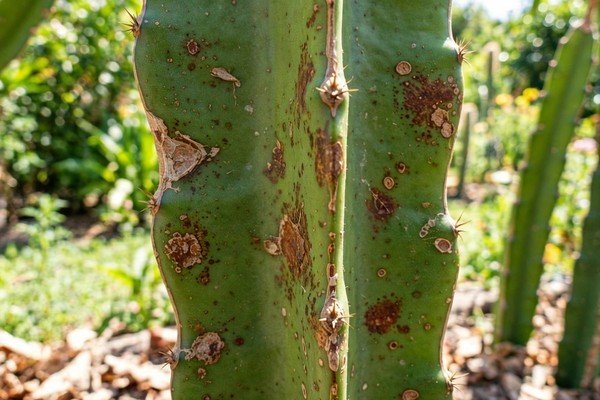
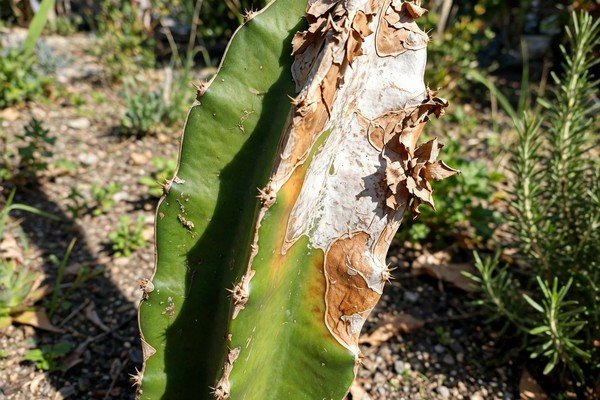
Sunburn spots appear on the side of the stem that faces the afternoon sun. They start as pale yellow or bleached white patches and dry into brown, papery areas with a clear edge where healthy green stem begins.
Fungal spots are usually round or oval, slightly sunken, with a darker border and a lighter or grey centre. If the middle feels soft or wet, bacteria may be involved too, and that needs faster action.
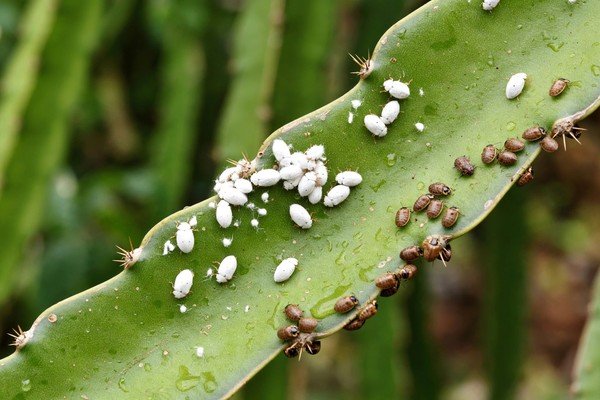
Pest damage looks more scattered: clusters of small brown or black marks where insects have fed, often with white cottony wax or sticky honeydew nearby. Mite damage shows up as fine brown speckling or a dull, bronzed surface.
Watering problems usually start at the base: stems turn yellow, then brown, and feel soft or mushy when pressed. Cold damage looks similar, but it follows a frost or a cold night, and the brown patches are dark and water-soaked.
Cause 1: Sunburn
Sunburn is the most common reason a grower asks why does my dragon fruit plant have brown spots. Dragon fruit loves sun, but it is a cactus that grows naturally under the light shade of trees in its home region. In a hot, open garden with no shade, the afternoon sun can scorch the stems, especially on young plants and on stems recently moved into full sun. Potted plants against a sun-baked wall are also at risk, because the wall reflects extra heat onto the stems.
To fix sunburn, move the plant into light shade during the hottest part of the day, or hang a shade cloth over it. A cloth that blocks part of the sunlight is enough; the plant still needs bright light to grow and fruit. Do not peel off the brown patches: the dead tissue protects the living stem underneath. If a whole stem segment is dry and dead, cut it off with a clean, sharp knife and let the cut end dry before you water again.
Cause 2: Fungal and Bacterial Disease
Fungal disease is the second most common answer to the question of why does my dragon fruit plant have brown spots. The most frequent fungal problem is anthracnose, caused by the fungus Colletotrichum gloeosporioides. It produces round, sunken brown spots on stems and fruit, often with a darker edge and a pale centre. In wet weather, the spots can grow and join together, and badly infected stems may rot. Stem canker is another fungal problem: dark brown or black raised patches that feel rough and corky. Bacterial soft rot is different again: the affected area turns brown, feels soft and wet, and may smell bad, and it spreads fast in warm, wet conditions.
Fungi and bacteria love warm, wet stems. Overhead watering, crowded plants with poor airflow, and wounds from pruning or insects all give disease an opening.
To fix fungal and bacterial spots, cut away the infected tissue with a clean, sharp knife or pruning shears, cutting back into healthy green stem a little beyond the visible edge of the spot. Disinfect the blade between cuts, and put the cut pieces in a bag and throw them away; do not compost them. Improve airflow around the plant and water at the base in the morning, never over the stems in the evening.
Our guide to a dragon fruit watering schedule in summer (https://dragonfruitgrow.online/dragon-fruit-watering-schedule-in-summer/) explains how to water in a way that keeps stems dry and roots healthy. For ongoing fungal problems, a copper-based fungicide is the treatment most often recommended for home growers. Follow the label exactly. For more on keeping disease away, read our dragon fruit fungal disease prevention tips (https://dragonfruitgrow.online/dragon-fruit-fungal-disease-prevention-tips/).
Cause 3: Pests
Pests are a smaller but real answer when you ask why does my dragon fruit plant have brown spots, and they are easy to miss because the insects are small. Mealybugs are the most common pest on dragon fruit. They look like tiny white cotton balls, usually hiding in the joints where new stems meet older ones, and where they feed, the stem develops brown or yellow marks. Scale insects are harder to see: they look like small brown bumps stuck to the stem, and they also leave brown feeding marks behind. Thrips rasp the stem surface, leaving silvery or brown streaks, while mites cause a dull, bronzed, speckled look.
Pest damage matters if you are asking why does my dragon fruit plant have brown spots, because feeding wounds let fungi and bacteria into the stem, and a heavy infestation weakens the whole plant. To fix it, wipe mealybugs and scale off with a cloth dipped in rubbing alcohol, or spray the plant with a strong jet of water. For a larger infestation, insecticidal soap or neem oil on the affected stems works well. Spray in the evening so the sun does not burn the wet stems, and repeat the treatment so you catch the young insects that hatch after the first spray.
Cause 4: Watering Problems
Watering is where many growers go wrong. Dragon fruit is a cactus, so it stores water in its stems and needs far less water than most garden plants. Too much water is more dangerous than too little, which is why watering is always worth checking when you wonder why does my dragon fruit plant have brown spots.
Overwatering causes root rot: the roots sit in wet soil, run out of air, and start to decay. The first sign is often yellowing at the base of the stems, which turns brown and soft. The stem feels mushy when pressed, and in bad cases the whole base of the plant collapses. Pots without drainage holes and heavy clay soil that stays wet are the usual causes. Underwatering looks different: the stems shrink and wrinkle, the edges thin out, and brown, dry patches appear where the tissue has dried up.
To fix overwatering, stop watering at once and let the soil dry out completely. If the plant is in a pot, check that the drainage holes are open and the pot is not sitting in a saucer full of water. If rot has spread far up the stem, cut the stem back to healthy tissue and let the cutting dry for several days before replanting it in fresh, dry mix. For underwatered plants, soak the soil thoroughly once, then water deeply only when the top few inches of soil are dry. Morning watering is best.
Cause 5: Cold Damage and Frost
Cold is another answer to why does my dragon fruit plant have brown spots. Dragon fruit comes from warm regions, and it does not handle cold well. When the temperature drops to freezing, the water inside the stem cells freezes and bursts the cells. The damaged tissue turns brown, then black, and feels soft and water-soaked. The damage often appears a day or two after the cold night, not during it, and it hits the newest, softest growth first. A light frost may only brown the tips of the stems, while a hard freeze can kill whole stem segments.
The roots and the lower stems usually survive, and the plant sends out new shoots when warm weather returns. Wait until the cold weather is over before you cut anything, because a stem that looks dead may still have living tissue inside. Once warm weather is back, cut away the blackened, mushy parts down to firm, green stem. To prevent the cold damage that makes you ask why does my dragon fruit plant have brown spots, cover the plant with a frost cloth on cold nights, and move potted plants under cover or against a warm wall. Our dragon fruit winter care guide (https://dragonfruitgrow.online/dragon-fruit-care-in-winter-month-by-month/) covers month-by-month protection through the cold season.
How to Tell the Causes Apart: Why Does My Dragon Fruit Plant Have Brown Spots
If you are still unsure why does my dragon fruit plant have brown spots, compare the marks against these signs:
- Sunburn: dry, flat, papery brown patches on the sun-facing side only.
- Fungal disease: round, sunken spots with a dark border and pale centre, sometimes in rings.
- Bacterial rot: soft, wet, dark brown or black patches that smell bad and spread fast.
- Pests: scattered small brown marks with white cottony wax, sticky honeydew, ants, or visible insects at the stem joints.
- Overwatering: yellow then brown, soft stems starting at the base, with wet soil that does not dry out.
- Underwatering: thin, wrinkled stems with dry brown patches, and soil that is dusty and dry.
- Cold damage: dark brown or black, water-soaked patches that appear a day or two after a frost, worst on new growth and stem tips.
If two causes are present at once, fix the most urgent one first. Soft rot and spreading fungus come before sunburn, because they can kill a stem in days while sunburn only marks it.
How to Treat Brown Spots Step by Step
Follow this routine in order when you are trying to work out why does my dragon fruit plant have brown spots and what to do next:
- Look closely and identify the cause using the signs above. Take a photo so you can see whether the spots are spreading.
- Remove the worst damage. Cut out soft, rotten or badly cankered tissue with a clean blade, cutting back into healthy green stem. Bag the cuttings and throw them away.
- Fix the conditions. Shade a sunburned plant, dry out an overwatered one, improve airflow around a diseased one, and treat pests if they are present.
- Keep the plant dry at the stem. Water at the base in the morning and let the surface dry during the day.
- Watch the new growth. If new stems come through clean and green, the problem is fixed. If new spots keep appearing, the cause may be different.
Do not feed a stressed plant with heavy fertilizer while it is recovering. Wait until you see healthy new growth before you feed again.
How to Prevent Brown Spots: Why Does My Dragon Fruit Plant Have Brown Spots
Prevention is easier than treatment. A grower who understands why does my dragon fruit plant have brown spots can stop most cases before they start: bright light but not scorching afternoon sun, well-drained soil, good airflow, and water at the roots rather than over the stems.
Give new plants a little shade until they are established, then move them into fuller sun gradually. Plant in a raised bed or a pot with large drainage holes, and use a loose, gritty soil mix that water runs through easily. Water in the morning at the base of the plant, and wait if the top few inches of soil are still moist. Inspect the plant every week, especially the stem joints and new growth, so you catch pests and disease while they are still small. In cold areas, have a frost cloth ready before the first cold night.
Frequently Asked Questions
Why does my dragon fruit plant have brown spots on only one side?
Brown spots on one side usually mean sunburn: the side facing the afternoon sun gets scorched while the shaded side stays green. Shade the plant during the hottest hours and the spots will stop spreading. If the spots are soft or wet instead of dry and papery, check the texture, because disease is more likely than sunburn.
Should I cut off stems with brown spots?
Cut off a stem only if the brown area is soft, wet, spreading, or dead all the way through. Dry sunburn patches and old pest marks can stay, because the dead tissue protects the stem underneath. When you do cut, use a clean, sharp blade, cut back into healthy green tissue, and disinfect the blade between cuts.
Can brown spots on dragon fruit spread to other plants?
Fungal and bacterial infections can spread to nearby plants through water splash, insects, and dirty tools, and pests can also move from plant to plant. Sunburn, cold damage and watering problems cannot spread, so keep infected plants apart if you can, and avoid overhead watering.
Will the brown spots go away on their own?
The brown patches themselves do not turn green again, because the damaged tissue is dead. What matters is whether new spots keep appearing. If you fix the cause, new growth comes through clean and healthy. If new spots keep appearing, the cause is still there, so go back through the signs in this guide and check again why does my dragon fruit plant have brown spots.
Is it safe to eat fruit from a plant with brown spots?
If you are asking why does my dragon fruit plant have brown spots and whether the fruit is still safe, fruit from a plant with sunburn or pest marks on its stems is fine to eat as long as the fruit itself is healthy and undamaged. If the fruit has soft, sunken brown spots or smells off, do not eat it.
Conclusion
Brown spots on a dragon fruit plant are the plant’s way of telling you something is wrong, and the spots themselves tell you what it is. Dry, papery patches on the sunny side mean sunburn. Round, sunken spots with dark edges mean fungus. Soft, wet, bad-smelling patches mean bacterial rot. Scattered marks with white wax or ants mean pests. Soft brown stems at the base mean too much water, and dark, water-soaked patches after a cold night mean frost.
So the next time you ask why does my dragon fruit plant have brown spots, start with the spots themselves, then fix the cause: shade for sunburn, clean cuts and dry stems for disease, pest removal for insects, better drainage for overwatering, and frost protection for cold. In every case, the routine is the same: look closely, remove the worst damage, fix the conditions, and watch the new growth. With light shade in extreme heat, well-drained soil, morning watering and good airflow, the plant will grow clean green stems and fruit well for years.
1 thought on “Why Does My Dragon Fruit Plant Have Brown Spots”