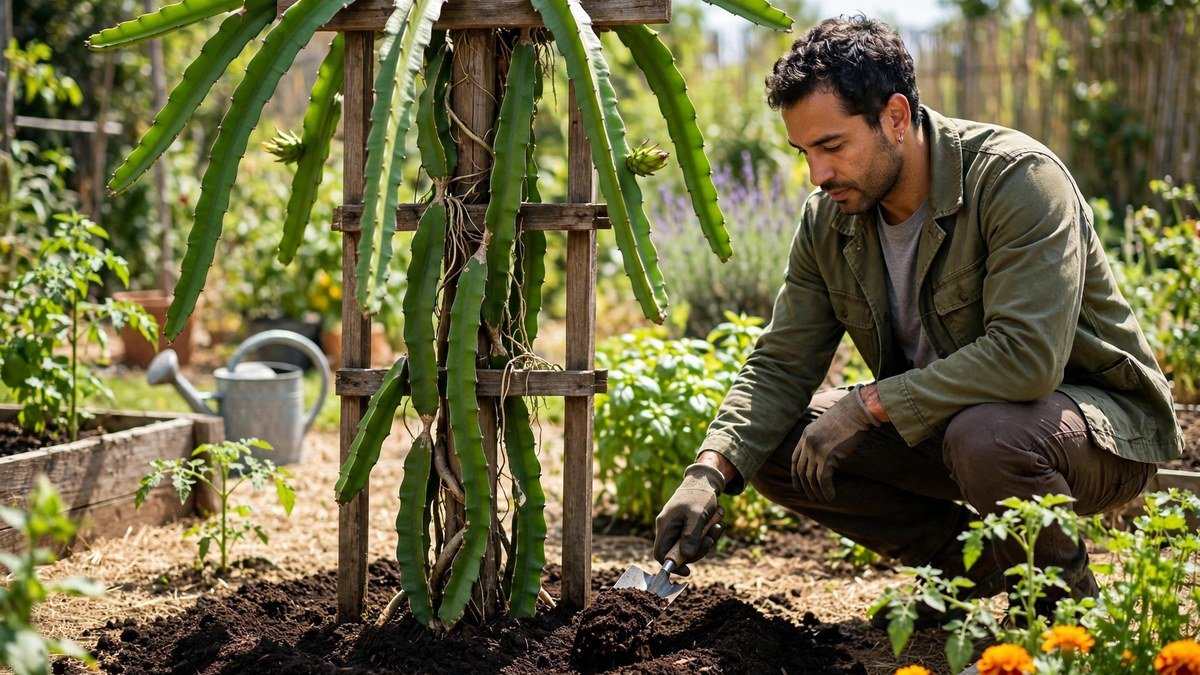
Spring is the season when a dragon fruit plant shakes off winter and starts growing again. The days get longer, the soil warms up, and the plant begins to push out new shoots. A little care at this point sets up the whole growing season. This dragon fruit spring care checklist walks through the jobs in order, from the first look at the plant to the last check before summer arrives.
None of these jobs is hard, and most of them take only a few minutes. What matters is doing them in the right order and not rushing. Water too early and the roots sit cold and wet. Feed too early and the plant cannot use it. Prune too hard and you cut away the stems that would have flowered. Work through the list slowly, one job at a time, and the plant will show you it is waking up.
In This Guide
- A slow first look at the plant after winter
- dragon fruit spring care checklist: restarting water the right way
- Pruning away damaged stems
- Feeding for strong new growth
- Checking the trellis and ties
- Pests and new shoots to watch for
- Refreshing mulch and the soil surface
- What to watch as spring turns to summer
- Answers to the most common questions
Start With a Slow Look Around the Plant
The first item on any dragon fruit spring care checklist is a slow, honest look at the plant. Walk around it and check every stem from the base to the tips. Look for stems that have gone soft, wrinkled or yellow over winter. Look for dark patches, dried-out tips and any stem that bends oddly when you touch it. Healthy stems are firm, plump and green, even if they look a little dull after winter.
Check the base of the plant as well. The soil may have sunk or washed away from the roots over winter, leaving them exposed. Look for cracks in the soil surface and for any sign that water has been pooling around the base. Also check where the plant meets its support. Stems that have slipped down or pulled away from the post need to be noted now, before the plant puts on new weight.
Do not fix anything during this first look. The point is to see the whole picture before you start cutting or watering. Make a mental note of what needs attention and in what order. If you are new to growing dragon fruit, our guide on how to grow dragon fruit covers the basics of the plant and its needs, which will help you read what you are seeing. The UF IFAS publication on dragon fruit is also a useful reference for the plant’s growth habits.
Restart Watering Gently
Water is the second job on this dragon fruit spring care checklist, and the key word is gently. Over winter, most growers water less, and the plant slows down. In spring, the plant starts drinking again, but the roots are still cool and slow. Pouring on large amounts of water now can leave the soil soggy and the roots struggling.
Start by watering lightly, enough to moisten the soil around the base without soaking it. Then wait a few days and check the soil before watering again. Push a finger into the soil to the first knuckle. If it feels damp, wait. If it feels dry, water again. As the days warm up and new growth appears, the plant will drink more, and you can increase the amount step by step.
The exact timing depends on your weather, your soil and whether the plant is in a pot or in the ground. Plants in pots dry out faster than plants in the ground, and sandy soil dries faster than heavy soil. Watch the plant rather than the calendar. Firm, plump stems mean the watering is right. Wrinkled or thinning stems mean the plant needs more water, while soft, yellowing stems can mean the roots are sitting too wet.

Prune Away Winter Damage
Once you have looked the plant over and restarted watering, the next step in this dragon fruit spring care checklist is to prune. Cut away any stems that are clearly dead, soft, rotted or badly damaged. Cut back to healthy green tissue, making a clean cut with sharp secateurs. Dull blades crush the stem and leave a ragged wound that heals slowly, so sharpen or replace the blades before you start.
Spring pruning is also the time to tidy the shape of the plant. Remove stems that cross over each other, stems that grow down toward the ground, and stems that crowd the centre where air cannot move. Good airflow matters, because still, damp air invites disease. Leave the strong, healthy stems that grow upward and outward, since these are the ones that will flower and fruit.
Do not overdo it. A dragon fruit plant needs its stems to make food and to flower, so cutting away too much in spring can cost you fruit later in the year. Our guide on when to prune dragon fruit explains the timing in more detail. As a rule, remove only what is dead, damaged or badly placed, and leave the rest to grow. Clean the secateurs between cuts if you see any sign of disease, so you do not spread it from one stem to another.

Feed the Plant for New Growth
Feeding is the fourth job on this dragon fruit spring care checklist, and it should come after watering and pruning, not before. A plant that has just been watered and tidied can use food well. A plant that is still dry or carrying dead wood cannot. Wait until you see the first signs of new growth, then feed.
Compost is the simplest spring feed. Spread a layer of well-rotted compost around the base of the plant, keeping it a few centimetres away from the main stem. Water it in lightly so the nutrients wash down toward the roots. Compost feeds slowly and improves the soil at the same time, which suits dragon fruit well. Well-rotted manure works in the same way, if you have it.
If you use a bought fertiliser, choose one made for fruiting plants and follow the label amounts exactly. More is not better. Too much fertiliser can burn the roots and push soft, weak growth that pests love. One light feed in early spring, followed by another light feed a few weeks later as growth picks up, is enough for most home plants. Stop and watch how the plant responds before feeding again.
Check the Support and Trellis
A dragon fruit plant gets heavy as it grows, and spring is the time to make sure the support can carry it. Check the post or trellis from the ground up. Push it gently to see if it wobbles. Look for wood that has rotted at soil level, metal that has rusted through, or concrete that has cracked. A post that fails in summer, when the plant is full of fruit, is a much bigger problem than one you fix in spring.
Check the ties as well. Stems grow thicker each year, and ties that were snug last year may now be cutting into the stem. Replace tight ties with soft cloth or wide plant ties, and leave a little slack so the stem can grow. Tie any loose stems back to the support so they grow upward instead of hanging down and snapping under their own weight.
If the plant has outgrown its support, spring is the time to add a taller post or a stronger frame. Do it before the new growth gets long and heavy. Trying to rebuild a trellis under a plant full of summer growth is hard work, and you risk breaking the very stems you want to keep.

Check for Pests and New Growth
Spring is when pests wake up too, so this dragon fruit spring care checklist includes a close look for trouble. Check the stems for small insects, sticky patches and tiny white or brown bumps. Aphids gather on soft new shoots. Mealybugs hide in the joints where stems meet. Snails and slugs leave silvery trails and chew holes in young growth. Catching these early, while numbers are small, is far easier than dealing with a heavy attack later.
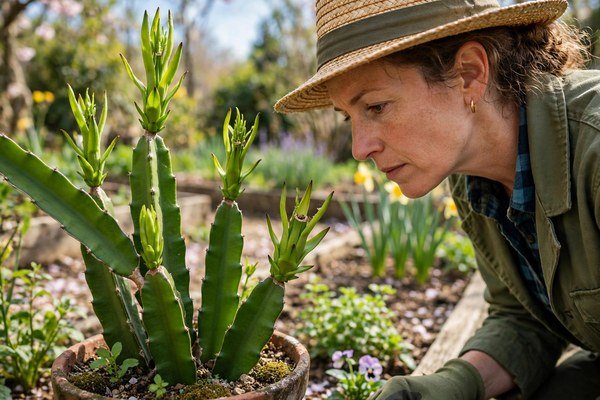
Look for new growth at the same time. Fresh shoots are bright green and firm, and they appear at the tips of stems and from the joints. New shoots are a good sign that the plant is waking up well. If a stem shows no new growth at all while the rest of the plant is sprouting, check it closely. It may be damaged inside even if it looks fine from outside.
For small pest problems, picking insects off by hand or washing them off with a strong jet of water is often enough. Avoid spraying chemicals on a plant that is about to flower, since sprays can harm the bees and other pollinators the flowers need. Keep checking once a week through spring, so a small problem never gets the chance to become a big one.
Refresh the Mulch and the Soil Surface
Mulch is part of this dragon fruit spring care checklist too. It protects the soil, holds moisture and feeds the soil as it breaks down, but last year’s mulch is often thin and tired by spring. Pull back the old mulch and look at the soil underneath. If the surface is hard and crusted, loosen it gently with a hand fork, taking care not to damage the shallow roots near the surface. Then spread a fresh layer of mulch around the base.
Good mulch for dragon fruit includes straw, dried leaves or wood chips, spread about five to eight centimetres thick. Keep the mulch a few centimetres away from the main stem, since mulch piled against the stem holds dampness there and can cause rot. The mulch should cover the root zone, which spreads out wider than most people expect.
This is also a good time to check the soil itself. Dragon fruit needs soil that drains freely, since roots sitting in wet soil rot quickly. Our guide on best soil for dragon fruit explains what good soil looks like and how to improve it. If water pools on the surface after watering, the drainage needs attention before the rainy season arrives.
What to Watch as Spring Turns to Summer
The last job on this dragon fruit spring care checklist is simply to keep watching. Spring turns to summer gradually, and the plant’s needs change with it. Watering will need to increase as the weather warms and the plant grows faster. New shoots will lengthen quickly, and some may need tying to the support before they get heavy enough to snap.
Watch for the first flower buds, which appear on mature stems as small, round bumps. Flowering is the reward for good spring care, and it usually follows a few weeks after strong new growth starts. When buds appear, keep watering steady and avoid moving or disturbing the plant. Sudden changes in water or rough handling can cause buds to drop before they open.
Keep the weekly pest check going through the whole season. Pests that are easy to handle in spring can multiply fast in warm weather. A plant that enters summer healthy, well fed, well watered and well supported has the best chance of flowering well and setting fruit. The work you do in spring is what makes that possible.
When should I start this dragon fruit spring care checklist?
Start this dragon fruit spring care checklist when the coldest weather has passed and the days are clearly warming up, with new shoots just beginning to show. The exact time depends on your climate. In warm areas this can be early spring, while in cooler areas it may be several weeks later. Watch the plant rather than the calendar, and begin when you see the first signs of fresh growth.
How much should I water a dragon fruit plant in spring?
Water lightly at first, then increase step by step as the plant grows and the weather warms. Check the soil with your finger before each watering. If the top few centimetres feel dry, water. If they feel damp, wait. Plants in pots dry out faster than plants in the ground, so check pots more often.
Should I prune my dragon fruit plant every spring?
Yes, a light spring prune is good practice every year. Remove dead, damaged and badly placed stems, and tidy the shape so air can move through the plant. Do not cut away healthy stems, since these are the ones that will flower. A gentle tidy each spring is better than a hard cut every few years.
What is the best spring feed for dragon fruit?
Well-rotted compost spread around the base is the simplest and safest spring feed for most home plants. It feeds slowly and improves the soil at the same time. Well-rotted manure works the same way. If you use a bought fertiliser, choose one made for fruiting plants and follow the label amounts exactly, since too much can burn the roots.
Why is my dragon fruit plant not growing in spring?
A plant that shows no new growth in spring may be too cold, too dry, or sitting in soil that drains poorly. Check the stems first. Firm, green stems with no new shoots may just need more warmth and a little more water. Soft or yellow stems can mean the roots are too wet. Check the drainage, ease off the watering, and give the plant a few more weeks before deciding it is in trouble.
Conclusion
Spring care is not complicated, but it rewards patience. Look the plant over first, restart watering gently, prune only what needs cutting, feed once new growth shows, and check the support, the pests and the mulch. Work through this dragon fruit spring care checklist one job at a time, and your plant will enter summer strong, healthy and ready to flower.