Best Soil for Dragon Fruit Plants: Mix, Drainage and pH
The best soil for dragon fruit is a loose, well-drained mix that holds some moisture without ever staying soggy. Get the soil right and almost everything else becomes easier: roots spread freely, stems grow fast, and the plant copes better with heat, rain and the odd missed watering. Get it wrong and even a healthy cutting can sit still for months, yellow at the edges, or quietly rot from the roots up.
Dragon fruit is a climbing cactus, not a desert cactus and not a thirsty tropical fruit tree. In the wild, pitaya clings to trees and rocks, rooting into pockets of leaf litter that drain almost instantly after rain. Heavy, compacted clay is the opposite of that home.
Table of Contents
- Why Soil Matters So Much for a Climbing Cactus
- What the Best Soil for Dragon Fruit Looks Like
- Drainage: The One Thing You Cannot Compromise On
- How to Test Your Existing Soil Before Planting
- Three Proven Soil Mix Recipes
- Soil pH for Dragon Fruit: The 5.5 to 7.5 Window
- Soil Mistakes That Hurt Dragon Fruit Plants
- Keeping Your Soil Healthy Year After Year
- Frequently Asked Questions
- Final Thoughts
Why Soil Matters So Much for a Climbing Cactus
Dragon fruit has fleshy, three-sided stems and a root system that is surprisingly shallow. According to the Hong Kong Agriculture, Fisheries and Conservation Department, the roots spread widely but mostly stay within the top 5 to 15 cm of soil. That thin layer is the plant’s whole world: water, nutrients and oxygen all come from it, and when it is compacted, waterlogged or starved of organic matter, the plant has nowhere else to go.
Roots sitting in standing water can be damaged fast — the AFCD notes that dragon fruit roots cannot tolerate immersion, and plants may wither after as little as 24 hours in waterlogged soil.
Soil also sets the pace of growth. UF IFAS Extension records stem growth of around 3 cm per day in warm weather under good conditions, but that speed depends on roots that can breathe and feed.
Loose soil lets roots branch quickly and feed fast growth, while dense soil slows everything down — and a slow plant fruits later and less reliably.
What the Best Soil for Dragon Fruit Looks Like
The best soil for dragon fruit is a sandy loam rich in organic matter: crumbly in the hand and free-draining. The AFCD recommends exactly this — sandy loam with plenty of organic matter and good aeration, at a pH between 5.5 and 7.5. UF IFAS adds that pitaya adapts to a wide range of soils provided they are well drained, and thrives where organic matter or manure has been added.
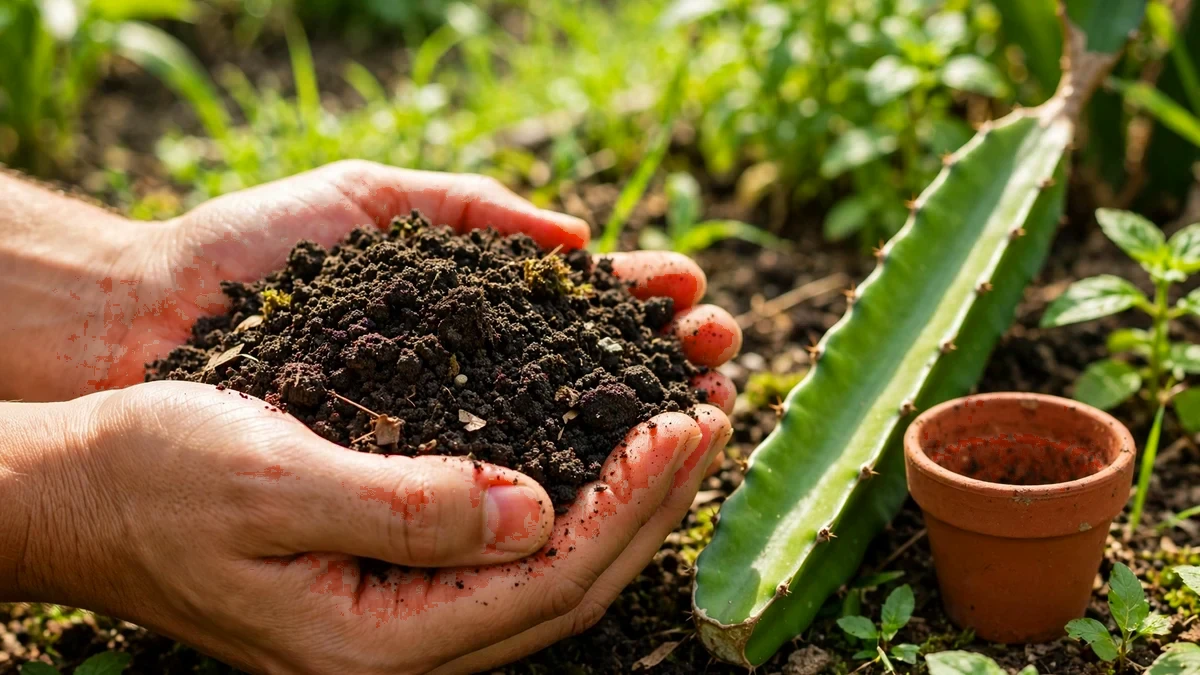
Squeeze a handful and it should hold together loosely, then break apart when poked. It should feel gritty rather than smooth and sticky, with visible pieces of compost or leaf mould, and water poured on top should disappear within seconds. Soil that forms a slick ball like modelling clay is too heavy; soil that falls through your fingers like dry beach sand is too light and needs organic matter.
Compost, well-rotted manure and leaf mould improve structure in both directions: they open heavy soil so water drains, and help sandy soil hold moisture and nutrients. Texture matters more than fertility at planting time — you can feed a plant later, but no fertiliser fixes the best soil for dragon fruit if it stays wet.

Drainage: The One Thing You Cannot Compromise On
If there is one rule about the best soil for dragon fruit, it is that water must drain away freely. The plant tolerates dry periods far better than wet feet. UF IFAS is blunt: although pitaya is a cactus that withstands dry spells, excessive soil moisture leads to bacterial and fungal disease. A dry period in winter and early spring even helps trigger flowering, while drought during flowering and fruiting reduces production.
The plant wants a rhythm of moist then drying, not constant wetness. Drainage problems usually show up in the stems: the base softens and turns yellow or brown, growth stalls, and in bad cases the stem rots through at soil level. By the time the damage is visible above ground, the roots have often been struggling for weeks, so prevention matters far more than treatment.
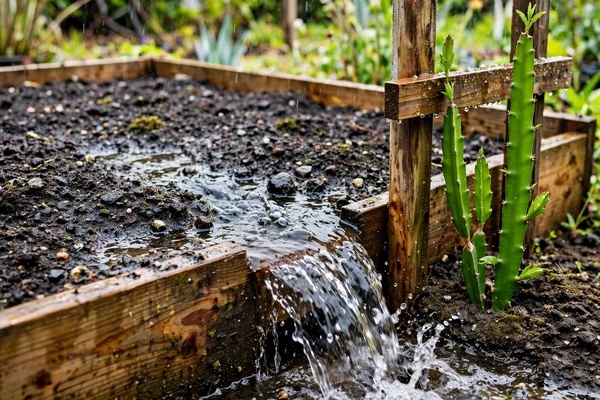
Test drainage before planting. Dig a hole about 30 cm deep and wide, fill it with water, let it drain, then fill it again and time it. If the second fill drains within an hour or two, drainage is reasonable. If water is still sitting there after several hours, the site needs help first.
Where drainage is poor, change the shape of the planting area: a raised bed 20 to 30 cm high, or a mound 60 to 90 cm high and 1.2 to 3 metres across, lifts the root zone above the wet layer. Let a new mound settle for a week or two before planting, and set the plant at the same level it grew in its pot, never deeper.
Our guide on planting dragon fruit in the ground covers site choice in detail, and growing dragon fruit in pots explains the container alternative.
How to Test Your Existing Soil Before Planting
Testing costs almost nothing and prevents the most common beginner mistake: planting into soil you have never actually looked at. The jar test reveals texture. Fill a clear jar one-third full with soil from the planting spot, add water until nearly full, shake hard, then leave it a day.
Sand settles first, silt next, clay last. If the clay layer is more than about a third of the total, the soil is heavy and needs serious amendment or a raised bed. A roughly even mix of sand and silt with a modest clay layer is the best soil for dragon fruit.
The drainage test is the hole-and-watch method described above. Do it after rain as well as in dry weather if you can, because a site that drains in summer may hold water in the wet season. Puddles lingering for more than a few hours after a downpour are a warning sign, as is any spot where water runs in from paths, roofs or higher ground.
A pH test is the third check. Cheap kits or a probe from a garden centre are accurate enough: take samples from several spots, 10 to 15 cm deep, mix them, and test. The target is 5.5 to 7.5. A result outside that range is not a reason to abandon the site — pH can be adjusted, as explained below — but it is useful to know before planting, not after.
Three Proven Soil Mix Recipes
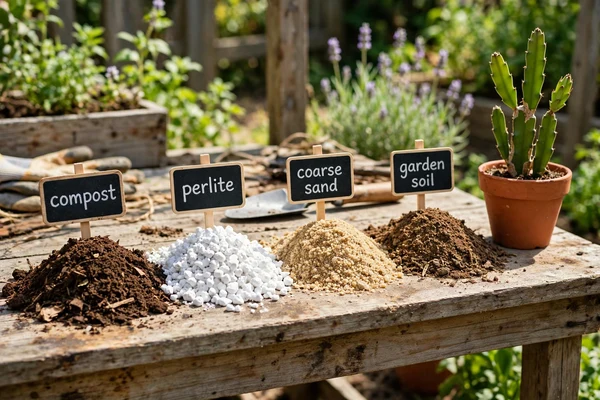
There is no single perfect recipe for the best soil for dragon fruit, because the right mix depends on what you are starting with. The garden-bed mix suits ordinary garden soil that drains reasonably but is a little heavy or tired. Dig the area at least 30 cm deep and twice as wide as the root ball, then mix the excavated soil with roughly one part well-rotted compost to two parts native soil, plus a handful of coarse perlite or grit per spadeful if the soil feels sticky.
Do not replace the native soil entirely with bought mix: roots that hit a sharp boundary between potting mix and native soil often refuse to cross it, leaving the plant trapped in its planting hole.
The container mix is for pots, where drainage matters even more. A reliable blend is one part good potting mix or compost, one part coarse perlite or pumice, and one part coarse sand or fine bark. It drains fast, holds enough moisture between waterings, and stays airy as it ages.
Avoid plain garden soil in pots: it compacts quickly, drains poorly, and can carry weed seeds and pests.
The raised-bed or mound mix is for poor drainage or very heavy clay. Build the bed from roughly equal parts native topsoil, compost and coarse organic material such as aged bark or leaf mould, with perlite or grit mixed through if the native soil is clay.
Make it at least 20 to 30 cm high and wider than it is tall, so roots can spread sideways in the improved soil. In every recipe, the compost must be mature and well-rotted: fresh manure and unfinished compost can burn young roots and temporarily rob the soil of nitrogen as they break down.
Soil pH for Dragon Fruit: The 5.5 to 7.5 Window
Soil pH controls which nutrients the plant can actually use. Dragon fruit prefers a pH between 5.5 and 7.5 — slightly acidic to neutral — the range where most nutrients are most available and where most garden soils already sit. Plants in soil far outside this window often show deficiencies even when fertiliser is applied, because the nutrients are present but locked in forms the roots cannot absorb.
In high-pH, alkaline or calcareous soils, iron and other trace elements become hard to take up, and the classic symptom is yellowing between the veins of new growth. UF IFAS notes that pitaya in the high-pH soils of south Florida may show minor element deficiencies, and chelated iron drenches can help.
Adjust pH gently. To raise it, work garden lime into the topsoil at the rate on the bag for your soil type, and re-test after a few weeks. To lower it, elemental sulfur or acidic organic matter such as pine bark can help over time, but the change is slow — re-test before adding more.
Never chase a perfect number: a stable pH of 6.5 is far better than one swinging between 5.0 and 7.5 after heavy-handed corrections. Compost is the quiet helper here too, buffering pH gently toward neutral while improving structure and drainage.
Soil Mistakes That Hurt Dragon Fruit Plants
The most damaging mistake is also the most common: planting into heavy clay without improving drainage or raising the bed. The plant may look fine for weeks while the roots slowly suffocate, then decline quickly after a wet spell.
Overwatering in good soil is the second mistake — a watering problem that looks like a soil problem. Even the best soil for dragon fruit cannot drain water that arrives faster than it can leave. Water by checking the soil, not the calendar: push a finger into the top few centimetres and water when the surface has dried but the soil below is still slightly moist. Our guide on how often to water dragon fruit explains how to judge this through the seasons.
Fresh manure is the third mistake. It can burn roots with excess salts and ammonia and can carry pathogens. Only well-rotted manure that is dark, crumbly and earthy-smelling belongs near a dragon fruit plant, and even then it should be spread around the base, not piled against the stem.
Compaction is the fourth: walking on the root zone or letting heavy rain pound bare soil presses the air out of the top layer where the roots live, so mulch the surface and keep feet on paths.
Finally, burying the stem is a quiet killer. Stems planted too deep, or with soil or mulch heaped against them, stay damp and become an easy entry point for rot, as covered in our guide to dragon fruit stem rot.
Keeping Your Soil Healthy Year After Year
Soil is not a one-time decision; it needs small, regular attention. The best habit is a yearly top-dressing of compost: spread 3 to 5 cm of mature compost over the root zone in spring, keeping it clear of the stem, and let the worms and rain work it in.
This replaces the organic matter that decomposes each year and slowly improves structure without any digging. Avoid digging around an established plant — the roots are shallow and wide, and a fork or spade through the root zone does damage that takes a season to repair.
Re-test pH once a year, in the same season each time so results are comparable. And watch the plant itself: steady, deep-green growth means the best soil for dragon fruit is doing its job, while pale, thin stems or growth that stalls in warm weather despite watering suggest the roots are struggling — check drainage and compaction before reaching for fertiliser.
In containers, soil ages faster. Potting mixes break down, compact and lose their air spaces over one to two seasons, so refresh the mix every year or two, ideally when the plant is dormant or between fruiting flushes.
Frequently Asked Questions
Can dragon fruit grow in clay soil, and what is the best soil for dragon fruit?
It can, but only if drainage is solved first. Pure heavy clay holds water and suffocates the shallow roots, so planting directly into it usually ends in rot. Use a raised bed or tall mound built from native soil and compost, or a large container with a free-draining mix.
Is sandy soil good for dragon fruit?
Sandy soil drains well, which dragon fruit likes, but on its own it holds little water or nutrition, so plants can dry out and grow slowly. The fix is regular organic matter — compost, leaf mould and well-rotted manure mixed in at planting and topped up each season. With enough compost, sandy soil becomes sandy loam, which is close to the ideal.
How often should I replace the soil in a dragon fruit pot?
Plan to refresh the mix every one to two years, or sooner if water pools on the surface or drains very slowly. Potting mix breaks down and compacts over time, and a container has no soil life renewing it the way a garden bed does. The best time is when the plant is not actively fruiting.
Does dragon fruit need acidic soil?
Not strongly acidic. The preferred range is a pH of 5.5 to 7.5, covering slightly acidic through to neutral and mildly alkaline. Most garden soils fall inside that range already. Test before amending, and use compost as the first step, because it buffers pH gently while improving drainage and feeding the soil.
Final Thoughts
The best soil for dragon fruit is not exotic or expensive. It is loose, well-drained, rich in organic matter, and sitting in a pH window of 5.5 to 7.5. Drainage comes first, organic matter second, and pH third — in that order.
Test the soil you have, fix drainage with a mound or raised bed if needed, mix in mature compost, and let the plant do the rest. If you are starting from the beginning, read our complete beginner’s guide to growing dragon fruit for the full picture — variety, climate and support — and check our climate guide at best climate for dragon fruit to see how soil and weather work together.
14 thoughts on “Best Soil for Dragon Fruit Plants: Mix, Drainage and pH”