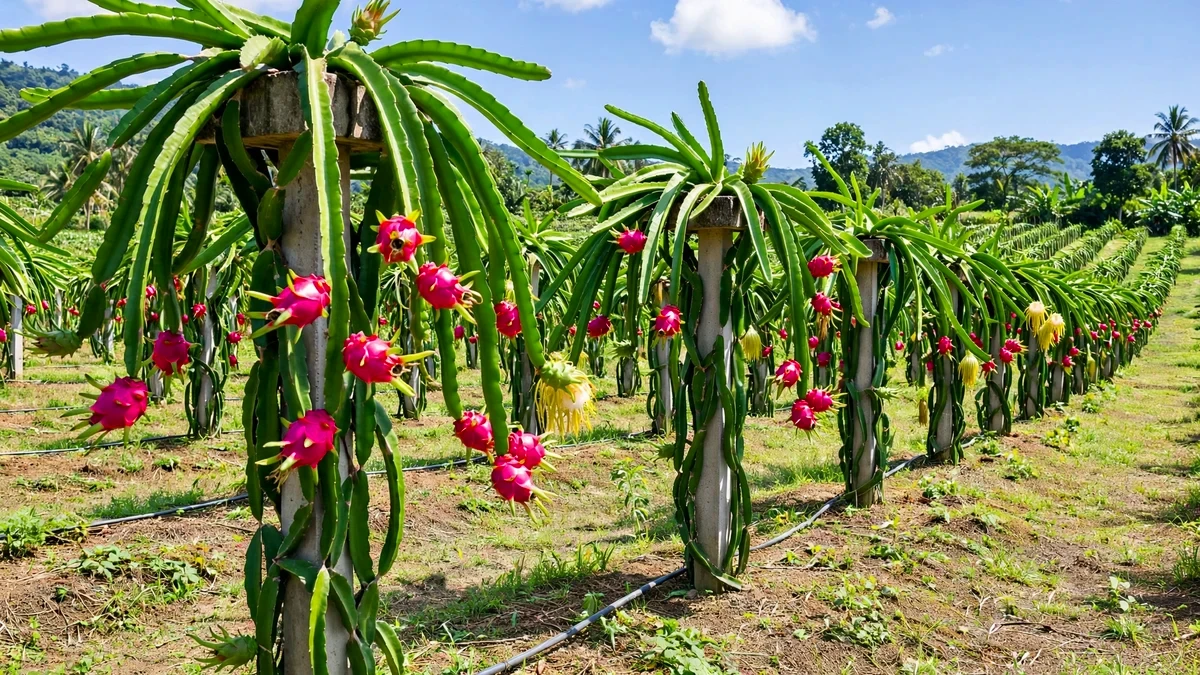
The best climate for dragon fruit is warm, sunny and frost-free — a tropical or subtropical climate where temperatures stay mild through winter and the growing season is long. That is the short answer, and it explains why dragon fruit is a major commercial crop in Vietnam, southern China, Israel and south Florida, and a popular home-garden plant across South and Southeast Asia.
But the fuller picture is more useful than the short answer, because dragon fruit is tougher than its tropical reputation suggests: it tolerates heat, dry spells and some shade, and with the right variety and a little protection it can be grown well outside the tropics too. This guide to the best climate for dragon fruit explains the temperatures the plant prefers, what cold and heat actually do to it, and how to work around your local climate.
Table of Contents
- What “Best Climate” Really Means for Dragon Fruit
- The Ideal Temperature Range
- How Much Cold Can Dragon Fruit Take?
- Heat, Sun and Sunburn
- Rainfall, Humidity and Drainage
- Wind and Storms
- How Climate Affects Flowering and Fruiting
- Microclimates: Finding the Warmest Spot in Your Garden
- Growing Dragon Fruit Outside Its Ideal Climate
- Choosing Varieties for Your Climate
- Frequently Asked Questions
What “Best Climate” Really Means for Dragon Fruit
Dragon fruit comes from tropical America — southern Mexico, Central America and parts of South America — and it is at home in warm conditions with plenty of sun. UF IFAS describes pitaya as growing well in tropical and subtropical climates mostly free of frosts and freezes. But “best” does not mean “only”. The plant tolerates cool and warm conditions, provided temperatures do not exceed about 38°C for long periods and do not drop below freezing. It also tolerates some shade, though too much shade reduces fruiting, and it handles dry periods better than most fruit crops.
That flexibility is why the same plant succeeds in such different places, from humid south Florida to the drier growing regions of Israel and India. What changes with climate is not whether the plant survives, but how fast it grows, how heavily it flowers, and how much protection it needs. A plant in the best climate for dragon fruit needs little more than sun, drainage and a trellis; the same plant in a cooler or harsher climate needs the same basics plus a sheltered spot, a container, or seasonal protection.
The Ideal Temperature Range
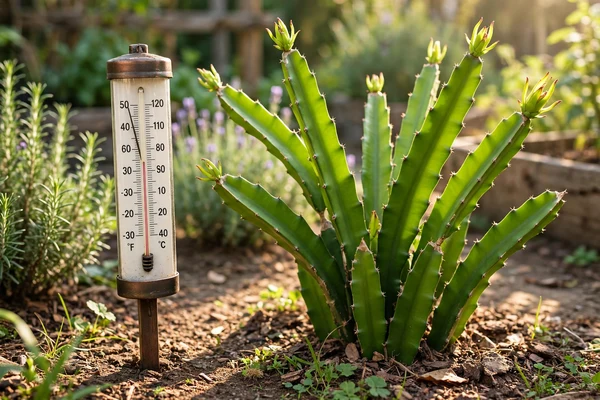
Published guidance varies slightly by source, but the picture is consistent: UF IFAS reports optimum temperatures for growth of 18 to 25°C from the plant’s native areas, while the Hong Kong Agriculture, Fisheries and Conservation Department gives an optimal growing temperature of 25 to 32°C for cultivated plants. Together these figures define the best climate for dragon fruit as roughly 18 to 32°C for active growth, fastest in the warmer part of that range.
Night temperatures matter as well as daytime highs: warm nights support steady growth, cool nights slow it. If your area has warm days and nights for most of the year with a mild winter, your climate is close to the best climate for dragon fruit and the plant will grow vigorously. If your summers are warm but winters cold, it can still do well for much of the year with protection in the cold months. The critical numbers are the extremes — the coldest night and the hottest, driest spell — because those are what damage the plant.
How Much Cold Can Dragon Fruit Take?
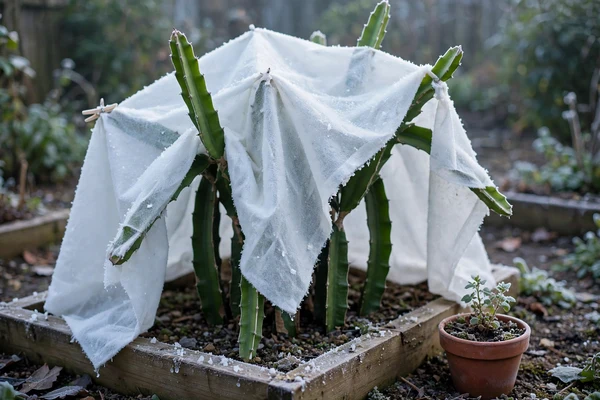
Cold is the main reason a garden falls short of the best climate for dragon fruit. UF IFAS notes that pitaya may be damaged by below-freezing temperatures (around -2°C) of long duration, but that plants recover rapidly from light freezing injury. The Hong Kong AFCD is more cautious: temperatures below 5°C cause serious damage, and it recommends covering plants with plastic when the air temperature drops to 10°C. The message is the same — dragon fruit has very little tolerance for cold, and even temperatures well above freezing can harm it.
For a home grower, the practical rules are simple. If your area regularly drops below 5°C in winter, grow dragon fruit in a container that can be moved under cover, or be prepared to cover the plant with frost cloth or plastic on cold nights. If frost is rare and light, a sheltered spot against a warm wall may be enough, but the plant should still be covered when frost is forecast. Young plants are more vulnerable than established ones, so protect new plantings first. Our guide on how to protect dragon fruit from cold covers covers, mulching, container moves and other practical measures.
Heat, Sun and Sunburn
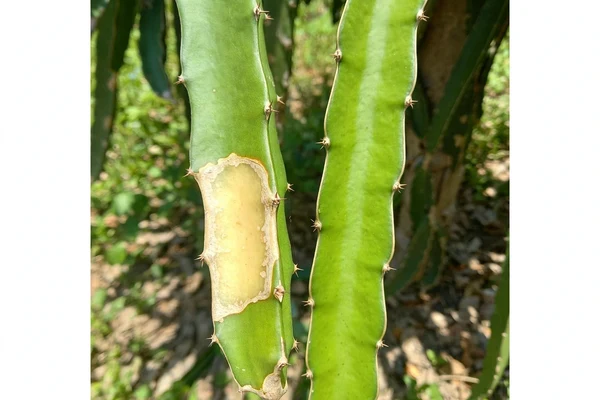
Dragon fruit handles heat better than cold, but extreme heat still causes problems. UF IFAS notes that the plant tolerates cool or warm climates, provided temperatures do not exceed 100°F (38°C), and that severe stem damage from sunburn has been reported in growing regions with low humidity or high altitude. About 30% shading is recommended during the first three to four months after planting, and where sun exposure is at damaging levels. Too much shade, however, results in low production and poor-quality fruit, so the aim is balance rather than heavy shade.
Sunburn shows up as pale yellow or bleached patches on the stems, which can dry out and become entry points for disease. It is most common on young plants, on stems facing the afternoon sun, and in dry, high-altitude regions. A little afternoon shade or shade cloth during the hottest weeks helps; established plants in humid climates usually cope with full sun. Our guides to dragon fruit sunlight requirements and how to protect dragon fruit from sunburn explain the balance, and light-stress yellowing is covered in our guide to why dragon fruit stems turn yellow.
Rainfall, Humidity and Drainage
Dragon fruit tolerates dry periods, but it is not a desert plant. UF IFAS notes that although pitaya is a member of the cactus family and may withstand dry periods, it has a fairly high water requirement, and that a dry period in winter and early spring is needed for abundant bloom — yet once plants flower, drought can result in poor production. The Hong Kong AFCD adds that optimal soil moisture is between 60% and 80%, that roots are shallow and spread in the top 5 to 15 cm of soil, and that roots cannot stand immersion in water: damage occurs if they are submerged for 24 hours, and the plant may wither in severe cases.
Both drought and waterlogging harm the plant, at different times of year. During flowering and fruiting it needs regular water; during the winter rest, far less. In a wet climate, drainage matters more than watering: the plant must never sit in waterlogged soil, so raised beds, mounds or containers are often the answer. In a dry climate, water regularly through the fruiting season and mulch to hold moisture in the shallow root zone. Very humid conditions with poor airflow can encourage disease — another reason to keep the canopy open with pruning. See our guide on how often to water dragon fruit.
Wind and Storms
Wind is the least important element of the best climate for dragon fruit, but it still deserves a place in site planning. UF IFAS notes that pitaya tolerates windy conditions, but very strong winds or hurricanes can damage trellises and supports, and consequently the plants. The stems bend rather than snap, but a trellis that fails in a storm can destroy a plant that took years to establish.
In windy sites, the answer is a stronger support rather than a sheltered position that sacrifices sun: set the trellis post deep and firm, use a sturdy top frame, and tie stems securely with soft ties. Avoid wind tunnels between buildings, where gusts intensify. After a storm, check the trellis and ties, prune damaged stems promptly, and if your area is prone to cyclones, a lower trellis and compact canopy are a sensible compromise.
How Climate Affects Flowering and Fruiting
The best climate for dragon fruit also shapes flowering and fruiting, not just survival. Flowers open at night and last a single night, and the flowering season runs through the warm months. A dry period in winter and early spring helps induce abundant flowering, which is why constant watering through winter can reduce it. Once flowering begins in late spring and summer, the plant needs regular water through to harvest: drought during flowering and fruiting reduces production.
Temperature also affects pollination. The large night-blooming flowers are pollinated by moths and bats in their native range, and some cultivars remain open into the early morning and may be visited by bees. Cool or wet weather during flowering can reduce pollinator activity and interfere with fruit set, which is one reason hand pollination is a useful skill for growers in marginal climates. Our guide to why dragon fruit flowers open at night explains the flowering biology, and our dragon fruit pollination guide covers hand pollination in detail. If your plant grows well but rarely flowers, climate is a likely cause — see our guide to why a dragon fruit plant is not flowering.
Microclimates: Finding the Warmest Spot in Your Garden
Every garden has microclimates — small areas warmer, cooler, sunnier or more sheltered than the garden as a whole — and finding the warmest one is the difference between a plant that thrives and one that struggles. A south-facing wall (north-facing in the southern hemisphere) absorbs heat by day and releases it at night, creating a pocket several degrees warmer than the open garden, and it also shelters the plant from cold wind.
Low spots are the opposite: cold air sinks and collects in hollows, so frost forms there first — avoid dips and the bottom of slopes. Raised ground, a spot near paving or stone that stores heat, and shelter from the prevailing cold wind all help, and the warmest spot is usually one that does not flood after rain. Walk your garden on a cold morning and notice where frost forms first and last: that is the most practical microclimate survey you can do, and it costs nothing.
Growing Dragon Fruit Outside Its Ideal Climate
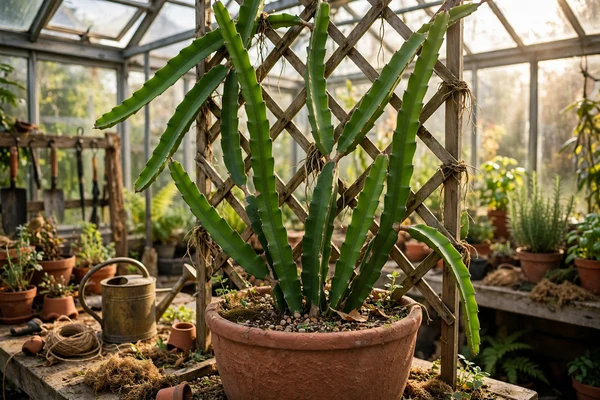
If your climate is cooler than ideal, dragon fruit is still possible — it just needs a different approach. The most reliable method is container growing: plant in a large pot of at least 20 to 25 litres, with a sturdy post trellis, and move the pot into a greenhouse, conservatory or bright sheltered spot for the cold months. Our guide to growing dragon fruit in pots covers pot size, mix and support.
A greenhouse is the next step up: it extends the warm season at both ends, giving the plant more growing time and frost protection. Ventilation matters inside one, since the plant needs airflow to avoid disease, and shade cloth may be needed in summer. In very hot, dry climates, the adjustments run the other way — afternoon shade, regular watering through the fruiting season, and mulch to hold moisture in the shallow root zone.
Whatever your climate, even far from the best climate for dragon fruit, the same basics apply: free-draining soil, a strong trellis, and the warmest, sunniest spot you can offer. Get those right and the plant will usually reward you, even a long way from the tropics. Growing outside the best climate for dragon fruit is still possible — our beginner’s guide on how to grow dragon fruit walks through planting and first-year care.
Choosing Varieties for Your Climate
Variety choice can soften a difficult climate, though it cannot overcome a hard frost. In hot gardens, white-fleshed Hylocereus undatus types are generally the toughest and most adaptable, tolerating heat and dry spells well. Red-fleshed varieties also handle heat, but their stems can be more prone to sunburn where the sun is very intense and humidity is low, so a little afternoon shade helps. Yellow dragon fruit prefers slightly more sheltered conditions and is less tolerant of extremes, so it is a poor first choice for a very hot or very cold garden.
In cooler climates, the variety matters less than the growing method: a container that can be moved under cover will do more than any choice of cultivar, though a vigorous variety gives more growth in a short season than a slow-growing type. Whichever variety you choose, confirm its pollination behaviour before buying — a variety that needs cross-pollination will fruit poorly in any climate if planted alone. Our guide to the best dragon fruit varieties compares types by flesh colour, growth habit and pollination needs.
Frequently Asked Questions
What is the lowest temperature dragon fruit can survive, and what is the best climate for dragon fruit?
It depends on duration and variety. Brief light frost around -2°C may cause damage from which plants recover, but temperatures below 5°C can cause serious damage according to the Hong Kong AFCD, and long freezing spells can kill the plant. Protect plants when temperatures approach 10°C.
Can dragon fruit grow in a hot desert climate?
Yes, with the right care: it tolerates heat and dry spells, but needs regular watering during flowering and fruiting, free-draining soil, and protection from the most intense afternoon sun, which can scorch the stems. Shade cloth and mulch both help.
Does dragon fruit need a dry season to flower?
A drier period in winter and early spring helps induce abundant flowering, according to UF IFAS. Plants watered heavily all winter often produce more stems and fewer flowers. Reduce watering in the cool months, then water regularly once flowering starts.
Can I grow dragon fruit in the UK or northern Europe?
Yes, but only in a container or greenhouse — the UK is far from the best climate for dragon fruit, and outdoors it will not survive winter frost. Grow it in a pot outdoors in summer, move it into a bright, frost-free greenhouse or conservatory for winter, and give it as much light as possible year-round.
1 thought on “What Climate Is Best for Growing Dragon Fruit?”