Best Dragon Fruit Varieties to Grow at Home
Choosing among the best dragon fruit varieties is the single most important decision you will make before planting, because the variety decides the colour and flavour of your fruit, how big the plant grows, and — most critically — whether it will set fruit at all on its own.
Two plants can look almost identical in the nursery and behave very differently in your garden: one may fruit heavily from its own pollen, while the other drops every flower unless a different variety is flowering nearby. This guide compares the main types by skin and flesh colour, growth habit, pollination needs and growing conditions, so you can pick varieties that suit your space, your climate and the amount of effort you want to put in.
Table of Contents
- Why Variety Choice Matters More Than You Think
- How to Read a Dragon Fruit Variety
- White-Fleshed Varieties: The Classic Choice
- Red- and Pink-Fleshed Varieties
- Purple-Fleshed Varieties
- Yellow Dragon Fruit
- Self-Fertile or Self-Incompatible: The Question That Decides Your Harvest
- Best Varieties for Pots and Small Gardens
- Best Varieties for Hot, Dry Climates
- Best Varieties for Beginners
- Where to Buy Plants and What to Check Before You Pay
- Frequently Asked Questions
Why Variety Choice Matters More Than You Think
Dragon fruit is not one plant with one behaviour. It is a group of closely related species and hybrids, and breeders in Taiwan, Vietnam, Israel and the United States have produced a large number of named cultivars and unnamed selections. UF IFAS notes that there are now a large number of named cultivars, and that information about the self-incompatibility of many of them is not well documented — which makes variety recommendations difficult and, in their words, potentially unreliable. That honesty matters: no honest guide can promise that a particular named variety will behave exactly the same in your garden as it did in someone else’s.
When a variety fruits poorly, the cause is usually one of three things: it needs another variety’s pollen and has none, it is growing in the wrong conditions for its vigour, or the plant sold under that name is not that variety at all. UF IFAS records that self-incompatibility has been reported in some Hylocereus species, so always confirm the pollination requirements before you buy.
Choose by type and by trait, not by hype. The broad groups — white-fleshed, red-fleshed, purple-fleshed and yellow-skinned — differ in growth vigour, flavour and how likely they are to need cross-pollination. Within each group, individual cultivars vary, so treat the names below as a starting point for questions to ask your nursery, not as guarantees. The best dragon fruit varieties for your garden are the ones whose needs match what you can actually provide.
How to Read a Dragon Fruit Variety
Four things define the best dragon fruit varieties. First is the species behind it: most common varieties come from Hylocereus undatus (white flesh, pink skin), Hylocereus costaricensis and Hylocereus polyrhizus (red or magenta flesh, pink skin), and Hylocereus megalanthus (yellow skin, white flesh). Hybrids between these species are common.
Second is flesh colour, a rough guide to flavour: white flesh tends to be mild and refreshing, red and purple flesh sweeter and richer, and yellow fruit is often described as the sweetest of all, though slower growing. Third is growth habit, from compact to extremely vigorous. Fourth, and most important, is pollination behaviour — whether the variety sets fruit with its own pollen or needs pollen from a different variety.
White-Fleshed Varieties: The Classic Choice

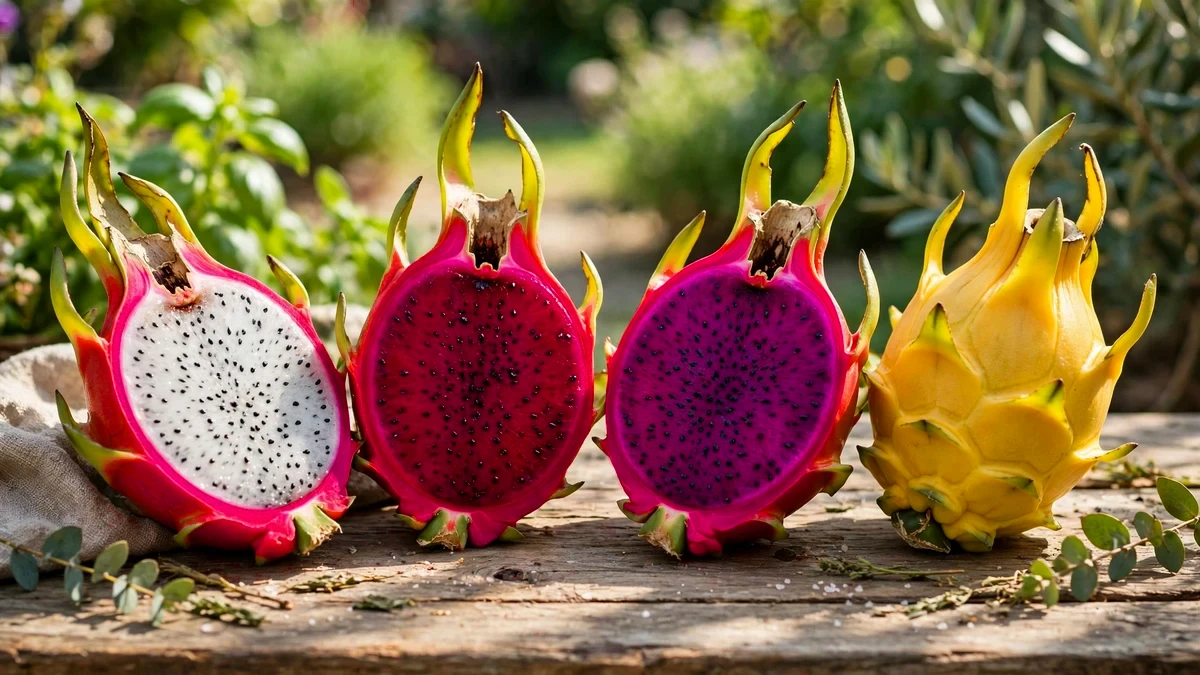
White-fleshed dragon fruit is the type most people meet first, and it remains the most widely grown. The classic is Hylocereus undatus, often sold simply as Vietnamese White or under similar names. It has bright pink skin with green-tipped scales and white flesh with tiny black seeds. The flavour is mild, clean and refreshing, and the fruit are usually medium to large.
Vietnamese White is generally reported as self-fertile, which is one reason it is so widely recommended to beginners. It is vigorous and performs well in a wide range of climates, but still needs a strong support, plenty of sun and well-drained soil to produce well.
White-fleshed types are also the most tolerant of neglect. If your garden gets hot, dry spells and irregular watering, a white-fleshed variety copes better than most alternatives.
Red- and Pink-Fleshed Varieties

Red-fleshed dragon fruit is the showstopper among the best dragon fruit varieties. Varieties based on Hylocereus costaricensis have deep pink skin and rich magenta flesh, and they look striking when cut open. Fruit are often smaller than white-fleshed ones, but sweeter and more aromatic.
Named red-fleshed varieties include American Beauty, a popular home-garden choice with good flavour, and several of the “cosmic” hybrids sold by specialist growers. American Beauty is often reported as self-sterile or only partly self-fertile, so plan on hand-pollinating or planting a second variety alongside it.
Red-fleshed varieties are often slightly less vigorous than Vietnamese White, and some need more care: a little more water in dry weather, and slightly better shelter from cold. They do well in hot gardens, and the fruit colour deepens with strong sun.
If flavour is your priority and you are willing to hand-pollinate on flower nights, put a red-fleshed variety at the top of your list. Just do not expect it to look after itself the way a white-fleshed plant will.
Purple-Fleshed Varieties
Purple-fleshed varieties sit between the red and white types in most respects. They are usually hybrids of Hylocereus polyrhizus or Hylocereus undatus crosses, and their flesh ranges from deep pink to a rich purple. Fruit are often large and attractive, with flavour that many growers rate above white-fleshed and below the best red-fleshed varieties.
Growth habit varies: some are moderately vigorous, others strong growers needing regular pruning. Because “purple” covers several different crosses, ask the seller which species or parent the plant is, and whether it is self-fertile.
Purple-fleshed varieties are a good middle choice when you want a striking fruit without the pollination headaches of the most demanding red types. They are also the group most often sold under vague or made-up names, so the seller’s reputation matters even more here.
Yellow Dragon Fruit
Yellow dragon fruit, from Hylocereus megalanthus, looks different from the rest of the best dragon fruit varieties: it has bright yellow skin with prominent spines and white flesh that turns noticeably sweeter than white Hylocereus undatus fruit. It is often described as the sweetest of all dragon fruit.
On a trellis, yellow dragon fruit has a slightly different growth habit — thinner, more spiny stems — and it benefits from extra care with drainage. If you garden somewhere warm and want the sweetest fruit available, it is worth a place on your trellis.
For a beginner, yellow dragon fruit is best as a second plant rather than your first: it adds a different harvest and a distinctive flavour, but it is also slower to establish, has smaller fruit, and can be more sensitive to cold and overwatering than the pink-skinned types. It is also the variety most likely to need hand-pollination to give a good harvest.
Self-Fertile or Self-Incompatible: The Question That Decides Your Harvest

Pollination is where most variety disappointments happen, so it deserves its own section. Dragon fruit flowers are large, white and fragrant, opening at night and fading by morning. If you rely on natural pollinators alone, some varieties will set fruit and others will flower and drop every bloom.
The flowers open at night and are usually pollinated by moths and bats in their native range, though in home gardens many growers hand-pollinate to improve fruit set. Our dragon fruit pollination guide explains the process, and our guide to why dragon fruit flowers open at night explains the flowering biology behind it.
The three categories are simple. Self-fertile varieties set fruit with their own pollen. Self-sterile varieties can pollinate themselves in theory but rarely set fruit without hand-pollination. Self-incompatible varieties need pollen from a genetically different plant of the same species, and cannot be pollinated by a clone of themselves.
UF IFAS recommends planting two or three different genetic types to allow cross-pollination, and notes that a single variety may not set fruit at all. The practical rule is simple. If you only have room for one plant, choose a variety your nursery can confirm is self-fertile. If you have room for two or more plants, choose varieties that flower together and are genetically distinct, and hand-pollinate on flower nights. Buying cuttings of the same variety twice does not create a compatible partner — they are clones.
Best Varieties for Pots and Small Gardens

Container growing changes the variety calculation, because a vigorous variety in a pot becomes a maintenance problem faster than it does in the ground. The best dragon fruit varieties for pots are the ones with moderate vigour, usually white-fleshed or purple-fleshed types.
Whatever variety you choose, the container matters as much as the plant: use a pot of at least 20 litres, a chunky free-draining mix, a strong central post, and a position in full sun. Water freely in warm weather but never leave the pot standing in water. In cold weather, a pot plant is more exposed to frost than a ground-planted one, so move it under cover if frost is forecast. Our guide to growing dragon fruit in pots covers pot size, mix and support, and our best soil for dragon fruit guide explains the mix to use.
A good approach is to grow two varieties in two pots side by side: a self-fertile type, and a red-fleshed type you pollinate by hand. That way, you get fruit from the first even in years when you miss a flower night.
Best Varieties for Hot, Dry Climates
Dragon fruit as a group handles heat well, and the differences between the best dragon fruit varieties in hot, dry climates are smaller than the differences in pollination and vigour. The real risk in a hot garden is not heat but water: long dry spells reduce flowering, and overwatering can cause root rot.
Yellow dragon fruit is the most likely to struggle in a very hot, dry garden, preferring slightly cooler nights and more sheltered conditions. White-fleshed and red-fleshed varieties are more forgiving, and their fruit quality improves with strong sun.
In hot, dry conditions, the practical choice is the same as elsewhere: plant two varieties — one self-fertile for reliable fruit, and one red-fleshed for flavour — and water deeply but infrequently through the growing season. Our guide to the best climate for dragon fruit covers temperature ranges and heat protection, and our sunlight requirements guide explains how to balance sun exposure with protection.
Best Dragon Fruit Varieties for Beginners
If you are planting your first dragon fruit and want the simplest path to fruit, the recommendations below are the safest place to start.
Start with Vietnamese White. It is vigorous, widely available, reported to be self-fertile and tolerant of beginner mistakes. Add American Beauty or a purple-fleshed variety as a second plant once the first is established, and hand-pollinate both on flower nights.
Avoid starting with yellow dragon fruit alone, and avoid buying a single plant whose pollination requirements the seller cannot describe. The chances are your first season’s harvest will be far better with a simpler setup.
A good next step is our how to grow dragon fruit beginner’s guide, which covers planting, trellising and first-year care, and our guide to how long dragon fruit takes to fruit sets realistic expectations.
Where to Buy Plants and What to Check Before You Pay
Buy from a specialist nursery or a reputable fruit-plant seller, not from a general market stall where labels are generic. Ask the seller for the variety name, the species or parentage, and whether the plant is self-fertile or needs a partner.
Check the plant itself: the stem should be firm and green, with no soft, yellow or blackened patches. Roots should be white or pale, not dark and mushy. Avoid plants with long, pale, stretched growth — a sign of growing in too little light.
If you are buying cuttings rather than potted plants, take a segment at least 30 cm long from healthy growth, leave it to callus for a few days and then plant it into a free-draining, moist — not wet — medium. A cutting takes longer to fruit than an established plant, so expect to wait a season or two. For more detail, our guide to how to propagate dragon fruit from cuttings explains curing and rooting, and our guide to growing dragon fruit from seeds explains why seeds are slower and less predictable.
Frequently Asked Questions
Which of the best dragon fruit varieties tastes the best?
Taste is personal, but most growers rate red- and purple-fleshed varieties as the sweetest and most interesting, with yellow-fleshed fruit often rated the sweetest of all. White-fleshed fruit is milder, and often these are among the best dragon fruit varieties for a first garden — some growers prefer the lighter flavour.
Can I grow just one dragon fruit plant?
Yes, if you choose a self-fertile variety such as Vietnamese White — though even self-fertile plants among the best dragon fruit varieties often set better fruit when cross-pollinated with another variety. If you buy a variety you cannot confirm as self-fertile, plan on planting at least two.
Why did my dragon fruit flower but not set fruit?
The most likely cause is pollination: your variety may be self-incompatible and need pollen from a different plant, or there were no night pollinators while the flower was open. Hand-pollinate on the next flower night and check the variety name on the label — the plant you bought may not be the variety you think it is.
Are yellow dragon fruit plants harder to grow?
They are slower growing, take longer to fruit, and are more sensitive to cold and overwatering than the pink-skinned types. They reward patient growers with very sweet fruit, but they are not the best first choice.