Introduction
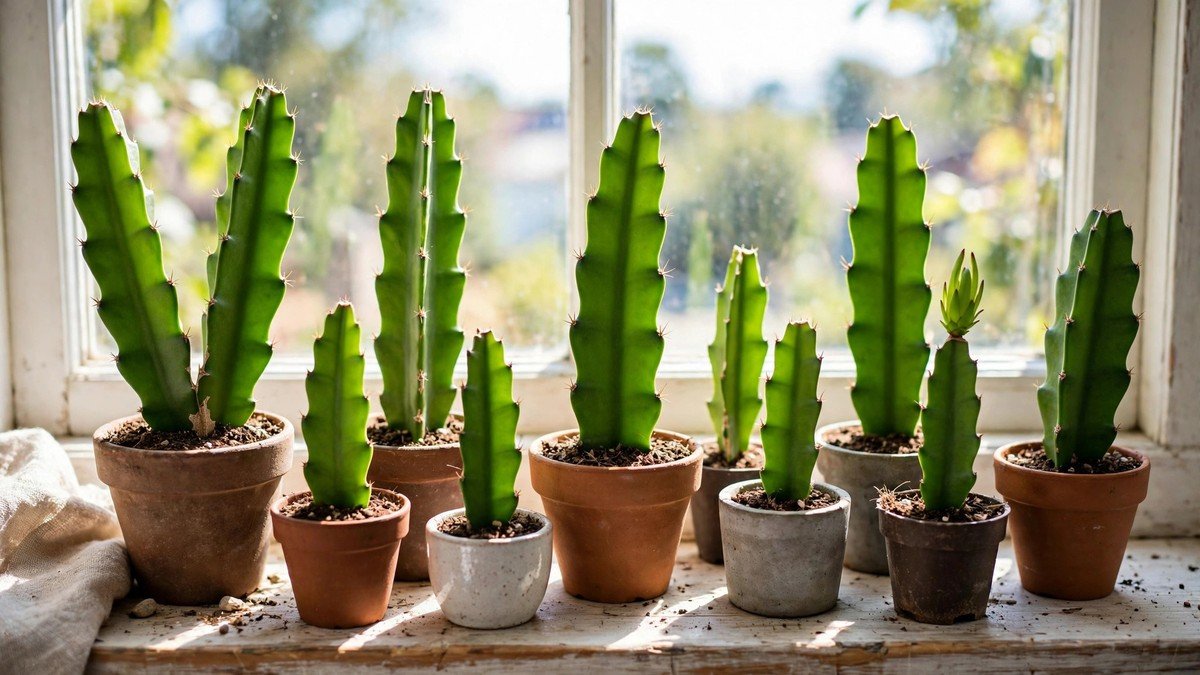
If you are wondering why dragon fruit cuttings not rooting, it is frustrating because the plant looks fine. The stem stays green, nothing seems wrong, and yet weeks pass with no roots at all. Then one day the base turns soft, and the cutting is lost.
Most cases of why dragon fruit cuttings not rooting come down to a small number of reasons, and most of them are fixable. The common causes are a cutting planted before its cut end healed, soil that stays wet, a cutting planted upside down, cold weather, a cutting taken from weak growth, or simply not enough time. This guide works through each cause, shows you how to tell which one is affecting your cutting, and gives you the fix that gets roots growing again.
A healthy dragon fruit cutting usually roots in two to four weeks in warm weather. In cool weather it can take six weeks or more. If your cutting has been in soil for more than six weeks in warm conditions with no roots, something is wrong, and it is time to check the causes of why dragon fruit cuttings not rooting below.
In this guide:
Table of Contents

How Dragon Fruit Cuttings Root
Dragon fruit is a cactus, and its cuttings root from the nodes and from the cut end at the base of the stem. When a cutting is planted, it first needs to seal the cut end. A dry, hard layer called a callus forms over the wound, and that callus is what keeps rot out. Only after the callus forms do root initials appear, usually as small white bumps, and then as thin white roots that grow into the soil.
That order matters. Callus first, then roots. A cutting planted in wet soil before the callus forms will usually rot from the base upward before it ever roots. A cutting kept too dry after rooting starts will stall, because new roots need a little moisture to grow.
The cutting also needs warmth and light to root. Dragon fruit is a tropical cactus that grows best when daytime temperatures are warm, roughly 20 to 30 degrees Celsius, with bright light. In cold weather the cutting goes quiet and waits. It is not dead, it is just not rooting yet.
Knowing this sequence tells you where to look when you are wondering why dragon fruit cuttings not rooting. Check the base first, then the soil, then the temperature, then the cutting itself.
Cause 1: Why Dragon Fruit Cuttings Not Rooting When Planted Before Callusing
This is the most common reason why dragon fruit cuttings not rooting, and it is the easiest to prevent.
When you cut a dragon fruit stem, the cut end is an open wound. If you plant it straight into moist soil, bacteria and fungi enter the wound and the base rots. The rot starts as a soft, dark patch at the base and spreads upward. A cutting that rots from the base will never root, because the tissue that would have made roots is dead.
The fix is to let the cutting callus before planting. Lay the cutting in a dry, shaded place with good airflow for five to seven days, longer in humid weather, until the cut end feels dry and hard and has a pale, sealed surface. A thick cutting may need ten days. Do not rush this step. A cutting that has callused properly can sit for weeks without harm, while a cutting planted too early can rot in days.
If your cutting is already in soil and the base feels soft or smells bad, take it out, cut away the rotten part until you reach clean, firm, green tissue, and let the fresh cut callus properly this time before you plant it again. A cutting can survive this rescue if the rot has not travelled far up the stem.
Cause 2: Why Dragon Fruit Cuttings Not Rooting in Soil That Stays Too Wet
Dragon fruit is a cactus, and its roots need air as much as they need water. Soil that stays wet suffocates new roots and invites rot, which is why dragon fruit cuttings not rooting is so often a watering problem.
The most common mistake is planting a cutting in ordinary garden soil or in a heavy potting mix that holds water. That soil stays soggy after watering, and the base of the cutting sits in wet soil day after day. The cutting may look fine on top while the base slowly rots underneath.
The fix is a very free-draining mix. Use a cactus or succulent mix, or make your own from roughly equal parts of potting soil, coarse perlite or pumice, and coarse sand or small bark. The mix should feel gritty, and water poured on top should drain through quickly instead of pooling.
Watering matters as much as the mix. Water the cutting lightly after planting, just enough to settle the soil around the base, and then wait until the top few centimetres of soil are dry before you water again. In warm weather that may be once a week. In cool or humid weather it may be much less. Never water on a schedule. Check the soil with your finger first. If the roots have already rotted, the rescue is the same routine: cut away the soft dark roots to clean tissue, let the cutting dry, and replant in fresh dry mix.
The pot matters too. It must have drainage holes, and it must not sit in a saucer full of water. A cutting in a pot without drainage will fail almost every time, whatever else you do right.
Cause 3: The Cutting Is Upside Down
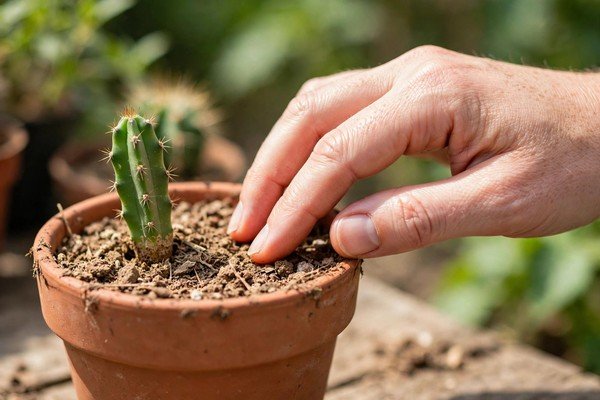
Dragon fruit cuttings have a top and a bottom, and planting one upside down is a surprisingly common mistake, especially with a cutting that has no leaves to show the way.
A dragon fruit stem has small spines and buds called areoles along its edges, and the growth points face upward. If you plant the cutting upside down, it will struggle to root and will not grow properly, because the plant’s growth direction is reversed. Some upside-down cuttings eventually root from a side node, but most stall or rot, which is another reason why dragon fruit cuttings not rooting can happen.
Before you plant, look at the cutting carefully. The end that was nearer the tip of the parent plant is the top. The areoles and any small new growth point upward. If you are not sure, look at the shape of the cut: the bottom end is the one you cut from the parent, and it is the end that needs to callus and go into the soil.
If you suspect a cutting is upside down, take it out and check. A cutting that has been upside down for a week or two can usually be turned around and replanted without harm, as long as the base is still firm and healthy.
Cause 4: It Is Too Cold
Temperature is the cause people overlook most often when they ask why dragon fruit cuttings not rooting, because the cutting looks healthy while it waits.
Dragon fruit roots best in warm weather, roughly 20 to 30 degrees Celsius during the day. Below about 15 degrees, rooting slows right down. Below about 10 degrees, it nearly stops, and a cutting left in cold, wet soil is likely to rot instead of rooting.
If you planted cuttings in late autumn or winter, they may simply be waiting for warmth. Move them to the warmest bright spot you have, such as a sunny windowsill indoors or a sheltered spot against a warm wall, and be patient. Do not keep watering a cold cutting. In cool weather it uses almost no water, and wet soil plus cold is the combination that causes rot.
If you live somewhere with cold winters, take and plant cuttings in late spring or early summer, when the weather is warm and the days are long. Cuttings planted at the right time root in two to four weeks. The same cutting planted in winter can take two months or more, if it roots at all.
Cause 5: The Cutting Itself Was Weak
Not every cutting is worth planting, and a weak cutting is another reason why dragon fruit cuttings not rooting happens. A cutting taken from thin, pale, stretched growth, or from a stem that was already sick, will root slowly or not at all.
A good cutting comes from a mature, healthy stem that is firm and green, about 30 to 40 centimetres long, with no soft spots, no rot and no pest damage. Very short cuttings have less stored energy to make roots, and very old woody cuttings root more slowly than a firm green stem of the same length. A cutting taken from the tip of a stem, with soft new growth, is also weaker than one taken from the mature middle of the stem.
If your cutting is thin and pale, it may have been grown in too little light. Give it bright light for a week or two before planting, or take a better cutting from a healthy part of the parent plant. If the parent plant has brown spots or pest damage, check it first: our why does my dragon fruit plant have brown spots guide explains what each spot type means and how to treat it.
A cutting that is too small can still root, but it will be slow and fragile. When you have a choice, always plant the strongest cutting you have.
Cause 6: Not Enough Time
Sometimes the cutting is fine and you are simply impatient, and that is worth saying honestly when you are wondering why dragon fruit cuttings not rooting yet.
A dragon fruit cutting in warm weather usually shows roots in two to four weeks. In cooler weather, or with a thick cutting, it can take six weeks. The roots grow underground first, so you will not see them until they are well established. The first visible sign is often new growth at the top of the cutting, a small green shoot or a new stem segment, which tells you roots have formed below.
Do not keep pulling the cutting out of the soil to check for roots. Every time you disturb it, you break the tiny new roots and set it back by days. Check instead by giving the cutting a very gentle tug after three or four weeks. If it resists, roots have formed. If it lifts out easily, it has not rooted yet, and you should put it back and wait.
If six weeks have passed in warm weather with no resistance and no new growth, take the cutting out and look at the base. If the base is firm and callused with small white bumps, it is about to root, so replant it and wait. If the base is soft or dark, cut away the rot and start the callusing step again.
How to Root a Dragon Fruit Cutting Step by Step
Here is the method that gives a cutting the best chance, using everything above, so you can stop wondering why dragon fruit cuttings not rooting.
First, choose a healthy stem and cut a piece about 30 to 40 centimetres long with a clean, sharp knife. Let the cut end callus in a dry, shaded place for five to seven days until it feels hard and dry.
Second, fill a pot with drainage holes with a free-draining cactus mix. Plant the callused end about 5 centimetres deep, with the cutting the right way up, and firm the soil gently around it. Support the cutting with a small stake if it wobbles, because movement breaks new roots.
Third, water lightly once, just enough to settle the soil, and put the pot in bright, indirect light in a warm place. Avoid full hot sun until roots have formed, because a cutting without roots cannot replace the water it loses in strong sun.
Fourth, water only when the top few centimetres of soil are dry, and do not disturb the cutting. In two to four weeks of warm weather, a gentle tug should meet resistance, and new growth should appear at the top. Once new growth is visible, move the cutting into brighter light and water a little more freely.
Fifth, if the cutting has not rooted after six weeks in warm weather, take it out, check the base, cut away any rot, let it callus again, and replant in fresh dry mix. A cutting can survive one rescue like this. Two rescues are possible but the odds get worse each time.


Frequently Asked Questions
How long do dragon fruit cuttings take to root?
Most cuttings root in two to four weeks in warm weather, roughly 20 to 30 degrees Celsius. In cool weather it can take six weeks or more. If there are no roots after six weeks in warm weather, check the base for rot.
Can I root dragon fruit cuttings in water?
Yes, it works, but rot is a real risk, and soil rooting is the safer choice for most growers. If you try water, use clean water, change it every few days, keep only the base in water, and move the cutting to soil as soon as roots appear.
Should I use rooting hormone on dragon fruit cuttings?
Rooting hormone can help, especially on a thick or slow cutting, but it is not necessary. A healthy cutting in warm weather with a proper callus and free-draining soil will root without it. If you use hormone, apply a thin layer to the callused end only, and do not use it as a substitute for callusing.
Why is my cutting rotting instead of rooting?
Rot almost always means the cutting was planted before it callused, or the soil stayed too wet, or both — the two main reasons why dragon fruit cuttings not rooting turns into rot. Cut away the rot to clean tissue, let the fresh cut callus for a full week, and replant in fresh, dry, free-draining mix. Water lightly and only when the soil is dry.
Can I plant a cutting directly in the ground?
Yes, in a warm climate with free-draining soil. The same rules apply: callus first, plant the right way up, and do not overwater. In a pot you control the soil and the water more easily, so pots are the safer choice for a first cutting.
Conclusion
If you are wondering why dragon fruit cuttings not rooting, the cutting is almost always telling you about one of six things: the callus, the water, the direction, the temperature, the cutting itself, or the time. Work through them in that order, starting with the base of the cutting, and you will find the cause.
Callus the cutting for five to seven days before planting. Use a free-draining mix in a pot with holes. Plant it the right way up. Keep it warm and bright. Water only when the soil is dry. Then leave it alone and give it two to four weeks. Most cuttings root when those simple conditions are met, and the ones that do not will usually root on the second try once the real cause is fixed.
4 thoughts on “Why Dragon Fruit Cuttings Are Not Rooting and How to Fix Them”