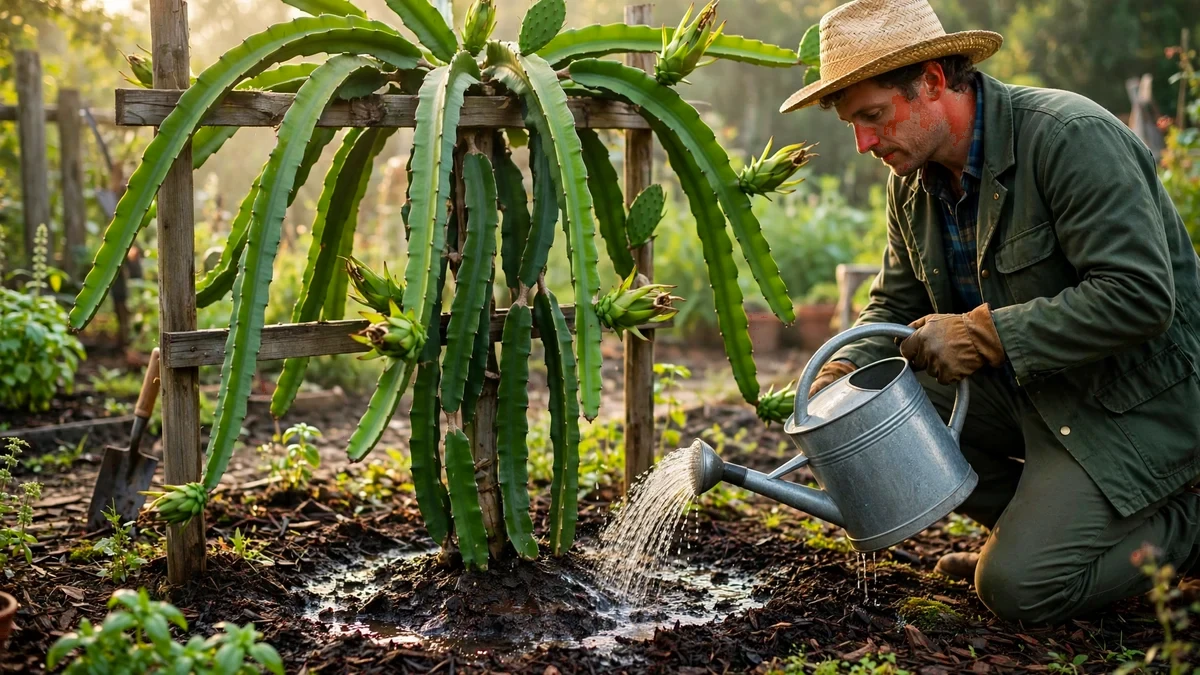
Watering is the question every dragon fruit grower asks first, and it is the one most often answered wrong. Dragon fruit is a cactus, so people assume it wants almost no water. In fact, it has a fairly high water requirement for a cactus, and it produces poorly when it is kept too dry.
At the same time, it hates wet feet: soil that stays soggy invites the bacterial and fungal diseases that kill more dragon fruit plants than drought ever does.
Knowing how often to water dragon fruit plants is about reading the plant, the soil, and the season together, not about following a fixed calendar. This guide explains how watering changes with plant age, pot or ground, flowering, and winter rest, and how to tell when you are getting it right.
Table of Contents
- Why Watering Dragon Fruit Is Different From Watering a Cactus
- How Often to Water Dragon Fruit Plants in the First Year
- How Often to Water Dragon Fruit Plants Once Established
- How Often to Water Dragon Fruit in Pots
- Watering Through Flowering and Fruiting
- Watering in Winter: The Dry Rest That Triggers Flowers
- Signs You Are Watering Too Much or Too Little
- How to Water: Method Matters as Much as Timing
- Frequently Asked Questions
- Related Guides
Why Watering Dragon Fruit Is Different From Watering a Cactus
Dragon fruit belongs to the cactus family, but it is a climbing, tropical cactus from the forests of Central and South America, not a desert cactus. In its native habitat it grows on trees in warm, humid conditions with regular rain, and its stems store water but its roots still need steady moisture.
UF IFAS puts it plainly: although pitaya are members of the cactus family and may withstand dry periods, they have a fairly high water requirement, and excessive soil moisture will result in bacterial and fungal diseases. That single sentence is the whole watering problem in miniature: enough water to grow and fruit, but never so much that the soil stays wet.
The plant’s structure explains the balance. The thick, fleshy stems hold water and let the plant survive a dry spell, but the roots are shallow and fine, and they need oxygen. In waterlogged soil the roots suffocate, and the stem base begins to rot. In dry soil the plant survives, but growth slows, stems thin out, and flowering drops.
The goal is soil that is moist but never soggy, and that drains freely after watering or rain. If your soil holds water for days after rain, no watering schedule will fix the problem: you need better drainage first, through a mound, a raised bed, or a freer-draining mix. Once the drainage is right, the question of how often to water dragon fruit plants becomes much easier to answer.
How Often to Water Dragon Fruit Plants in the First Year
Young plants need more frequent watering than established ones. A newly planted cutting or a young plant in its first year has a small root system that dries out quickly, and it is putting energy into growing roots and climbing the trellis.
Water young plants deeply two or three times a week in warm weather, and check the soil before each watering: push your finger two or three centimetres into the soil near the base. If it feels dry at that depth, water. If it still feels damp, wait a day. In cool or cloudy weather, once a week may be enough.
The first month after planting is the most delicate. The cutting needs steady moisture to form roots, but the cut end can rot if it sits in wet soil, which is why cuttings are cured for a week before planting and planted in a well-drained mix. Water the soil around the base, not the stem itself, and avoid wetting the cut end.
A light mulch around the base helps hold moisture without keeping the stem wet. After the first few months, as the roots spread and the plant starts climbing, you can begin to stretch the interval between waterings. The plant will tell you it is established when it puts on fast new growth, sometimes as much as three centimetres a day in warm weather, and the stems look plump and green rather than thin and pale.

How Often to Water Dragon Fruit Plants Once Established
An established plant, one that has been in the ground for a year or more and has a good root system, is more forgiving. In warm growing weather, water deeply once or twice a week, depending on your soil and climate. Sandy soil dries fast and may need watering twice a week, while heavier soil that holds moisture may need water only once a week or less.
The finger test is still the best guide: water when the top few centimetres of soil are dry, and water deeply enough that the moisture reaches the roots, not just the surface. A deep soak that wets the soil to twenty or thirty centimetres is better than a daily sprinkle that only wets the top.
Deep, infrequent watering encourages the roots to grow down, which makes the plant more resilient in dry spells. Shallow, frequent watering keeps the roots near the surface, where they dry out fast and are more vulnerable. Water in the early morning when you can, so the stems dry during the day and the plant takes up water before the heat of the afternoon. Avoid watering late in the evening, because wet stems and soil overnight encourage fungal problems.
In very hot, dry weather, an established plant may need water three times a week, and in a rainy period it may need none at all. The schedule follows the weather and the soil, not the calendar, and that flexibility is the heart of knowing how often to water dragon fruit plants well.
How Often to Water Dragon Fruit in Pots
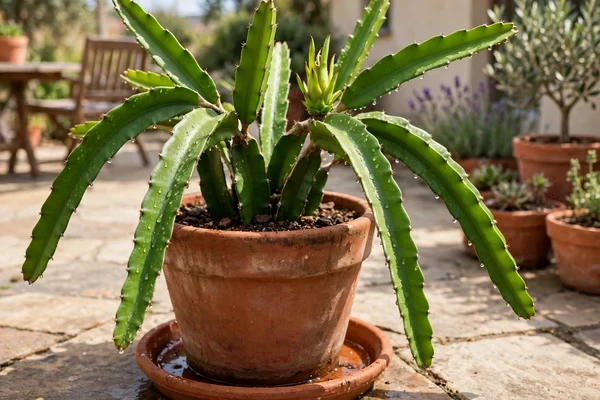
Plants in pots dry out much faster than plants in the ground, because the soil volume is small and the pot walls warm up in the sun. A dragon fruit in a large container in summer may need water every two or three days, and in a heatwave it may need water daily.
Check the soil every day in warm weather when judging how often to water dragon fruit: if the top three centimetres are dry, water until it runs out of the drainage holes, then empty the saucer so the pot is not sitting in water. A pot that sits in a full saucer is the fastest way to rot the roots.
Choose a pot with generous drainage holes and a free-draining mix, and use a large pot, because a small pot dries out too fast and the plant becomes root-bound. A layer of mulch on the surface of the pot soil slows evaporation, and moving the pot into light afternoon shade in the hottest part of summer can reduce water loss without harming the plant.
In winter, potted plants need much less water, sometimes only once every two or three weeks, because growth slows and the soil stays damp longer. Always check before watering rather than watering on a fixed schedule, because a pot in shade dries far more slowly than a pot in full sun, even on the same patio.
Watering Through Flowering and Fruiting
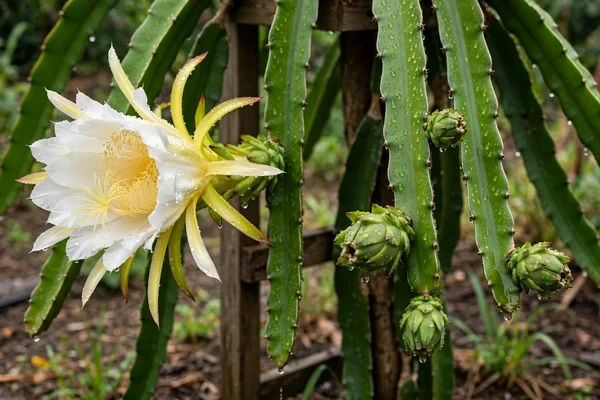
Flowering and fruiting are the thirstiest times in the plant’s year. Once the plant flowers in late spring and summer, it needs steady moisture to set fruit and size it up.
UF IFAS notes that a dry period in winter and early spring is needed for abundant bloom, but once plants flower, drought may result in poor production, and periodic watering is recommended from flowering through harvest.
In practical terms, that means watering deeply once or twice a week through the flowering and fruiting season, and more often in hot, dry weather. Do not let the soil dry out completely while fruit is developing, because drought stress during fruiting can cause flowers to drop and young fruit to stall.
At the same time, avoid sudden flooding after a dry spell while fruit is ripening, because a rapid uptake of water can split the fruit.
Steady, even watering is the goal: the same amount, at the same interval, week after week, adjusted gently for rain and heat. If rain has been heavy, skip a watering. If a heatwave arrives, water a day early.
Mulch helps enormously during fruiting, because it keeps the soil moisture even between waterings and reduces the shock of a sudden soak. A plant that is watered steadily through fruiting produces larger, juicier fruit and drops fewer flowers than one that swings between dry and wet.
Watering in Winter: The Dry Rest That Triggers Flowers
Winter watering is where many growers go wrong when deciding how often to water dragon fruit, because they keep watering at summer rates all year. Dragon fruit needs a dry rest in winter and early spring to flower well.
UF IFAS is clear that a dry period in winter and early spring is required for abundant bloom induction. In practice, that means cutting back sharply: water only enough to keep the stems from shrivelling, perhaps once every two or three weeks in a cool climate, and less if rain is regular. The stems may look slightly thinner in winter, and that is normal. They plump up again when watering resumes in spring.
The dry rest should be a rest, not a drought. Do not let the plant dry out completely for months, because severe drought stress can damage the roots and reduce flowering rather than encouraging it.
Water lightly if the stems start to wrinkle deeply or the soil is bone dry for weeks.
In frost-prone areas, dry soil also helps the plant tolerate cold a little better than wet soil, because wet roots in cold weather are more prone to rot. When spring arrives and the days lengthen, resume watering gradually, increasing the frequency over two or three weeks as new growth appears. The plant will respond with fresh stems, and then with the flowers that the dry rest helped to trigger.
Signs You Are Watering Too Much or Too Little
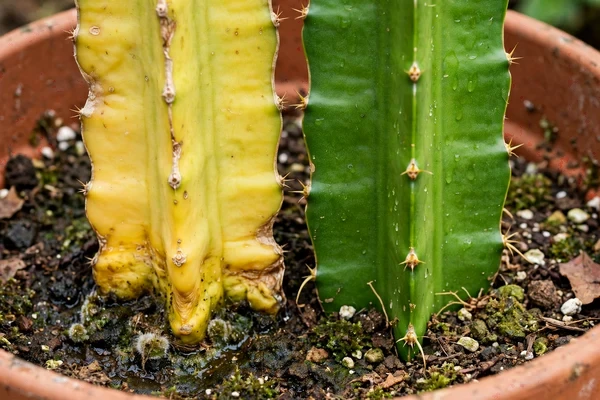
The plant tells you when the balance is wrong. Overwatering shows first in the stems: they turn yellow, feel soft at the base, and may develop dark, water-soaked patches that spread upward. The soil smells sour, and the plant may drop flowers or young fruit. In severe cases the stem base rots completely and the plant collapses.
If you see these signs, stop watering, let the soil dry out, and improve drainage. Cut away any rotted stem tissue back to healthy green wood with clean secateurs, and let the cut dry before watering again.
Underwatering looks different. The stems become thin, wrinkled, and pale green, growth slows or stops, and the plant drops flower buds before they open. The soil pulls away from the edge of the pot or cracks in the ground. The fix is simple: water deeply and thoroughly, and then return to a regular schedule. A plant that has been underwatered usually recovers quickly once water returns, as long as the roots are still alive.
The key is to check the soil and the stems every week, not just when something looks wrong, so you catch the problem early. A finger in the soil and a glance at the stems is a faster way to judge how often to water dragon fruit than any watering calendar.
How to Water: Method Matters as Much as Timing
How you water matters as much as how often. Water the soil at the base of the plant, not the stems, because wet stems invite fungal problems and sunburn on wet skin can scorch.
A watering can with a rose, a soaker hose, or a drip irrigation line all work well, because they deliver water slowly to the soil. Drip irrigation is the best option for a large planting, because it waters evenly, keeps the stems dry, and wastes little water to evaporation. Overhead sprinklers are the worst option, because they wet the whole plant, wash soil onto the stems, and lose water to the air.
Water early in the morning so the plant takes up water before the heat of the day and the soil surface dries by evening. Avoid watering in the middle of a hot afternoon, when much of the water evaporates before it reaches the roots.
If you use a hose, use a gentle flow and move it around the base so the water soaks in rather than running off.
On a slope, water slowly or in two short sessions so the water has time to sink in. Good method, combined with the right frequency, is what makes a watering routine work, and it is the final piece of knowing how often to water dragon fruit plants in a way that keeps them healthy for years.
Frequently Asked Questions
How often to water dragon fruit in summer?
In warm weather, an established plant in the ground usually needs a deep watering once or twice a week, and a potted plant may need water every two or three days. Always check the soil first: water when the top few centimetres are dry, and water deeply rather than sprinkling the surface.
Can I overwater a dragon fruit plant?
Yes, easily. Dragon fruit hates soil that stays soggy, and overwatering causes stem rot, yellowing stems, and dropped flowers. Make sure the soil drains freely, let it dry a little between waterings, and never let a pot sit in a full saucer of water.
Should I water dragon fruit in winter?
Water much less in winter. The plant needs a dry rest in winter and early spring to flower well, so water only enough to keep the stems from shrivelling, perhaps once every two or three weeks in a cool climate. Resume normal watering gradually in spring.
Why are my dragon fruit stems wrinkled?
Wrinkled, thin stems usually mean the plant is too dry, especially in hot weather or in a small pot. Water deeply, check the soil more often, and add mulch to hold moisture. If the stems are soft and yellow rather than wrinkled, the problem is more likely overwatering or rot.
Related Guides
- Best Soil For Dragon Fruit
- Dragon Fruit Stem Rot
- Dragon Fruit Splitting
- Dragon Fruit Plant Not Flowering
- Dragon Fruit Plant Care
- When To Prune Dragon Fruit
- Best Fertilizer For Dragon Fruit
DragonFruitGrow.online is an independent gardening information website and is not affiliated with any nursery, fruit brand, or agricultural supplier. Growing conditions vary by cultivar, climate, soil, and plant age, so treat this guide as general information and adjust the advice to your own garden.
3 thoughts on “How Often to Water Dragon Fruit Plants”