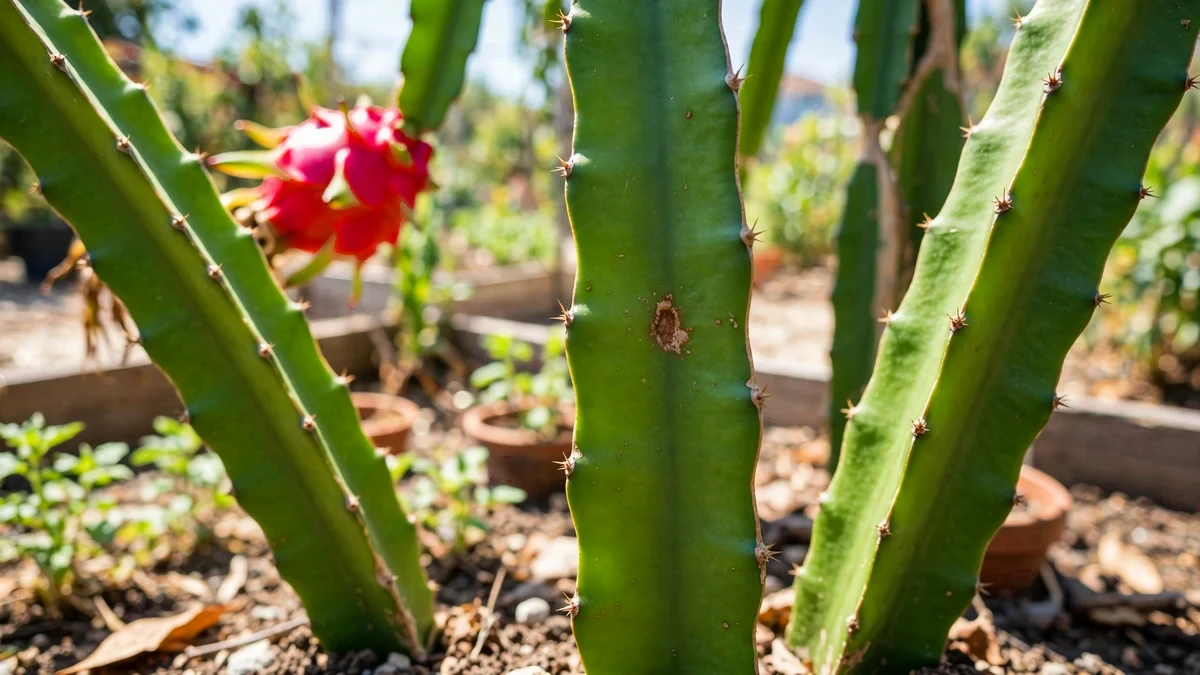
Dragon fruit is a hardy climbing cactus, but it is not immune to disease. Most problems start quietly: a small spot on a stem, a soft patch near a cut, a fruit that decays before it ripens. Learning to recognise dragon fruit plant diseases early gives you the best chance of limiting the damage, because a small affected area can often be removed while the rest of the plant stays healthy. This guide describes the common signs, explains the conditions that favour disease, and shows how sanitation, airflow, drainage, and careful watering reduce risk.
Table of Contents
- What Dragon Fruit Plant Diseases Look Like in a Home Garden
- How Moisture, Airflow and Injuries Invite Disease
- Fungal Problems: Spots, Anthracnose and Fruit Rot
- Bacterial Problems and Wet-Weather Damage
- Stem and Root Problems Linked to Moisture
- How to Tell a Disease from Sunburn, Cold or Nutrient Stress
- Sanitation, Watering and Airflow Habits That Lower Risk
- Inspecting Plants and Deciding When to Remove a Stem
- Frequently Asked Questions
What Dragon Fruit Plant Diseases Look Like in a Home Garden
The first sign of dragon fruit plant diseases is usually a change on the stem surface. Healthy stems are firm, green, and smooth along their flat wings, with only small spines or none at all on the edges. A diseased stem may show round or irregular spots in brown, black, orange, or yellow, a soft or sunken patch, a water-soaked area that darkens over a few days, or a dry, papery lesion.
Spots may stay small and isolated, or they may join together and spread along the stem. Some problems affect only the outer surface, while others soften the flesh underneath, so a stem that looks only slightly marked on the outside can feel soft when you press it gently.
Fruit and flowers can show signs too. A flower bud may darken and drop, a young fruit may develop spots or soften early, and a ripening fruit may decay from the flower end or from a wound. Roots are harder to see, but a plant that wilts despite wet soil, grows slowly, or produces pale, thin stems may have root trouble. When you notice a change, note where it is, how fast it is spreading, and what the weather has been like. A spot that appears after a long wet spell, or near a fresh pruning cut, tells a different story from a mark that appears after a hot, dry week.

How Moisture, Airflow and Injuries Invite Disease
Most dragon fruit plant diseases need the same three things: a pathogen present in the environment, a susceptible plant surface, and conditions that let the pathogen establish itself. In home gardens, the conditions matter most, because fungi and bacteria are often already present in soil, on old plant material, or in the air. Long periods of leaf and stem wetness give them time to infect. Warm, humid weather after rain is a common trigger, especially when stems stay wet overnight. Poor airflow makes the problem worse, because crowded stems dry slowly and trap humid air inside the canopy.
Injuries open the door. A pruning cut, a tie that has rubbed the stem, a knock from a tool, sunburn damage, or an insect bite can all create an entry point. That is why two plants in the same garden can behave differently: the plant with clean cuts, loose ties, and spaced stems is less likely to develop a spreading problem than a plant with many small wounds in a crowded canopy. UF IFAS notes that excessive soil moisture can lead to bacterial and fungal diseases, and the University of Guam SARE factsheet notes that good sunlight and air movement help plants dry quickly after rainfall and reduce disease pressure.
Fungal Problems: Spots, Anthracnose and Fruit Rot
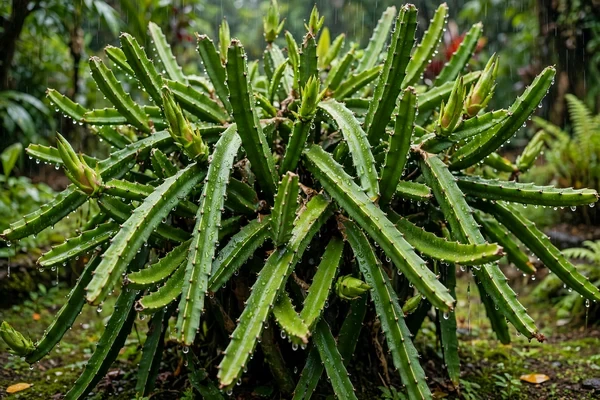
Fungal problems are among the most commonly reported dragon fruit plant diseases in warm, humid regions. Anthracnose, associated with the fungus Colletotrichum gloeosporioides, is reported in extension literature as a cause of fruit and stem rot. On stems it may appear as dark, sunken spots that enlarge over time; on fruit it can cause dark lesions and decay, sometimes starting at a wound or at the flower end.
Other fungi cause leaf-like spots on the stem surface, stem cankers, or soft rots that spread along a segment. Because several fungi can produce similar spots, a home gardener usually cannot identify the exact organism from appearance alone, and that is not necessary for the first steps: remove the affected part cleanly, improve airflow, and avoid wetting the plant.
Fruit rot deserves special attention because it affects the harvest directly. Fruit that is damaged by insects, birds, or handling is more likely to rot, and fruit that sits in a wet, shaded part of the canopy stays damp longer. Harvesting carefully, handling fruit gently, and removing fallen or decaying fruit from under the plant reduces the amount of fungal material near healthy fruit. Any fungicide use must follow the product label for the crop and the local rules, and a product approved in one country may not be approved in another.
Bacterial Problems and Wet-Weather Damage
Bacterial problems are often linked to wet weather and to wounds. The SARE factsheet names black spot, associated with the bacterium Xanthomonas campestris, as a disease known to infect dragon fruit. Bacterial spots may look water-soaked at first, then darken, and the affected tissue may feel soft or slimy rather than dry. In some cases the lesion spreads quickly along the stem during a wet spell, then slows when the weather dries. Bacterial dragon fruit plant diseases are harder to treat with sprays than many fungal problems, which is why prevention and removal matter more than a search for a cure after the plant is badly affected.
Wet weather alone can also damage stems without a named pathogen. Prolonged rain, waterlogged soil, and water pooling at the base stress the plant and make it more vulnerable. A stem that has been waterlogged may soften, discolour, or collapse, and the damaged tissue can then be colonised by fungi or bacteria. If your garden holds water after rain, consider a raised bed or mound, a freer-draining mix, and a site that does not flood. The guide on the best soil for dragon fruit explains mix, drainage, and pH in more detail.
Stem and Root Problems Linked to Moisture
Stem rot and root rot are closely related forms of dragon fruit plant diseases, because both are favoured by the same conditions: wet soil, poor drainage, and damaged tissue. A stem that rots at the base, near the soil line, often points to a soil or watering problem rather than a single spot infection higher up the plant.
The base stays damp longest, especially if mulch or soil is piled against the stem, or if the plant is watered from above late in the day. Roots in waterlogged soil receive less oxygen, grow poorly, and become more vulnerable to rot organisms. A plant with root trouble may show yellowing stems, slow growth, or wilting even when the soil feels wet.
The distinction matters because the response is different. A single spot higher up a stem can often be cut out. A rotting base usually means you need to change the conditions around the plant: improve drainage, reduce watering frequency, move mulch away from the stem, and remove the affected tissue with a clean cut above the rot. The companion guide on dragon fruit stem rot covers that problem in depth, including early signs, drainage, sanitation, and recovery.
How to Tell a Disease from Sunburn, Cold or Nutrient Stress
Not every mark on a dragon fruit stem is one of the dragon fruit plant diseases. Sunburn can cause pale, bleached, or brown patches on the sun-facing side of a stem, especially in hot, dry, high-altitude conditions or after a plant is moved suddenly into full sun. IFAS notes that severe stem damage from sunburn has been reported in some regions, and that about 30 percent shading is recommended during the first months after planting and where sun is at damaging levels.
Cold damage can cause soft, dark, or water-soaked patches after a frost, and the plant may recover from light freezing injury. Nutrient stress can cause yellowing, pale growth, or thin stems, but it usually affects the plant more evenly than a disease spot.
A few simple questions help separate the causes. Did the mark appear after a frost, a heatwave, or a sudden move into sun? Is it only on the sun-facing side, or on all sides? Is it spreading from a wound or a cut, or is it even across the plant? Does the soil stay wet, or is it dry? Yellowing alone is a poor guide, because it has many causes, and the guide on why dragon fruit stems turning yellow works through those causes one by one. When the cause is unclear, change the conditions you can control, remove clearly dead tissue, and watch the plant for a week before deciding on a stronger step.
Sanitation, Watering and Airflow Habits That Lower Risk
Sanitation is the most reliable defence against dragon fruit plant diseases in a home garden. Remove damaged, diseased, or dead stems promptly, using sharp, clean tools, and take the removed material away from the plant rather than leaving it at the base. Clean tools between cuts when you are working on a diseased stem, and wash your hands after handling affected material.
Prune soon after harvest, when you can see the canopy clearly, and remove stems that reach the soil, cross over others, or crowd the centre. The IFAS guide recommends removing pruned stems from the field, and notes that pruning cuts may be treated with a fungicide to reduce stem rot. Any product used should follow its label and local rules.
Watering habits matter just as much. Water at the base, in the morning, so stems dry during the day, and avoid wetting the canopy late in the day. How often you water depends on soil, weather, plant age, and growth stage, and the guide on how often to water dragon fruit explains how to judge it. Thinning a crowded canopy is not only a pruning job; it is disease prevention, because open stems dry faster after rain and are easier to inspect. A plant that is watered carefully, spaced well, and pruned regularly is not guaranteed to stay disease-free, but it is far less likely to develop a spreading problem.
Inspecting Plants and Deciding When to Remove a Stem
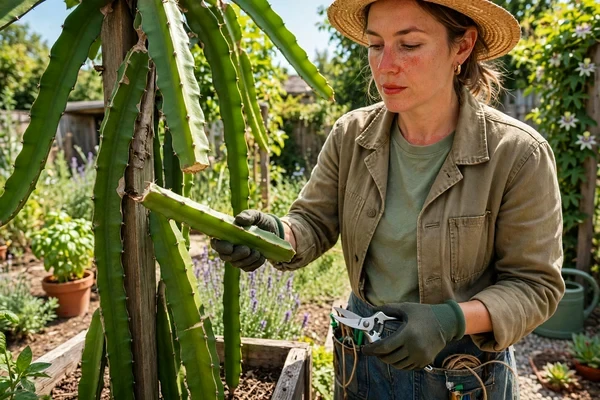
A short weekly inspection is enough for most home plants, and it takes only a few minutes. Walk around the plant, look at both sides of the stems, check the base and the undersides of hanging branches, and look at developing fruit. Feel any stem that looks marked: a firm stem with a small dry spot is different from a soft, spreading lesion. Note anything new, and compare it with what you saw last week. If a spot is small, dry, and stable, you may only need to watch it. If it is spreading, soft, or near the main stem, act sooner.
When you remove a stem, cut into healthy tissue a few centimetres beyond the visible damage, using a clean, sharp blade, and make a clean cut rather than tearing the stem. Do not leave a short stub of diseased tissue, because the problem can continue from there. Take the removed stem away from the garden, and clean the tool before the next cut.
If many stems are affected, or the main stem is badly damaged, remove the worst stems first and reassess, rather than cutting the whole plant back in one day. If dragon fruit plant diseases keep spreading despite sanitation, airflow, and drainage improvements, or if you need an accurate identification, contact your local agricultural extension service or a local plant clinic, and follow their advice and the locally approved product labels.

Frequently Asked Questions
Can I eat fruit from a plant with dragon fruit plant diseases?
Do not eat fruit that is spotted, soft, mouldy, or decaying, and do not eat fruit from a stem that is badly rotted. A plant with a small, isolated stem spot may still produce sound fruit on a healthy branch, but judge each fruit on its own condition: it should be firm, clean, and free of spots or soft patches. When in doubt, discard the fruit.
Do dragon fruit plant diseases spread to other plants in the garden?
Some pathogens can spread to nearby dragon fruit plants, and a few can affect other cacti or succulents, especially in wet, crowded conditions. Spores and bacteria can move in rain splash, on tools, and on hands. That is why diseased stems should be removed promptly, tools should be cleaned between cuts, and new cuttings should come from healthy plants.
Why did my plant get sick even though I water it carefully?
Careful watering helps, but dragon fruit plant diseases also depend on weather, airflow, injuries, and the plant’s history. A long wet spell, a crowded canopy, a wound from a tie or a tool, or a cutting taken from an infected plant can all start a problem. Review the other factors as well: drainage, spacing, pruning, and whether mulch or soil is touching the stem. Fixing one factor may not be enough if another is still favouring disease.
When should I ask a local expert instead of treating the plant myself?
Ask for local help when the disease spreads quickly, when the main stem or many stems are affected, when you cannot tell whether the cause is disease, sunburn, or cold, or when you are considering a chemical product. A local extension service or plant clinic can often identify the problem from photographs or a sample, and can tell you which products, if any, are approved for dragon fruit in your area. Bring notes on the symptoms, the weather, and what you have already tried.
DragonFruitGrow is an independent gardening information resource. Growing results vary with cultivar, climate, soil and plant age.
1 thought on “Dragon Fruit Plant Diseases: Common Signs and Causes”