
Stem rot is one of the most worrying problems a dragon fruit grower can find, because it attacks the very part of the plant that holds it up and carries water and nutrients. A stem that was firm and green can soften, darken, and collapse, sometimes within days in warm, wet weather. The good news is that dragon fruit stem rot is usually linked to conditions a gardener can change: wet soil, poor drainage, crowded stems, and wounds that stay damp. This guide explains what stem rot is, how to spot it early, and how drainage, sanitation, and airflow support plant health.
Table of Contents
- What Dragon Fruit Stem Rot Is
- Conditions That Encourage Dragon Fruit Stem Rot
- Early Signs to Look For on Stems and Cut Ends
- How Watering and Drainage Affect Stem Rot
- Sanitation and Pruning Cuts That Reduce Spread
- Airflow, Sunlight and Spacing Around the Plant
- Helping a Plant Recover After Stem Rot
- Preventing Stem Rot in New Cuttings and Young Plants
- Frequently Asked Questions
What Dragon Fruit Stem Rot Is
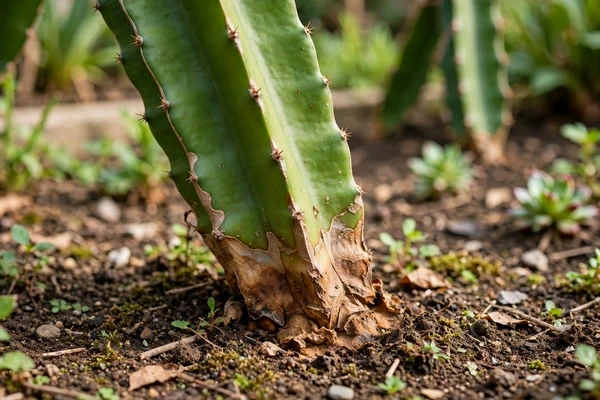
Dragon fruit stem rot is a softening and decay of stem tissue, usually associated with fungi or bacteria that thrive in wet conditions. The stem is fleshy and full of water, so once the outer surface is damaged and the tissue stays damp, organisms can establish themselves and break the tissue down from the inside. A rotted section may feel soft or mushy when pressed gently, look water-soaked or dark brown, and lose its firm, green appearance.
Stem rot is different from a simple surface spot. A spot may stay on the outer skin and never soften the flesh beneath it, while rot changes the structure of the stem itself. A stem with rot may bend or collapse at the affected point, and the section above the rot may yellow or wilt because water and nutrients can no longer move through it properly. The base of the plant is a common site, because it stays damp longest, but rot can also start at a pruning cut, a tie wound, or a joint where water collects.
Extension literature links stem rot with the fungus Colletotrichum gloeosporioides, which is also associated with fruit rot, and UF IFAS notes that excessive soil moisture can lead to bacterial and fungal diseases. A home gardener does not need to identify the exact organism to take the first steps, which are to remove the rotted tissue cleanly and to change the wet conditions that allowed it to develop.
Conditions That Encourage Dragon Fruit Stem Rot
Dragon fruit stem rot is most likely when several favourable conditions come together. The first is prolonged wetness: soil that stays waterlogged after rain, stems that stay wet overnight, or a base that never dries out between waterings. Dragon fruit needs regular water during flowering and fruiting, according to IFAS, but it also needs soil that drains freely. A plant in heavy, compacted soil, in a hollow where water pools, or in a pot without drainage holes is at much higher risk than a plant in a raised bed with a free-draining mix.
The second condition is damage. A pruning cut, a tie that has rubbed the stem, a knock from a tool, sunburn, or an insect bite can create an entry point. Fresh cuts are especially vulnerable if they are made in wet weather and then stay damp. The third condition is crowding. Dense stems trap humid air, dry slowly after rain, and rub against each other in the wind, creating small wounds. A plant that is wet, wounded, and crowded in a warm spell is therefore the most likely to develop rot.
Early Signs to Look For on Stems and Cut Ends
Early signs of dragon fruit stem rot are easy to miss if you only look at the plant from a distance. Check the base first, then the joints between stem segments, then any recent pruning cuts. A small water-soaked patch, a darkening of the green skin, or a slightly sunken area can be the first sign. Press the area very gently with a clean finger: healthy tissue feels firm, while rotted tissue feels soft, spongy, or hollow. A cut end that stays wet, darkens, or develops a soft, brown margin instead of drying and callusing is also a warning sign.
A stem that bends easily at one point, or that feels limp above a certain spot, may have rot at that point even if the surface still looks mostly green.
Colour changes help, but they are not the whole story. Yellowing above a soft patch, a stem that stops growing while its neighbours keep growing, or a branch that wilts in the morning despite wet soil can all point to a problem below the visible surface. Check after rain and after watering, when wet patches are easiest to see, and compare what you find with the previous week. A mark that stays the same size for a week is less urgent than one that grows by the day. If you find a soft patch, act promptly: a small area can often be cut out, while a large area may cost the whole stem.
How Watering and Drainage Affect Stem Rot
Watering and drainage are the most important factors in dragon fruit stem rot, because rot organisms need moisture to grow. The aim is to keep the roots moist enough for growth without keeping the stem base and the soil around it constantly wet. Water at the base, in the morning, so any splashed stems dry during the day, and avoid watering late in the day or wetting the canopy. How often to water depends on soil, weather, plant age, and growth stage, and the guide on how often to water dragon fruit explains how to judge it by soil moisture rather than by a fixed calendar.
Drainage matters even more than watering frequency. Dragon fruit is adapted to a wide range of soils provided they are well drained, according to IFAS, and it does well in soils high in organic matter. A free-draining mix, a raised bed or mound in a wet garden, and a pot with large drainage holes all help water move away from the roots.
The guide on the best soil for dragon fruit covers mix, drainage, and pH in detail. Uneven moisture is also linked to fruit splitting, covered in the guide on dragon fruit splitting before harvest. Keep mulch and soil away from direct contact with the stem, because a damp layer against the stem keeps it wet and can hide the first signs of rot.

Sanitation and Pruning Cuts That Reduce Spread
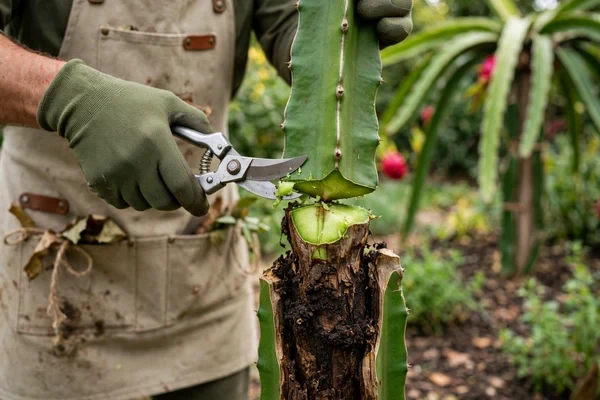
Sanitation is the practical core of stem rot care. When you find rotted tissue, remove it promptly and cleanly, cutting into healthy, firm tissue beyond the visible damage. Use a sharp, clean blade, and make a smooth cut rather than tearing the stem. Clean the tool before the next cut, especially when moving from a rotted stem to a healthy one, and take the removed material away from the plant rather than leaving it at the base.
The IFAS guide recommends removing pruned stems from the field, and notes that pruning cuts may be treated with a fungicide to reduce stem rot. Any product used should follow its local label and local rules, and a product approved in one country may not be approved in another.
How you make a cut matters as much as when you make it. Prune in dry weather when possible, so the cut surface dries and calluses quickly, and avoid pruning during a long wet spell unless the stem must be removed urgently. Let the cut end dry in the air, and do not seal it with soil or wet mulch. If you are removing several stems, work from the healthiest stems first and the most affected stems last, then clean your tools and wash your hands. A short, clean cut into healthy tissue, followed by dry conditions, gives the plant a far better chance than a ragged cut left in a wet, crowded canopy.
Airflow, Sunlight and Spacing Around the Plant
Airflow and sunlight help stems dry after rain, and dry stems are much less likely to develop rot. The SARE factsheet notes that good sunlight exposure and air movement around plants allow them to dry quickly after rainfall and help reduce disease pressure. A crowded canopy does the opposite: it traps humid air, shades the inner stems, and keeps them wet for hours after the rain has stopped. Thinning the canopy is therefore not only a pruning job; it is rot prevention.
Leave space between plants, and keep the area around the base clear of weeds, fallen stems, and dense ground cover that holds moisture. Remove stems that grow inward toward the centre, stems that cross over others, and stems that hang so low they touch the soil. Each gap you create lets light reach the inner stems and lets air move through the plant. Stems that rub against each other in the wind should be separated or one of them removed, because repeated rubbing wounds the surface and creates an entry point. For a broader view of disease signs and causes, see the guide on dragon fruit plant diseases.
Helping a Plant Recover After Stem Rot
Recovery after dragon fruit stem rot depends on how much healthy tissue remains and whether the conditions that caused the rot have been fixed. If the rot is limited to one branch and the main stem is firm, the plant can often recover well: remove the affected stem cleanly, improve drainage and airflow, and give the plant time. New growth usually appears from healthy tissue below the cut, and that growth should be trained and spaced as it develops.
If the rot is at the base of the main stem, recovery is slower and less certain. Cut back to firm, healthy tissue, even if that means losing a large part of the plant, and make sure the cut end can dry. Improve the drainage around the base before the plant regrows, and do not pile soil or mulch against the fresh cut. Watch the plant weekly for new soft patches, and remove any that appear while they are still small. A plant that has lost its main stem may regrow from the base or from a healthy side stem, but it will take time, and fruiting will be delayed.
Preventing Stem Rot in New Cuttings and Young Plants
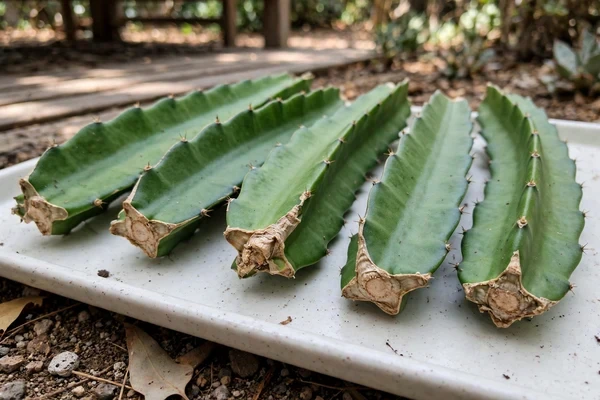
Young plants and fresh cuttings are especially vulnerable to dragon fruit stem rot, because their cut ends are open wounds and their root systems are small. Start with healthy material: take cuttings only from firm, green, disease-free stems, and avoid any stem with spots, soft patches, or a damaged base. Make a clean, slanted cut at the base of the cutting, and let it cure in a dry, shady place for several days until the cut end has dried and callused.
IFAS recommends curing cuttings for 7 to 8 days in a dry, shady location before planting, and the SARE factsheet gives a similar period of 5 to 7 days. Planting a fresh, uncured cutting in wet soil is one of the most common ways rot starts.
Plant the cured cutting in a free-draining mix, in a pot or raised bed with good drainage, and water sparingly until roots have formed. As the plant grows, train one main stem up its support and remove low side shoots, so the base stays open and dry. Young plants also benefit from light shade in the first months, because sunburn can wound the stem and create an entry point; IFAS notes that about 30 percent shading is recommended during the first 3 to 4 months after planting. A cutting that is cured, planted in draining soil, and kept dry at the base has a much better start than one planted wet and crowded.
Frequently Asked Questions
Can a stem with dragon fruit stem rot be saved?
It depends on how far the rot has spread. A small, soft patch on a side branch can often be cut out cleanly, leaving healthy tissue that dries and calluses. A stem that is soft along most of its length, or rotted through at the base, usually cannot be saved and should be removed to protect the rest of the plant. Always cut into firm, healthy tissue beyond the visible damage, and check the cut end for any remaining soft or discoloured tissue.
Does stem rot spread from one plant to another?
Rot organisms can spread in wet conditions, in rain splash, on tools, and on hands, so a badly rotted plant can be a source of infection for nearby plants. Remove rotted stems promptly, clean tools between cuts, and avoid taking cuttings from an affected plant. Keep a new cutting away from a plant with active rot until the new plant is established and healthy. Good spacing and airflow reduce the chance of spread.
How long does it take for a plant to recover after stem rot?
There is no fixed recovery time, because it depends on how much healthy tissue remains, the cultivar, the climate, and the season. A plant that lost one branch may produce new growth within weeks in warm weather, while a plant cut back to the base may take a full growing season to rebuild. Watch for firm, green new growth as the sign of recovery, and keep watering and drainage careful while it regrows. Fruiting will usually be delayed after a severe cut.
Will stem rot kill my dragon fruit plant?
Stem rot can kill a plant if it spreads through the main stem at the base and the conditions that caused it are not changed, but many plants recover when the rotted tissue is removed early and drainage and airflow are improved. The outcome depends on early detection and on fixing the wet, crowded conditions.
DragonFruitGrow is an independent gardening information resource. Growing results vary with cultivar, climate, soil and plant age.