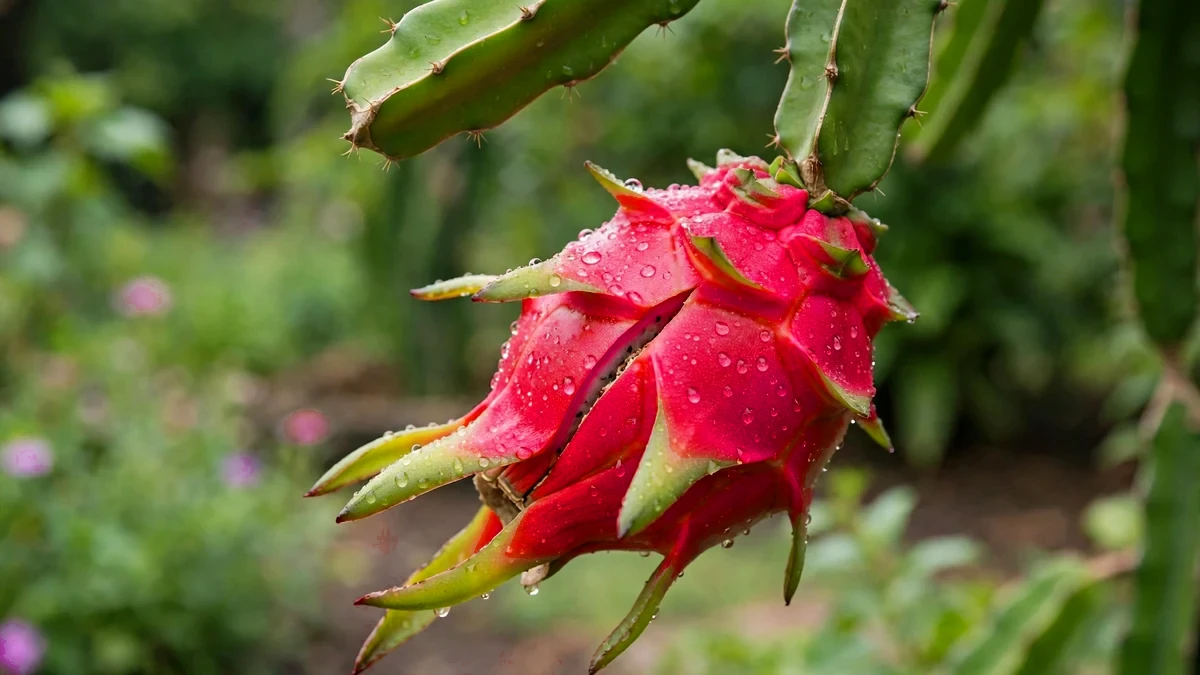
Few things are more disappointing than watching a perfect dragon fruit split open on the plant days before you planned to pick it. The crack usually runs along the side of the fruit, the flesh inside is exposed, and the fruit that looked ready for the kitchen suddenly looks ruined. Dragon fruit splitting is common, and in most cases it has a clear cause: the fruit grew faster than its skin could stretch, usually because water arrived suddenly after a dry spell.
This guide explains why splitting happens, which fruits are most at risk, how to prevent it, and what to do with fruit that has already split.
Table of Contents
- What Dragon Fruit Splitting Looks Like
- Why Dragon Fruit Splitting Happens: Irregular Watering
- Rain, Humidity and Sudden Weather Changes
- Variety, Fruit Size and Growth Rate
- Pests, Disease and Physical Damage
- How to Prevent Dragon Fruit Splitting
- What to Do With Split Fruit
- When Splitting Signals a Bigger Problem
- Frequently Asked Questions
- Related Guides
What Dragon Fruit Splitting Looks Like
A split dragon fruit usually shows a crack in the skin that runs lengthwise, sometimes from the stem end and sometimes from the middle of the fruit. The crack may be shallow, showing only a thin line where the skin has parted, or it may be deep enough to expose the flesh underneath. In some cases the fruit splits into two or three sections that peel apart. The exposed flesh dries out quickly, turns brown at the edges, and attracts fruit flies and fungal spores. Once the skin is open, the fruit can no longer be stored, and it will decay within a day or two if it is left on the plant.
Splitting is different from the small cracks that sometimes appear on the bracts, the leafy scales on the fruit. Bract cracks are usually cosmetic and do not affect the flesh. A true split goes through the skin and into the flesh, and it is usually easy to feel: the fruit gives unevenly when you squeeze it, and the crack may weep juice.
Splitting most often affects fruit that is close to ripe, because the skin is under the most tension at that stage, and it often appears after a heavy rain or a sudden change in watering. Knowing what a split looks like helps you catch it early, pick the fruit before it gets worse, and use it the same day rather than losing it entirely.
Why Dragon Fruit Splitting Happens: Irregular Watering
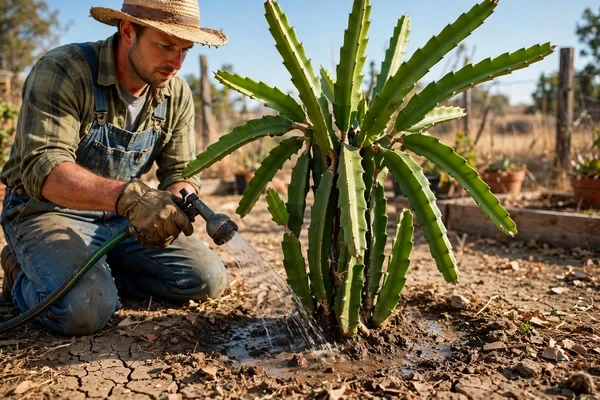
The main cause of dragon fruit splitting is irregular water. When the plant is dry for a period and then suddenly receives a large amount of water, the fruit takes up water quickly and swells. The skin, which has been growing slowly during the dry period, cannot stretch fast enough to keep up with the flesh inside, and it cracks. This is the same mechanism that splits tomatoes and cherries after rain, and according to UF IFAS, it is the most common reason for splitting in home gardens, where watering is often irregular.
The risk is highest in the last two or three weeks before harvest, when the fruit is sizing up fast and the skin is already tight. A dry spell followed by a heavy watering, a burst of rain, or even a single deep soak after weeks of light watering can be enough to split fruit that was fine the day before. The problem is worse in hot weather, because the plant loses water fast through the stems and then takes it up even faster when water arrives.
To reduce the risk, keep the soil moisture as even as you can through the fruiting season, watering deeply but regularly rather than letting the soil dry out completely and then flooding it. The guide on how often to water dragon fruit explains how to judge the right rhythm for your soil and climate.
Rain, Humidity and Sudden Weather Changes
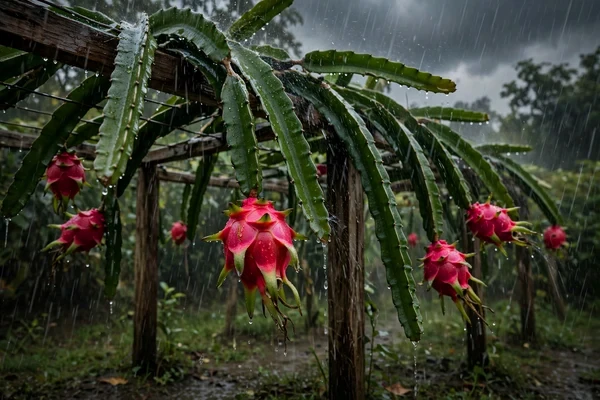
Rain is the hardest cause of dragon fruit splitting to control, because you cannot stop it. A heavy downpour after a dry week is the classic trigger: the roots take up a large volume of water in a short time, the fruit swells, and the skin splits. Warm, humid weather after rain makes it worse, because the fruit stays wet and the skin softens, so it tears more easily. Wind can add to the damage by knocking fruit against stems and trellis parts, which weakens the skin before it splits.
You cannot prevent rain, but you can reduce its effect. Good drainage is the first defence: soil that drains freely lets excess water pass through instead of sitting around the roots, so the plant does not take up a sudden flood all at once.
A layer of mulch around the base helps too, because it keeps the soil moisture steadier between rain events and reduces the shock of a sudden downpour. Some growers in very rainy areas pick fruit a day or two earlier than they otherwise would when a big storm is forecast, because a slightly early fruit is better than a split one. If your area has a distinct rainy season, expect more splitting in that season and check the trellis every day during wet weeks, so split fruit is found and used quickly.
Variety, Fruit Size and Growth Rate
Dragon fruit splitting does not affect every variety equally. Some varieties have thinner skins that split more easily, while others have thicker, tougher skins that resist cracking. Large fruit splits more often than small fruit, because the skin has to stretch further and the volume of flesh inside is greater. Fruit that grows very fast, for example after a heavy fertiliser application or a sudden flush of growth, is also more likely to split, because the flesh expands faster than the skin can grow.
You cannot change the variety of a plant you already have, but you can use this knowledge when you choose new plants. If splitting is a regular problem in your garden, ask local growers which varieties hold up best in your climate, and favour those for new plantings.
For existing plants, avoid heavy fertiliser applications during the fruiting period, because a sudden flush of growth increases the risk. Feed the plant steadily through the season rather than in large doses, and do not over-thin the fruit in the hope of bigger fruit, because the biggest fruit on the plant is often the first to split. A moderate, even crop is less likely to split than a small number of very large fruit.
Pests, Disease and Physical Damage
Dragon fruit splitting is not always caused by water. Insect damage can weaken the skin and start a crack that then spreads as the fruit grows. Fruit flies lay eggs in the skin, and the larvae inside can cause the fruit to split or rot. Birds peck at ripening fruit and leave holes that split open. Even a small knock, from a ladder, a tool, or a stem rubbing against the trellis, can bruise the skin and create a weak point. Once the skin is damaged, the fruit is much more likely to split when it takes up water.
Disease can also play a role. Anthracnose, caused by the fungus Colletotrichum gloeosporioides, appears as reddish-brown lesions on the fruit, and these lesions weaken the skin. Stem-end rot and other decays make the fruit soft and prone to cracking.
If you see splitting together with spots, lesions, or soft patches, the cause may be disease rather than water, and you should look at the plant as a whole: check the stems for rot, improve airflow by pruning, and remove affected fruit promptly so the problem does not spread. Clean tools and good sanitation help here, as they do everywhere in dragon fruit growing.
How to Prevent Dragon Fruit Splitting
Preventing dragon fruit splitting is mostly about keeping water steady. Water the plant deeply and regularly through the fruiting season, and avoid long dry periods followed by heavy watering. A drip irrigation system or a soaker hose is ideal, because it delivers water slowly and evenly. Mulch the base of the plant with a thick layer of organic material, such as straw or well-rotted compost, to hold moisture in the soil and smooth out the swings between wet and dry. Check the soil with your finger before watering: if the top few centimetres are dry, water; if they are still damp, wait.
Good drainage matters as much as watering. If your soil holds water after rain, the roots sit in wet soil and take up water in a rush. Plant on a slight mound or in a raised bed if drainage is poor, and avoid planting in a hollow where water collects.
Prune the canopy to improve airflow, because a dense canopy stays wet longer after rain and the fruit dries more slowly. Finally, pick fruit promptly when it ripens. Fruit left on the plant past its peak is more likely to split, because the skin is at its tightest and any sudden water uptake has nowhere to go. Checking the trellis every two or three days during the harvest season, and picking fruit as soon as the ripeness signs are right, prevents more splitting than any other single habit.

What to Do With Split Fruit
A split fruit is not always a lost fruit. If the split is small, the flesh inside is still firm and fresh-smelling, and you catch it on the same day, you can use it immediately. Cut away the split area and any brown or soft flesh, and eat the rest the same day, or use it in a smoothie or juice. Do not store split fruit, because the open skin lets in decay and the fruit will spoil within a day or two. Do not leave split fruit on the plant, because it attracts fruit flies and fungal spores that can spread to sound fruit.
If the split is deep, the flesh is brown or sour-smelling, or the fruit has been split for more than a day, compost it. Do not eat fruit with visible mould, and do not feed spoiled fruit to animals. The best use of a split fruit is a quick one: pick it, trim it, and eat it or blend it the same day. Some growers keep a small container in the kitchen during harvest season specifically for split fruit, so it gets used first and nothing is wasted. A split fruit is a reminder to check your watering, but it is not a disaster if you catch it early.

When Splitting Signals a Bigger Problem
A few split fruits in a season are normal, especially after heavy rain. But if a large share of your fruit is splitting, or if splitting happens even in dry weather, something else may be wrong. Check your watering first: are you watering heavily and rarely, rather than lightly and often? Check your fertiliser: a heavy dose of nitrogen during fruiting can push fast, soft growth that splits easily. Check the drainage: if water pools around the base after rain, the roots are taking up water in a rush.
If the fruit also shows spots, soft patches, or insect holes, look for pests and disease. Anthracnose lesions, fruit fly damage, and bird pecks all weaken the skin. If the plant itself looks stressed, with yellowing stems or soft rot at the base, the splitting may be a symptom of a wider plant health problem, and you should read the guides on stem rot and plant diseases. In most cases, though, dragon fruit splitting is a water problem, and steadier watering, good mulch, and prompt picking will reduce it sharply in the next season.
Frequently Asked Questions
When dragon fruit splitting happens, is the split fruit safe to eat?
Yes, if the split is fresh, the flesh is firm and fresh-smelling, and you cut away the split area. Eat it the same day. Do not eat split fruit that smells sour, has visible mould, or has been split for more than a day.
Will watering less stop dragon fruit from splitting?
No, watering less usually makes it worse. The cause is irregular water, not too much water. Keep the soil moisture steady with regular, deep watering and mulch, rather than letting the soil dry out and then flooding it.
Does rain always cause dragon fruit to split?
Not always, but heavy rain after a dry period is the most common trigger. Good drainage, mulch, and picking fruit promptly when it ripens all reduce the risk, even in a rainy season.
Which dragon fruit varieties split the least?
It varies by region, because skin thickness and growth rate differ between varieties and climates. Ask local growers which varieties hold up best in your area, and favour thicker-skinned types for new plantings if splitting is a regular problem.
Related Guides
- When To Harvest Dragon Fruit
- How To Tell If Dragon Fruit Is Ripe
- How To Store Dragon Fruit
- Dragon Fruit Stem Rot
- What To Do After Harvesting Dragon Fruit
DragonFruitGrow.online is an independent gardening information website and is not affiliated with any nursery, fruit brand, or agricultural supplier. Growing conditions vary by cultivar, climate, soil, and plant age, so treat this guide as general information and adjust the advice to your own garden.