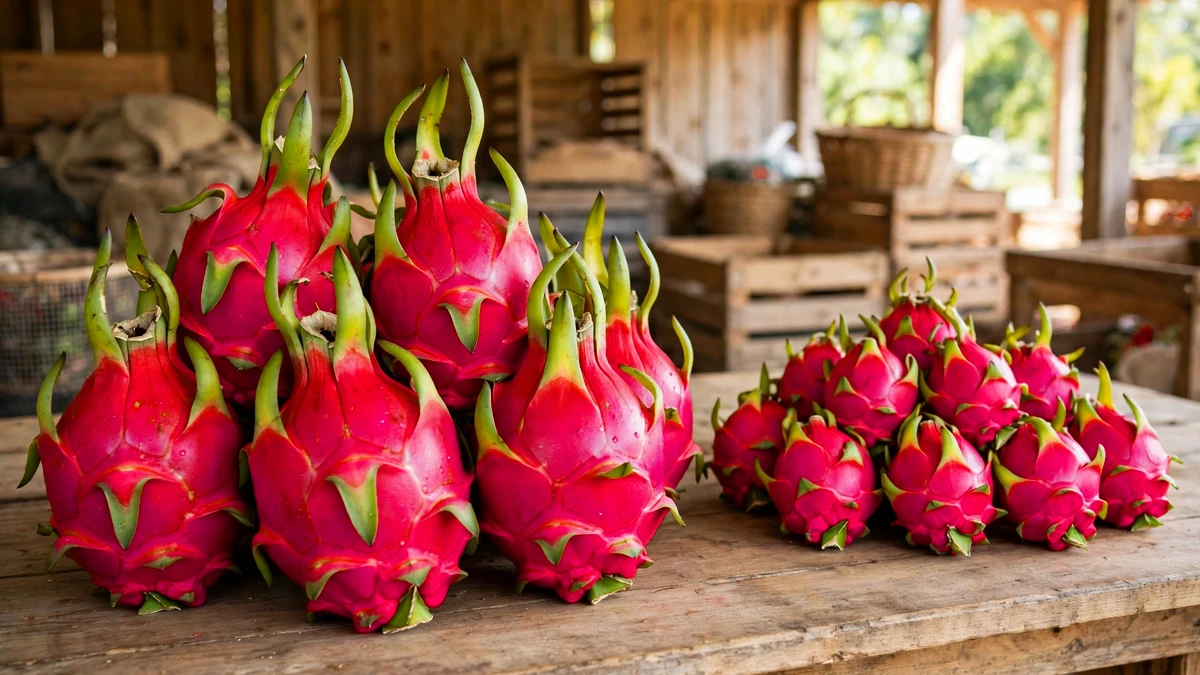
When the baskets come in from the trellis, the fruit in them is not all the same. Some fruits are large and flawless, some are small, some have a bruise or a dry bract, and a few may already be soft. Sorting and grading is the simple job of looking at each fruit and deciding what it is good for: eating fresh now, storing for later, cooking, or composting.
Learning how to grade dragon fruit after harvest takes only a few minutes per basket, and it protects the good fruit, because one damaged fruit stored with sound fruit can spoil the whole batch. This guide explains how to grade dragon fruit, the quality factors growers use, how to set up a simple home grading system, and how to pack each grade so nothing is wasted.
Table of Contents
- Why Sorting and Grading Matters After Harvest
- The Quality Factors Used to Grade Dragon Fruit
- How to Grade Dragon Fruit by Size and Weight
- How to Grade Dragon Fruit by Colour and Appearance
- Sorting Out Damaged and Second-Grade Fruit
- A Simple Home Grading System That Works
- Packing Graded Fruit for Storage or Sale
- Frequently Asked Questions
- Related Guides
Why Sorting and Grading Matters After Harvest
Grading matters for three reasons. The first is storage: sound fruit keeps for one to two weeks in the refrigerator, but damaged fruit decays in days, and decay spreads from one fruit to another. If you store everything together without sorting, the worst fruit decides the life of the whole basket.
The second reason is eating quality. A large, fully coloured fruit with fresh bracts tastes better and looks better on the table than a small, pale fruit with dry scales. Sorting lets you eat the best fruit fresh and use the rest for smoothies, cooking, or freezing. The third reason is value. If you sell or share your fruit, graded fruit looks professional and earns trust, while a mixed box with bruised fruit in it does not.
Grading does not need to be complicated. Commercial growers use formal grades with size bands and strict rules, and those rules differ from one market to another, so there is no single worldwide standard a home grower must follow.
What matters at home is a consistent system that you use every harvest: look at each fruit, check its size, colour, skin, and firmness, and put it in the right pile. A few minutes of sorting after each picking round saves fruit, reduces waste, and makes the harvest feel organised rather than chaotic. It is one of the easiest habits to learn, and it pays off every time you open the refrigerator.
The Quality Factors Used to Grade Dragon Fruit
The quality factors used to sort dragon fruit are the same ones buyers and markets look at, and they are easy to learn. Size comes first: larger fruit is usually preferred, and fruit is often grouped into size bands, with the largest fruit in the top grade.
Colour comes second: the skin should have an even, full colour, pink or red for most varieties and yellow for yellow-fleshed types, with no pale patches or dull areas. The bracts, the leafy scales on the fruit, should be fresh, green, and flexible rather than dry, brown, or broken.
Shape and firmness come next. Top quality fruit is well shaped, symmetrical, and firm, with a slight give when squeezed gently. Fruit that is lopsided, flattened on one side, or soft all over goes into a lower grade.
The skin should be free of defects: no insect damage, no splits, no bruises, no sunken patches, and no signs of decay. UF IFAS and UC Davis postharvest guidance list these same points as quality indices: fruit size, skin colour, absence of defects, and firm, fleshy, green bracts.
Finally, the stem end should be clean and dry, not wet or rotting. A fruit that passes all of these checks is top grade. A fruit that fails one or two is second grade. A fruit that fails several is for immediate use or compost. Learning how to grade dragon fruit starts with knowing these factors and checking them in the same order every time.
How to Grade Dragon Fruit by Size and Weight
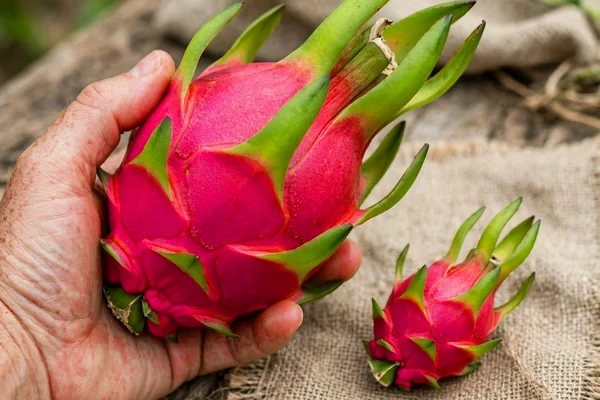
Size is the easiest factor to grade, and a simple scale makes it objective. Weigh a few fruits from your harvest and you will quickly see the range your plants produce. In many home gardens, fruit commonly weighs somewhere between about 200 and 600 grams, depending on the variety, the plant’s age, and the season, but the exact range varies widely, so use your own harvest as the reference rather than a number from a book.
Sort the fruit into three piles: large, medium, and small. Large fruit, the biggest third of your harvest, is the top grade for fresh eating and sharing. Medium fruit is good for everyday eating and storing. Small fruit is still perfectly edible, but it is better used for smoothies, juicing, or eating at home rather than for display.
Weight is a better guide than appearance, because a fruit can look large but feel light if it has lost moisture. A fruit that feels heavy for its size has kept its water content and is likely to be juicy inside. A fruit that feels light has probably been on the plant too long or has been stored badly.
If you sell your fruit, buyers often pay by weight, so weighing the fruit also helps you price it fairly. Keep a simple record of the average weight from each plant or variety over the season, because it tells you which plants produce the best fruit and whether your feeding and watering are working. Size grading is simple, but it gives you real information about your garden, and it is a useful part of knowing how to grade dragon fruit well.
How to Grade Dragon Fruit by Colour and Appearance
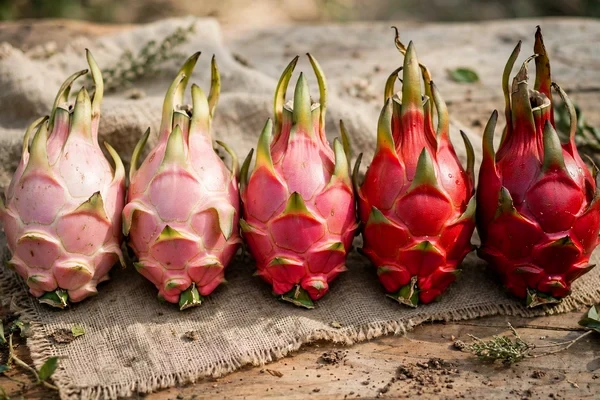
Colour tells you about ripeness and quality at a glance. The skin of a ripe red-fleshed variety should be an even, bright pink or red, with no green or pale patches. Yellow varieties should be an even golden yellow.
The colour should be consistent over the whole fruit, including the areas that were shaded by leaves, although a little variation is normal. Fruit with dull, faded, or patchy colour is usually under-ripe or over-ripe, and it goes into a lower grade even if it is large.
The bracts are the next thing to check. Fresh, green, flexible bracts are a sign of a recently picked, well-handled fruit. Bracts that are dry, brown, brittle, or broken suggest the fruit has been stored too long, handled roughly, or left in the sun.
The skin itself should be smooth and free of marks. Look for insect holes, bird pecks, sunken spots, and any sign of splitting. A small mark on one side may only lower the grade slightly, but a deep mark, a split, or a soft patch means the fruit should be used immediately or composted. Appearance grading is quick once you have done it a few times, and it is the factor that most affects how the fruit looks on the table or in a box.
Sorting Out Damaged and Second-Grade Fruit
Every harvest has some fruit that is not perfect, and the skill is in deciding what to do with it. Start by setting aside any fruit that is split, badly bruised, soft all over, or showing signs of decay, such as dark sunken patches, mould, or a sour smell.
This fruit should not be stored with sound fruit. Use it the same day if the flesh is still firm and fresh-smelling, by cutting away the damaged part, or compost it if it is spoiled. Do not leave damaged fruit in the basket, because decay spreads.
Second-grade fruit is the next pile: fruit that is small, slightly misshapen, or has a minor blemish, but is otherwise sound. This fruit is perfectly good to eat, and it is ideal for the home kitchen. Use it for smoothies, fruit salads, and juicing, where appearance does not matter, or eat it fresh at home.
Some growers freeze second-grade fruit as cubes for later use, which is a good way to save it. Only the best fruit goes into long storage or into a box for sharing or selling. Sorting damaged and second-grade fruit out quickly protects the top grade and makes sure nothing edible is wasted.
A Simple Home Grading System That Works
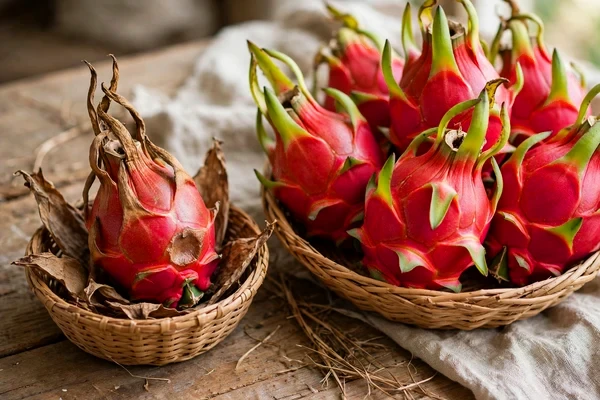
You do not need a formal grading table. A three-pile system works well for most home growers. Pile one is first grade: large, well-coloured, firm, unmarked fruit with fresh green bracts. This fruit is for fresh eating, sharing, and selling.
Pile two is second grade: medium or small fruit, or fruit with a minor blemish, but still firm and fresh. This fruit is for the home kitchen, smoothies, and freezing. Pile three is use-now-or-compost: split, bruised, soft, or damaged fruit. Use what you can the same day and compost the rest.
Set up your sorting station in the shade, with a clean table or a flat surface, a shallow basket for each pile, and a damp cloth for wiping fruit. Sort the fruit as soon as it comes in from the trellis, while it is still cool, and do not leave the baskets in the sun while you work.
Handle each fruit once: pick it up, check the size, colour, bracts, and firmness, and put it in the right pile. With practice, sorting a basket of twenty fruits takes about five minutes. Write down how many fruits went into each pile, because the numbers tell you how your plants are performing and whether a problem, such as splitting or pest damage, is getting worse.
Packing Graded Fruit for Storage or Sale
Once the fruit is graded, pack each grade separately. For storage, place first-grade fruit in a shallow crate or basket lined with a soft cloth, in a single layer, and store it in the refrigerator in a perforated bag. Do not stack fruit more than two layers deep, because the weight bruises the fruit below.
For fruit you plan to share or sell, pack it in a clean, shallow box with padding between the layers, such as clean straw, soft paper, or cloth. Place the fruit with the stem end down or on its side, not on top of each other, and keep the best-looking fruit on top where it can be seen.
Label each box with the grade, the variety if you know it, and the picking date, so you use the oldest fruit first. Keep the boxes out of the sun and move them into shade or a cool room as soon as they are packed.
If you are selling at a market, bring only first-grade fruit, and keep second-grade fruit for home use or for juice, because a buyer who finds a bruised fruit in the box is unlikely to come back. Good packing protects the grade you worked to achieve, and it is the final step in learning how to grade dragon fruit properly.

Frequently Asked Questions
How to grade dragon fruit to find the best grade?
The best grade is large, well-coloured, firm fruit with fresh green bracts and no marks, splits, or bruises. This fruit is best for fresh eating, sharing, and selling, and it also stores the longest.
Can I eat second-grade dragon fruit?
Yes. Second-grade fruit is fruit that is small, slightly misshapen, or has a minor blemish, but is otherwise sound and fresh. It tastes the same as first-grade fruit and is ideal for home eating, smoothies, and freezing.
How do I grade dragon fruit without a scale?
You can learn how to grade dragon fruit by eye and by feel. Compare the fruit in your harvest with each other: the largest third is the top grade, the middle third is second grade, and the smallest is for home use. A fruit that feels heavy for its size is usually juicier than one that feels light.
Should I wash dragon fruit before grading it?
No. Grade the fruit dry, and wash it only just before eating. Water on the skin encourages decay in storage, so keep the fruit dry during sorting and packing.
Related Guides
- When To Harvest Dragon Fruit
- How To Tell If Dragon Fruit Is Ripe
- How To Store Dragon Fruit
- How Long Dragon Fruit Lasts
- Dragon Fruit Splitting
- What To Do After Harvesting Dragon Fruit
DragonFruitGrow.online is an independent gardening information website and is not affiliated with any nursery, fruit brand, or agricultural supplier. Growing conditions vary by cultivar, climate, soil, and plant age, so treat this guide as general information and adjust the advice to your own garden.