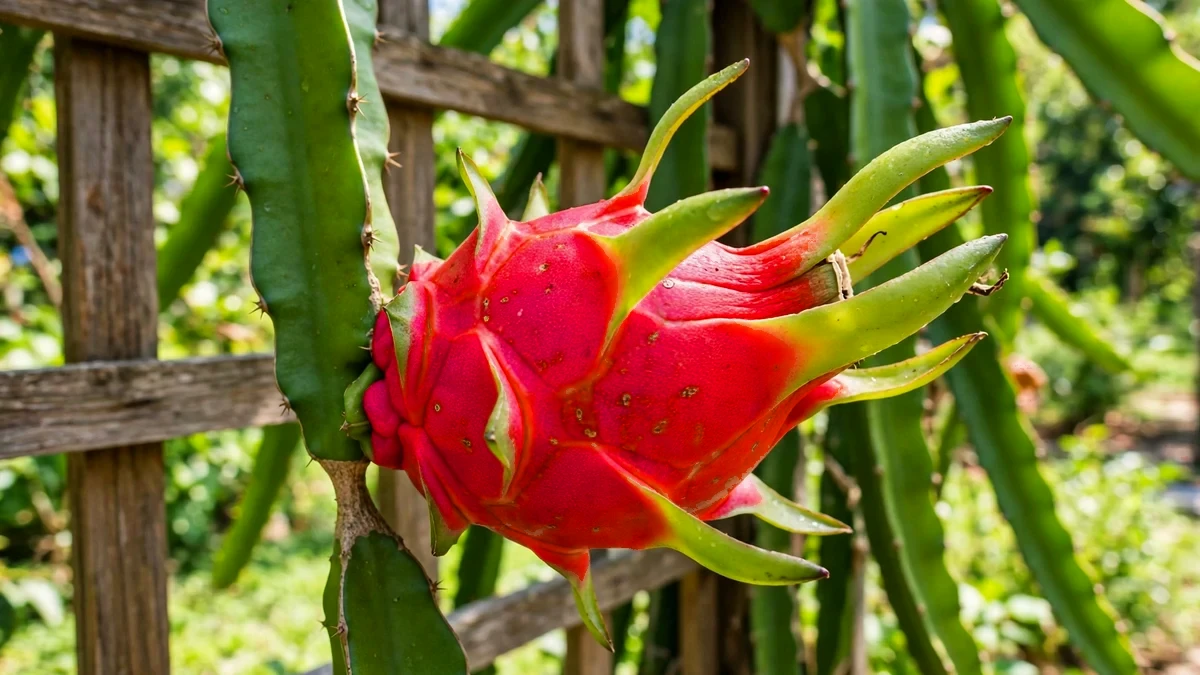
Knowing when to harvest dragon fruit is one of the most useful skills a home grower can learn. Pick too early and the fruit stays bland, because dragon fruit does not sweeten much once it leaves the plant. Pick too late and it softens, splits or loses flavour on the stem. The plant gives clear signals, and once you learn to read them, the decision becomes much easier. This guide explains those signals in plain language, so you can judge ripeness with confidence instead of guessing.
Table of Contents
- Why Knowing When to Harvest Dragon Fruit Matters
- The Main Signs Dragon Fruit Is Ready to Harvest
- How Skin Colour Changes as Dragon Fruit Ripens
- How Variety Changes the Harvest Window
- Weather, Season and Plant Age: Why Timing Shifts
- What Happens If You Pick Too Early or Too Late
- A Simple Harvest-Readiness Check You Can Repeat
Why Knowing When to Harvest Dragon Fruit Matters
Dragon fruit is a non-climacteric fruit, which means it does not continue ripening normally after harvest. UC Davis Postharvest notes that dragon fruit are generally harvested close to the full ripe stage for exactly this reason, and that ethylene treatment has no effect on starting colour development. A banana picked green will ripen on the kitchen counter; a dragon fruit picked green will not. The sugars and flavour a fruit has on the day you pick it are roughly what you will get when you eat it.
As the fruit matures, its skin colour changes to red or yellow, its total soluble solids rise to a peak, and its acidity and flesh firmness start to fall. Those changes happen together, and they are the reason experienced growers watch the fruit rather than the calendar alone.
Timing also affects storage: fruit picked too early is more sensitive to chilling injury at around 5 or 6°C, and the University of Guam factsheet notes harvested fruit may rot within about 10 days at room temperature but keep up to around 14 days at 10°C and 90% relative humidity.
The Main Signs Dragon Fruit Is Ready to Harvest
The most reliable way to decide when to harvest dragon fruit is to combine several signs rather than trusting one alone: colour, firmness, bract condition, size and timing.
First, look at skin colour. Red-skinned types should show a deep, even pink-red with little green remaining; yellow types a full, even yellow. Patchy colour with large green areas usually means the fruit needs more time. Judge colour in natural daylight, because shade and warm evening light can make a fruit look riper than it is.
Second, check the bracts, the leaf-like scales on the fruit. On a top-quality ripe fruit they should still be firm, fleshy and green. As the fruit passes its best point, the bracts dry, brown and wilt. Fresh green bracts are a good sign; dry brown ones suggest overripeness.
Third, feel the fruit gently. A ripe dragon fruit gives very slightly under gentle pressure, like a ripe kiwi, but still feels firm overall. A rock-hard fruit is probably under-ripe, while one that dents easily is likely overripe. Press with the palm, never a fingertip, which can bruise the skin.
Fourth, consider size and shape: the fruit should look full and plump, and UF IFAS describes mature fruit as an oblong berry about 4.5 inches thick. Finally, check the days since flowering — UC Davis lists days after flowering as a maturity index, with a minimum of 27 to 33 days depending on cultivar and area.
How Skin Colour Changes as Dragon Fruit Ripens
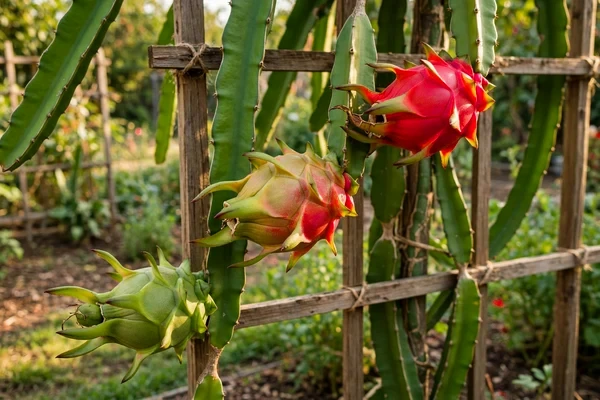
Skin colour is the most watched maturity sign, and it is worth understanding how it changes. A young dragon fruit starts out green, matching the stem it grows from. As it matures, the green fades and the mature colour spreads across the skin. In red-skinned varieties, colour usually appears first at the flower end and spreads upward toward the stem. In yellow varieties the change is similar, with green giving way to a clear yellow.
The change is gradual, not sudden. Over several days the fruit passes through a half-coloured stage, where pink or yellow patches sit beside green ones. Many growers pick at this stage, when the fruit looks attractive but is not yet fully ripe. The sugars are still building, and the flesh may still be firm and bland. When judging when to harvest dragon fruit, waiting until the colour is even across the whole fruit usually gives a better result.
If the whole fruit, including the bracts, has turned a uniform dull red or brown, it is probably past its best. Light can fool the eye: fruit on the sunny side often colours earlier than fruit tucked inside the canopy, even if both flowered on the same day. Check every fruit on its own, turning it gently to see the shaded side. The exact shade matters less than evenness.

How Variety Changes the Harvest Window
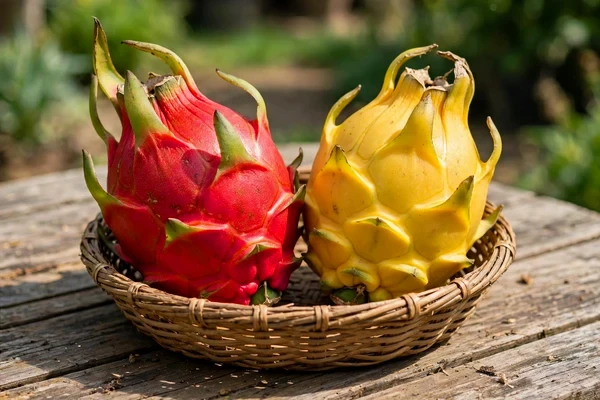
Not all dragon fruit ripens on the same schedule, and variety is the biggest reason. The common red-skinned white-fleshed type, Hylocereus undatus, the red-fleshed Hylocereus polyrhizus types, and the yellow-skinned Selenicereus megalanthus all behave differently, and even cultivars within one species can vary. That is why no single harvest date works for every plant, and why learning when to harvest dragon fruit means learning your own varieties first.
Yellow-skinned types are often the slowest to signal ripeness, because their colour change from green to yellow can be subtle at first. They also need different storage conditions: UC Davis gives an optimum storage temperature of 6°C for yellow pitaya, compared with 10°C for red pitaya. Red-fleshed types often colour strongly and early, which can tempt growers to pick before the flesh has fully sweetened. White-fleshed types can look ripe outside while the inside is still mild, so the firmness check matters more for them.
Pollination matters too: fruit from a well-pollinated flower often grows larger and ripens more evenly, while poorly pollinated fruit may stay small. If you grow more than one variety, note which ripens first, because that order usually repeats each season. Keep a simple record of flowering and ripening dates for each variety; after a season or two you will know your own pattern. If you are still choosing types, our guide to the best dragon fruit varieties compares popular varieties by skin and flesh colour, growth habit and pollination needs.
Weather, Season and Plant Age: Why Timing Shifts
Even the same variety on the same plant will not ripen on a fixed schedule every year, because weather and plant condition shift the timing. Warm, sunny weather generally speeds ripening, while cool or cloudy weather slows it. A fruit that flowered during a hot spell may colour up several days earlier than one that flowered during a cool, overcast period. This is normal, and it is another reason to judge each fruit by its signs rather than by a date on a calendar.
Season matters too when deciding when to harvest dragon fruit: early-season fruit forming on cool nights may take longer than mid-summer fruit, and late-season fruit can be slower again as days shorten.
Plant age and health matter as well when deciding when to harvest dragon fruit: young plants often produce smaller, unevenly ripening fruit, while mature plants produce more even fruit, and a stressed plant may ripen fruit early with poor flavour. UF IFAS recommends periodic watering from flowering through harvest, since drought in this period can lead to poor production.
What Happens If You Pick Too Early or Too Late
Picking too early is the more common mistake, and the harder one to fix. Because dragon fruit does not ripen normally off the plant, an under-ripe fruit stays under-ripe. The flesh may be firm, pale and starchy, with little sweetness and a slightly sour or grassy taste. It will not develop the sugars it would have gained on the plant, and no amount of time on the kitchen counter will change that. The fruit may soften slightly, but that is decay beginning, not ripening. Early-picked fruit also stores poorly, as it is more sensitive to chilling injury in the fridge.
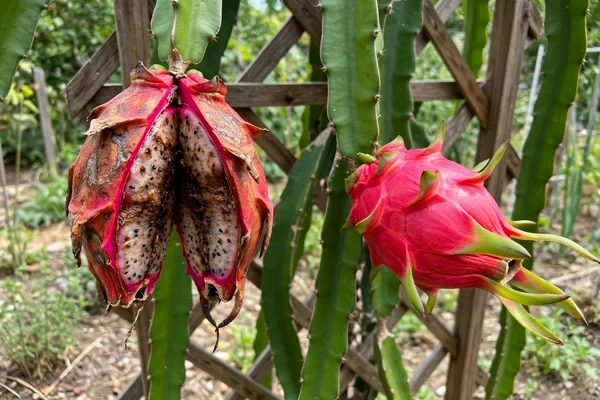
Picking too late has different costs. The fruit softens and the skin may split, especially after rain or irregular watering, when flesh swells faster than the skin can stretch; the University of Guam factsheet notes uneven soil moisture may cause splitting. Split fruit attracts insects and decays quickly. Overripe fruit also loses bright colour, its bracts dry and brown, and its flavour turns flat or fermented, while birds and rats are drawn to it.
The window for when to harvest dragon fruit is usually several days wide, not a single morning, so there is no need to panic. Checking the plant every day or two during the ripening period is enough to catch fruit at its best. If you are unsure, wait one more day and check again; a fruit that is nearly ripe will usually show clearer colour and a slight softening within a day or two.
A Simple Harvest-Readiness Check You Can Repeat
A short, repeatable routine makes deciding when to harvest dragon fruit easy and keeps you from relying on memory or guesswork. Use this check every day or two once fruit starts to colour, and pick only the fruit that passes all of it.
Step one, count the days. Note the date the flower opened and count forward. If fewer than about 27 days have passed, the fruit is very unlikely to be ready. Our guide to dragon fruit days after flowering explains how to use this count as an estimate alongside the visual signs.
Step two, look at the colour in daylight. Stand so the sun is behind you and look at the whole fruit, turning it gently to see the shaded side. The skin should be evenly coloured with no large green patches. Compare it with other fruit on the same plant; the ripest fruit is usually the most evenly coloured.
Step three, check the bracts. They should be firm and green, not dry or brown. If the bract tips are still fresh and green, that is a good sign. If they are wilting and brown, the fruit may be past its best.
Step four, feel the fruit. Cup it in your palm and press very gently. It should give just slightly and spring back. If it is rock hard, give it more time. If it feels soft or leaves a dent, pick it now and use it soon.
Step five, look at the fruit as a whole: plump and full, with no shrivelling, cracks or insect damage. UC Davis describes top-quality fruit as well shaped, with firm flesh and green bracts, and free of defects such as splitting and insect damage. If a fruit passes all five steps, it is ready — pick it gently and move it into the shade. For the next steps, see our guides on how to harvest dragon fruit, how to store dragon fruit after harvest and how to tell if dragon fruit is ripe.
Frequently Asked Questions
How do I know when to harvest dragon fruit for the first time?
Rely on even skin colour, firm green bracts and a slight give under gentle pressure, plus at least 27 days since flowering. Pick one fruit that looks ready, taste it, and use it as your reference for the rest of the season.
Can dragon fruit ripen after picking?
Dragon fruit is non-climacteric, so it does not continue ripening normally after harvest. An under-ripe fruit will not become sweet on the counter, though it may soften as it starts to decay. That is why knowing when to harvest dragon fruit matters: always pick close to full ripeness, when the skin is evenly coloured and the flesh has had time to develop sugars on the plant.
Why is my dragon fruit red on one side and green on the other?
Uneven colour usually means the fruit is still ripening, with the sunny side colouring first, or that it is shaded inside a dense canopy. Leave it until the shaded side catches up, and thin crowded stems after harvest so light reaches fruit more evenly next season.
How long can I leave ripe dragon fruit on the plant?
A ripe fruit usually stays in good condition on the plant for a few days, but the window is short. After that it softens, its bracts dry out, and it may split after rain or attract birds and insects. Check ripening fruit every day or two and pick promptly once it passes the readiness check.
Disclaimer: DragonFruitGrow.online is an independent gardening information resource. Growing results vary with cultivar, climate, soil and plant care, so use this guide as general information and adapt it to your local conditions.
1 thought on “When to Harvest Dragon Fruit: Signs of Ripeness”