
Learning how to tell if dragon fruit is ripe saves you from the two most common harvest mistakes: picking a fruit that never sweetens, and leaving a good fruit on the plant until it spoils. The checks themselves are simple — look, touch, and compare — but each one has a detail that beginners often miss. This guide walks through the hands-on tests one by one, so you can stand in front of your plant and judge any fruit in under a minute.
Table of Contents
- Start With the Skin: Colour, Evenness and Shine
- Read the Bracts: What the Scales Tell You
- The Gentle Squeeze Test: Feeling for Ripeness
- Size, Shape and Weight: Secondary Clues Worth Checking
- The Stem End and Fruit Base: Small Details That Help
- Ripe, Almost Ripe or Overripe: A Quick Comparison
- Common Mistakes When Judging Ripeness
Start With the Skin: Colour, Evenness and Shine
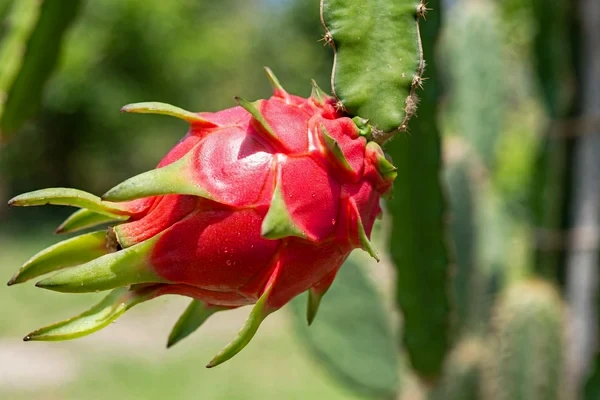
Colour is the first thing to check, and the most informative single sign of ripeness. A young dragon fruit is green, and as it matures the green fades and the ripe colour takes over. For red-skinned types, look for a deep, even pink-red across the whole fruit. For yellow-skinned types, look for a full, even yellow. The key word is even: a fruit that is bright red on the sunny side and still green on the shaded side is not finished yet.
Check the fruit in natural daylight, ideally with the sun behind you, and turn it gently to see all sides. Indoor light and the warm glow of late afternoon can both make a fruit look riper than it is, so a morning check in open daylight is the most honest test.
Also look at the quality of the colour, not just its presence. Ripe skin usually looks bright and fresh, often with a slight natural shine. Dull, faded or greyish skin suggests the fruit is past its best or has been stressed by sun or drought. Small blemishes, scratches or insect marks do not necessarily mean the fruit is unripe, but a large dull patch is worth noting. When you are learning how to tell if dragon fruit is ripe, comparing two fruits on the same plant is a useful trick: the riper one is almost always the more evenly and brightly coloured of the pair.
Read the Bracts: What the Scales Tell You
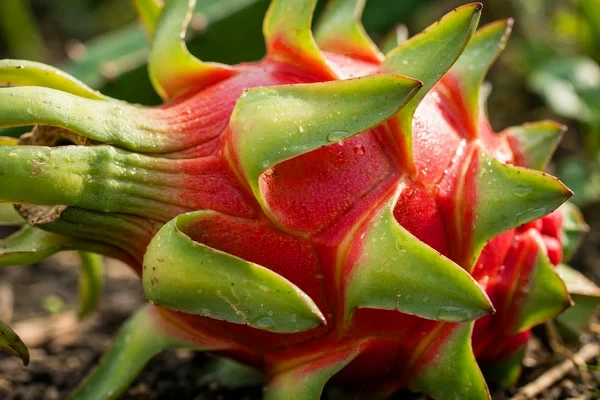
The bracts are the leaf-like scales that cover the fruit, and when you are learning how to tell if dragon fruit is ripe they carry information the skin alone cannot give. On a ripe, fresh fruit, the bracts should be firm, fleshy and green, especially at their tips. UC Davis lists firm, fleshy, green bracts as a feature of top-quality fruit, alongside firm flesh and good shape. When the bracts are still fresh and green, the fruit is usually still in its prime picking window.
As the fruit passes its best point, the bracts are often the first thing to show it. They dry out, turn brown at the tips, wilt and become papery. A fruit with fully brown, dry bracts is usually overripe, even if the skin still looks red. The change often starts at the tips of the longest bracts, so look closely at those first.
Bracts can also warn you about the plant’s condition. Bracts that are yellowed or spotted may point to sun damage or disease pressure rather than ripeness, so read them together with the skin colour and the squeeze test rather than alone. On yellow-skinned varieties, the contrast between the yellow skin and the green bracts is especially clear, and it makes the bract check easier. Never pull or bend a bract to test it: a torn bract creates a wound where decay can start.
The Gentle Squeeze Test: Feeling for Ripeness
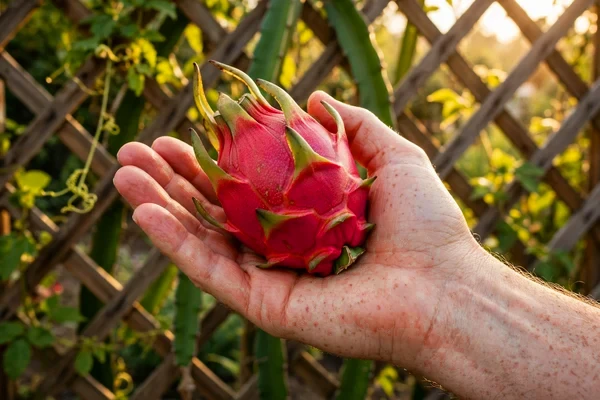
The squeeze test is the most hands-on part of learning how to tell if dragon fruit is ripe, and it is the one most often done wrong. The correct method is to cup the fruit in your palm and press very gently with the flat of your fingers, or with your whole palm. A ripe dragon fruit gives just slightly under this pressure and springs back, feeling similar to a ripe kiwi or a ripe avocado that is ready to eat today. The flesh should feel firm overall, with only a hint of softness.
A fruit that feels rock hard under gentle pressure is almost certainly under-ripe, even if its colour looks good. Colour can run ahead of sugar development, especially in red-fleshed types that colour strongly and early. If the fruit is hard, leave it on the plant and check again in two or three days.
A fruit that feels soft, yields easily, or keeps a dent after you press it is overripe. The flesh inside is likely soft and the flavour flat. Pick it now and use it the same day, or compost it if the skin is broken. Never squeeze with a fingertip or a fingernail: a pinpoint press bruises the skin and leaves a dark mark, and a bruised spot is where rot starts first. With practice, the difference between hard, just-right and soft becomes obvious in a second, and this is the test that most improves with experience.
Size, Shape and Weight: Secondary Clues Worth Checking
Size, shape and weight are supporting clues, not deciding ones, but they add useful information when the colour and squeeze tests leave you unsure. A ripe dragon fruit should look full and plump, with a smooth, rounded outline. UF IFAS describes mature fruit as an oblong berry about 4.5 inches thick. A fruit that still looks angular, pinched or thin at the ends may still be filling out, so give it more time.
Weight is a quieter clue when you are working out how to tell if dragon fruit is ripe and the colour test is unclear. A ripe fruit usually feels heavy for its size, because the flesh is full of juice. Compare two fruits of similar size in your hands: the heavier one is often the riper, juicier one. This is only a rough guide, since fruit size varies with variety, plant age and how many fruit the plant is carrying, but it is a handy tie-breaker when two fruits look similar.
Shape problems can also tell you something is wrong rather than unripe. A fruit that is lopsided, flattened on one side or much smaller than its neighbours may have had poor pollination, and it may ripen unevenly or never reach good flavour. Such fruit is still edible when its colour and firmness check out, but it is worth picking first and eating first. Do not judge by size alone: a small fruit can be perfectly ripe, and a large one still under-ripe.
The Stem End and Fruit Base: Small Details That Help
Two small areas of the fruit give extra clues that many growers overlook when learning how to tell if dragon fruit is ripe: the stem end, where the fruit joins the plant, and the flower end at the base. At the stem end, a ripe fruit often shows a slight loosening, and the fruit may feel a little less rigidly attached than an unripe one. Do not pull on the fruit to test this — a tug can tear the stem and damage the plant. Just notice whether the fruit moves slightly when you cup it.
At the flower end, look at the dried flower remains. On a maturing fruit these dry up and darken. The skin around the flower end is also where colour usually appears first in red varieties, so it is often the most coloured part of the fruit. If the flower end is fully coloured but the stem end is still green, the fruit is still ripening from the base upward and needs more time.
Also check the skin near the stem end for tiny cracks. Fine cracks can appear as a ripe fruit swells, and a few small ones are not a problem, but deep or spreading cracks mean the fruit is splitting and should be picked at once. Our guide on dragon fruit splitting before harvest explains why splitting happens and how to reduce it. Finally, look for soft, dark or sunken spots, which can signal decay or insect damage; pick such fruit promptly.
Ripe, Almost Ripe or Overripe: A Quick Comparison
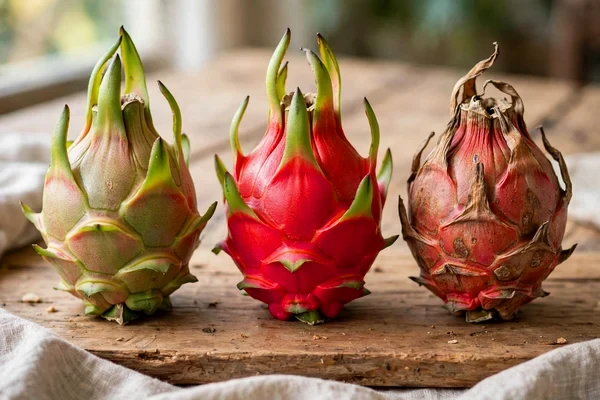
Putting the checks together is easier when you can compare the three stages side by side. An under-ripe fruit has patchy colour with visible green, firm green bracts, and a rock-hard feel. It may look nearly ready from a distance, but the green patches and the hard flesh give it away. Leave it on the plant.
A ripe fruit has even, bright colour across the whole skin, firm green bracts with fresh tips, and a slight give under gentle palm pressure. It feels heavy for its size, looks plump and full, and the skin has a fresh shine. This is the fruit to pick.
An overripe fruit has dull or darkened skin, dry brown bracts, and soft flesh that dents easily. It may smell faintly fermented, and the skin may show small splits or soft spots. Pick it immediately and use it the same day, or compost it if it is damaged.
When you are still learning how to tell if dragon fruit is ripe, it helps to pick one fruit you believe is ready, cut it open, and taste it. If it is sweet and the flesh is firm and juicy, your judgement was right, and you can use that fruit as your reference. If it is bland and starchy, it was picked early, and you now know what under-ripe looks like on your own plant. One tasted fruit teaches more than any photograph.
Common Mistakes When Judging Ripeness
The most common mistake when learning how to tell if dragon fruit is ripe is trusting colour alone. Colour can run ahead of flavour, especially in red-fleshed varieties and in fruit on the sunny side of the plant. Always confirm colour with the squeeze test and the bract check before picking. The second mistake is squeezing too hard or with a fingertip, which bruises the fruit and can make a ripe fruit look damaged the next day.
A third mistake is judging fruit in the wrong light. Checking at dusk, under a yellow garden light, or through sunglasses can make an unripe fruit look ripe. Check in open daylight whenever you can. A fourth mistake is assuming all the fruit on a plant ripens together. Fruit that flowered on different days, or sits in different light, ripens on its own schedule. Judge each fruit individually, and pick selectively rather than stripping the plant at once.
A fifth mistake is picking a fruit because it looks big — size alone is a poor ripeness signal. Finally, many growers wait too long, hoping a fruit will get sweeter, and end up with a soft, split or bird-pecked fruit instead. Because dragon fruit does not ripen normally after picking, pick when the checks agree, not before and not days after. If you want the wider timing picture, our guide on when to harvest dragon fruit covers the full maturity signs and the harvest window. After picking, grading by size, colour and condition helps you decide which fruit to eat first — see how to grade dragon fruit for the basics.
Frequently Asked Questions
How to tell if dragon fruit is ripe without cutting it open?
When learning how to tell if dragon fruit is ripe without cutting it open, use the three checks together: even skin colour with no large green patches, firm green bracts, and a slight give under gentle palm pressure. A fruit that passes all three is very likely ripe. Cutting is only needed when you are learning, to confirm your judgement by tasting.
Does dragon fruit feel soft when ripe?
It should feel only slightly soft. A ripe dragon fruit gives just a little under gentle pressure, like a ripe kiwi, but stays firm overall. If it feels soft, squishy or keeps a dent, it is overripe and should be used the same day.
Why is my dragon fruit red but tasteless?
A red skin does not guarantee sweetness, which is a common frustration when learning how to tell if dragon fruit is ripe. Colour can develop before sugars peak, especially in red-fleshed types, in fruit picked too early, or in fruit from a stressed or poorly pollinated plant. Wait for even colour plus the slight give of the squeeze test, and make sure the plant gets steady water from flowering through harvest.
Can I ripen dragon fruit on the counter after picking?
Dragon fruit is non-climacteric, so it does not continue ripening normally after harvest. An under-ripe fruit may soften slightly on the counter, but that is decay beginning, not ripening, and it will not become sweet. Always pick close to full ripeness.
Disclaimer: DragonFruitGrow.online is an independent gardening information resource. Growing results vary with cultivar, climate, soil and plant care, so use this guide as general information and adapt it to your local conditions.
1 thought on “How to Tell If Dragon Fruit Is Ripe”