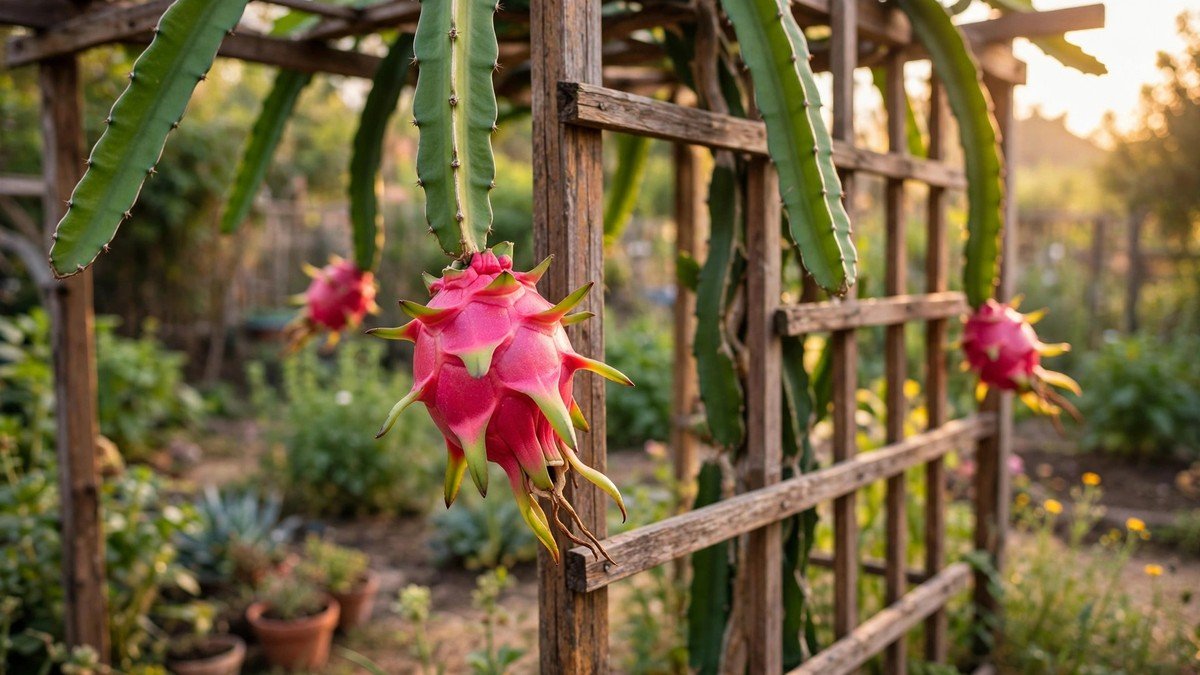
Dragon fruit shows up in shops all year, so it is easy to think it has no season at all. The plant disagrees. In the ground, dragon fruit is a warm-weather crop with a clear fruiting window, and that window opens and closes at different months depending on where you live.
So when is dragon fruit season, exactly? In most of the northern hemisphere the harvest runs from June to November, with the best fruit in August and September. In the southern hemisphere the season flips to roughly November to May. The rest of this guide fills in the detail: the months for each big growing region, how variety moves the dates, what starts the season, and how to plan your own harvests around it.
The month ranges below come from UF IFAS extension notes and regional growing guides. One warning first: every date here is a typical range, not a promise. A hot year pulls the season earlier, a cool spring pushes it later, and a young plant may fruit weeks behind a mature one in the same garden.
In This Guide
- The Short Answer
- What “Season” Means for a Dragon Fruit Plant
- When Is Dragon Fruit Season in Florida and the Southern United States
- Vietnam, Thailand and Southeast Asia
- When Is Dragon Fruit Season in India and Pakistan
- Australia and the Southern Hemisphere
- Central America, Mexico and Ecuador
- How Variety Shifts the Season
- What Triggers the Season to Start
- Why You Still See Dragon Fruit in Shops Out of Season
- How to Plan Your Harvests Around the Season
- What to Do When the Season Ends
- Frequently Asked Questions
The Short Answer
If you only remember one line about when is dragon fruit season, remember this: summer into autumn in the north, summer into autumn in the south, and the two do not overlap much. In the northern hemisphere, fruit is picked from June to November, with August and September usually giving the heaviest and sweetest picks. In the southern hemisphere, the picking months run from about November to May, with the heaviest fruit in January and February.
The plant fruits in warm weather, so its season follows summer around the globe. Away from the equator, in subtropical places with a real winter, the season is shorter and sharper: it starts when the warmth returns and ends with the first cold nights. The dates below are harvest months, not flowering months. Flowers open first, mostly in late spring and summer, and each fruit needs about 30 to 50 days after the flower to ripen. So flowers in May mean fruit in June or July.
What “Season” Means for a Dragon Fruit Plant
A dragon fruit season is not one single harvest. It is a run of flowering waves, called flushes, spread across the warm months. A healthy mature plant flowers several times in a season, rests a few weeks between waves, then flowers again. Each wave gives a batch of fruit about a month later, so picking happens in rounds rather than all at once.
Young plants keep a shorter season than old ones. A cutting planted this year may give a few fruit, or none, while a three or four year old plant in the same garden fruits for the full season. UF IFAS notes that three to four year old plants may produce about 220 lb (100 kg) of fruit per year. Flowers open at night and need pollination to set fruit.
When Is Dragon Fruit Season in Florida and the Southern United States
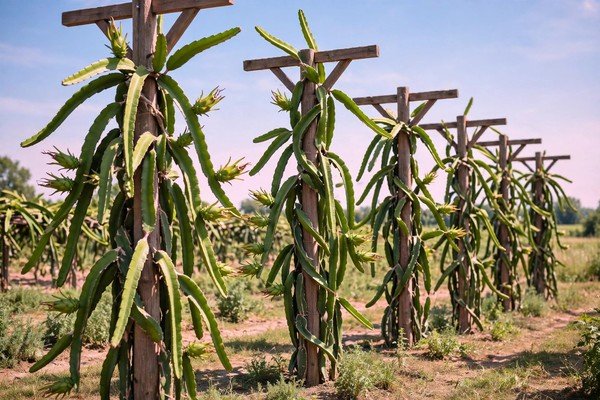
In Florida, when is dragon fruit season? The extension answer is June to November for Hylocereus undatus, the common white-flesh type. Flowering starts in late spring, the first fruit ripens in June, and picking continues until November.
California runs a similar but slightly longer season, often given as July to December in regional guides, because coastal warmth holds later into the year. Frost sets the hard edge of the season in the United States. Dragon fruit is damaged below freezing, around 31°F (-2°C), and a cold night can end the season early even if fruit is still on the plant, so growers in cooler areas pick the last fruit before a cold snap.
Vietnam, Thailand and Southeast Asia
Vietnam is the world’s largest dragon fruit producer, and its season sets the pace for the fruit trade. Asked simply, when is dragon fruit season in Vietnam? The main harvest runs from May to October, with fruit coming in waves through the warm, wet months. Thailand follows a similar window, roughly April to October, with advanced farms running several flowering cycles in a year.
Near the equator there is no cold winter to stop the plant, so fruiting is driven by rain and day length rather than by a summer that starts and ends. Commercial farms in Vietnam also use night lighting to push flowering outside the natural window, which is how the country ships fruit in months when no natural season is running.
For a home grower in Southeast Asia, the season is long: first fruit in late spring, steady picks through the rainy season, and the last fruit in autumn.
When Is Dragon Fruit Season in India and Pakistan
In India, when is dragon fruit season? Fruiting starts around June, and harvesting is usually finished by October to November, according to a 2025 review of dragon fruit cultivation in India. The pattern follows the monsoon: plants grow through winter, stems mature over seven to eight months, flowers open with the summer warmth, and fruit ripens from June onward.
Pakistan has no separate published season, but its warm lowland regions share the same hot summers and mild winters as northern India, so home growers in Punjab and Sindh generally plan on the same June to November window. Fruit follows the summer heat, and the season ends as nights turn cool in late autumn.
Growers in cooler northern areas should expect a shorter season and pick the last fruit before cold weather arrives, since the plant has no defence against frost. If you are buying plants in Pakistan or India, ask the nursery which months their mother plants fruited last year.
Australia and the Southern Hemisphere
In Australia, when is dragon fruit season? On the east coast the season runs from about November to May. Flowering peaks in November and December, heavy fruit production follows in January, and the last harvests come in April. In the tropical north, around Darwin and North Queensland, fruiting can start as early as September and run to March, because the wet season warmth arrives sooner.
The southern hemisphere flip confuses northern growers, but the rule is the same: fruit follows summer. Australia’s summer is December to February, so its dragon fruit season sits across the new year. In the Northern Territory, fruit is ready about 28 to 30 days after the flower opens, on the fast end of the usual 30 to 50 day range.
Central America, Mexico and Ecuador
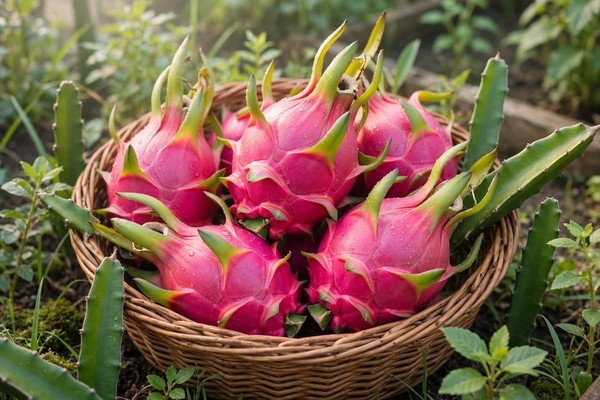
Dragon fruit is native to tropical America, so its season there is the original one. In Mexico and Central America the season generally runs from June to November, matching the rainy season.
Ecuador works differently. Its famous yellow dragon fruit, sold as Palora, peaks from December to March, the opposite end of the year from the main northern season. That is why yellow dragon fruit appears in shops in midwinter while pink fruit is scarce: it comes from a region whose season is running when the north is cold. If you grow a yellow variety at home, expect its season to sit later than your pink varieties, even in the same garden.
How Variety Shifts the Season
Your variety can move when is dragon fruit season forward or back by several weeks on your own plant. White-flesh types (Hylocereus undatus) are usually the earliest to ripen and set the start of the season in most gardens. Red-flesh types (Hylocereus costaricensis and related hybrids) often colour earlier but finish a little later, so their picking window sits in the middle and late season.
Yellow types (Hylocereus megalanthus) are the slowest: the fruit takes longer to size up, and the season is short, so the harvest comes late and ends fast.
That spread is useful for stretching when is dragon fruit season in your garden. A garden with one white, one red and one yellow variety gets a longer picking season than a garden with three plants of the same type, because the varieties take turns. Some varieties also need pollen from a different variety to set fruit at all.
What Triggers the Season to Start
The question of when is dragon fruit season comes down to three triggers: day length, warmth, and a dry rest. Dragon fruit is sensitive to day length, and flowering begins as days lengthen in spring and summer. Warmth keeps the process moving: growth is best around 18 to 25°C (65 to 77°F), and the plant tolerates heat up to about 38°C (100°F) before growth stalls.
The third trigger surprises new growers. A dry period in winter and early spring helps the plant set flower buds, and extension notes say a dry period in winter and early spring is needed for heavy flowering.
Once flowers open, the rule flips: steady water from flowering through harvest keeps fruit sizing well, and a dry spell at that stage can drop buds or stall fruit. In monsoon regions the season rides the rains, though heavy rain at harvest time can split ripe fruit.

Why You Still See Dragon Fruit in Shops Out of Season
Seeing fruit in a shop in January does not change when is dragon fruit season for a plant in your garden. Shop fruit comes from three places that break the local season: the opposite hemisphere, farms using night lighting, and warm regions whose natural season runs while yours is cold. Ecuador’s yellow fruit in December to March is one example; Vietnam’s light-assisted fruit is another.
That is why shop fruit out of season often tastes mild or watery next to fruit picked ripe from a garden plant in season. Buy pink dragon fruit from June to November in the northern hemisphere, buy yellow in the winter months when Ecuador’s season is running, and buy Australian fruit from November to May if you are in the south.

How to Plan Your Harvests Around the Season
Planning around when is dragon fruit season is mostly about writing dates down. Start a simple notebook or phone note in the first year: the date the first flowers open, the date the first fruit colours, and the date of each picking round.
Three habits stretch the season and cut waste. First, plant more than one variety, so the harvest comes in turns rather than one rush. Second, count forward from each flowering night: fruit is usually ready 30 to 50 days after the flower, so a flower that opens in early July points to a pick in mid August.
And third, learn how to tell if dragon fruit is ripe by colour and touch rather than by the calendar alone, because weather moves the dates by days either way. Our guide to when to harvest dragon fruit covers the picking signs in full.
Fresh fruit keeps only four to five days at room temperature, though it lasts several weeks in a refrigerator, so eat, share or chill each round within days of picking.
What to Do When the Season Ends
When is dragon fruit season over? It ends when nights cool and flowering stops, usually in late autumn. The work then is to prune dragon fruit after the final harvest, clear away the cut stems, and let the plant rest. Pruning after harvest opens the plant to light and air, which keeps disease down and sets up the next year’s flowering wood.
Feeding and watering slow down in the cool months. The plant still needs some water, but far less than in the fruiting season, and wet soil in cool weather invites rot. The rest period is not wasted time; it is the dry rest that helps the next season’s flowers form.
Frequently Asked Questions
When is dragon fruit season?
When is dragon fruit season in most of the northern hemisphere? June to November, with the best fruit in August and September. In the southern hemisphere the season runs from about November to May. Near the equator, in places like Vietnam and Thailand, the season runs from about May to October.
What is the best month to buy dragon fruit?
August and September are the best months to buy in the northern hemisphere, because the main growing regions are in full production and the fruit is at its sweetest. In the southern hemisphere, January and February are the peak buying months. Yellow dragon fruit is the exception: buy it from December to March.
Why does my dragon fruit plant have no fruit outside the season?
The plant only flowers when days are long and nights are warm, so outside the season there are simply no flowers to turn into fruit. If your plant has stems but no flowers in the warm months, the cause is usually age, shade, or missing pollination, not the calendar.
Can I make dragon fruit fruit out of season?
Home growers can stretch the season a little, but not remove it. A greenhouse keeps the plant warm and can add weeks on either end of the season, In a normal garden, the honest way to get more fruiting months is to plant early, mid and late varieties together.
Is dragon fruit season different for yellow varieties?
Yes. Yellow varieties fruit later and for a shorter time than pink varieties, and their season is easy to miss. In Ecuador the yellow Palora harvest peaks from December to March, and in home gardens the yellow fruit usually ripens weeks after the pink fruit on nearby plants. If you grow a yellow type, watch it separately.
Conclusion
Once you know when is dragon fruit season in your region, the rest of the year plans itself. Mark the flowering dates, count forward about a month to each picking round, and plant more than one variety so the harvest comes in turns. Your own notes from one full year will give you a season calendar no guide can match, because it is written for your garden, your varieties, and your weather.