
Dragon fruit is a forgiving crop in many ways, but it bruises easily, and the plant itself has spines and brittle stems that punish careless handling. The right dragon fruit harvesting tools make the difference between a basket of clean, unmarked fruit and a pile of bruised fruit with torn stems. You do not need expensive dragon fruit harvesting tools. A small set of well-chosen tools, kept sharp and clean, covers almost every home harvest. This guide explains what each of these dragon fruit harvesting tools does, how to choose a good version, and what you can safely leave in the shed.
Table of Contents
- Why the Right Tools Matter at Harvest Time
- Secateurs and Pruning Shears: Your Most Important Tool
- Gloves That Protect Without Slowing You Down
- Baskets, Buckets and Crates for Carrying Fruit
- Ladders, Pickers and Reaching Tools
- Cleaning and Caring for Your Dragon Fruit Harvesting Tools
- What You Do Not Need and What to Avoid
- A Simple Harvest Kit Checklist
- Frequently Asked Questions
- Related Guides
Why the Right Tools Matter at Harvest Time
A dragon fruit harvest is a short, delicate operation repeated many times through the season. Each fruit has to be cut from the stem, carried without bruising, and stored without damage. The skin is thin and the flesh inside is soft, so a squeeze that would not harm an apple can leave a dent in a dragon fruit. The bracts, the pointed leafy scales on the skin, break off if they catch on a rough surface, and once they are gone the fruit looks tired and old even when it is freshly picked.
Good dragon fruit harvesting tools solve these problems one at a time: a sharp blade for a clean cut, gloves for spines, a soft container for carrying, and a safe way to reach high fruit.
The plant benefits too. Pulling fruit off by hand tears the stem and leaves an open wound that can let in the bacteria and fungi behind stem rot. A clean cut with sharp secateurs heals faster and keeps the plant healthy for the next flush of flowers. Cheap, blunt tools cause the same damage as pulling, because they crush the stem instead of cutting it. Spending a little on one good pair of secateurs and keeping them sharp is the single best investment in dragon fruit harvesting tools a dragon fruit grower can make at harvest time. The rest of the kit is simple, and much of it you probably already own.
Secateurs and Pruning Shears: Your Most Important Tool
Secateurs are the heart of your harvest kit. For dragon fruit, bypass secateurs are the better choice: the two blades slide past each other like scissors and make a clean cut, while anvil secateurs crush the stem against a flat plate.
Look for a pair with a blade length of about five to eight centimetres, which is large enough for the thick stems of a mature plant but small enough to work between crowded stems. A comfortable grip matters because you may be cutting for an hour at a time, so try the secateurs in your hand before you buy them if you can. A locking catch keeps the blades closed in your pocket, and a holster that clips to your belt keeps them within reach while both hands are free.
Sharpness is more important than brand. A sharp blade cuts the stem in one smooth motion and leaves a flat, clean wound. A blunt blade needs two or three squeezes, crushes the stem, and leaves a ragged edge that heals slowly.
Sharpen your secateurs before the harvest season starts, and carry a small sharpening stone or a pocket sharpener so you can touch up the edge during a long picking session. Test the edge on a piece of paper: a sharp blade cuts cleanly, a blunt one tears. Clean the blades with soapy water after each use and dry them, because sap and moisture left on the steel will rust the edge and can carry disease from one plant to another. Of all the dragon fruit harvesting tools you will buy, the secateurs deserve the most care.

Gloves That Protect Without Slowing You Down
Dragon fruit stems carry small spines along their ribs, and some varieties have sharper spines than others. The spines are not dangerous, but they are annoying: they catch on skin and sleeves, and a deep scratch can sting for hours. A good pair of gloves solves this. Choose gloves made from thick leather or a tough synthetic palm with a close fit. Loose gloves are worse than none, because they catch on spines and make it hard to feel the fruit. The glove should let you feel whether a fruit is firm or slightly soft when you squeeze it gently, because that softness is one of the signs of ripeness.
Long sleeves are just as useful as gloves. A light, long-sleeved shirt protects your forearms when you reach into the canopy, and it also protects you from the sun during a morning harvest. Some growers wear a lightweight apron with a large pocket, which keeps the secateurs and a phone close at hand.
Avoid gloves with open fingers for harvesting, because the fingertips are the part of your hand most likely to meet a spine. If you find gloves uncomfortable in hot weather, try a thin pair with a reinforced palm rather than going bare-handed. The few minutes spent putting gloves on saves a lot of small cuts and makes the whole harvest more pleasant, especially when you are working through a large crop and your hands are in the canopy for an hour or more.

Baskets, Buckets and Crates for Carrying Fruit
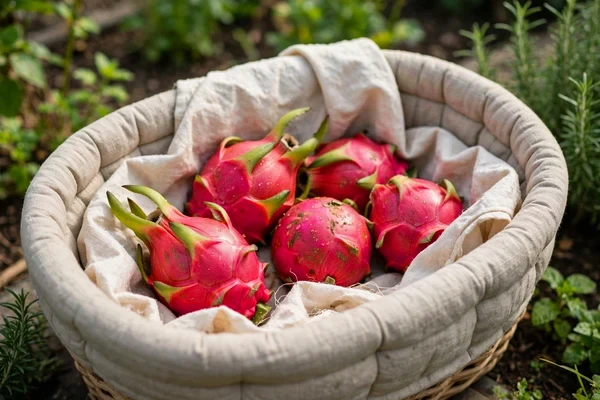
The container you carry matters as much as the tool you cut with. Dragon fruit bruises under its own weight, so a deep bucket full of fruit is a bad idea: the fruit at the bottom is crushed by the fruit on top. A shallow basket or a wide, flat crate is much better. Line it with a soft cloth, an old towel, or a layer of clean straw so the fruit does not rest directly on hard wood or plastic. Carry only one or two layers of fruit in each container, and if you have a big harvest, use two shallow baskets rather than one deep one.
A basket with a handle that hooks over your arm leaves both hands free for climbing and cutting. Some growers use a small bucket with a rope handle that can be lowered to the ground on a rope from a ladder, which is the safest way to get fruit down from a tall trellis.
Whatever you use, keep it clean. Wash baskets and crates between harvests, and let them dry in the sun, because old sap and soil in a dirty basket can carry fungal spores onto fresh fruit. Do not use containers that held chemicals or fertiliser, even if they have been rinsed, because residues can contaminate the fruit. A clean, shallow, padded container is one of the simplest dragon fruit harvesting tools, and it protects the crop better than almost anything else you own.
Ladders, Pickers and Reaching Tools
Dragon fruit grows on tall trellises, so reaching the fruit is a tool problem as much as a picking problem. A tripod orchard ladder is the safest option for most home gardens, because its three legs stay stable on uneven ground and its wide base spreads the weight. A step ladder works for lower trellises. A straight extension ladder can be used if it is tied to the post and held at the base by a second person. Never stand on the top rung of any ladder, and never lean a ladder against the hanging stems, which can snap under the weight.
For fruit that is out of reach even from a ladder, a long-handled fruit picker is the answer. It has a small basket or a set of soft fingers at the end of a pole, and a blade or a pulling cord that cuts the stem.
It takes practice to cut cleanly with one, so try it on a few low fruits first before you use it at full stretch. A picker is also useful for fruit growing over a fence or above a path where a ladder cannot stand safely. Keep the picker clean and check its cord and basket before each use, because a frayed cord can drop a fruit from three metres up. With a good ladder and a picker, no fruit on your trellis should be out of reach.

Cleaning and Caring for Your Dragon Fruit Harvesting Tools
Tools that are not cleaned spread disease. The fungi and bacteria that cause stem rot and fruit decay can travel on a dirty blade from one plant to another, and a basket that held rotting fruit last season can contaminate this season’s crop. Cleaning takes only a few minutes and it should be part of every harvest, as recommended in the UF IFAS dragon fruit guide. Wash secateurs with warm soapy water, dry them thoroughly, and wipe the blades with a little oil to prevent rust. Dip the blades in a household disinfectant or in diluted alcohol between plants if you have had disease problems, and let them dry before the next cut.
Ladders and pickers need attention too. Check the rungs and feet of a ladder before you climb, and replace worn rubber feet so the ladder does not slip. Inspect the picker’s basket and cord for wear. Wash baskets and crates with soapy water and dry them in the sun. Store everything under cover, out of the rain, so wooden handles do not rot and metal parts do not rust.
A dry, shaded shed or a garage shelf is ideal. Dragon fruit harvesting tools that are cleaned and stored properly last for years, and they are always ready when the fruit ripens. Tools left dirty in the garden are the ones that fail at the worst moment.
What You Do Not Need and What to Avoid
Not every garden gadget earns its place in the harvest. A chainsaw is far too powerful for harvesting and will damage the plant. A machete is too heavy and too blunt for the fine cuts a dragon fruit stem needs. Large pruning loppers are useful for thick, woody stems during pruning season, but they are clumsy for picking fruit and can crush the stem. A knife can work, but it is less safe than secateurs when your other hand is holding the fruit, and a slip can cut your hand.
Avoid anything that squeezes or grips the fruit hard, such as metal tongs or a tight wire basket, because the skin bruises easily and the bracts snap off. Avoid plastic bags as a harvest container, because the fruit sweats inside the bag, the skin softens, and the fruit can start to decay before it reaches the kitchen. Avoid picking fruit with wet hands or wet tools after rain, because moisture helps disease spread.
The rule is simple: if a dragon fruit harvesting tool is sharp, clean, soft where it touches the fruit, and safe to use at height, it belongs in your kit. Everything else can stay in the shed.
A Simple Harvest Kit Checklist
Before the season starts, gather your kit in one place so harvest mornings are calm. You need one pair of sharp bypass secateurs with a holster, one pair of close-fitting leather gloves, one long-sleeved shirt, two shallow padded baskets or crates, one tripod or step ladder, one long-handled fruit picker, a small sharpening stone, and a bottle of soapy water or disinfectant for the blades. Add a wide-brimmed hat and sunscreen, because you will be working in the morning sun, and a bottle of water for yourself. Check each item before the first harvest: sharpen the secateurs, wash the baskets, inspect the ladder feet, and test the picker cord.
A kit that is ready before the fruit ripens means you can pick at the right moment instead of hunting for tools while the fruit gets overripe. The best dragon fruit harvesting tools are the ones that are sharp, clean, and within reach when you need them.
Frequently Asked Questions
Do I really need dragon fruit harvesting tools like secateurs, or can I just twist the fruit off?
You really need secateurs. Twisting tears the stem, leaves an open wound, and often bruises the fruit at the join. A clean cut with sharp secateurs heals quickly and keeps the plant healthy. A good pair costs little and lasts for years.
What is the best basket for carrying dragon fruit?
A shallow basket or wide flat crate lined with a soft cloth is best. Do not use a deep bucket, because the fruit at the bottom is crushed by the weight above it. Carry only one or two layers, and move the basket into shade as soon as you come down from the ladder.
Can I use a fruit picker for all my dragon fruit?
A picker is excellent for high fruit, but it is slower and less precise than secateurs for fruit within easy reach. Use secateurs for most of the harvest and the picker only for fruit you cannot safely reach from a ladder.
How often should I sharpen my secateurs?
Sharpen them before the harvest season, and touch up the edge with a small stone during long picking sessions. A sharp blade should cut a piece of paper cleanly. If it tears the paper, it will crush the stem too.
Related Guides
- How To Harvest Dragon Fruit
- When To Harvest Dragon Fruit
- Harvest Dragon Fruit From Trellis
- How To Store Dragon Fruit
- Dragon Fruit Trellis
- What To Do After Harvesting Dragon Fruit
DragonFruitGrow.online is an independent gardening information website and is not affiliated with any nursery, fruit brand, or agricultural supplier. Growing conditions vary by cultivar, climate, soil, and plant age, so treat this guide as general information and adjust the advice to your own garden.