
Learning how to harvest dragon fruit properly matters as much as knowing when it is ripe. A careless pick can tear the stem, bruise the fruit, or damage the buds that would have become next season’s flowers, while a careful pick takes only a few seconds longer and protects both the fruit and the plant you will rely on next year. This guide covers the two main picking methods — twisting by hand and cutting with secateurs — plus the preparation and handling habits that keep damage to a minimum. Whether you twist or cut, the principles of how to harvest dragon fruit without damage are the same.
Table of Contents
- Why Dragon Fruit Is Easy to Damage
- Before You Pick: What to Check and Prepare
- How to Harvest Dragon Fruit by Hand: The Twist Method
- The Cut Method: Using Secateurs for a Clean Separation
- Handling Fruit After Picking
- Protecting the Plant: Stems, New Growth and Next Flowers
- Mistakes That Damage the Plant or the Fruit
Why Dragon Fruit Is Easy to Damage
Dragon fruit looks tough, but it bruises and tears more easily than most garden fruit. The skin is relatively thin and the flesh beneath it soft, so a squeeze in the wrong place or a knock against a hard basket can leave a bruise that shows up within a day. UC Davis notes that abrasion of the skin makes the fruit unsightly and increases water loss, leading to shrivelling. A bruised fruit also decays faster, because damaged skin is the main entry point for the fungi and bacteria that cause rot.
The plant is vulnerable too. Dragon fruit stems are fleshy and heavy, hanging from the trellis in a spreading canopy. Pulling a fruit downward puts force on the stem joint, which can tear the stem’s skin or snap a whole segment. A torn stem is an open wound that can let in disease — UC Davis lists stem rot among the disorders that follow physical damage — and damaged stems lose the buds that would flower next, so one rough harvest can reduce the following season’s crop.
When learning how to harvest dragon fruit, remember the bracts add a third point of fragility: these leaf-like scales are easily bent or torn, and a fruit with damaged bracts looks poor and stores worse. Some varieties also carry small spines on the fruit or stem, which can scratch your hands and make you jerk away mid-pick — another reason to prepare properly first.
Before You Pick: What to Check and Prepare
Knowing how to harvest dragon fruit starts before you touch a fruit. First, confirm it is actually ready, using the signs in our guide on when to harvest dragon fruit: even skin colour, firm green bracts and a slight give under gentle pressure. Careful picking cannot save an unripe fruit — it will not sweeten off the plant.
Second, gather your equipment: clean, sharp secateurs or garden scissors, gloves, and a shallow container lined with a soft cloth or paper. A shallow basket is better than a deep bucket, because fruit at the bottom gets crushed by the weight above it. If the variety has spines, remove them with hand clippers or a brush before harvesting, as the University of Guam factsheet recommends.
Third, clean your secateurs: wipe the blades and, ideally, disinfect them, especially after use on other plants. Clean cuts heal faster than ragged ones, and dirty blades can carry disease between plants. Pick in the cool morning or late afternoon rather than midday heat.
Finally, look at the plant as a whole: notice where the ripe fruit are, which stems are heavy, and whether any are cracked or hanging low. Plan your route so you are not reaching across fruit or leaning on stems. A few minutes of preparation prevents most harvest damage. For a full equipment list, see our guide to dragon fruit harvesting tools.

How to Harvest Dragon Fruit by Hand: The Twist Method
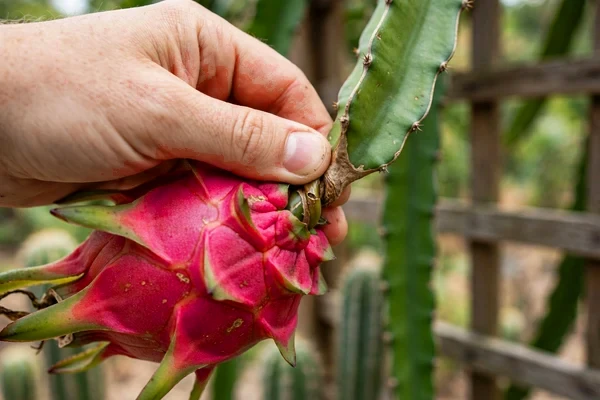
The twist method is the traditional way to pick dragon fruit, and it works well for fruit that is fully ripe and separates easily; the University of Guam factsheet notes fruits can be harvested by cutting the peduncle or twisted off by hand. To twist correctly, cup the fruit in one palm so your hand supports its full weight, and place your other hand on the stem just above the fruit to hold it steady.
Then rotate the fruit gently, about a quarter to a half turn, while lifting it very slightly upward — do not pull straight down. It should separate at the natural joint, leaving a small, clean stem stub on the fruit. If it does not separate with a gentle twist, do not force it: forcing can tear the stem’s skin or snap the segment, and a resisting fruit is often not fully ripe yet. Switch to the cut method below, or leave the fruit for another day or two.
Twisting has a real advantage: it leaves no cut surface on the plant, so there is no open wound to heal, and the fruit’s stem end stays neatly closed, which helps it store. It suits ripe fruit on easy-to-reach stems and is the fastest way to pick when many fruit are ready at once. It is less suitable high in the canopy, where you cannot support the stem with your second hand, or where the stalk is thick and woody — in those cases, cutting is safer. However you pick, the core of learning how to harvest dragon fruit is the same: support the fruit, steady the stem, and never pull against the plant.
The Cut Method: Using Secateurs for a Clean Separation
Cutting with secateurs is the safer method whenever a fruit does not twist off easily, and the best choice for tall trellises and thick stalks. Hold the fruit in one hand so it cannot fall when the stalk is cut, and place the secateurs around the short stalk, not the fruit itself. Cut a short distance above the fruit, leaving a stub of a centimetre or two attached: it protects the stem end from drying out and decay, and gives you something to hold without touching the skin.
Make the cut in one clean, decisive motion. A slow, crushing cut from blunt blades tears tissue and leaves a ragged wound that heals slowly, so sharpen or replace blunt secateurs before harvesting. Cut at a slight angle so water runs off the cut surface on the plant rather than sitting on it.
After cutting, look at the wound on the plant. A small, clean cut dries and heals on its own in dry weather; do not seal it with paint or paste unless local extension advice recommends it. Put the cut fruit straight into your padded container, stem end up if possible, so it does not roll and bruise. For fruit high in the canopy, our guide on harvest dragon fruit from a trellis covers safe reaching and ladder use.

Handling Fruit After Picking
How you handle fruit in the minutes after picking is part of knowing how to harvest dragon fruit well, and it affects how long it keeps. Dragon fruit loses water quickly in warm weather: UC Davis reports weight loss of about 2.6% per day at 20°C for Hylocereus undatus, compared with only about 0.3% per day at 10°C. Move picked fruit into the shade immediately, and do not leave it in the sun while you finish harvesting — a shaded basket, a cool box, or a cloth over the container all help.
Place fruit in a single layer whenever you can. Stacking, even two layers deep, puts pressure on the bottom layer and causes bruising that appears later. If you must stack, put soft paper or cloth between layers and keep the stack shallow. Do not drop fruit into the container, even from a short height; set each fruit down gently.
Do not wash fruit straight after picking unless it is dirty: water on the skin encourages decay. If a fruit is dusty, wipe it gently with a dry cloth. Check each fruit as you pick it — set aside any with cracks, soft spots or insect damage to use first, and keep only sound fruit for storage. Damaged fruit decays faster and can spread rot to its neighbours, so sorting at picking time saves waste later. Handle the fruit by its body, not by the bracts, and keep the stem stub intact as the fruit’s natural seal.
Protecting the Plant: Stems, New Growth and Next Flowers
After picking, step back and inspect the stems you worked around for torn skin, cracked segments or stems bent during picking. Small tears usually heal on their own in dry weather, but a badly damaged stem is better pruned off cleanly with secateurs than left hanging. UF IFAS recommends pruning to remove damaged, diseased or dead stems, and notes that pruning soon after harvest is good practice.
Be careful around new growth and flower buds, which sit along the stems and are easily knocked off by a careless arm or a ladder leaning on the wrong stem. Move slowly when you reach into the canopy, and watch where your arms and tools go. Do not use stems as handholds, and do not hang your basket from a fruiting stem — the weight can bend or snap it.
Support is worth checking at the same time. Mature dragon fruit plants become very heavy, and UF IFAS warns that a weak trellis may buckle under the weight of a mature plant. After harvest, check that ties are secure and no stem hangs unsupported, and tie up any that has slipped with a soft tie that will not cut into the flesh. These small acts of care are part of learning how to harvest dragon fruit sustainably: the plant you protect this year is the plant that feeds you next year.

Mistakes That Damage the Plant or the Fruit
The most damaging mistake when learning how to harvest dragon fruit is pulling the fruit straight down without supporting the stem: this tears the stem skin, can snap a whole segment, and bruises the fruit at the same time. Always cup the fruit and steady the stem first. The second mistake is using blunt secateurs, which crush rather than cut and leave ragged wounds that heal slowly and invite disease.
A third mistake is picking in the heat of the day and leaving fruit in the sun: hot fruit loses water fast and bruises more easily, so harvest in the cool morning and move fruit into shade at once. A fourth is overfilling containers — a deep bucket crushes the bottom layer, and the damage only shows up days later as soft, dark patches.
A fifth mistake is picking fruit that is not ready: an unripe fruit resists twisting, which tempts you to pull harder, and the result is a torn stem and a bland fruit. If a fruit resists, stop and check the ripeness signs again. Finally, do not ignore small wounds on the plant — a torn stem left untended can develop rot, while a clean pruning cut heals quickly. After harvest, give the plant the aftercare it needs; our guide on what to do after harvesting dragon fruit covers watering, pruning and preparing for the next flowering.
Frequently Asked Questions
How to harvest dragon fruit, twist or cut?
Twist when the fruit is fully ripe and separates with a gentle quarter-turn while you steady the stem; cut with clean, sharp secateurs when the fruit resists, the stalk is thick, or the fruit is high in the canopy. Never force a twist — forcing tears the stem. Both work well when done gently, and cutting is the safer default for beginners.
How do I pick dragon fruit without getting spiked?
Wear gloves and check the fruit and nearby stems for spines before you reach in. If a variety has spines on the fruit, remove them with hand clippers or a brush before harvesting, as the University of Guam factsheet recommends. Long sleeves help; never jerk your hand away if you feel a prickle, or you may knock fruit off the plant.
What should I do if I tear a stem while picking?
A torn stem is the most common injury when learning how to harvest dragon fruit — stop and assess the damage. A small skin tear usually heals on its own in dry weather. A badly torn or snapped segment should be pruned off cleanly with sharp secateurs, cutting back to healthy tissue, with the pruned material removed from the plant. Avoid watering the wound directly, and watch it for signs of rot over the next few weeks.
How should I carry dragon fruit after picking?
Use a shallow container lined with a soft cloth or paper, place fruit in a single layer, and move it into the shade immediately. Do not stack fruit deeply or drop it into the container, and keep the stem stub attached. Sound fruit stored cool and dry keeps far longer than bruised fruit left in the sun.
Disclaimer: DragonFruitGrow.online is an independent gardening information resource. Growing results vary with cultivar, climate, soil and plant care, so use this guide as general information and adapt it to your local conditions.
1 thought on “How to Harvest Dragon Fruit Without Damaging the Plant”