Table of Contents
- Introduction
- What Scale Insects Are and How to Recognise Them
- What Causes a Scale Infestation and How to Get Rid of Scale Insects on Dragon Fruit
- What You Need Before You Start
- Step 1: Remove the Scale You Can See
- Step 2: How to Get Rid of Scale Insects on Dragon Fruit by Spraying for the Young Insects
- Step 3: Control the Ants
- Natural Enemies and Long-Term Prevention
- When the Infestation Is Too Bad to Save a Stem
- Frequently Asked Questions
- Conclusion
Introduction
Learning how to get rid of scale insects on dragon fruit is important because scale is one of the hardest pests to notice until it has already spread. Scale insects are small sap-sucking pests that attach themselves to the stems, hide under a hard or waxy shell, and feed slowly for weeks. A few scale insects do little damage, but a heavy infestation weakens the plant, yellows the stems, drops the fruit, and leaves behind a sticky coating that grows black sooty mould.
The good news is that learning how to get rid of scale insects on dragon fruit is straightforward, because scale is beatable, and dragon fruit is a tough plant that recovers well once the pest is gone. The fix has three parts: remove the scale you can see, treat the young insects you cannot see, and remove the conditions that let scale thrive, especially ants, which protect scale for its honeydew. Each part matters, and treating only the visible adults is the most common reason the pest comes back.
This guide walks through the whole job, from recognising scale to manual removal, sprays, natural enemies and prevention, so you can clear the plant and stop the infestation from returning. If your plant has a different pest, our how to get rid of mealybugs on dragon fruit guide covers the other common sap-sucker.
What Scale Insects Are and How to Recognise Them
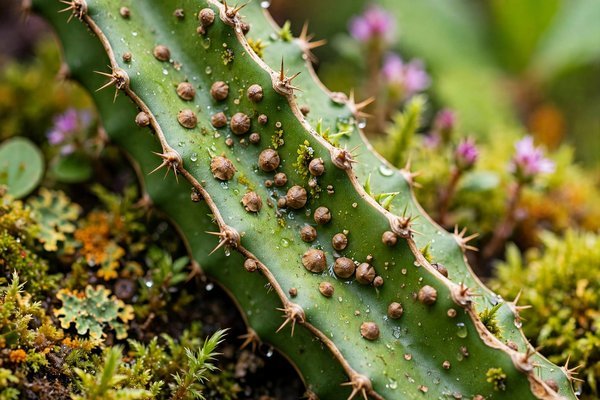
Scale insects are not one species, and the UF IFAS guide to pitaya growing lists scales among the insect pests reported on dragon fruit. They are a large group of sap-sucking insects, and the ones on dragon fruit are usually armoured scale or soft scale. Armoured scale hides under a hard, flat, round or oval cover that looks like a tiny bump, a scab or a piece of bark stuck to the stem. Soft scale is larger, rounder and softer, and it often looks like a small brown dome.
Both types stay in one place once they settle, which is why, when you are learning how to get rid of scale insects on dragon fruit, they are easy to mistake for part of the plant.
The first signs are usually the bumps themselves, often along the ridges of the stem, around the areoles where the spines grow, and on the underside of new growth. Look closely at stems that have stopped growing, turned yellow in patches, or look dusty. Run a fingernail gently over a suspect bump: if it lifts off and leaves a pale mark underneath, it is scale, not bark. If it is part of the stem, it will not lift.
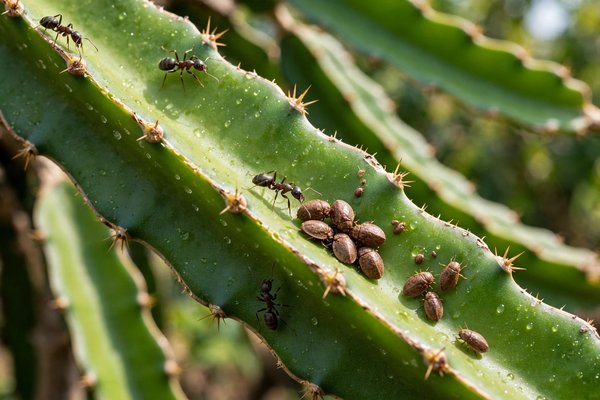
Other signs appear around the scale. Soft scale excretes honeydew, a clear sticky liquid, which coats the stem below the infestation and feels tacky to the touch. Ants are often the first clue, because ants farm scale for honeydew and will be walking up and down a stem that looks clean at first glance. Sooty mould, a black powdery coating, often grows on the honeydew, and it blocks light from the stem.
Fruit on a badly infested plant may be small, misshapen or drop early, and new growth may be stunted or deformed.
What Causes a Scale Infestation and How to Get Rid of Scale Insects on Dragon Fruit
Knowing how to get rid of scale insects on dragon fruit starts with knowing where scale comes from: it spreads from nearby plants, from new cuttings, and from ants, and it thrives when the plant is stressed or crowded.
New plants are the most common source. A cutting or a potted plant bought from a nursery can carry a few scale insects hidden in a crease, and those few become hundreds over a few weeks in warm weather.
Always inspect a new plant closely before you put it next to your other dragon fruit, and keep it apart for two weeks if you can. Check the stems, the base, and the underside of any new growth.
Ants are the second cause, and they matter more than most growers realise. Ants protect scale from predators and move young scale insects to fresh stems, in exchange for honeydew. If you see ants on your dragon fruit, look for scale, even if you cannot see it yet. Controlling the ants is part of controlling the scale, not a separate job.
Stress and crowding make everything worse. A plant that is overwatered, which can lead to root rot, underfed or growing in poor light is weaker and less able to outgrow pest damage. Dense, tangled growth with poor airflow gives young scale insects sheltered places to settle, and it makes the plant harder to inspect. A healthy, well-spaced plant with good airflow is easier to check, easier to treat, and recovers faster.
What You Need Before You Start
Gather everything before you start, because you will want to work through the plant in one session, and you do not want to leave treated stems half-finished.
To learn how to get rid of scale insects on dragon fruit, you need a soft old toothbrush or a soft cloth, a blunt knife or an old credit card for scraping, rubbing alcohol or a mild soap solution, a spray bottle, horticultural oil or neem oil, gloves, and a bucket or bag for the material you remove. A magnifying glass or your phone’s camera zoom is useful for checking small stems, because young scale insects are tiny and easy to miss.
Work in the shade or in the evening, not in hot sun, because oil sprays on a sun-heated stem can scorch it. Do not treat a plant that is already drought-stressed or wilting: water it normally the day before, and treat it when it is healthy enough to cope with the spray. Keep children and pets away from the treated plant until the spray has dried.
Step 1: Remove the Scale You Can See
When learning how to get rid of scale insects on dragon fruit, start with manual removal, because no spray kills armoured scale reliably through its shell. The shell protects the adult insect, so the fastest way to cut the population is to take the adults off by hand.
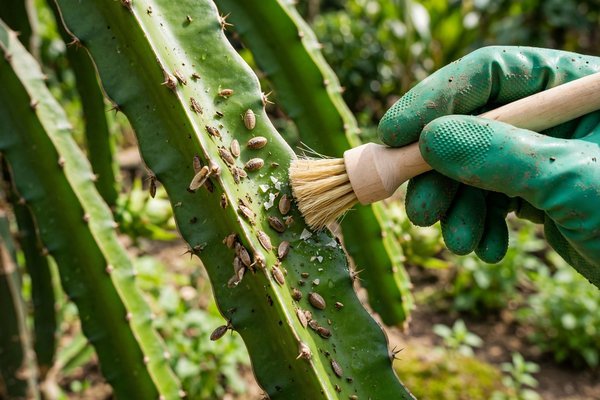
Take a soft toothbrush, dip it in rubbing alcohol or soapy water, and gently scrub the infested stems. Work along the ridges and around the areoles, where scale hides.
For stubborn bumps, lift them off with a blunt knife or the edge of an old card, taking care not to gouge the stem. The stem underneath may look pale or scarred where the scale was feeding, and that is normal. The scar will heal if the plant is healthy.
Put everything you remove into a bag or bucket, and throw it away with the household waste. Do not drop it on the soil or in the compost, because live scale can crawl back onto the plant.
Check the whole plant, not just the worst stem, and check the base of the plant and any stems touching the ground or a wall, because scale spreads to sheltered places first. Repeat the manual removal every few days for two weeks, because you will miss some adults on the first pass.
Step 2: How to Get Rid of Scale Insects on Dragon Fruit by Spraying for the Young Insects
Manual removal takes off the adults, but when you are learning how to get rid of scale insects on dragon fruit, remember it does not take off the crawlers, the tiny young scale insects that walk to a new spot before they settle and grow a shell. Crawlers are the stage that spreads the infestation, and they are the stage that sprays can kill.
Horticultural oil is the most reliable spray for scale on dragon fruit. It works by smothering the insects, so it kills crawlers and soft scale on contact, and it is safer for the plant than a harsh chemical insecticide if it is used correctly.
Mix it exactly as the label says, spray in the evening or on a cloudy day, and coat the stems thoroughly, including the undersides and the creases. Do not spray in hot sun, and do not spray a plant that is already stressed by drought.
Neem oil is a gentler option, and it works as both a smothering spray and a growth disruptor for young insects. It is slower than horticultural oil, so expect to repeat it every 7 to 10 days for three or four rounds. A simple soap spray, made from a mild liquid soap and water, can help with soft scale and crawlers, but it does little to armoured scale, so use it as a follow-up, not as the main treatment.
Repeat the spray every 7 to 10 days for at least three rounds, even if the plant looks clean after the first. The timing matters, because each round catches the next batch of crawlers as they hatch. Stopping after one spray is the most common reason scale comes back.
Step 3: Control the Ants
If ants are on your plant, controlling them is part of how to get rid of scale insects on dragon fruit, not an optional extra. Ants protect scale from ladybirds and other predators, and they carry crawlers to fresh stems. As long as the ants are there, the scale has bodyguards.
Follow the ant trail to find where the ants are coming from, and block or remove the route if you can. A sticky barrier around the base of the post or pot, such as a band of horticultural glue or a wrapped strip, stops ants from climbing up to the plant. Keep the base clear of weeds and fallen fruit, because both give ants shelter and food.
Ant bait stations, placed on the ground near the trail and away from the plant itself, are more effective than spraying the ants on the plant, because the bait is carried back to the nest.
Do not spray a broad insecticide on the plant to kill the ants, because it will also kill the ladybirds and parasitic wasps that eat scale, and the scale will come back faster without its predators. Give the ant control a week to work, and keep checking the plant for new scale in the meantime.
Natural Enemies and Long-Term Prevention
Scale has natural enemies, and a garden that keeps them alive will have less scale over time, which helps with how to get rid of scale insects on dragon fruit for good. Ladybirds eat crawlers and young scale, and tiny parasitic wasps lay eggs inside scale insects and kill them from within. You will rarely see the wasps, but you will see their work: scale that turns dark, dry and hollow instead of plump and alive.
Avoid broad-spectrum insecticides unless you have no other option, because they kill the predators as well as the pest, and the pest recovers faster. If you must use a chemical treatment, choose one labelled for scale, follow the label exactly, and use it as a single targeted treatment, not as a routine spray. Leave a few untreated plants nearby if you can, so the predators have somewhere to survive.
Long-term prevention, and lasting success with how to get rid of scale insects on dragon fruit, is mostly inspection and airflow. Check your dragon fruit every week in warm weather, and every two weeks in cool weather, looking closely at new growth and at the stems near the base.
Prune out dense, tangled growth so air moves through the plant and you can see the stems. Quarantine new cuttings for two weeks, and wash your hands and tools after handling an infested plant before you touch a healthy one.
When the Infestation Is Too Bad to Save a Stem
Sometimes, even when you know how to get rid of scale insects on dragon fruit, a stem is so heavily infested that saving it costs more than it is worth.
If a stem is covered in scale from base to tip, yellowed, soft and no longer growing, and the scale returns within days of cleaning it, cut that stem off. Use clean, sharp secateurs, cut back to healthy green tissue, and seal the cut by letting it dry in the air for a few days before you water the plant again.
Do not throw the cut stem in the compost or leave it on the ground. Bag it and throw it away with the household waste, because live scale on a cut stem can still spread. Sterilise the secateurs with rubbing alcohol before you cut a healthy stem, because a dirty blade can carry scale crawlers and fungi from one stem to another.
After you remove a bad stem, the plant will usually push new growth from the remaining healthy stems within a few weeks in warm weather. Feed it lightly, water it normally, and keep checking the new growth, because crawlers from the old infestation can settle on the soft new stems first.
Frequently Asked Questions
What should I check first when learning how to get rid of scale insects on dragon fruit — are the bumps scale or part of the plant?
Lift one gently with a fingernail. Scale lifts off and leaves a pale mark underneath. Part of the stem will not lift, and it will feel like the stem itself. Scale is usually clustered along ridges and around areoles, while normal stem texture is even across the surface.
Will soapy water alone kill scale insects?
Soapy water helps with soft scale and crawlers, but it does little to armoured scale, because the hard shell protects the adult. Use manual removal for the adults and horticultural oil or neem oil for the crawlers, and repeat the spray for at least three rounds.
How long does it take to get rid of scale on dragon fruit?
Expect three to six weeks for how to get rid of scale insects on dragon fruit. Manual removal cuts the adults at once, but the sprays need three or four rounds, 7 to 10 days apart, to catch each new batch of crawlers. Check the plant weekly for at least a month after the last spray.
Why does scale keep coming back on my dragon fruit?
When learning how to get rid of scale insects on dragon fruit, the usual reasons it keeps coming back are ants protecting the scale, a missed stem that was never treated, or stopping the sprays after one round. Control the ants, treat the whole plant including the base, and finish all three or four spray rounds even if the plant looks clean.
Is scale on dragon fruit dangerous to eat the fruit?
Scale itself does not make the fruit poisonous, but do not eat fruit from a heavily infested plant until you have washed it thoroughly and the plant has recovered. Sooty mould and honeydew on the fruit are unpleasant, and a stressed plant produces poor fruit. Wait for clean new fruit after the treatment.
Conclusion
Scale insects are slow, stubborn and easy to miss, but they are beatable with a patient routine for how to get rid of scale insects on dragon fruit. Remove the adults you can see, spray for the crawlers you cannot see, control the ants that protect them, and repeat the sprays for three or four rounds even when the plant looks clean. Check the plant weekly, quarantine new cuttings, and keep the growth open so you can see the stems.
A dragon fruit plant that has been cleared of scale by following how to get rid of scale insects on dragon fruit usually recovers well and pushes fresh growth within a few weeks in warm weather. The work is not a single spray. It is a few weeks of checking, cleaning and spraying, and a habit of inspecting the plant that stops the next infestation before it spreads.