
Dragon fruit is a tropical plant, and cold is one of the few weather conditions that can seriously damage it. To protect dragon fruit from cold, you need to know its limits, choose a warm spot, and have a simple plan ready before the first cold night arrives. A light frost may only mark a few stem tips, but a hard or long freeze can kill stems to the ground, and a young plant in a pot is at greater risk than a large plant in the ground. Most cold damage is preventable with timely covering, good drainage and a sheltered position.
The UF IFAS pitaya guide gives the key figure: pitayas may be damaged by long exposure below freezing, around 31 degrees Fahrenheit (minus 2 degrees Celsius), although they recover rapidly from light freezing injury. Optimum growth is around 18 to 25 degrees Celsius, and plants grow best in climates mostly free of frost. Many gardeners still grow dragon fruit where light frost occurs, but to protect dragon fruit from cold you should plan ahead, not improvise on the night frost is forecast.
Table of Contents
- How Cold Affects Dragon Fruit
- How Much Cold Can Your Plant Tolerate?
- Choosing the Warmest Spot
- Covers, Cloth and Temporary Shelter
- Water, Mulch and Feeding Before Cold Weather
- Moving Potted Plants Indoors or Under Cover
- What to Do After a Cold Night
- A Simple Cold-Weather Plan
How Cold Affects Dragon Fruit
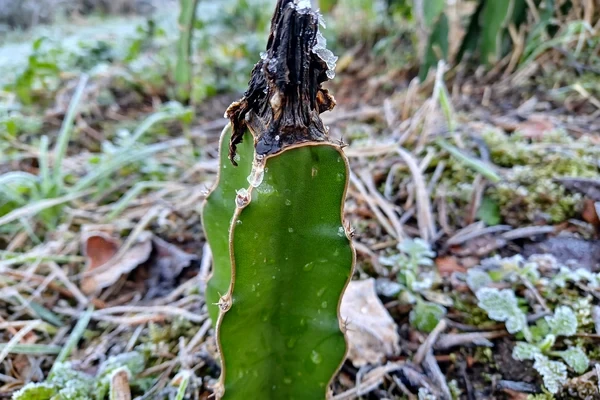
Cold damage in dragon fruit usually starts at the tips of stems, which are the youngest and most exposed parts. The affected tissue first looks water-soaked or dark green, then turns brown or black and feels soft. In a light frost, only the outer tips are marked, and the plant grows new shoots from below the damage in spring. In a harder freeze, whole stems can collapse, and the damage may travel down into older wood. Roots are less often damaged in the ground, because soil insulates them, but roots in a small pot can freeze much more easily.
Flowers and young fruit are more sensitive than stems: a cold night during flowering can cause buds to drop even if stems show little damage. New growth made late in the season is also vulnerable, because it has not hardened before winter. Below about 10 degrees Celsius, growth largely stops and the plant uses little water, so a plant in wet, cold soil is far more likely to rot than one in moist, well-drained soil. Wet cold is more damaging than dry cold.
How Much Cold Can Your Plant Tolerate?
Tolerance depends on the plant’s size, age and condition, and on how long the cold lasts. A brief dip just below freezing on a calm, dry night may cause only tip damage, while several hours below freezing, especially with wind, can damage whole stems. The UF IFAS figure of about minus 2 degrees Celsius for damage of long duration is a useful guide, not a sharp line: a plant may survive a short dip to that temperature with little harm, and may be damaged at a slightly higher temperature if the cold lasts all night or follows wet weather.
Young plants are the most vulnerable. A cutting in its first year has a small root system, thin stems and little stored energy, so it needs the most protection. A large, established plant has thicker stems, more reserves and a deeper root system, and it can regrow from the base even if the top is damaged. Plants in pots are more exposed than plants in the ground, because the pot offers little insulation and the roots can freeze from the sides. A plant that is already stressed — by drought, over-watering, disease or recent heavy pruning — will also suffer more from cold than a healthy plant.
Local conditions change the risk too. A hollow where cold air collects frosts more often than a gentle slope, where cold air drains away. Coastal gardens are usually milder than inland ones. Knowing your garden’s cold spots, and checking a local forecast, helps you protect dragon fruit from cold on the right nights. The climate background is in best climate for dragon fruit.
Choosing the Warmest Spot

The warmest spot in a garden is usually the best place to protect dragon fruit from cold, and choosing it before planting saves years of covering. A position against a south-facing wall in the northern hemisphere (north-facing in the southern hemisphere) absorbs heat during the day and releases it at night, keeping the air nearby a few degrees warmer. A wall also blocks wind, which is a major cause of cold damage, because wind strips warm air from around the plant and drives cold air into its tissues.
Avoid low spots where cold air collects, and open positions where wind funnels through. A gentle slope, a corner sheltered by a fence or hedge, or a spot near a building is usually warmer than the middle of an open lawn. Keep the plant a few metres from the wall, with the trellis between plant and wall, and away from dripping eaves.
For a plant already in a cold spot, moving is an option only while it is small; a large plant in the ground is better protected where it is, with covers and mulch. In a climate with regular frost, the warmest, most sheltered spot is the right choice, even with slightly less sun — a plant that survives winter fruits better than one in full sun that freezes each year. Choosing that spot is the first step to protect dragon fruit from cold.
Covers, Cloth and Temporary Shelter

Covering is the most direct way to protect dragon fruit from cold on a frosty night, and it is the first method most gardeners should try. Frost cloth, also called horticultural fleece, is the best material: it is light, breathable, lets some light through, and can stay on for a day or two without cooking the plant. Drape it over the trellis so it reaches the ground, and weigh the edges down with stones or bricks so cold air cannot blow underneath. The cloth works by trapping heat rising from the soil, so covering to the ground matters more than wrapping the top tightly.
Old bedsheets or blankets can work for one night, but they are heavier, hold water and can crush stems. Avoid plastic sheeting alone: it insulates poorly, traps moisture, and where it touches a stem that spot can freeze more easily. If plastic is all you have, support it on a frame so it does not touch the plant, and remove it in the morning.
Never leave a cover on for days in sunny weather, as heat under it can scorch stems. Cover in the late afternoon, before temperatures fall, and uncover in the morning once frost has lifted. Keep cloth dry and ready before the cold season. A string of warm-white outdoor-rated lights under the cloth can add a little heat on a very cold night — never use an open flame or heater under a cover.
Water, Mulch and Feeding Before Cold Weather
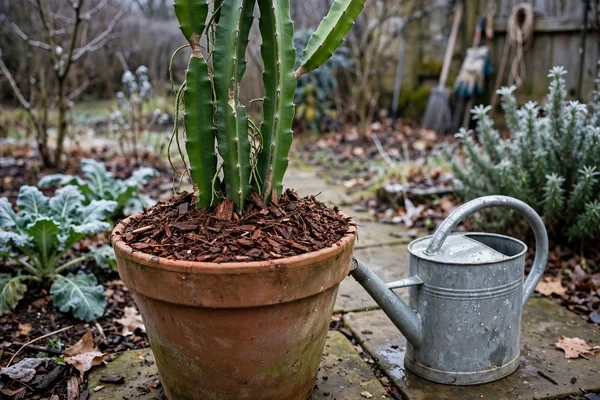
Watering before a cold night helps protect dragon fruit from cold, if the soil is well drained. Moist soil holds heat better than dry soil and releases it slowly overnight, which can keep the root zone a degree or two warmer. Water in the morning or early afternoon, so the plant is not sitting wet and cold at night, and the stems have time to dry. Do not water heavily in the days before a freeze if the soil is already wet, and do not water a plant that is already waterlogged — the aim is moist, not soggy, soil. More detail is in how often to water dragon fruit.
Mulch is the second simple protection. A layer of organic mulch around the base insulates the roots, keeps soil temperature steadier, and reduces the effect of a cold night on the root zone. Keep mulch a few centimetres away from the stem itself, because mulch piled against the stem holds moisture and can encourage rot. In a pot, mulch also helps, but the pot itself is the weak point: wrapping the outside of a pot in bubble wrap, hessian or an old blanket on cold nights insulates the roots far better than mulch on top alone.
Feeding should stop well before cold weather. Fertilise during the growing season, and avoid nitrogen-rich feeding in late autumn, because it encourages soft new growth that has not hardened and is the first to freeze. A plant that has slowed growth, with firm, mature stems, is better prepared for cold than one still pushing tender shoots. Compost around the base in autumn is fine, as it feeds the soil slowly, but a heavy dose of fertiliser just before winter is not.
Moving Potted Plants Indoors or Under Cover
Potted dragon fruit plants are the easiest way to protect dragon fruit from cold, because they can be moved. Before the first frost, move pots to a sheltered spot: a greenhouse, a conservatory, a covered porch, a garage with a window, or simply against a warm wall under an overhang. The spot does not need to be warm — it needs to be frost-free and bright. A dark garage is not ideal for more than a night or two, because the plant still needs light, but it is better than leaving the plant out in a hard freeze.
Move the pot before cold arrives, not during it; a large wet pot is heavy, so plan ahead and use a trolley. Once under cover, water sparingly, as the plant is barely growing and wet soil in a cool spot invites rot. Check weekly, give light when possible, and move it back outside only after the last frost, hardening gradually with a few hours outside at first. For a plant too large to move, a simple frame covered with frost cloth creates a warmer tent to protect dragon fruit from cold; leave a gap for air and remove the cloth on mild days.
What to Do After a Cold Night
Do not prune cold damage immediately. After a frost, the damaged tips may look black and dead, but the extent of the damage is not clear until the plant starts growing again in spring. Pruning too early can cut back into healthy tissue that would have survived, and fresh cuts in cold, wet weather can let in disease. Wait until new growth appears, then cut back to firm, healthy green tissue with a clean, sharp tool, and let the cut dry.
Check the plant in daylight. Firm, green stems below the damage are alive, even if the tips are black. Soft, watery or foul-smelling stems are dead and should be removed once the weather warms. If the whole top has collapsed but the base is firm, the plant may regrow from the base in spring — do not dig it up in winter. Keep watering light until growth resumes, because a damaged plant uses little water and wet soil can rot the roots.
Do not feed a cold-damaged plant straight away. Wait until new shoots appear and the weather is warm, then feed lightly. Most light frost damage is cosmetic, and a healthy plant replaces lost tips within a few weeks of warm weather. If no new growth appears by late spring, or rot spreads, seek local advice, because the roots may also have been damaged.
A Simple Cold-Weather Plan
A practical plan to protect dragon fruit from cold needs only a few steps, done before winter. First, know your frost dates and check the forecast on cold evenings. Second, keep frost cloth, bricks and a frame or hoops ready, so covering takes minutes. Third, mulch the root zone in autumn, stop nitrogen feeding, and water the soil lightly before a forecast frost if it is dry. Fourth, move small pots to shelter before the first frost, and cover plants in the ground on the coldest nights. Fifth, uncover in the morning and check the stems after each cold spell.
For the whole year, the seasonal timing of these jobs is set out in the dragon fruit plant care calendar. With that plan, to protect dragon fruit from cold becomes a routine rather than an emergency: a cloth on a few nights a year, a warm spot, and patience in spring are usually enough.
Frequently Asked Questions
What temperature is too cold, and how do I protect dragon fruit from cold?
Damage can occur after long exposure below about minus 2 degrees Celsius (31 degrees Fahrenheit), according to UF IFAS. Light, brief frost may only mark stem tips, while a long, hard freeze can kill stems. The plant also stops growing below about 10 degrees Celsius, so it needs little water in cool weather.
Should I cover my dragon fruit every night in winter?
No — to protect dragon fruit from cold, cover only on nights when frost is forecast, and uncover in the morning. Leaving a cover on for days in sunny weather can trap heat and scorch stems, and a wet, heavy cover can crush growth. Keep the cloth ready so covering is quick when it is needed.
Can a frost-damaged dragon fruit plant recover?
Yes, often. Light frost usually damages only the tips, and new shoots grow from below the damage in spring. Even if the top collapses, a plant with firm roots may regrow from the base. Wait until spring growth appears before pruning, so you can see what is alive.
Is it better to grow dragon fruit in a pot in a cold climate?
A pot has advantages in a cold climate, because it can be moved to shelter before frost and back outside in spring. The disadvantage is that pot roots freeze more easily, so the pot needs insulation or shelter on cold nights. In the ground, roots are better insulated but the plant cannot be moved.
DragonFruitGrow is an independent gardening information resource. Growing results vary with cultivar, climate, soil and plant age.