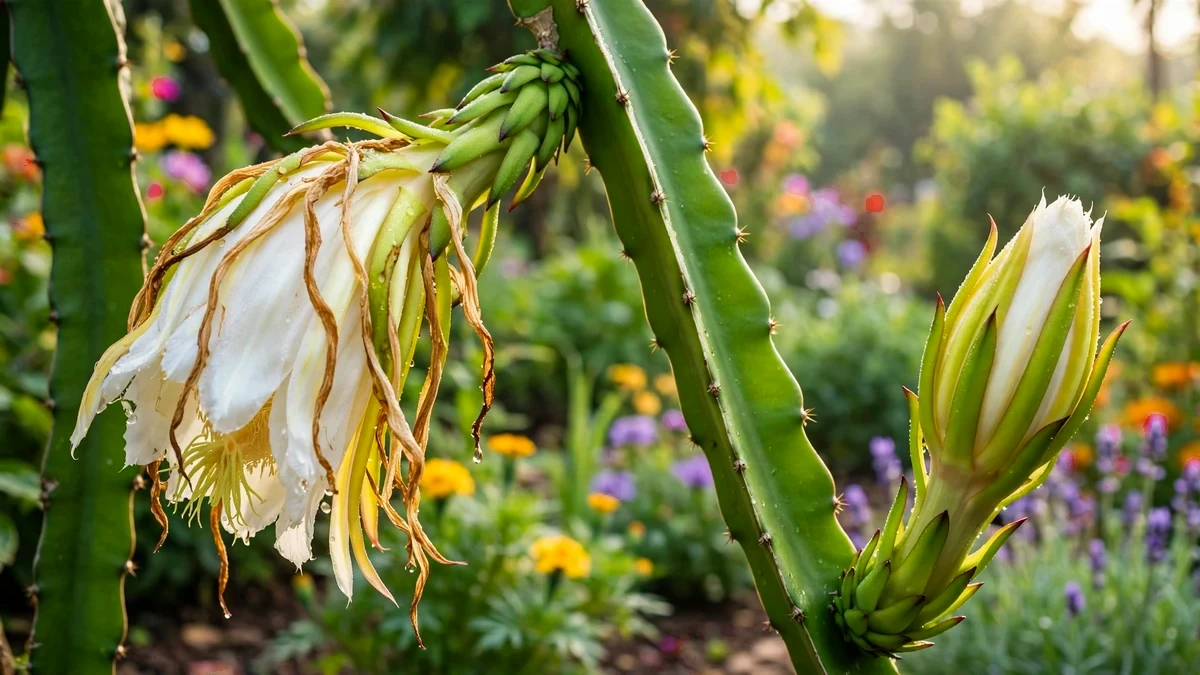
Seeing dragon fruit flowers falling off a plant that looked healthy only a day earlier is frustrating, especially after waiting months for buds to appear. The flowers are large and spectacular, yet each one lasts only a short time, so it is easy to mistake a normal spent flower for a problem. Understanding dragon fruit flowers falling off starts with knowing which drops are normal and which point to pollination failure, weather stress, water imbalance or a plant not yet strong enough to carry fruit. Most cases have more than one cause, and the pattern of dragon fruit flowers falling off — when and how many fall — usually gives the clearest clue.
Dragon fruit, also called pitaya, is a climbing cactus with triangular green stems. Its flowers open at night and can reach about 14 inches long, according to UF IFAS. Because the flowering window is so brief, an unpollinated flower has no reason to stay on the plant, so it is shed. That is not always disease. Investigate when most flowers fall, when buds drop before opening, or when the pattern repeats through a whole season.
Table of Contents
- How Dragon Fruit Flowers Normally Develop
- Why Dragon Fruit Flowers Falling Off After Pollination Fails
- Weather Stress: Heat, Wind and Sudden Changes
- Water Imbalance: Too Much and Too Little
- Plant Age, Health and Nutrition
- Pests, Disease and Physical Damage
- How to Diagnose Flower Drop Step by Step
- Reducing Flower Drop Next Season
How Dragon Fruit Flowers Normally Develop

A dragon fruit bud appears along the edge of a mature stem, swells over several weeks and opens for a single night. Each flower is hermaphroditic, containing both male and female parts, but that does not guarantee it can fertilise itself. Some varieties are self-fertile, while others are self-incompatible and need pollen from a different variety. The UF IFAS guide notes that self-incompatibility has been reported in several nursery cultivars and that information about individual cultivars is not always well documented, so growers often learn about their own variety by observation.
Once the flower opens, pollination must happen during the night or early morning while it is still open. Moths and bats are natural night pollinators, and bees may visit flowers still open in the morning. If pollination succeeds, the base swells into a young fruit and the petals wither and fall — that is normal. If it fails, the whole flower usually yellows and drops within a few days. A fallen flower with a tiny swelling fruit left behind is a success; one with nothing left was unpollinated. Most species are long-day plants, so longer daylight encourages flowering, usually from late spring into autumn in warm regions.
Why Dragon Fruit Flowers Falling Off After Pollination Fails
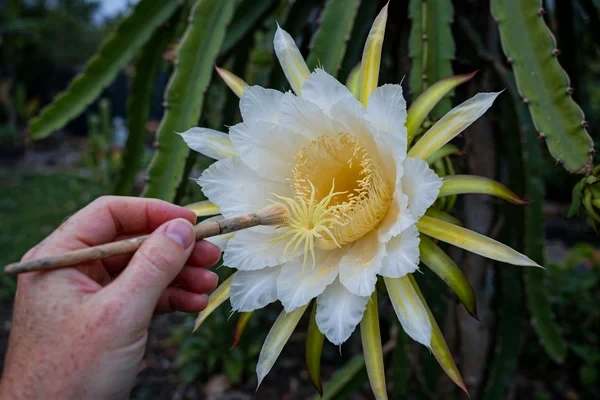
When dragon fruit flowers falling off happens night after night with no young fruit left behind, pollination is the first cause to check. The flower may have looked healthy, yet if no compatible pollen reached its stigma, the plant has no fruit to develop and sheds the flower. This is common with self-incompatible varieties grown alone: one plant can flower generously for years and set almost nothing, because its own pollen cannot fertilise its own flowers. UF IFAS recommends planting two or three different genetic types so cross-pollination can improve fruit set and size.
Night pollinators are not always present in a home garden. Moths and bats do the work in some regions, but in a walled garden, a balcony or an area with few night-flying insects, visits may be rare. Wind does not reliably carry dragon fruit pollen, because it is heavy and sticky. Bees help only if the flower is still open in the morning, and in hot weather flowers may close earlier than expected. Rain on the flowering night can wash pollen away or keep pollinators inactive.
Hand pollination is the most direct test. On the night a flower opens, collect fresh pollen from a flower of a different variety, if available, and brush it gently onto the central stigma. If compatible pollen is unavailable, try the flower’s own pollen as a test, but do not expect it to work on a self-incompatible variety. Mark the flower with a loose tie and check it a few days later. If hand-pollinated flowers swell while unpollinated ones fall, you have found the cause. See the dragon fruit pollination guide and why dragon fruit flowers open at night.
Weather Stress: Heat, Wind and Sudden Changes
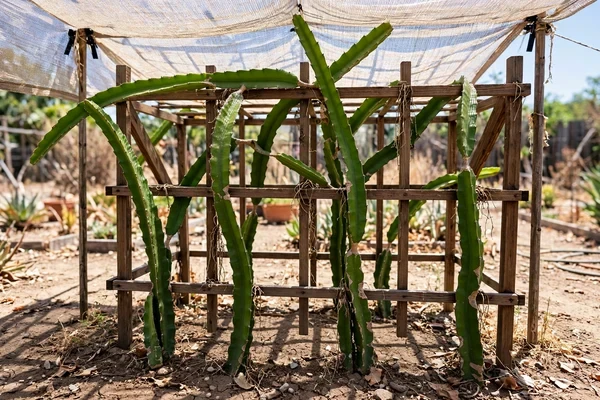
Dragon fruit prefers warm conditions, with optimum growth around 18 to 25 degrees Celsius (65 to 77 degrees Fahrenheit) according to UF IFAS, and it tolerates warmer weather provided temperatures do not exceed about 38 degrees Celsius (100 degrees Fahrenheit). Beyond that, heat stress can cause buds to abort and open flowers to drop. A heatwave during flowering is a common cause of sudden flower loss, especially after a cooler spell. The plant protects itself: supporting fruit through extreme heat demands water and energy it may not have, so it sheds flowers first.
Cold snaps have a similar effect: exposure below freezing can damage stems and flowers, and even a cool night can stress a bud enough to make it drop, particularly on a young or exposed plant. Strong wind can tear a large flower from its stem and dry the plant and soil. Heavy rain can damage flowers, knock pollen off and waterlog the soil. After a storm, losing some flowers is normal; the concern is when losses continue in calm weather afterwards. This weather pattern is a frequent trigger for dragon fruit flowers falling off in exposed gardens.
Water Imbalance: Too Much and Too Little
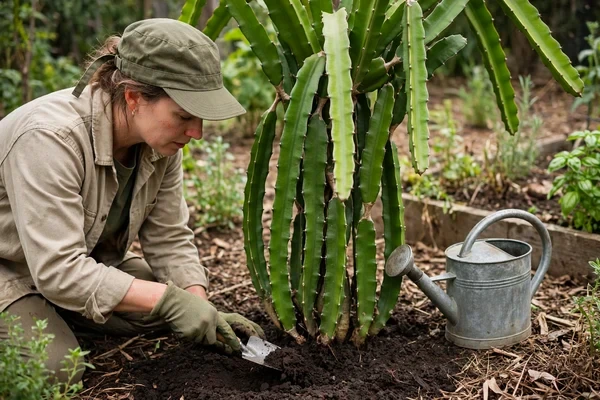
Water is a frequent cause of dragon fruit flowers falling off, and both extremes give the same visible result. Dragon fruit is a cactus, so it is often assumed to need little water, but UF IFAS describes a fairly high water requirement, and the SARE factsheet notes that over-watering and excess rain may lead to flower drop and fruit rot. The plant needs steady moisture during flowering, yet soil must drain freely, because waterlogged roots cannot take up water or oxygen and are prone to disease.
Under-watering is easy to miss: fleshy stems store water, so a plant can look plump while its roots are dry. In a dry spell, especially in warm weather, the plant may abort flowers to conserve moisture. Buds shrivel, flowers open weakly or not at all, and may drop within a day. This is more likely in containers, where soil dries quickly, and in fast-draining sandy soils. A dry period in winter and early spring helps encourage flowering, according to UF IFAS, but once plants flower, drought can lead to poor production, so watering should stay regular from flowering through harvest.
Over-watering causes different problems. Soggy soil suffocates roots, encourages stem and root rot, and can make buds yellow and drop before opening. Watch for soil that stays wet for days, a sour smell, stems soft at the base, and yellowing starting low on the plant. If soil is waterlogged, fix drainage first, not fertiliser: improve the mix, raise the planting mound, clear blocked drainage holes and let soil dry to moist, not wet, before watering again. Practical guidance is in how often to water dragon fruit.
Plant Age, Health and Nutrition
A young plant often drops its first flowers, and that is usually normal. Cuttings can fruit within a year in favourable conditions, but a plant still building roots may not have reserves to support fruit. Its first buds show it is maturing, not that a harvest is guaranteed. A small or recently transplanted plant will usually hold more flowers as it grows larger.
Nutrition affects flowering more subtly. Very high-nitrogen fertiliser may produce lush green growth at the expense of flowers, while a plant unfed for a long time may lack energy to carry fruit. Minor element deficiencies can occur, particularly in poor or high-pH soils; UF IFAS notes pitaya in south Florida may show minor element deficiencies in calcareous soils. The remedy is balanced, moderate feeding, not a sudden heavy dose during flowering, which can stress roots and increase drop. Compost or well-decomposed manure around the base, kept away from the stem, supports steady growth.
A crowded plant is also less likely to hold flowers. Tangled stems reduce light and airflow, encourage disease and make pollination harder. Pruning after harvest — removing damaged, diseased or dead stems and stems reaching the soil — keeps the canopy open. If a plant has not flowered at all, rather than flowering and dropping, the causes are usually different — maturity, light or pruning — and are covered in why your dragon fruit plant is not flowering.
Pests, Disease and Physical Damage
Pests rarely cause flower drop alone, but they can weaken buds enough to tip them into dropping. Thrips, mites, ants, scales, mealybugs and leaf-footed bugs have all been reported on dragon fruit, and some feed on buds and young fruit. Look at fallen buds for small insects, sticky residue, distorted growth or feeding marks, and check at night as well as daytime, since some pests are more active after dark. Slugs may damage low buds, while rats and birds usually damage fruit rather than flowers.
Disease is a more common contributor, especially in wet conditions, and a frequent cause of dragon fruit flowers falling off. Stem rot and fruit rot fungi, including Colletotrichum, can start at a wound and spread into a bud, causing it to yellow, soften and fall. Good airflow, sunlight on stems and quick drying after rain reduce disease pressure, as the SARE factsheet notes. Remove fallen flowers from the ground, because decaying material can harbour disease, and avoid overhead watering late in the day. Clean, sharp tools and cuts allowed to dry help prevent infection through pruning wounds.
Physical damage is often overlooked. A stem knocked by a mower, a wire cutting into a stem, or a flower brushed by passers-by can cause a bud to drop. Check ties are firm but not tight and flowering stems are supported. If only flowers on one damaged stem fall, physical damage there is likely.
How to Diagnose Flower Drop Step by Step
Start by counting, not guessing. Note how many flowers opened, how many fell, and how many left a swelling fruit behind. If most hand-pollinated flowers set fruit and unpollinated ones fall, the cause is pollination. If flowers fall on the same nights as a heatwave, cold snap, heavy rain or strong wind, weather is the likely trigger. If soil is bone dry or soggy, correct water first. If buds drop before opening, look at plant age, nutrition and disease; if open flowers drop after a normal-looking night, look at pollination first.
Next, inspect the plant in daylight. Healthy stems are firm, green and plump. Soft, yellow or blackened areas point to rot or sun damage; thin, pale stems suggest too little light or nutrients; a dense canopy suggests pruning is overdue. Check whether a second variety is flowering at the same time: if none is in flower when yours opens, cross-pollination cannot happen. Keep notes and photographs through the season, showing flowers, stems and soil on the day flowers fall.
Reducing Flower Drop Next Season
Preparation for next season starts after the current flowering ends. Prune lightly after harvest, removing damaged and crowded stems, and keep the canopy open so light and air reach flowering stems. Feed moderately during the growing season and keep watering steady once flowering begins, avoiding both drought and waterlogging. If pollination was the problem, plant a second, different variety nearby so flowering overlaps, or plan to hand-pollinate the main flush. If weather was the problem, consider a more sheltered position for a new plant, temporary shade cloth during extreme heat, and frost protection for cold nights. If the plant is young, give it time: a larger root system and mature canopy hold flowers far better than a first-year plant.
Do not try to fix dragon fruit flowers falling off by adding everything at once. Extra water, extra fertiliser and extra pruning in the same week can stress the plant further and hide the cause. Change one thing, watch the next flush, and then decide what to change next. In most gardens, compatible pollen, steady water, good drainage and a healthy, open canopy turn a season of falling flowers into a season of fruit. When dragon fruit flowers falling off continues despite those basics, and stems show spreading rot or severe yellowing, seek advice from a local extension service with photographs and notes.
Frequently Asked Questions
Is it normal for dragon fruit flowers falling off after one night?
Yes, petals normally wither and fall after the single night of opening. That is normal when a small swelling fruit is left behind. It is a problem when the whole flower, including its base, falls and no young fruit remains, especially if most flowers in a flush do this.
Can a single dragon fruit plant produce fruit on its own?
Some varieties can, but others are self-incompatible and need pollen from a different variety. Because cultivar information is not always well documented, a lone plant that flowers well but never sets fruit may need a second variety nearby or regular hand pollination with compatible pollen.
Should I water more when my dragon fruit is flowering?
Water steadily rather than heavily. Keep soil moist but well drained from flowering through harvest, and avoid letting it dry out completely or stay soggy. Check soil before watering, and water at the base in the morning.
How long should I wait before worrying about flower drop?
One bad night after a storm or heatwave is not a concern. If most flowers fall through an entire flush, or the pattern repeats in the next flush after hand pollination and corrected watering, work through the diagnosis steps in this article and, if needed, ask a local extension service for help.
DragonFruitGrow is an independent gardening information resource. Growing results vary with cultivar, climate, soil and plant age.