
Air layering is the patient grower’s way to clone a dragon fruit plant. Instead of cutting a stem off and hoping it roots, you grow roots on the stem while it is still attached to the parent plant, and only cut it free once the roots are ready. When you air layer dragon fruit stem sections this way, the new plant gets water and food from the parent the whole time, so it almost never wilts or fails the way a fresh cutting sometimes does.
The method sounds technical, but it needs only moss, plastic wrap, twine and a sharp knife, and the whole job takes about twenty minutes. It is the best way to multiply a variety you love, to save a stem that has outgrown its support, or to share a plant with a friend without weakening your own. This guide explains how air layer dragon fruit stem work is done step by step, which stems to choose, and how to care for the layer until it is ready to pot.
In This Guide
- What air layering means and why it works so well on dragon fruit
- How to choose the right stem for layering
- Tools and materials you need
- The air layering process step by step
- Aftercare while roots form
- Cutting the layer free and potting the new plant
- Frequently asked questions
What Air Layering Means
Air layering is a propagation method in which roots are encouraged to grow from a stem while it is still attached to the parent plant. A small wound is made in the stem, damp moss is packed around the wound, and the moss is wrapped in plastic to hold in moisture. Over several weeks, roots grow from the wounded area into the moss. Once a good ball of roots has formed, the stem is cut below the moss and potted as a new, independent plant. Growers who air layer dragon fruit stem sections see roots far more reliably than growers who take cuttings, because the stem never loses its supply of water while it roots.
The method suits dragon fruit particularly well. The plant naturally grows roots from its stem joints, especially where stems touch a damp surface, so a moss wrap gives it exactly the conditions it wants. The UF IFAS growing guide notes that dragon fruit roots readily from stem sections, which is why this method works so well on this plant. You can read the full guide through UF IFAS.
Air layering has two clear advantages over ordinary cuttings. First, the layered stem keeps receiving water and nutrients from the parent plant while it roots, so it does not dry out or stall. Second, the new plant is already a good size when you cut it free, often a metre or more of stem with roots attached, so it fruits much sooner than a small cutting would. The only cost is patience: roots usually take four to eight weeks to form, and you must keep the moss damp the whole time.
Choosing the Right Stem
Choose a stem when you air layer dragon fruit stem sections for the best results, and pick one that is healthy, mature and easy to reach. The ideal stem is at least a year old, firm and green, about as thick as your thumb, and growing vigorously. Young, soft stems root quickly but are easily damaged, while very old, woody stems root slowly. A stem that has already fruited is a good choice, because you know the variety and the fruit quality.
Pick a spot on the stem about 30 to 45 centimetres below the tip, where the stem is straight and free of buds or side shoots. Avoid stems that are sunburned, soft, shrivelled or marked with disease, since a weak stem makes a weak new plant. Also avoid the lowest part of the plant, where stems are often woody and slow to root. One healthy stem can carry one air layer; if you want several new plants, layer several stems, but never layer more than a third of the plant at once, or the parent will struggle to feed them all.
Spring and early summer are the best times to start, when the plant is growing fast and the weather is warm. A layer started in warm weather can root in four weeks, while one started in cool weather may take twice as long or stall altogether. If your plant is in a pot, turn it so the stem you want to layer faces you and is easy to reach for weekly checks.

What You Need
Gather everything before you start, because a half-wrapped stem dries out quickly. You need a sharp, clean knife or pruning blade; a handful of sphagnum moss, soaked in water until it is damp but not dripping; a sheet of clear plastic wrap about 30 centimetres square; twine, string or twist ties; and optionally a small amount of rooting hormone powder or gel. A spray bottle of clean water is useful for dampening the moss during checks.
When you air layer dragon fruit stem sections, sphagnum moss is the best wrapping material because it holds water well, stays airy, and does not rot quickly. If you cannot find sphagnum moss, coconut coir fibre works as a substitute, though it dries out faster and needs checking more often. Avoid ordinary garden soil or potting mix in the wrap: both are heavy, hold too much water, and can rot the stem before roots form.
Disinfect the knife before you cut, with rubbing alcohol or a quick dip in diluted bleach, and let it dry. A clean cut heals into roots; a dirty cut can introduce rot. Keep a small bowl of water nearby so you can re-wet the moss if it dries while you work, and have the plastic and twine within reach so the wrap goes on immediately after the moss.
Air Layering Step by Step
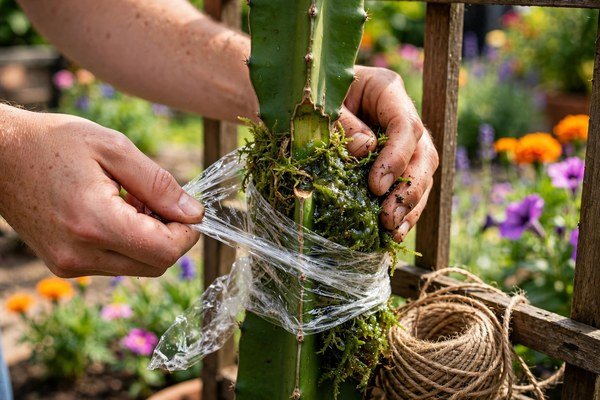
Work slowly and keep the moss damp while you air layer dragon fruit stem sections, and the process is straightforward. First, make a shallow ring cut around the stem at your chosen spot: cut through the green skin in a complete circle, about 3 millimetres deep, just enough to reach the pale tissue underneath. Then make a second ring cut 3 to 4 centimetres below the first, and peel away the strip of skin between the two cuts. This ring, called girdling, stops food from flowing past the wound and encourages roots to form there instead.
If you are using rooting hormone, dust or smear a thin layer onto the exposed ring now. It is optional, since dragon fruit roots readily on its own, but it can speed rooting by a week or two on woody stems. Next, take a generous handful of damp sphagnum moss, squeeze out the extra water, and pack it around the ring in a ball about the size of a tennis ball. The moss must cover the whole ring and extend a few centimetres above and below it.
Wrap the moss ball tightly in clear plastic, folding the edges so no moss shows, and tie both ends firmly with twine. The wrap should be snug but not crushing, and sealed well enough that water cannot escape. Keep the moss damp but not soaking, because air layer dragon fruit stem roots rot quickly in waterlogged moss. If water drips from the wrap, it is too wet: open one end, squeeze the moss gently, and re-tie it. Label the wrap with the date so you know when to check it.
Aftercare While Roots Form
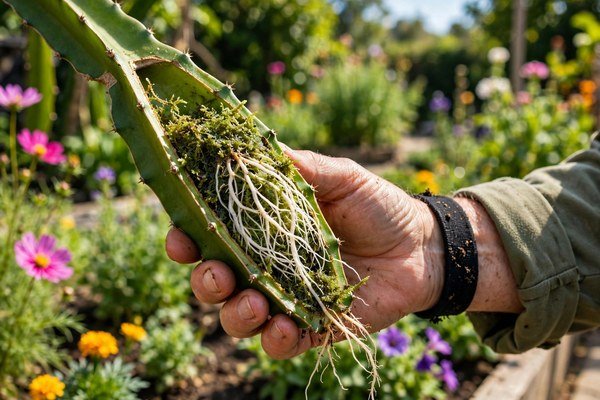
Check the moss every week through the clear plastic. It should look damp and dark; if it turns pale and dry, add water with a spray bottle through a small slit in the plastic, then seal the slit with tape. The most common mistake when you air layer dragon fruit stem sections is impatience: unwrapping the plastic to peek at the roots breaks the fragile new growth, so look through the plastic and leave the wrap alone.
Roots usually appear as white threads pressed against the plastic within four to six weeks in warm weather. Wait until the moss ball is full of roots and the roots look thick and white, not thin and brown. In cool weather this can take eight to ten weeks. If no roots appear after ten weeks, the ring may have healed over: unwrap the moss, re-cut the ring slightly wider, apply fresh moss, and wrap it again. A failed first attempt is common and does not harm the plant.
While the layer is rooting, keep watering and feeding the parent plant normally. The layered stem still draws on the parent, so a stressed parent makes a slow layer. If the stem above the wrap starts to wilt, the wrap may be too tight or the moss too dry; loosen the ties slightly and dampen the moss. Healthy growth above the wrap is a good sign that roots are forming below it.
Cutting and Potting the New Plant
Once the moss ball is full of roots, cut the stem about 5 centimetres below the wrap with clean, sharp secateurs. Make the cut in one smooth motion so the stem does not crush. Remove the plastic and twine carefully, but leave the moss and roots intact: the moss protects the young roots and helps the plant settle into its pot.
Pot the new plant in a large container with a sturdy post or trellis, using the mix from our guide to the best soil for dragon fruit. Bury the rooted moss ball just below the surface and firm the mix gently around it. Water thoroughly, then place the pot in bright shade for the first week so the new roots can establish without heat stress. If you air layer dragon fruit stem sections for a second plant, you can repeat the process on another stem once the first layer is potted.
Tie the stem loosely to its support and let it grow. The new plant is already a good size, so it may flower within a year if it is kept warm, fed and watered well. Care for it exactly as described in our guide on how to grow dragon fruit, and it will soon look like a plant you grew from seed, except it is an exact copy of the parent. If you want to combine two varieties on one plant instead of cloning one, see how to graft dragon fruit onto cactus for a faster way to mix varieties.

Frequently Asked Questions
How long does it take to air layer dragon fruit stem cuttings?
Most layers root in four to eight weeks in warm weather, and the wait is shorter when you air layer dragon fruit stem sections in spring or early summer. You can check progress through the clear plastic: white roots pressed against the plastic mean the layer is working. Cool weather can stretch the wait to ten weeks, so start in spring or early summer for the fastest results.
Can I air layer a stem that is already fruiting?
Yes, and it is often a good choice, because a fruiting stem proves the variety and fruit quality. Just remember that the stem is feeding both the fruit and the new roots, so pick the fruit first or accept that rooting may take a little longer.
What if the moss dries out?
Dampen it through a small slit in the plastic with a spray bottle, then seal the slit with tape. If the moss has dried out completely for more than a few days, replace it with fresh damp moss, since dried moss rarely re-wets evenly and can stall rooting.
Is rooting hormone necessary?
No. Dragon fruit roots readily on its own, and most layers succeed without it. Rooting hormone can help on thick, woody stems, but a clean ring cut, damp moss and warm weather matter far more than any powder or gel.
Conclusion
Air layering is the most reliable way to copy a dragon fruit plant you love, because the new plant roots while the parent still feeds it. Choose a healthy stem, cut a clean ring, pack it with damp moss, and wait for white roots to fill the wrap. When you air layer dragon fruit stem sections with patience and keep the moss damp, the success rate is very high, and the new plant you pot is already big enough to grow fast and fruit sooner than a cutting ever would.