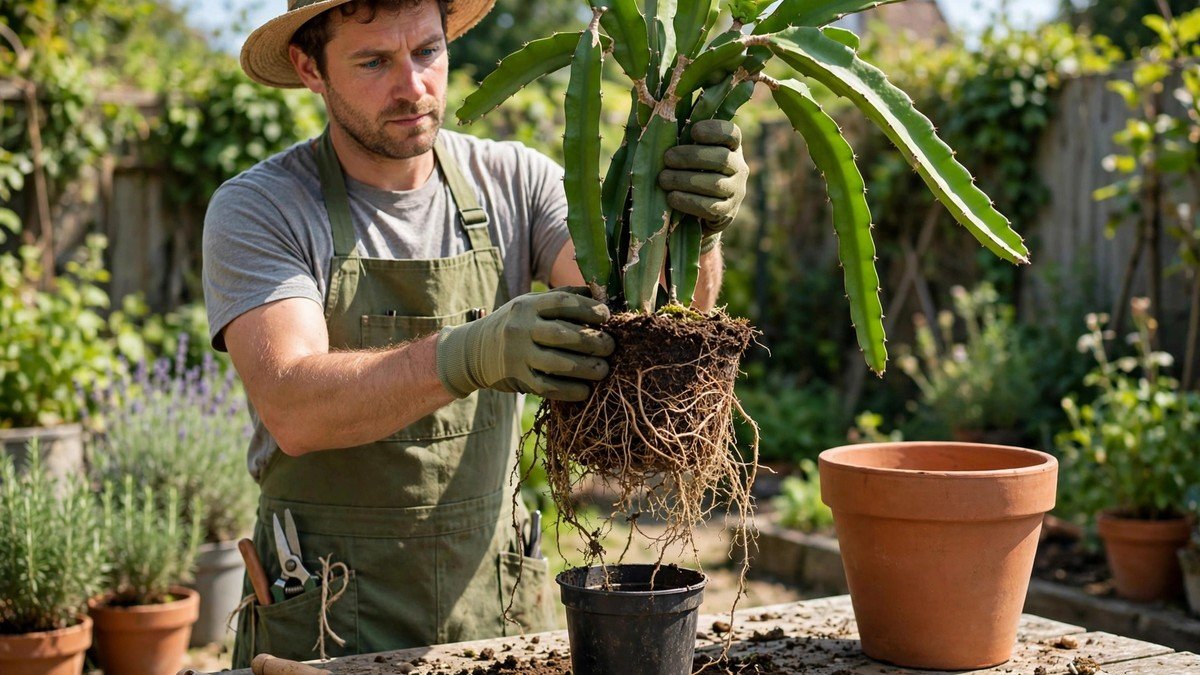
A dragon fruit plant in a pot grows fast, and sooner or later its roots fill every centimetre of soil. When that happens, growth slows, the stems turn pale and thin, and watering becomes a daily chore because the pot dries out within hours. This guide shows you how to repot root bound dragon fruit plant step by step, without tearing the roots or breaking the stems. The job takes less than an hour with basic garden tools, and a struggling plant often puts out strong new growth within weeks of moving to a bigger pot.
In This Guide
- Signs your plant is root bound
- how to repot root bound dragon fruit plant: the full process at a glance
- What you need before you start: how to repot root bound dragon fruit plant
- Removing the plant without damage
- Loosening the roots the right way
- Choosing the new pot and soil mix
- How to repot root bound dragon fruit plant step by step
- Aftercare in the first weeks
- Mistakes that set the plant back
- Answers to the most common questions
Signs Your Plant Is Root Bound
The most obvious sign is roots coming out of the drainage holes. A few fine roots are normal, but a thick mat pushing out means the plant has run out of room. Another sign is water running straight through the pot the moment you water it. When roots have replaced most of the soil, there is nothing left to hold moisture, so the pot dries out within hours on a warm day.
Growth tells the same story. A root-bound plant makes thin, pale stems, grows slowly even in warm weather, and may drop its flower buds before they open. The plant is not sick, it is simply hungry, because a crowded root ball cannot take up enough water and food. Roots poking out of the drainage holes are the clearest sign it is time to learn how to repot root bound dragon fruit plant before the roots strangle themselves into a solid knot.
You can check by tipping the pot on its side and sliding the plant out gently. If the roots form a tight net around the soil with almost no soil visible, the plant is root bound. Now is the time to learn how to repot root bound dragon fruit plant. Do not wait for the next season.
What You Need Before You Start: How to Repot Root Bound Dragon Fruit Plant
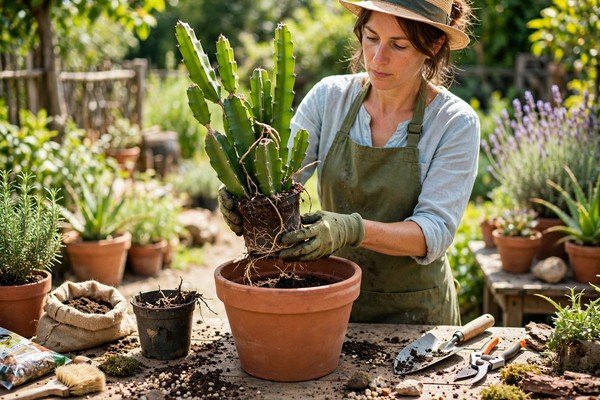
Gather everything before you lift the plant out of its pot, because exposed roots dry out fast in sun and wind. You need a new pot, fresh soil mix, a pair of thick gloves, clean secateurs, a trowel, and a watering can. A wooden trellis post or stake for the new pot is useful too, since a repotted plant often needs support while it settles. The steps below show how to repot root bound dragon fruit plant with ordinary garden tools and no special equipment.
Pick a pot only one size bigger, roughly 5 to 8 centimetres wider across. A pot far too big holds wet soil around a small root ball and the roots can rot. Make sure it has several drainage holes, and that it is heavy enough to hold a tall plant without tipping over.
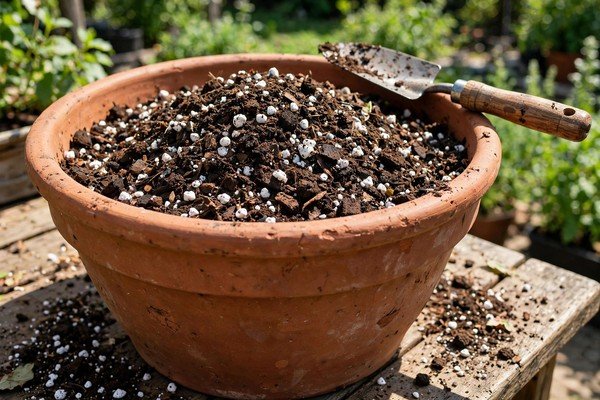
Mix the soil before you start: roughly half potting soil, a quarter coarse sand or perlite, and a quarter compost. It should feel light and crumbly, not heavy and wet. Our guide to best soil for dragon fruit explains the mix in more detail. Wet it lightly so it is damp, not soggy, and have it ready beside the new pot.
Removing the Plant Without Damage
Water the plant the day before: damp soil slides out far more easily than dry soil, and damp roots are less likely to snap. On the day, lay the pot on its side on a table or on the ground, and tap the sides gently to loosen the root ball. Never pull the plant out by its stems, because dragon fruit stems snap easily where they join the main stem.
The first real step in how to repot root bound dragon fruit plant is getting it out of the old pot without tearing the roots. Hold the base of the main stem with one gloved hand and ease the pot off with the other. If the pot will not budge, run a long knife or trowel around the inside edge to free the roots from the pot wall. For a plant tied to a trellis, untie the stems first and lay them down gently, so they do not snap under their own weight.
If the root ball comes out in one solid piece, set it down and look at the roots. Black, mushy, or bad-smelling roots are rotten and should be cut away with clean secateurs; healthy roots are white, cream, or light brown and firm. Cutting away dead root is far better than leaving rot in the new pot.
Loosening the Roots the Right Way
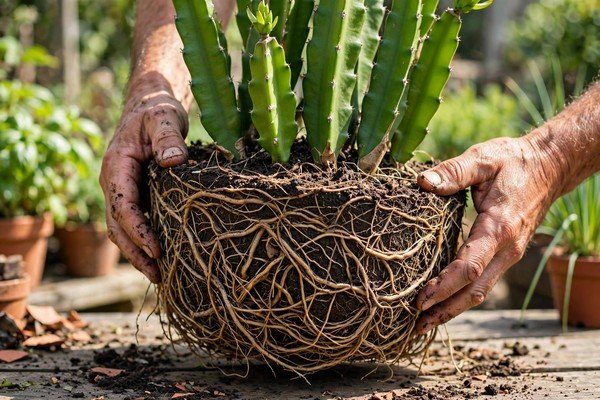
A root-bound plant needs its roots loosened before it goes into the new pot, or the roots will keep circling in the same tight shape and never grow out into the fresh soil. Teasing the roots apart is the gentlest part of how to repot root bound dragon fruit plant, and it is worth doing slowly. Use your fingers to pull the outer roots apart, working from the bottom of the root ball upward. Pull outward, not downward, so the roots spread into a wider shape.
If the roots form a solid mat, make three or four shallow vertical cuts down the sides of the root ball with a clean knife, about 2 to 3 centimetres deep. This lets new roots branch into the fresh mix. Also loosen the flat mat at the bottom, where circling is usually worst, and remove any black, soft, or broken roots.
Do not wash the roots clean: the thin soil clinging to them holds useful microbes, and washing can damage the fine root hairs. A gentle shake to drop loose old soil is enough, and the plant settles faster when its roots keep some familiar soil around them.
Choosing the New Pot and Soil Mix
Choosing the right pot is half of how to repot root bound dragon fruit plant successfully. A pot that is only slightly bigger than the old one is best, because the roots can grow into the fresh soil quickly and the soil dries out evenly. A pot that is far too large stays wet in the middle, and wet soil is the fastest way to rot the roots of a newly repotted plant. Measure the old pot across the top and add 5 to 8 centimetres for the new one.
Depth matters too: roots spread wide rather than deep, so a wide, moderately deep pot suits the plant better than a tall narrow one. The pot must be stable, because a mature plant on a trellis is top heavy. Put the pot where the plant will live before you fill it, because a full pot of wet soil is heavy to move.
Fill the new pot with fresh mix, not old garden soil, which can carry pests and diseases and is usually tired and compacted. The mix should drain freely: water poured on top should run out of the drainage holes within a few seconds. A layer of coarse gravel over the holes stops the mix washing out while keeping water moving. The UF IFAS publication on dragon fruit notes that good drainage is essential, and it is the single most important thing about the soil for this plant.
How to Repot Root Bound Dragon Fruit Plant Step by Step
Start by putting a layer of fresh mix in the bottom of the new pot, about a third of its depth. Set the plant in the centre and check the height: the top of the root ball should sit about 3 to 5 centimetres below the rim of the pot, so there is room to water without soil spilling over. Add or remove mix under the root ball until the height is right. Now the main part of how to repot root bound dragon fruit plant begins, and it is best done slowly.
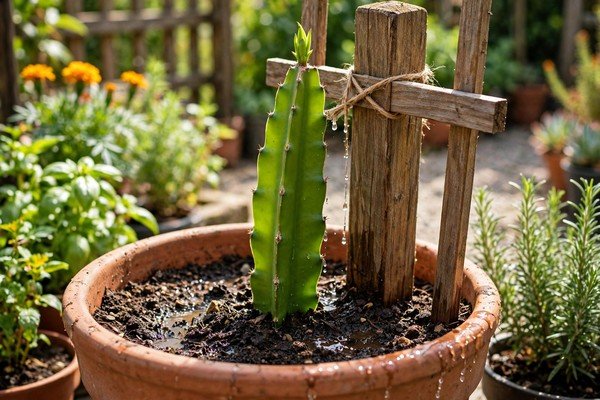
Hold the plant upright and fill mix around the sides, pressing it down gently with your fingers as you go. Do not stamp the soil down hard, because compacted soil holds no air and the roots need air as much as water. Fill to just below the rim, leaving a small gap for watering. If the plant has a trellis post, set the post in place now and tie the main stem to it loosely with soft ties, so the plant does not lean while it settles.
Water slowly until water runs out of the drainage holes, which settles the mix around the roots. Check the soil level after watering, as it often sinks a little, and top it up if needed. Put the plant in bright light but out of harsh midday sun for the first week. A plant that wilts a little in the first day or two usually recovers once the roots start working.
Aftercare in the First Weeks
Aftercare decides whether your work on how to repot root bound dragon fruit plant pays off, because the first two weeks are when the roots grow into the fresh soil. Water when the top few centimetres of mix feel dry, but do not keep the soil wet all the time. The roots need air, and soggy soil in a new pot is the most common reason a repotted plant fails. Our guide on how often to water dragon fruit gives a simple routine for pots through the seasons.
Do not feed for the first three to four weeks after learning how to repot root bound dragon fruit plant: fresh mix and compost already hold enough food, and fertiliser on damaged roots can burn them. After a month, when you see new growth, start feeding lightly. Fresh green growth at the stem tips within three to six weeks is the best sign the repot worked.
Keep the plant out of strong wind for the first week, and tie long stems to the trellis so they do not snap. Pale or soft stems for a few days are normal shock. If the plant keeps wilting after a week, check that the soil is not too wet and the drainage holes are clear. A plant that recovers well usually grows faster than before within a month.
Mistakes That Set the Plant Back
The most common mistake when people first try how to repot root bound dragon fruit plant is choosing a pot far too big. A huge pot looks generous, but the soil in the middle stays wet, the roots rot, and the plant ends up worse than before. Stick to one size bigger, and repot again in a year or two if the plant outgrows it. Repotting often in small steps is far safer than one giant jump.
Another mistake is repotting in a heatwave or while the plant is flowering: hot weather stresses the roots and a flowering plant may drop its buds. Spring or early summer is best. If you must repot at another time, give the plant shade for a week and water carefully.
Cutting away too many roots is a third mistake: trim only dead, black, or badly circling roots, and leave the healthy ones alone. A plant with most of its roots cut away may take months to recover. Also, do not bury the stem deeper than before, because a buried stem can rot where it meets the soil.
Frequently Asked Questions
How to repot root bound dragon fruit plant without breaking the stems?
Water the plant the day before, lay the pot on its side, and ease the pot off while holding the base of the main stem, never pulling by the stems. Untie the plant from its trellis first and lay the stems down gently. If the pot will not budge, run a knife around the inside edge to free the roots. Work slowly and keep the root ball damp while you work.
When is the best time to repot a dragon fruit plant?
Spring or early summer is best, when the plant is growing strongly and the weather is warm but not extreme. Avoid a heatwave or flowering time, because the plant may drop its buds. A badly root-bound plant can be repotted at any time, but it will need shade and careful watering for the first week.
How much bigger should the new pot be?
Only one size bigger, roughly 5 to 8 centimetres wider across the top than the old pot. A pot that is far too big holds wet soil around a small root ball, and the roots can rot before they grow into it. If the plant outgrows the new pot in a year or two, repot again by the same small step.
Can I reuse the old soil?
It is better to use fresh mix. Old soil from a root-bound pot is usually tired, compacted, and may carry pests or diseases. Shake off loose old soil from the root ball, but leave the soil near the centre alone. Fill the new pot with a fresh mix of potting soil, coarse sand or perlite, and compost that drains freely.
How long does a repotted dragon fruit take to recover?
Most plants show new growth within three to six weeks. A little wilting in the first few days is normal shock. If it keeps wilting after a week, check the soil is not too wet and the drainage holes are clear. Once new stems appear, the plant has settled and you can feed it lightly again.
Conclusion
Repotting a root-bound dragon fruit is a simple job that makes a big difference. Once you know how to repot root bound dragon fruit plant, the job takes less than an hour: water the day before, ease the plant out, loosen the circling roots, move it into a pot one size bigger with fresh free-draining mix, water well, and give it a few weeks of gentle care. The signs to watch for are roots at the drainage holes, water running straight through, and slow pale growth. Fix those, and the plant usually rewards you with strong new stems and better fruit in the next season.
If you are starting from a cutting rather than repotting an old plant, our guide on how to grow dragon fruit covers the first steps from planting to first fruit.