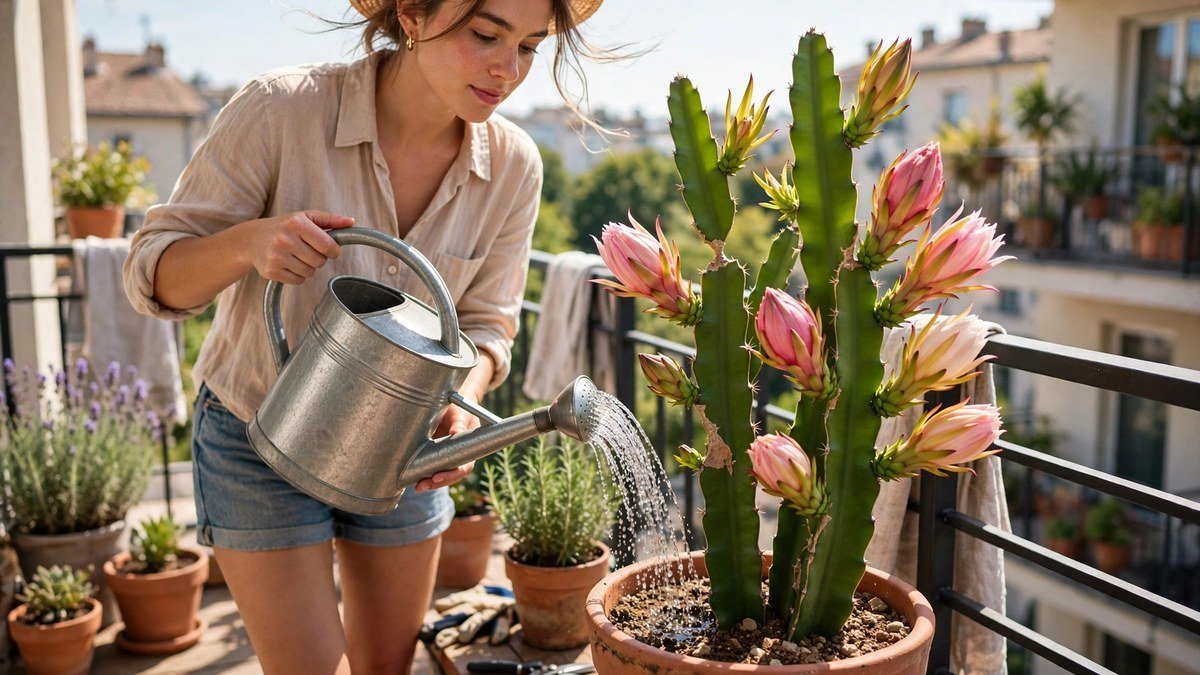
Summer is the season when dragon fruit grows fastest, and it is also the season when watering mistakes do the most damage. The plant drinks more in the heat, yet its roots still rot quickly if they sit in wet soil. That contradiction confuses a lot of growers. They see dry stems and water every day, then wonder why the base turns soft and yellow. Or they hold back out of fear of rot, and the plant stalls, drops buds, and shrivels in the sun.
The answer is not a fixed number of days. A good dragon fruit watering schedule in summer is a routine built around soil checks, pot size, and your own garden’s weather, and this guide gives you that routine for pots and ground plants alike.
In This Guide
- Why Summer Changes Everything for Dragon Fruit Watering
- How Often to Water Potted Dragon Fruit in Summer
- How Often to Water Ground-Planted Dragon Fruit in Summer
- The Finger Test and Other Simple Soil Checks
- Morning or Evening: When to Water in Summer
- Signs You Are Overwatering in Summer
- Signs You Are Underwatering in Summer
- Watering After Rain and During Heatwaves
- Frequently Asked Questions
Why Summer Changes Everything for Dragon Fruit Watering
Dragon fruit is a climbing cactus, and cacti are built to survive dry spells. The thick green stems store water, the skin is waxy to slow evaporation, and the roots are shallow and fine. In mild weather, that design means the plant needs very little water. Summer changes the balance in three ways at once.
First, heat pulls moisture out of the soil faster. A pot that stayed damp for five days in spring can dry out in two days under a hot summer sun. Second, the plant is growing hard. New stems stretch, flower buds form, and fruit swells, and all of that growth uses water. Third, the sun heats the pot itself. A dark pot on a sunny balcony heats the root zone well above air temperature, drying the mix from the edges inward.
That is why a schedule that worked in spring fails in summer. Your pot size, mix, sun exposure, and local heat all change the answer, so a dragon fruit watering schedule in summer has to adapt to your own garden instead of copying a neighbour’s routine.
How Often to Water Potted Dragon Fruit in Summer
For most potted plants, a practical dragon fruit watering schedule in summer is every two to three days in hot weather, with a soil check before every watering. Small pots under 30 litres dry fastest and may need water every second day during a heatwave. Large pots over 50 litres hold more moisture and often do well on a three to four day gap. Young cuttings in small pots dry out quickest of all, with little soil to hold water and little stem to store it.
When you water, water deeply. Pour slowly until water runs freely from the drainage holes, then stop. A deep watering reaches the whole root zone. A light sprinkle only wets the top few centimetres, which encourages roots to stay near the surface, where they dry out fastest. After watering, empty any saucer under the pot. A pot sitting in a puddle is the fastest route to root rot, even in summer.
Check the soil daily for the first two weeks of summer and note how many days it takes the top five centimetres to dry out. That number is your starting schedule.
How Often to Water Ground-Planted Dragon Fruit in Summer
Plants in the ground behave very differently from plants in pots. The soil mass is far larger, the roots can reach deeper, and the ground does not heat up the way a pot does. A good dragon fruit watering schedule in summer for ground plants is usually once or twice a week, with a deep soak each time.
Water slowly so it sinks in rather than running off. A drip line or a slow hose running for twenty to thirty minutes works better than a quick blast from a can. The aim is to wet the soil to a depth of at least 20 to 30 centimetres, where the feeding roots live. Shallow watering trains the roots to stay near the surface, which makes the plant more vulnerable to dry spells.
Mulch makes a real difference in the ground. A 5 to 8 centimetre layer of straw, wood chips, or dry leaves around the base keeps the soil cooler and slows evaporation, stretching the gap between waterings by a day or two. Keep it a few centimetres away from the stem so moisture does not sit against it.
Newly planted cuttings in the ground need more attention than established plants. For the first month after planting, check the soil every two or three days and water when the top few centimetres feel dry. Once the roots are established, move to the weekly deep-soak routine.
The Finger Test and Other Simple Soil Checks
No calendar can tell you whether your plant needs water today, which is why the finger test sits at the heart of any dragon fruit watering schedule in summer. The finger test is the most reliable check a home grower has, and it takes five seconds. Push your index finger into the soil up to the second knuckle, about five centimetres deep. If the soil feels cool and damp at that depth, wait. If it feels dry, water. If it feels wet and sticky, you may already be watering too often.
A wooden skewer works the same way and is useful for deeper pots. Push it into the mix, leave it for a minute, then pull it out. A dark, damp skewer means the soil is still moist. A dry, pale skewer means it is time to water. A moisture meter is another option, but it is not necessary. The finger test, done honestly, is enough.
Weight is a second check for pots. Lift the pot just after watering and again two days later. A pot that has lost a lot of weight has dried out, and with practice you can judge moisture by weight alone.
Watch the plant as well as the soil. Stems that look slightly thinner in the afternoon and plump up by morning are coping with normal heat. Stems that stay thin and wrinkled through the night mean the plant is genuinely thirsty.

Morning or Evening: When to Water in Summer
The time of day matters more in summer than in any other season. Morning is the best time to water dragon fruit, and a morning-first habit is the simplest dragon fruit watering schedule in summer to stick to. The soil is cool, the plant can drink before the heat of the day, and any water that splashes onto the stems dries quickly in the rising sun.
Evening watering is the second choice. It works, but wet stems and a damp surface overnight give fungal problems a chance to start, especially in humid weather. If evening is your only option, keep the water at the base and off the stems.
Avoid watering in the middle of the day. Water on hot stems can scorch them, and much of it evaporates before reaching the roots. If you come home to a wilting plant at midday, move it into shade if you can and wait until late afternoon, then water deeply.
Signs You Are Overwatering in Summer
Overwatering is the most common summer mistake, and the most dangerous, because it can kill the plant. The first sign is usually at the base: the stem turns soft and yellow where it meets the soil and feels spongy when pressed. That softness is the start of rot, and it spreads upward if the soil stays wet.
Other signs follow. The stems turn a pale yellow-green instead of a healthy deep green. New growth looks weak and thin. The soil smells sour or musty when you disturb it, and the surface may grow algae or a white crust. In the worst cases, the plant leans or topples because the roots have rotted away and can no longer hold it.
If you see these signs, stop watering and let the soil dry out. Move a potted plant into bright shade and check the drainage holes. If the base is soft, cut away the rotted part with a clean knife until you reach firm green tissue, let the cut dry, and repot into fresh, dry mix. Caught early, the plant can recover.
For the wider care of the plant, including planting and feeding, UF IFAS publishes a practical dragon fruit growing guide that is worth reading alongside this schedule.
Signs You Are Underwatering in Summer
Underwatering is less dangerous than overwatering, but it still costs you growth and fruit. The stems are the first thing to check. A thirsty dragon fruit stem looks thin and slightly wrinkled, with the ribs standing out more sharply than usual. The colour may fade from deep green to a dull grey-green. In severe cases, the stem tips dry out and turn brown.
Flower buds are the next casualty. A plant that is short of water often drops its buds before they open, or the flowers open weakly and fail to set fruit. Fruit that does form may stay small, and the skin can split if watering suddenly resumes after a long dry spell.
The fix is simple: water deeply, then return to a steady dragon fruit watering schedule in summer, checking the soil before each watering. Do not flood the plant every day to make up for lost time. That sudden swing from dry to soaking is what causes fruit to split and roots to suffer. Steady, regular watering is what the plant wants.
If your potted plant keeps drying out faster than you can keep up, the pot may be too small. A plant that has outgrown its pot has more roots than soil, and no schedule can fix that. Repot into a larger container with fresh mix, and the watering rhythm will settle down. Our guide on the best potting mix for dragon fruit in pots explains the mix that holds moisture without staying wet.
Watering After Rain and During Heatwaves
Summer rain changes the schedule completely. After heavy rain, skip the next watering and check the soil the next day. A rain-soaked pot may not need water for three or four days, even in hot weather. In a rainy spell the risk flips from drying out to rotting, so check the drainage holes and make sure no pot sits in standing water.
Heatwaves need the opposite response, and they are the one time a dragon fruit watering schedule in summer should tighten up. Check the soil daily and be ready to water a day earlier than usual. Move potted plants into light afternoon shade, or drape a light shade cloth over them during the hottest hours. A plant in a black pot on a concrete balcony can need water twice as often as the same plant in a white pot on soil.
During a heatwave, a light misting of the stems in the early morning can help, but it is not a substitute for watering the soil. The roots do the drinking. Misting cools the plant and raises humidity for a short while, which is useful, but the soil check still decides whether you water.
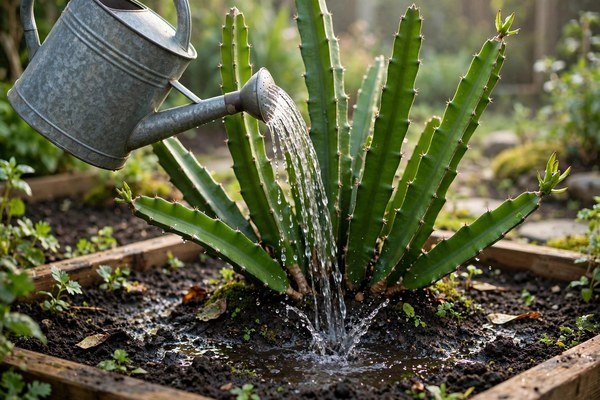
A steady dragon fruit watering schedule in summer is less about the calendar and more about the habit of checking. Check the soil, water deeply when it is dry, and let the plant tell you the rest. That habit will carry your plant through the hottest months with strong growth and fruit to show for it. For planting and support, see our guide on how to grow dragon fruit in a container on balcony.
Frequently Asked Questions
What is the best dragon fruit watering schedule in summer?
The best dragon fruit watering schedule in summer for potted plants is every two to three days in hot weather, with a soil check before each watering. Ground plants usually need a deep soak once or twice a week. Small pots dry fastest and may need water every second day in a heatwave, while large pots can go three to four days. Always check the top five centimetres of soil first.
How do I know if my dragon fruit needs water in summer?
Push your finger five centimetres into the soil. If it feels dry at that depth, water. If it feels cool and damp, wait. Stems that stay thin and wrinkled through the night are also a sign the plant is thirsty. A pot that feels much lighter than it did just after watering has dried out.
Should I water dragon fruit every day in summer?
No, daily watering is usually too much, even in summer. Dragon fruit roots rot quickly in soil that never dries out. Water deeply every two to three days for pots, or once or twice a week for ground plants, and always check the soil first. The only exception is a very small pot in extreme heat, which may need water every second day.
Is morning or evening better for watering dragon fruit in summer?
Morning is best. The soil is cool, the plant drinks before the heat of the day, and water on the stems dries quickly. Evening watering works too, but keep water off the stems to reduce the risk of fungal problems overnight. Avoid watering in the middle of the day, when much of the water evaporates and wet stems can scorch.
Can I overwater dragon fruit in summer?
Yes, and overwatering is the most common summer mistake. Even in hot weather, soil that stays wet rots the roots. Signs include a soft yellow base, pale stems, a sour smell from the soil, and algae on the surface. If you see these signs, stop watering, let the soil dry out, and check that the drainage holes are clear.
Conclusion
Summer watering is a balance, not a battle. Your dragon fruit needs more water in the heat, but its roots still need air between waterings. A simple dragon fruit watering schedule in summer, built on deep watering and a quick soil check before each round, gives the plant both. Water in the morning, watch the stems, and adjust the gap as the weather changes. Do that, and your plant will grow hard all summer and reward you with fruit.
1 thought on “Dragon Fruit Watering Schedule in Summer for Pots and Ground Plants”