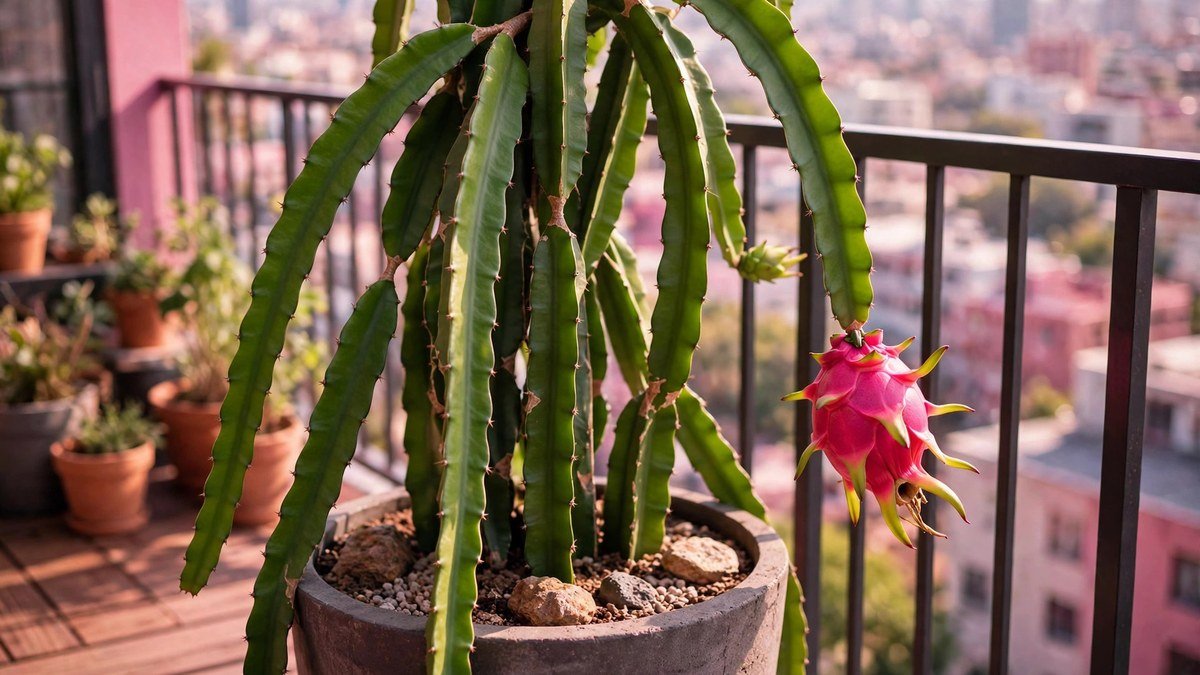
A balcony can be a surprisingly good home for a dragon fruit plant. The vine loves sun and warm air, and a container keeps its roots exactly where you want them. You do not need a garden to grow dragon fruit in a container on balcony. You need the right pot, a free-draining soil mix, a sunny corner, and a support the stems can climb.
This guide shows you how to grow dragon fruit in a container on balcony, covering the balcony checks most beginners skip, such as weight, wind, and drainage water, then pot size, soil, sunlight, support, watering, and feeding. Dragon fruit is a cactus, so it forgives a missed watering far more easily than a pot that stays wet.
In This Guide
- Check Your Balcony Before You Buy Anything
- Choose the Right Pot for a Balcony
- Soil Mix That Drains Fast
- Sunlight When You Grow Dragon Fruit in a Container on Balcony
- Support and Trellis That Fits a Small Space
- How to Plant a Cutting to Grow Dragon Fruit in a Container on Balcony
- Watering Without Flooding the Balcony Below
- Feeding Lightly Through the Season
- Common Mistakes Balcony Growers Make
- Frequently Asked Questions
- Conclusion
Check Your Balcony Before You Buy Anything
First, check the weight. A large pot full of wet soil is heavy, and a mature plant with a support adds more. Keep the pot close to the wall, where the structure is strongest, rather than out near the railing. In a rented flat, ask the building management about heavy planters first.
Second, look at the wind. Upper-floor balconies can be windy, and a tall cactus stem acts like a sail. A light or narrow pot can tip over in a strong gust, and a falling pot is a danger to people below. Choose a wide, stable pot, and place it where a wall or parapet breaks the wind.
Third, think about drainage water. Every watering sends some water out of the drainage holes, and on a balcony that water runs across the floor or down onto the flat below. Put a deep saucer under the pot, and empty it after watering.
Choose the Right Pot for a Balcony
When you grow dragon fruit in a container on balcony, go for a pot that holds roughly 60 to 100 litres of soil. That size gives the roots room and keeps the plant steady in wind, while still fitting against a balcony wall. A pot much smaller than this dries out too fast in summer and tips over easily once the stems grow tall. A pot much larger is very hard to move and very heavy when wet.
Depth matters as much as width. A pot around 45 to 60 centimetres deep holds enough soil to stay moist between waterings without staying soggy. A shallow, wide bowl dries out within a day in hot weather, which means constant watering. Material is a trade-off: terracotta is heavy, stable, and breathes well, but dries out faster and can crack in a hard frost, while thick plastic is light and cheap and holds moisture longer, but needs extra weight at the base or it can blow over. Whatever you choose, the pot must have drainage holes, because standing water rots cactus roots.
Soil Mix That Drains Fast
Dragon fruit hates wet feet. Its roots need air as much as they need water, so the soil mix must drain freely while still holding a little moisture. Ordinary garden soil is usually too heavy for a pot. It packs down, holds water for days, and slowly suffocates the roots.
A simple mix is one part potting compost, one part coarse perlite or pumice, and one part coarse sand or fine bark. The compost feeds the plant and holds some moisture, while the perlite and sand keep the mix open so water runs through quickly. Cactus or succulent potting mix from a garden centre is a good starting point, and you can add a handful of perlite to make it drain even faster.
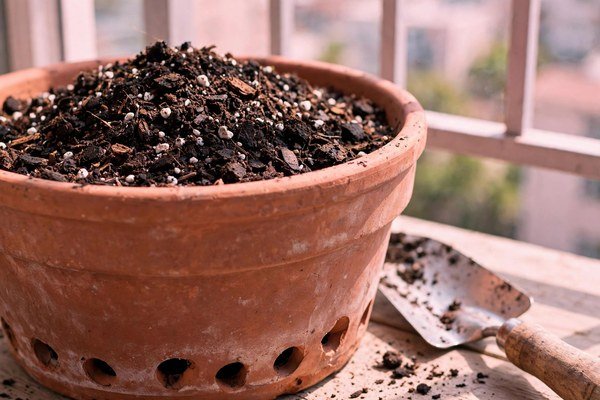
When you grow dragon fruit in a container on balcony, fill the pot to a few centimetres below the rim, and press the mix down gently without stamping it flat. Check the drainage before you plant by watering the filled pot once: water should start dripping from the holes within a minute, and the surface should not stay flooded. Top the surface with a thin layer of small stones or bark chips to slow evaporation.
Sunlight When You Grow Dragon Fruit in a Container on Balcony
Sunlight decides whether your plant grows into a fruiting vine or stays a thin, pale stem. Dragon fruit needs several hours of direct sun each day to grow strongly and flower. A shaded balcony will keep the plant alive, but it will rarely give you fruit.
Watch your balcony for a full day before you place the pot, and note which hours the sun reaches the floor and the wall. A south-facing balcony in the northern hemisphere, or a north-facing one in the southern hemisphere, gets the longest sun. An east-facing balcony gets gentle morning sun, while a west-facing balcony gets strong afternoon sun.
Most balconies are shaded for part of the day by the roof above or the wall beside them. The sunniest spot is usually near the outer edge, but that is also the windiest place for a heavy pot. A good compromise is close to the wall on the sunny side, where the plant still catches several hours of direct light. Young cuttings need a gentler start, so give a new plant bright light with a little shade during the hottest part of the day for its first few weeks. If your plant only gets two or three hours of direct sun when you grow dragon fruit in a container on balcony, expect slower growth and fewer flowers.
Support and Trellis That Fits a Small Space
A dragon fruit stem cannot stand on its own for long. In nature it climbs a tree, and when you grow dragon fruit in a container on balcony, it needs a post, a frame, or a trellis. Without support the stems sprawl across the floor, snap under their own weight, and never reach the shape that flowers best.
The classic setup is a single sturdy post in the centre of the pot, with a small frame or ring at the top. The stems climb the post, then spill over the top and hang down, and that hanging growth is where flowers and fruit usually appear. A wooden post about 1.5 metres tall above the soil is enough for a container plant. Fix the post firmly in the pot before you fill it with soil, so its base sits deep and stable.
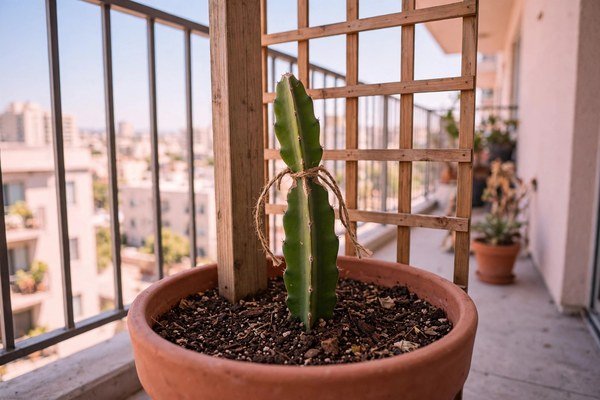
Tie the young stem loosely to the post with soft cloth strips or garden twine, leaving room for the stem to thicken. A tight wire tie cuts into the flesh as the stem grows, so check the ties every few weeks.
How to Plant a Cutting to Grow Dragon Fruit in a Container on Balcony
Most balcony growers start with a cutting, not a seed. A cutting is a piece of stem from a mature plant, and it grows faster and fruits sooner than a plant raised from seed. Choose a healthy cutting at least 20 to 30 centimetres long, with clean green skin and no soft spots.
Let the cut end dry for a few days before planting. This step is called curing, and it matters, because a fresh cut that goes straight into wet soil can rot. Leave the cutting in a dry, shaded place until the cut surface feels dry and slightly calloused.
Plant the cured end about 5 centimetres deep in the soil mix, with the growing tip pointing up. Press the soil gently around the base so the cutting stands upright, then tie it loosely to the support post. Do not plant the cutting too deep, since a buried stem stays wet and rots. Water lightly after planting, just enough to settle the soil, then check the soil with your finger before you water again. New roots usually form within a few weeks in warm weather, and a fresh green shoot from the top is the sign that the plant has settled in.
For general guidance on pitaya planting and care, the UF IFAS extension publication on dragon fruit is a useful reference. It covers varieties, planting, and care in a clear, practical way.
Watering Without Flooding the Balcony Below
Watering is where most balcony growers go wrong. Too much water rots the roots, and too little water leaves the stems thin and wrinkled. The right approach is simple: water deeply, then wait until the soil has dried out before you water again.
When you grow dragon fruit in a container on balcony, push your finger a few centimetres into the soil before each watering. If it feels dry at that depth, water slowly until a little runs out of the drainage holes. If it still feels damp, wait another day. In warm weather a container plant may need water a few times a week, while in cool or cloudy weather once a week can be enough. The finger test beats any fixed schedule.
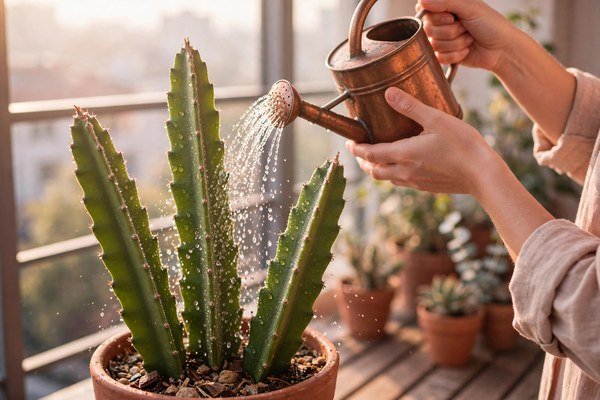
Water in the morning when you can, so splashes on the stems dry before night. Aim the water at the soil, not the stems. Always water over the tray or saucer under the pot, and empty the saucer after the pot has drained. A saucer that stays full keeps the bottom of the soil wet and breeds mosquitoes in warm weather. In winter, cut back sharply, since the plant grows slowly and uses very little water.
Feeding Lightly Through the Season
A container plant cannot reach into the ground for food, so it depends on what you add to the pot. Dragon fruit is not a heavy feeder, and overfeeding causes more harm than underfeeding. Too much fertiliser can burn the roots and push out soft growth that snaps easily.
Start feeding once the plant is growing well, usually in the warm months. A balanced, slow-release fertiliser made for cacti or general garden use, applied at the rate on the packet, is a safe choice. You can also top-dress the pot with well-rotted compost once or twice during the growing season. When you grow dragon fruit in a container on balcony, feed little and often: a small feed every month or so through the warm season beats a single heavy dose in spring. Stop feeding as the weather cools, and do not feed a newly planted cutting until you see fresh growth.
Common Mistakes Balcony Growers Make
The first mistake is a pot with no drainage holes, or a saucer that never gets emptied. Both keep the roots wet, and wet roots rot. If your plant turns yellow from the base upward, overwatering is the likely cause. Let the soil dry out fully and water less often.
The second mistake is starting with a pot that is too small. A small pot dries out daily in summer, blows over in wind, and needs repotting within a year. When you grow dragon fruit in a container on balcony, start with the right size instead.
The third mistake is no support, or support added too late. Stems that sprawl on the floor break when someone steps on them, and they rarely flower well. Put the post in at planting time.
The fourth mistake is too little sun. A balcony that looks bright can still be too shady for a fruiting cactus, because the roof and walls block direct sun for most of the day. If the stems grow long, thin, and pale, move the plant to the sunniest safe spot you have.
The fifth mistake is treating the plant like a leafy houseplant. Dragon fruit is a cactus. It wants fast-draining soil, deep but infrequent watering, and plenty of sun. Daily light watering and a dark corner are the opposite of what it needs when you grow dragon fruit in a container on balcony.
The sixth mistake is forgetting the neighbours — keep the plant tidy and prune any stem that reaches past your own space.
Frequently Asked Questions
How do I grow dragon fruit in a container on balcony if I have never grown a cactus before?
To grow dragon fruit in a container on balcony, start with a healthy cutting, a pot that holds roughly 60 to 100 litres of free-draining soil mix, and the sunniest spot on your balcony. Let the cutting cure for a few days, plant it shallowly, tie it loosely to a support post, and water only when the top few centimetres of soil feel dry.
Can dragon fruit grow on a small balcony?
Yes, as long as the plant grows upward rather than outward. A single post with a small top frame lets the vine climb and drape without taking over the floor. Prune side shoots while the plant is young, and keep the pot close to the wall.
How much sun does a balcony dragon fruit plant need?
It needs several hours of direct sun each day to grow strongly and flower. A balcony that gets morning sun plus some afternoon sun usually works well. If your balcony only gets a couple of hours of direct sun, growth will be slower and it may flower less.
How often should I water dragon fruit in a pot on a balcony?
There is no fixed number of days that suits every balcony, so check the soil with your finger first. Water deeply when the top few centimetres feel dry, and let the pot drain fully. In hot, windy weather this may be a few times a week, while in cool or cloudy weather once a week or less can be enough.
Conclusion
Learning how to grow dragon fruit in a container on balcony is a slow, satisfying project that suits a small space. The plant asks for a few simple things: a large pot with drainage, a loose soil mix, several hours of sun, a sturdy post to climb, and watering that is deep but not frequent.
Start with the balcony checks, place the pot where it will stay, and let the plant settle at its own pace.
5 thoughts on “How to Grow Dragon Fruit in a Container on Balcony for Beginners”