
Dragon fruit looks tough. Its thick green stems store water, it climbs happily in hot sun, and it seems to grow almost anywhere. That tough look fools a lot of new growers, because the roots tell a different story. Dragon fruit roots are shallow and fine, and they rot quickly when they sit in wet soil. In a pot, the mix you choose decides whether the plant climbs and fruits or slowly turns yellow and gives up.
The best potting mix for dragon fruit in pots is simple to make: a few everyday materials in the right proportions give your plant drainage, air and gentle nutrition. This guide covers drainage, ingredients, three homemade recipes, store-bought bags, and refreshing the mix at repotting time.
In This Guide
- Why Drainage Matters More Than Anything
- The Base Ingredients and What Each One Does
- Recipe 1: The Simple All-Rounder
- Recipe 2: The Fast-Draining Mix for Wet Climates
- Recipe 3: The Rich Mix for Hungry Plants
- How to Choose a Store-Bought Mix
- pH and the Mistakes That Ruin the Best Potting Mix for Dragon Fruit in Pots
- Refreshing the Best Potting Mix for Dragon Fruit in Pots When You Repot
- Frequently Asked Questions
Why Drainage Matters More Than Anything
Dragon fruit is a climbing cactus, and cacti hate wet feet. In the wild, its roots spread through loose, gritty material on trees and rocks, where rain runs straight through and air reaches every root. A pot changes that completely. It is a closed box, and water has only one way out, through the drainage holes at the bottom. A heavy mix can hold water for days after watering.
When roots sit in soggy mix, they cannot breathe. The fine roots die first, then the damage moves upward. Stems turn soft and yellow, growth stops, and the plant becomes an easy target for rot. Many growers blame watering when the real problem is the mix.
The best potting mix for dragon fruit in pots drains freely but still holds a little moisture: water should flow out within seconds, not pool on the surface, and the mix should stay lightly damp for a day or two. If it dries to dust in hours it drains too fast; if it is still wet three days later, too slowly. Always use a container with drainage holes, and never let the pot sit in a saucer full of water.
The Base Ingredients and What Each One Does
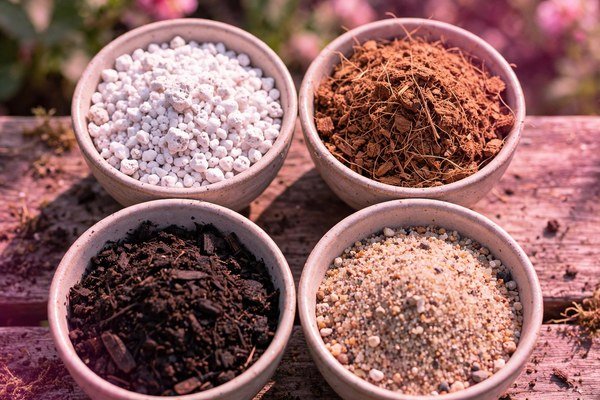
Every ingredient in the best potting mix for dragon fruit in pots has a job, and you do not need all seven below — most growers get excellent results with three or four: something that holds moisture, something that drains, and something that feeds.
Coco coir is the soft, spongy fibre from coconut husks. It holds moisture without becoming waterlogged and keeps the mix light. It breaks down slowly, which matters in a pot that stays in use for a year or more. Soak a dry brick in water before mixing so it expands fully.
Perlite is the small white volcanic rock you see in most bagged mixes. It holds no water at all. Its job is to create air pockets so roots can breathe and excess water can escape. Without enough perlite, even a good mix can pack down into a solid, airless block.
Compost is the feeding ingredient. Well-rotted compost adds gentle nutrients and feeds the tiny organisms that keep soil alive. Use mature compost that smells earthy, not sour or sharp. Fresh, unfinished compost can burn young roots.
Coarse sand adds weight and drainage. Use coarse horticultural sand or washed river sand, never fine beach sand or builder’s sand, which packs tight and makes drainage worse.
Pumice is a light volcanic stone, similar in job to perlite but heavier and longer lasting. It does not float to the surface when you water, which makes it a good choice for outdoor pots in rain. If perlite is hard to find, pumice is the best swap. Pine bark fines are small pieces of bark that open up the mix and break down slowly, useful in wet climates. Worm castings are a gentle, rich addition. A handful per pot adds nutrients and helpful microbes without the risk of burning roots.
Recipe 1: The Simple All-Rounder
This is the best potting mix for dragon fruit in pots to start with. It works in most climates, it is easy to remember, and it suits a young plant just as well as an established one. Mix by volume, using any container as your measure, as long as you use the same one for every ingredient.
- 2 parts coco coir
- 1 part perlite
- 1 part mature compost
- 1 part coarse sand
Blend everything in a large tray until the colour looks even. Wet the mix lightly while you stir, so the coir is damp but not dripping. Then do the squeeze test. Take a handful and squeeze it firmly. It should hold its shape for a second and then crumble apart when you poke it. If water drips out, it is too wet. If it falls apart instantly into dust, add a little more coir.
This recipe balances drainage and moisture well for most growers. If your summers are very rainy, use recipe two; if your plant is fruiting heavily, recipe three is the better pick.
Recipe 2: The Fast-Draining Mix for Wet Climates
Rain is the enemy of a potted cactus. In a wet climate, or during a long rainy season, a standard mix can stay damp for days, and that is when rot starts. This recipe for the best potting mix for dragon fruit in pots trades moisture holding for speed, so water runs through quickly and the roots stay aired even after heavy rain.
- 1 part coco coir
- 2 parts perlite or pumice
- 1 part coarse sand
- 1 part pine bark fines
The extra perlite and the bark fines are the key. Together they keep large air gaps in the mix even when it is soaking wet. The single part of coir still holds enough moisture for the roots to drink, but it cannot turn the pot into a swamp.
A fast-draining mix needs more frequent watering in dry spells, so check the soil often. Push a finger two knuckles deep into the mix. If it feels dry at that depth, water. If it still feels cool and damp, wait. In wet climates, raise the pot slightly off the ground on bricks or pot feet, so water escapes freely and the pot never sits in a puddle.
Recipe 3: The Rich Mix for Hungry Plants
A mature dragon fruit plant that is growing fast and setting fruit eats more than a young cutting. This recipe for the best potting mix for dragon fruit in pots keeps the drainage of the all-rounder but adds more food. It is best for established plants in large pots, not for fresh cuttings, which prefer a leaner mix while they root.
- 2 parts coco coir
- 1 part perlite
- 1 part mature compost
- 1 part worm castings
- A handful of coarse sand per bucket of mix
The worm castings are the difference here. They release nutrients slowly, feed soil life, and help the plant hold its green colour through the fruiting season. Do not overdo them. Too much rich material makes the mix heavy and holds water, which undoes the drainage you worked to build.
How to Choose a Store-Bought Mix
Not everyone wants to mix their own, and that is fine. A good bagged mix can work well, as long as you know what to look for. Most bagged mixes are made for general houseplants, and those are usually too heavy for dragon fruit.
Look for a bag labelled cactus or succulent mix. These are made for plants that need sharp drainage, and they are the closest ready-made match. Read the ingredients on the back. A good bag lists perlite, pumice or bark among the first few ingredients. If the bag is mostly peat or fine compost with no gritty material, put it back.
Even a cactus mix benefits from a little help. Stir in extra perlite, roughly one part perlite to three parts bagged mix, before filling the pot. That one step fixes the most common weakness of bagged mixes, which is that they pack down and lose air over time.

pH and the Mistakes That Ruin the Best Potting Mix for Dragon Fruit in Pots
Dragon fruit grows best in a slightly acidic to neutral mix, roughly in the range most garden plants enjoy. You do not need to chase an exact number. What matters is avoiding the extremes. A mix that is far too acidic or far too alkaline locks nutrients away, and the plant shows it with pale leaves and slow growth even when you feed it well.
The most common mistake when making the best potting mix for dragon fruit in pots is using plain garden soil in a pot. In a bed it looks fine, but in a container it compacts into a dense, airless mass that holds water and cracks when it dries. Never fill a pot with garden soil alone. If you want to use some, keep it to a small share of a mix that is mostly coir, perlite and compost.
The second mistake is skipping drainage holes. A pot without holes turns even the best mix into a pond. If a pot you love has no holes, drill some, or use it as a decorative cover with a plain plastic pot inside that does have holes.
The third mistake is packing the mix down hard. Dragon fruit roots need air, and firm pressing squeezes the air out. Fill the pot loosely, settle the mix with a gentle shake and a light watering, and let it find its own level.
The fourth mistake is using fresh manure or unfinished compost. Both can burn roots. Only use compost that is dark, crumbly and smells like forest soil. The fifth mistake is forgetting that mixes age. A mix that drained beautifully on day one can turn tired after a year, as organic material breaks down and air spaces close up. That is why repotting matters.
For more on the wider care of the plant, UF IFAS publishes a useful dragon fruit growing guide that covers planting and care alongside soil.
Refreshing the Best Potting Mix for Dragon Fruit in Pots When You Repot
Repotting is not just about a bigger pot. It is the best chance you get to refresh the best potting mix for dragon fruit in pots.
Choose a time when the plant is growing actively and the weather is warm. Water the plant the day before so the root ball comes out in one piece. Tip the pot on its side and ease the plant out gently.
Shake off the loose old mix and look at the roots. Healthy roots are pale and firm. Trim away any roots that are dark, soft or smell bad, using clean, sharp scissors. This is the moment to catch early rot before it spreads.
Fill the new pot one third full with fresh mix, set the plant at the same depth it was growing before, and fill around the sides. Keep the stem base slightly above the mix surface so water does not sit against it. Water lightly to settle the mix.

After repotting, keep the plant out of harsh midday sun, water only when the top few centimetres feel dry, and hold off feeding for a few weeks. Between full repots, refresh the top layer with fresh compost blended with a little perlite.
Frequently Asked Questions
What is the best potting mix for dragon fruit in pots?
The best potting mix for dragon fruit in pots is a loose, fast-draining blend of coco coir, perlite, mature compost and coarse sand, roughly in a 2 to 1 to 1 to 1 ratio by volume. It drains within seconds of watering, holds a little moisture for the roots, and stays airy enough to prevent rot. In wet climates, increase the perlite and add pine bark fines.
Can I use regular potting soil for dragon fruit?
Regular potting soil can work if you improve it, but on its own it is usually too heavy. Most general potting soils hold water for days, which is the main cause of root rot in container dragon fruit. Mix one part perlite and one part coarse sand into three parts of regular potting soil, and check that water drains out quickly after watering.
Is perlite or pumice better for dragon fruit mix?
Both work well. Perlite is lighter, cheaper and easier to find, but it can float to the surface when you water. Pumice is heavier, lasts longer and stays in place, which makes it better for outdoor pots in rainy areas. If you can find pumice at a fair price, use it. If not, perlite does the job perfectly well.
Why does my dragon fruit mix stay wet for days?
The mix is either too heavy or the pot is not draining properly. Check the drainage holes first, because a blocked hole is the most common cause. If the holes are clear, the mix itself is the problem. It may contain too much fine compost or garden soil and not enough perlite or sand. Repot into a lighter mix with more perlite, and never let the pot sit in a saucer full of water.
Conclusion
The best potting mix for dragon fruit in pots is a simple balance: something that holds a little moisture, something that lets water escape, and something that feeds the plant gently. Start with the all-rounder recipe, adjust it to your climate, and refresh the mix when you repot.
