
A dragon fruit plant needs a strong post to climb, and the classic choice is a concrete or wooden post with a frame on top. But a PVC pipe trellis for dragon fruit is a lighter, cheaper option that suits pots and small gardens, and a home grower can build one in an afternoon with basic tools. It will not last as long as concrete, and it will not carry as much weight as hardwood, but for a young plant or a balcony pot it is often the most practical support you can build.
The trick is building it right. A PVC pipe trellis for dragon fruit fails when the pipe is too thin, the joints are loose or the base is not anchored, and a mature plant can bend a flimsy frame in one season. This guide covers the pipe size that holds, the frame shape that works, the anchoring that keeps it upright, and the fixes that stop bending.
In This Guide
- Why PVC works for dragon fruit
- Choosing the right pipe size and fittings
- Planning the frame: height, top and pot size
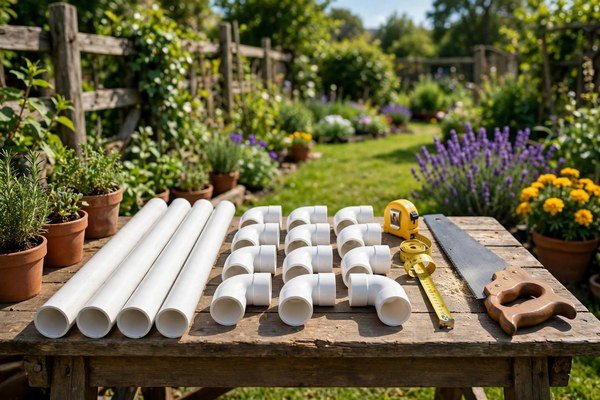
- Tools and materials
- Building the trellis step by step
- Fixing it to the pot or the ground
- Where PVC fails and how to strengthen it
- Pots versus ground planting
- Mistakes to avoid
- Frequently asked questions
Why PVC Works for Dragon Fruit
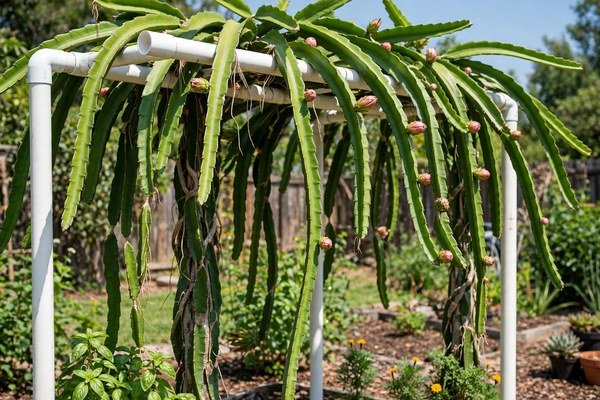
Dragon fruit is a climbing cactus that grows by sending long stems upward and then draping them over a support so they hang down and flower. The plant needs a post roughly 1.5 to 1.8 metres tall with a frame at the top for the stems to spill over. PVC pipe can provide exactly that shape at a fraction of the cost of timber or steel, and it never rots, rusts or needs painting.
The material has real advantages for a home grower. A PVC pipe trellis for dragon fruit is light enough to move with the pot, easy to cut with a hand saw, and joined with simple push-fit elbows and tees that need no welding or drilling. The smooth surface is gentle on stems, and the white pipe reflects sun instead of heating up the way dark metal does. The UF IFAS growing guide describes dragon fruit as a climbing cactus that needs a sturdy support, and a well-built PVC frame meets that need for the first few years of a plant’s life.
A PVC pipe trellis for dragon fruit is not right for every situation. A mature plant in the ground will eventually outgrow a PVC frame, and a trellis in a windy garden needs serious anchoring. But for a potted plant on a balcony or a young plant in its first two years, PVC is a sensible place to start.
Choosing the Right Pipe Size and Fittings
Pipe size decides whether your trellis stands or bends, so do not buy the cheapest thin pipe on the shelf. For the main upright post, use PVC pipe of at least 40 millimetres outside diameter, and prefer 50 millimetres if you can find it. Thinner pipe, such as 25 or 32 millimetres, flexes under a fruiting plant and will bow within a season. For the top frame, 40 millimetre pipe is usually enough, since the frame spreads the load across four sides.
Buy pressure-rated pipe rather than thin drainage pipe, and look for fittings to match: two 90-degree elbows for a simple U-shape, or four elbows plus straight connectors for a square top frame. A PVC pipe trellis for dragon fruit also needs a cross piece or a small wooden disc at the top for the stems to rest on, plus soft ties, cable ties or strips of old cloth for tying stems. Avoid metal wire, which cuts into the fleshy stems as they grow and thicken.
Check the pipe before you buy: good PVC is rigid, straight and crack-free, while pipe left in the sun at a shop may already be brittle. In a hot climate, paint the finished frame a light colour, which slows sun damage and adds a year or two to its life.
Planning the Frame: Height, Top and Pot Size
A PVC pipe trellis for dragon fruit works best when the post is about 1.5 metres above the soil, with a top frame roughly 50 to 60 centimetres across. That height is tall enough for stems to climb and drape, but short enough to reach the fruit for picking and pruning without a ladder. A taller post looks impressive but makes harvest and pruning harder, and it catches more wind. That balance of height and reach is what makes a PVC pipe trellis for dragon fruit practical instead of just cheap.
The top frame of a PVC pipe trellis for dragon fruit is what makes the plant fruit well. Stems that hang down over a frame flower far more than stems that grow straight up, so the frame should be wide enough for several stems to drape over each side. A simple square frame of four pipes joined with elbows works well, and a cross bar through the middle gives extra resting points. Some growers add an old bicycle wheel or a wooden ring at the top, which gives a round edge for stems to spill over neatly.
Pot size matters as much as the frame. A PVC pipe trellis for dragon fruit in a pot needs a container of at least 50 litres, wide and heavy enough to stop the whole thing tipping when the plant is loaded with fruit. A small, light pot with a tall trellis is a sail in the wind. If you are planning to grow dragon fruit in a container on a balcony, choose the largest pot you can manage and fill it with the free-draining mix from our guide to the best soil for dragon fruit, because a heavy pot is part of the support, not just a container.
Tools and Materials
You need surprisingly few tools. A hand saw or pipe cutter for cutting the pipe, a tape measure, a marker pen, PVC cement or solvent glue for permanent joints, sandpaper for cleaning cut ends, and a drill with a small bit if you plan to add screws through the joints. For assembly, have your elbows, tees and end caps ready, plus soft ties for the plant and a level to check the post is upright.
A useful extra for any PVC pipe trellis for dragon fruit is a length of wooden dowel or a metal rod that fits inside the main upright pipe. Sliding a rod inside the post stiffens it greatly and costs very little, and it is one of the best cheap upgrades for a PVC trellis. Another useful extra is a bag of ready-mix concrete for anchoring a ground-planted post, or a heavy paving slab to sit a potted trellis on. Gather everything before you start cutting, because a half-glued frame left in the sun warps while you search for a fitting.
Building the Trellis Step by Step
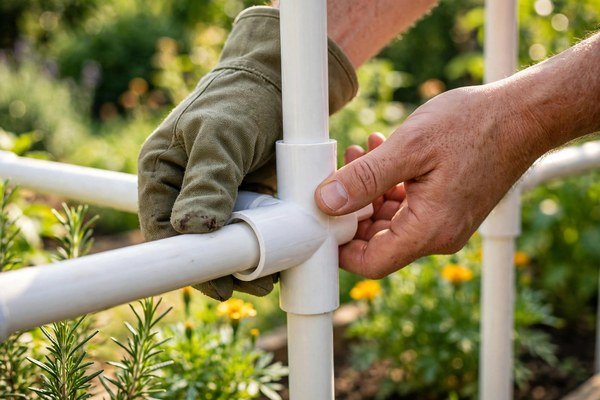
Start by cutting the main upright to length: 1.5 metres above the soil, plus the depth it will sit in the pot or ground, usually 30 to 40 centimetres. Cut the four top-frame pieces to equal lengths, about 50 to 60 centimetres each, and dry-fit the whole frame without glue first. This dry run shows mistakes before they become permanent, and a PVC pipe trellis for dragon fruit is far easier to fix at this stage than after the glue sets.
Once the dry fit looks right, take it apart and glue the joints one at a time with PVC cement, twisting each fitting a quarter turn so the glue spreads evenly. Hold each joint for thirty seconds, then leave the frame untouched for at least an hour. Slide a stiffening rod inside the upright before gluing the top elbow on, and check the upright with a level as you work.
Add the top frame last, then fit end caps on any open pipe ends so rain and insects cannot get inside. Some growers drill a small drainage hole in the lowest elbow so any water that does get in can escape. Let the whole frame cure overnight before you tie the plant to it, because fresh glue joints are weaker than they look.
Fixing It to the Pot or the Ground
A PVC pipe trellis for dragon fruit is only as good as its anchor, and this is where most PVC trellises fail. For a potted plant, push the upright deep into the pot so its base rests on the bottom, then fill around it with soil and firm the mix well. The post should not wobble when you shake it gently. A PVC pipe trellis for dragon fruit in a pot also benefits from a heavy pot and a wide base, and on a windy balcony it is worth tying the pot to the railing or placing a paving slab on the soil surface as ballast.
For a plant in the ground, dig a hole at least 40 centimetres deep and set the upright in ready-mix concrete, checking with a level before the concrete sets. Concrete anchoring is the strongest option and the best choice if your garden is windy or the plant will grow large. In soft soil, a wider concrete footing, about 30 centimetres across, stops the post leaning as the plant gains weight. Let the concrete cure for a full day before tying stems to the frame.
Whichever anchor you use, tie the main stems loosely to the upright with soft ties as they grow, spacing the ties about 30 centimetres apart. Tight ties strangle the stem as it thickens, so check them every few months and loosen or replace any that bite in.

Where PVC Fails and How to Strengthen It
The most common failure of a PVC pipe trellis for dragon fruit is bending. A PVC pipe trellis for dragon fruit bends when the upright is too thin, the plant is too heavy for the frame, or the top is loaded on one side only. The fix is a thicker upright, a stiffening rod inside the pipe, or a second upright tied to the first to share the load. Training stems evenly around the frame also helps, because a balanced load bends nothing while a one-sided load bends everything.
The second failure is sun damage: PVC left in strong sun for years turns brittle and cracks at the joints. Painting the frame a light colour slows this greatly. The third failure is loose joints, usually from skipping the glue or gluing dusty pipe. Clean every cut end with sandpaper and wipe it dry before gluing.
If a PVC pipe trellis for dragon fruit does start to bend, act early. Prop it with a temporary wooden stake, redistribute the stems evenly, and prune the heaviest growth back. A trellis saved in time can serve another season, while one left bending will fail suddenly, often dropping the plant and breaking stems.
Pots Versus Ground Planting
A PVC pipe trellis for dragon fruit suits pots better than ground planting, because a potted plant stays smaller and lighter, and the whole unit can be moved out of wind or frost. The grower controls water and feeding precisely, and a pot-grown plant never reaches the weight of a ground-grown one, so the PVC frame is rarely overloaded.
In the ground, the plant grows bigger, heavier and faster, and a PVC frame that was fine in year one may struggle in year three. If you plant in the ground, plan from the start to replace the PVC with a concrete or hardwood post once the plant matures, and treat the PVC trellis as a starter support rather than a permanent one. For the full picture on growing from the start, see our guide on how to grow dragon fruit, which covers soil, watering and support together.
Mistakes to Avoid
The biggest mistake when building a PVC pipe trellis for dragon fruit is building too light: thin pipe, no glue, no anchor, and a small pot. That trellis looks fine on day one and fails in the first fruiting season. The second mistake is building too tall, which makes picking and pruning a chore and turns the frame into a wind sail. The third is tying stems with wire or tight string, which cuts into the flesh and leaves wounds that invite rot.
Another error is forgetting the top frame and letting stems climb a bare pole. Without a frame the plant flowers poorly, so build both before you plant. Finally, do not ignore a leaning post: a small lean is easy to fix with a stake, while a large lean usually ends with the whole plant on the ground.
Frequently Asked Questions
How strong is a PVC pipe trellis for dragon fruit once the plant fruits?
A well-built PVC pipe trellis for dragon fruit with a 40 to 50 millimetre upright, glued joints and a good anchor carries a young to medium plant with a normal fruit load. A very large, mature plant will eventually need a concrete or hardwood post, so treat PVC as a starter support for two to three years.
What size PVC pipe should I use for a dragon fruit trellis?
Use at least 40 millimetres outside diameter for the upright post, and 50 millimetres if available. Use 40 millimetre pipe for the top frame. Avoid 25 and 32 millimetre pipe for the main post, because it flexes under a fruiting plant.
How long does a PVC trellis last outdoors?
A painted PVC frame in a mild climate usually lasts three to five years before sun damage makes it brittle. Unpainted pipe in strong sun lasts less. Painting it a light colour and keeping the joints glued and clean adds a year or two.
Can I use PVC for a dragon fruit plant in the ground?
Yes, as a starter support, anchored in concrete. Plan to replace it with a concrete or hardwood post once the plant matures and gains weight, usually after two to three years, before the PVC starts to bend.
Do I need to glue the joints or is a push fit enough?
Glue the joints. A push fit feels solid on day one but works loose as the plant moves in the wind and the pipe expands in heat. PVC cement is cheap, and glued joints hold for the life of the trellis.
Conclusion
A PVC pipe trellis for dragon fruit is the cheapest, lightest way to support a young plant, and a careful build makes it far stronger than its price suggests. Use thick pipe, glue every joint, anchor the base properly, and give the plant a proper top frame to drape over. Check it each season, strengthen it before it bends, and replace it with a heavier post when the plant outgrows it. Built that way, a simple plastic frame carries your plant through its first harvests without fuss.