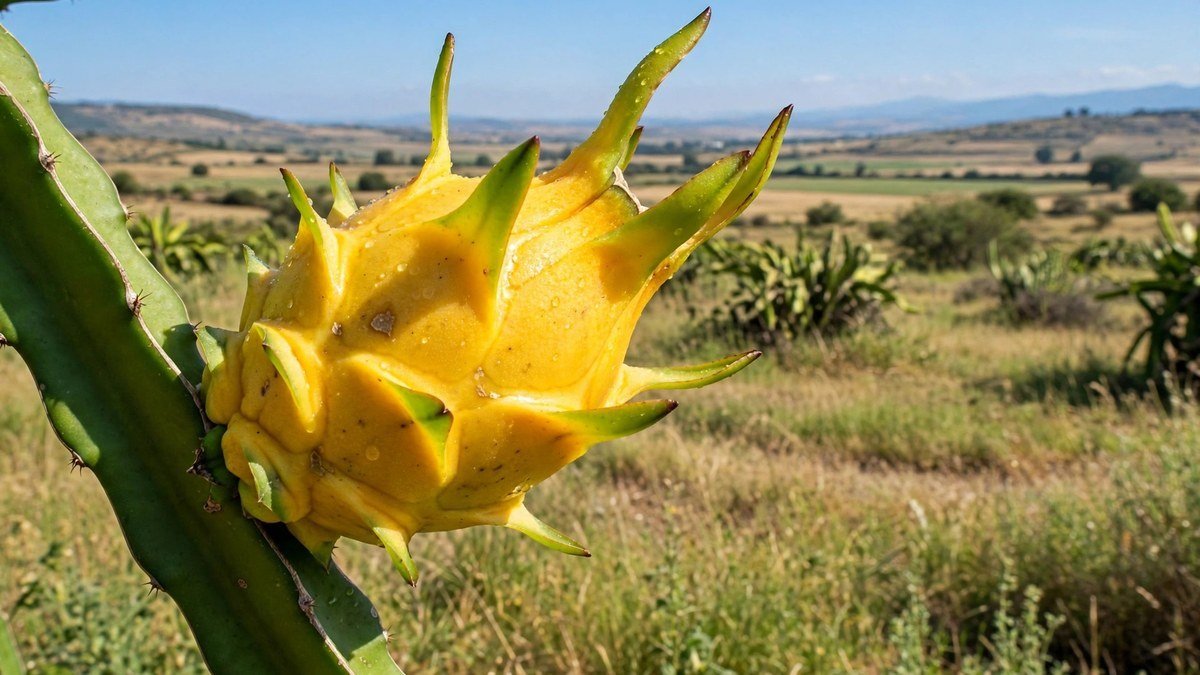
Yellow dragon fruit is the sweetest of all dragon fruit types, but it is also the easiest to pick at the wrong time. With pink dragon fruit, the change is obvious: green skin turns pink, and everyone can see it. With yellow dragon fruit, the change is quieter. The skin moves from green to yellow in small steps, and a fruit that looks ready from a distance can still be sour inside. Pick too early and you get a bland, starchy fruit. Pick too late and the flesh turns soft and the flavour fades.
The good news is that a ripe yellow dragon fruit gives you four clear signs, and learning how to tell yellow dragon fruit is ripe is easier than most growers expect. Colour, touch, the scales on the skin, and smell each tell you part of the story, and together they leave very little doubt. This guide shows you how to tell yellow dragon fruit is ripe using all four signs, so you pick sweet fruit and stop guessing.
In This Guide
- Why Yellow Dragon Fruit Fools So Many Growers
- Sign 1: Skin Colour From Green to Golden Yellow
- Sign 2: The Gentle Squeeze Test
- Sign 3: Scales and Wings What Dry Edges Mean
- Sign 4: Smell and the Stem End
- Signs It Is Still Too Early
- Signs It Has Gone Too Far
- How to Pick Without Damaging the Fruit
- Frequently Asked Questions
Why Yellow Dragon Fruit Fools So Many Growers
Yellow dragon fruit, usually the species Hylocereus megalanthus, is different from the pink types in more than colour. The fruit is smaller, the skin is thinner, and the flesh is white with tiny black seeds. It is also the sweetest dragon fruit most growers will ever taste, with a flavour that reminds people of a mix between a pear and a kiwi, with honey notes when fully ripe.
The problem is the ripening process. A pink dragon fruit announces itself: the skin blushes, then turns fully pink, visible from across the garden. A yellow fruit changes more slowly, moving from green to pale yellow-green, to soft yellow, and only at the end to rich golden yellow. In dull light the middle stages all look alike, which is why so many growers pick a week early and wonder why the fruit tastes bland.
There is another trap. Yellow dragon fruit is non-climacteric, which means it does not ripen much after picking. A pink fruit picked slightly early will soften a little on the counter. A yellow fruit picked early stays much as it was: firm, pale inside, and sour. With yellow fruit, the ripening has to happen on the plant, and that makes learning how to tell yellow dragon fruit is ripe a skill worth taking time over.

Sign 1: Skin Colour From Green to Golden Yellow
Colour is the first sign in how to tell yellow dragon fruit is ripe, and the most reliable one if you read it properly. A ripe yellow dragon fruit has an even, rich golden yellow skin all over, with no green patches left. The yellow should look warm and deep, like the colour of straw in sunlight, not pale or washed out.
Watch the fruit over several days and you will see the change happen in order. First the green fades from the top of the fruit, near the stem. Then the yellow spreads downward. The last places to change are the areas between the scales and the very bottom of the fruit. When those last spots have turned yellow too, the fruit is ready or very close to it.
Light matters when you check colour. Look at the fruit in daylight, not under a yellow garden lamp or in deep shade, because warm artificial light makes an unripe fruit look yellower than it is. If you are unsure, compare it with a younger fruit on the same plant: the difference is much clearer side by side.
Do not wait for the skin to turn orange or brown. Golden yellow is the target. If the skin starts to look dull, brownish, or blotchy, the fruit is past its best, and you should pick it right away and eat it the same day.
Sign 2: The Gentle Squeeze Test
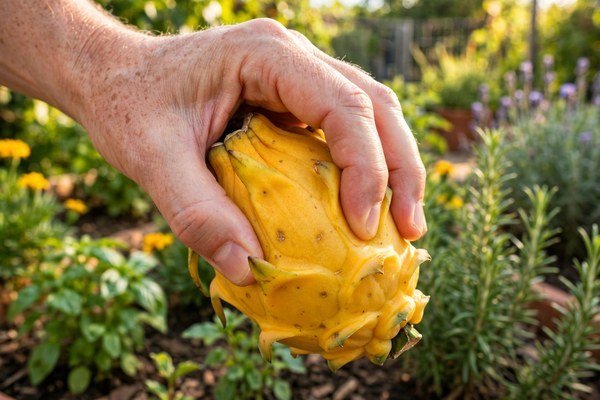
Colour tells you most of the story, but touch confirms it, which is why the squeeze test is a key part of how to tell yellow dragon fruit is ripe. A ripe yellow dragon fruit gives slightly under gentle pressure, much like a ripe avocado or a ripe pear. Hold the fruit in your palm and press the skin very gently with your thumb. It should yield a little and spring back. If it feels hard as a stone, it is not ready. If your thumb sinks in easily and leaves a dent, it is overripe.
When you are learning how to tell yellow dragon fruit is ripe by touch, the squeeze test works best when you test the middle of the fruit, not the ends. The stem end is always firmer, and the bottom end is always softer, so neither gives a true reading. Press the widest part of the fruit, on two opposite sides, and compare what you feel.
Be gentle. Yellow dragon fruit has thinner skin than pink types, and a hard squeeze can bruise the flesh underneath. Use your whole palm rather than your fingertips, and press once. If you check again tomorrow, press a different spot.
One more touch clue: a ripe fruit feels heavy for its size. As the fruit ripens, the flesh fills out and the fruit gains weight. An unripe fruit of the same size feels lighter and hollower. With practice, you will notice the weight change before you notice anything else.
Sign 3: Scales and Wings What Dry Edges Mean
The scales, the small leaf-like flaps on the skin, are a useful second opinion when you are learning how to tell yellow dragon fruit is ripe. On an unripe yellow fruit, the scales are green, firm, and pressed flat against the skin. As the fruit ripens, the scales change. Their tips turn yellow, then dry out slightly, and the edges begin to lift and curl away from the skin.
When most of the scales have dry, papery tips and a few have started to curl, the fruit is usually ripe. This sign is especially useful because it is hard to fake: the scales dry as the fruit matures, and they do not dry early. If the scales are still fully green and tight, the fruit needs more time, even if the skin looks yellow.
Watch out for one exception. In very hot, dry weather, the scale tips can dry out early from sun and wind, before the fruit is ripe. That is why the scales are a supporting sign, not the only one. Always read them with skin colour and the squeeze test: if the scales look dry but the skin still has green patches and the fruit feels hard, trust the colour and the touch, and wait.
Sign 4: Smell and the Stem End
Smell is the quietest sign in how to tell yellow dragon fruit is ripe, and the one most growers forget to use. A ripe yellow dragon fruit has a light, sweet fragrance at the stem end, where the fruit joins the plant. Hold the fruit close and smell the stem end. A gentle, honey-like scent means the fruit is ripe. No smell at all usually means it needs more time. A sour or fermented smell means it is overripe and should be picked and eaten immediately, or composted if the flesh has gone soft.
The stem end gives you a second clue. On a ripe fruit, the stem area softens slightly and the fruit loosens its grip on the plant. Give the fruit a very gentle twist. A ripe fruit will come away with little resistance. An unripe fruit holds on firmly, and forcing it will tear the stem and damage the plant.
Do not rely on smell alone, because wind and heat can carry the scent away outdoors. Use it as a final check after colour, touch, and scales all point the same way. When all four signs agree, you know how to tell yellow dragon fruit is ripe, and you can pick with confidence.
Signs It Is Still Too Early
Knowing how to tell yellow dragon fruit is ripe also means knowing when to leave it alone. A fruit that still has green patches on the skin, especially between the scales and near the bottom, is not ready. A fruit that feels hard as a rock under gentle pressure is not ready. A fruit with fully green, tight scales and no smell at the stem end is not ready, even if it has reached full size.
Size alone tells you nothing about ripeness, and that is one of the first lessons in how to tell yellow dragon fruit is ripe. A yellow fruit can reach its full size a week or more before it is ripe, and growers who pick by size alone almost always pick early. Wait for the colour to finish changing, then confirm with touch.
If you have already picked a fruit too early, do not expect it to ripen much on the counter. Yellow dragon fruit softens only slightly after picking, and the sweetness does not increase much. The best use for an early-picked fruit is in a smoothie or juice, where its mild flavour is less noticeable. For growing basics, see our guide on how to grow dragon fruit in a container on balcony.
Signs It Has Gone Too Far
An overripe yellow dragon fruit is easy to recognise once you know what to look for. The skin turns dull and blotchy, with brown spots that spread. The fruit feels very soft all over, and your thumb leaves a dent that does not spring back. The scales are dry and brittle, and the stem end may smell sour or fermented. In the worst cases, the skin splits, and insects find the fruit before you do.
An overripe fruit is not always a lost fruit. If the flesh inside is still firm and sweet-smelling, eat it the same day. If it is mushy, sour-smelling, or discoloured, compost it. Do not leave overripe fruit on the plant, because it attracts pests and can spread rot to nearby fruit.
The best way to avoid overripeness is to check the plant every day once the first fruit starts to colour. Yellow fruit can go from ripe to overripe in just a few days in hot weather, so a daily check in the last week is worth the effort.

How to Pick Without Damaging the Fruit
Picking is a small job, but once you know how to tell yellow dragon fruit is ripe, doing it well protects both the fruit and the plant. Use clean, sharp secateurs or scissors and cut the stem about two centimetres above the fruit. Do not pull or twist the fruit off the plant, because that can tear the stem and leave a wound where rot can start. A clean cut heals quickly.
Handle the fruit gently. The thin skin bruises easily, and a bruise on a yellow fruit turns brown within hours. Hold the fruit in your palm, not by the scales, and place it in a padded basket or a cloth bag rather than dropping it into a hard bucket.
After picking, keep the fruit in a cool, shaded place and eat it within a few days. Yellow dragon fruit keeps best at room temperature for a day or two, then in the fridge if you need more time. Wash it just before eating, not before storing, because water on the skin speeds up spoiling.
For the wider care of the plant, including planting and feeding, UF IFAS publishes a practical dragon fruit growing guide that is worth reading alongside this harvest guide. And if you also grow pink types, our guide on dragon fruit skin colour when ripe covers the pink ripening signs in the same detail.
Frequently Asked Questions
How to tell yellow dragon fruit is ripe before picking?
Check four signs together: the skin should be an even golden yellow with no green patches, the fruit should give slightly under gentle pressure like a ripe avocado, the scale tips should be dry and starting to curl, and the stem end should smell faintly sweet. When all four signs agree, the fruit is ripe. Colour alone is not enough, because the skin can look yellow before the flesh is sweet.
How long does yellow dragon fruit take to ripen on the plant?
From flowering to ripe fruit usually takes around four to six weeks, depending on the variety and the weather. Warm, sunny weather speeds ripening, while cool or cloudy weather slows it down. The last week is the fastest, so check the plant daily once the colour starts to change.
Will yellow dragon fruit ripen after picking?
Only slightly. Yellow dragon fruit is non-climacteric, which means it does not ripen much once it is off the plant. It may soften a little on the counter, but the sweetness does not increase much. Always pick yellow fruit at full ripeness on the plant, and use an early-picked fruit in a smoothie rather than eating it fresh.
Why is my yellow dragon fruit still green after a month?
The fruit may need more time, or the plant may not be getting enough sun and warmth. Yellow fruit ripens slowly in cool or shaded conditions. Make sure the plant gets at least six hours of direct sun a day and that the fruit itself is not hidden behind dense stems. If the fruit is still fully green after six weeks, check that the plant is healthy and well fed, because a stressed plant ripens fruit slowly.
What does overripe yellow dragon fruit look like?
An overripe yellow fruit has dull, blotchy skin with brown spots, feels very soft all over, and may smell sour or fermented at the stem end. The scales are dry and brittle, and the skin may split. Eat it the same day if the flesh inside is still firm and sweet-smelling, or compost it if the flesh is mushy or sour.
Conclusion
Learning how to tell yellow dragon fruit is ripe comes down to four signs you can check in under a minute: even golden yellow skin, a gentle give under pressure, dry curling scale tips, and a faint sweet smell at the stem end. No single sign is enough alone, but when all four agree, the fruit is ready. Check daily in the last week, pick with clean secateurs, and eat the fruit the day you pick it.

1 thought on “How to Tell Yellow Dragon Fruit Is Ripe Before You Pick It”