
In a nursery, yellow-skinned dragon fruits all look alike: golden skin, green-tipped scales, a promise of honey-sweet flesh. Yet the plants behind them behave very differently. Some set fruit on their own, some need pollen from another plant, some stay compact in a pot, and some outgrow a balcony in one season. Among yellow dragon fruit varieties for beginners, the right choice is rarely the sweetest fruit on paper. It is the plant whose pollination needs, size, thorns and cold tolerance match your space and patience.
In This Guide
- What makes yellow dragon fruit different from pink and red types
- How to compare yellow types using seven practical traits
- Profiles of six yellow types worth knowing
- Thorns, pollination, pots, cold tolerance and where to buy cuttings
- The two or three easiest yellow types for a first-time grower
- Mistakes first-time growers make, and frequently asked questions
What Makes Yellow Dragon Fruit Different
Most yellow-skinned dragon fruit is Selenicereus megalanthus, while familiar pink-skinned fruit comes mainly from other Hylocereus species. Yellow fruit is usually smaller, often the size of a large egg, with thinner skin and tighter scales. The flesh is white, firm and noticeably sweeter than most pink fruit, tasting closer to honey and pear than to melon.
The trade-off is patience: yellow types generally fruit later than pink types, and their stems carry more spines, which makes pruning more careful work. People searching for yellow dragon fruit varieties for beginners are usually chasing that sweetness, but a less sweet type that fruits reliably alone beats a famous sweet type that drops every flower for lack of pollen.
How to Compare Yellow Types Using Seven Traits
Judge every yellow type against the same seven traits: sweetness and flavour; fruit size and yield; thorn levels; pollination needs, the most important trait, since a self-fertile plant fruits alone while a self-sterile one needs a second compatible plant flowering the same night; growth vigour; pot suitability; and cold tolerance. With these traits in mind, the differences between yellow dragon fruit varieties for beginners stop looking like marketing and start looking like trade-offs you can weigh.
Six Yellow Types Worth Knowing
The six yellow dragon fruit varieties for beginners meet most often are Palora, Colombian Yellow, Ecuador Yellow, Isis Gold, Australian Golden and Yellow Giant.
Palora
Palora, from the Palora region of Ecuador, is widely regarded as the sweetest yellow dragon fruit. Fruit is small to medium, 150 to 250 grams, with bright yellow skin and honey-flavoured white flesh. Its drawback is pollination: Palora is generally self-sterile, so it needs pollen from another type flowering the same night.
Colombian Yellow
Colombian Yellow is a Selenicereus megalanthus type grown widely in Colombia, and the workhorse of the yellow group. Fruit is medium, around 200 to 350 grams, with golden skin and sweet white flesh, milder than Palora. The plant is vigorous, productive and comparatively tough in warm, humid conditions. Like Palora it is usually self-sterile, and its stems carry short, sharp spines.
Ecuador Yellow
Ecuador Yellow is closely related to Palora and sometimes sold under overlapping names, which is why a trusted source matters. Fruit is small to medium with rich golden skin and very sweet flesh, on a moderately vigorous plant with a tidy habit. Cross-pollination is usually required and flowering can be shy in the first two years. Its spines are moderate.
Isis Gold
Isis Gold is an Australian selection bred for home gardens rather than commercial farms. Fruit is medium to large, often 300 to 450 grams, with golden skin and sweet, mild white flesh. Its standout feature is self-fertility: a single plant can set fruit with its own pollen, making it one of the friendliest yellow types for a first garden. Growth is vigorous but manageable on a trellis or sturdy post.
Australian Golden
Australian Golden circulates among Australian and Southeast Asian growers and is valued for large fruit and strong growth. Fruit can reach 400 grams or more, with bright yellow skin and sweet white flesh. The plant is vigorous and needs solid support and pruning. Pollination reports are mixed, so plan on a second plant unless your seller confirms self-fertility for their exact clone.
Yellow Giant
Yellow Giant is sold as a larger-fruited yellow type, with fruit sometimes reported above 500 grams. The flesh is white and sweet, milder than Palora, under deep golden skin with prominent scales. The plant is vigorous, even rampant in warm conditions, and needs the strongest support of the six types here. Leave Yellow Giant until you have grown a simpler type first.
Yellow Types at a Glance
Palora gives the sweetest fruit but needs cross-pollination and patience. Colombian Yellow gives steady yields and toughness with similar pollination needs. Ecuador Yellow matches Palora on flavour but flowers more shyly. Isis Gold gives medium to large fruit and is reported self-fertile, leading most shortlists for a single-plant garden. Australian Golden gives large fruit but uncertain pollination, and Yellow Giant gives the biggest fruit with the biggest space and support demands. Among yellow dragon fruit varieties for beginners, self-fertility and plant size matter more than a small difference in sweetness, because a plant that never sets fruit has no flavour at all.

Thorns, Spines and Safe Handling
Yellow dragon fruit stems carry clusters of short spines along their ribs, varying by type and stem age. Young growth is softer, while older stems carry harder spines. Palora and Ecuador Yellow sit in the middle, Colombian Yellow is a little sharper, and Yellow Giant is the most awkward to handle.
Wear thick gloves and long sleeves when tying stems, pruning or harvesting. Fruit carries small scale tips rather than true thorns, so harvest by twisting gently instead of pulling. If thorn level decides your choice, ask the seller how spiny their exact clone is, because spine levels vary between plants of the same named type, a detail easy to miss when comparing yellow dragon fruit varieties for beginners only by fruit photos.
Self-Fertile Types Versus Types That Need Cross-Pollination
Pollination decides whether your yellow plant fruits or flowers and drops its buds, so understand it before you buy. A self-fertile plant sets fruit with its own pollen, while a self-sterile plant needs pollen from a different plant flowering the same night. Most classic yellow types, including Palora, Colombian Yellow and Ecuador Yellow, fall in the second group, which is why so many first-time growers see flowers and no fruit.
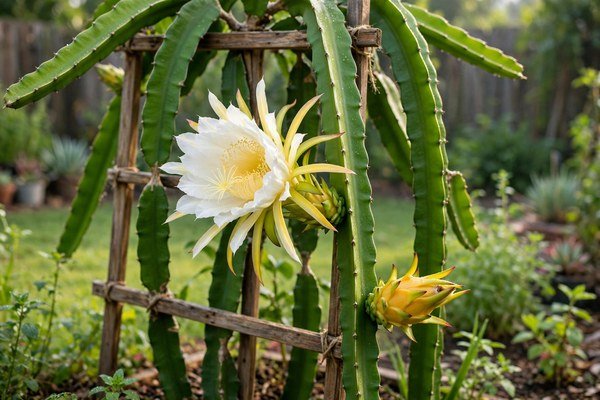
Flowers open at night and fade by morning, so the window is short. Hand pollination is far more reliable: collect pollen with a soft brush in the evening and dust it onto the stigma. A flower that stays plump and green is setting fruit; one that yellows and falls was not pollinated. For a single-plant garden, choose a type reported as self-fertile, such as Isis Gold. See the UF IFAS guide on dragon fruit flowering and pollination for how night-opening flowers and pollen transfer work.
Never assume a yellow type is self-fertile just because a seller says yellow fruit is easy: that one assumption causes more disappointment than any other mistake, and it is the trait that separates the easiest yellow dragon fruit varieties for beginners from the ones that frustrate new growers.
Which Yellow Types Suit Pots and Small Spaces
Pots change the equation, because a container limits root space and therefore plant size. Isis Gold is the strongest pot candidate: self-fertile, moderately vigorous, and fruitful in a container of at least 50 litres with a sturdy post or trellis. Palora and Ecuador Yellow can grow in pots, but they still need a second plant nearby for pollen, meaning two pots and two supports. Colombian Yellow grows well in a pot when young but becomes top-heavy, needing a wide, heavy container.
Australian Golden and Yellow Giant are poor pot choices for a beginner: both want room to spread and constant pruning. If you plan to grow dragon fruit in a container on a balcony, start with one self-fertile type in the largest pot you can manage and a free-draining mix, because the best soil for dragon fruit never stays soggy around the roots. A pot-grown yellow plant also fruits a little later than the same type in the ground, a delay that surprises people who pick yellow dragon fruit varieties for beginners expecting a quick first harvest.

Cold Tolerance and What Frost Does to Yellow Types
Yellow dragon fruit is a tropical cactus that dislikes cold far more than heat. Most yellow types grow best between 20 and 30 degrees Celsius and suffer when nights fall below 10 degrees. Light frost scorches stem tips, while hard frost can kill a young plant outright. Colombian Yellow is often described as slightly tougher in cool conditions, while Palora and Ecuador Yellow are more sensitive. Isis Gold sits in the middle and tolerates brief cool nights better than Palora if sheltered from wind.
No yellow type is genuinely frost-hardy. If your winters bring regular frost, grow your plant in a pot you can move to a sheltered wall or indoors on the coldest nights, and cover it with frost cloth when a cold snap is forecast. Check the sunlight requirements for your site too, because a plant in full sun stores more warmth. For borderline climates, these limits are part of what makes some yellow dragon fruit varieties for beginners a better fit than others: a type that survives your winter always beats a sweeter one that does not.
Where to Buy Cuttings Without Getting the Wrong Plant
Buy from specialist cactus nurseries, dragon fruit growers or reputable online cutting sellers, not market stalls with unlabeled cuttings. Yellow types look almost identical as bare stems, and a wrong label may only show two years later when fruit ripens. Before paying, ask four questions: which exact type is this and where did the mother plant come from; is this clone self-fertile or does it need cross-pollination; how long is the cutting, since 30 to 45 centimetres roots faster than a tiny piece; and can the seller show fruit from the actual mother plant, not a stock photo.
Avoid cuttings that are soft, wrinkled or blackened at the cut end, and any seller who cannot name the type. A cutting bought carefully is the cheapest part of growing dragon fruit, while one bought blindly is the most expensive mistake, since it costs you years. The safest yellow dragon fruit varieties for beginners are the ones whose identity you can verify before planting.

The Two or Three Easiest Yellow Types for a First-Time Grower
For most first-time growers, Isis Gold is the easiest yellow type to start with. It is self-fertile, its fruit is a good size, its flavour is sweet without being extreme, and it grows well in a pot or in the ground on a simple trellis. That combination removes the two biggest beginner problems, pollination failure and unmanageable size.
If you have room for two plants and enjoy hand pollination, add Palora as your second plant: the sweetest fruit of the group. Colombian Yellow is the third easy option, best in warm, humid climates for growers who want steady yields and accept needing a second plant for pollen. Start with Isis Gold alone, or add Palora if you have room for two plants. Whichever you pick, give it full sun, strong support, free-draining soil and patience through the first year, because even the easiest yellow dragon fruit varieties for beginners need time to root, climb and settle before they flower well.
Mistakes First-Time Growers Make With Yellow Types
First, buying an unnamed yellow cutting and expecting Palora sweetness. Flavour, size and pollination are a gamble, so pay for a named type if flavour matters. Second, planting a self-sterile type alone and wondering why every flower falls. Check pollination needs before buying, not after the first flowering. Third, choosing Yellow Giant or Australian Golden for a small balcony, where vigour becomes a chore.
Fourth, overwatering, especially in pots: roots rot quickly in wet soil, and a rotted plant rarely recovers. Fifth, skipping support: this is a climbing cactus, not a shrub, and trailing stems fruit poorly and break easily. Sixth, expecting fruit in the first year. Most yellow types need at least eighteen months to two years from a cutting before fruiting well. Avoid these six mistakes and even a demanding type becomes manageable.
Frequently Asked Questions
Which yellow dragon fruit varieties for beginners are easiest to grow?
Isis Gold, because it is reported self-fertile, fruits at a good size and grows well in a pot or in the ground. Palora is sweetest but needs cross-pollination, so it works best as a second plant.
How long does a yellow dragon fruit plant take to fruit?
From a rooted cutting of 30 to 45 centimetres, most yellow types take eighteen months to three years to fruit well. Fruit ripens roughly 30 to 40 days after flowering, when the skin turns a deep, even gold.
Do yellow dragon fruit plants need another plant to produce fruit?
It depends on the type. Isis Gold is reported self-fertile and can fruit alone. Palora, Colombian Yellow and Ecuador Yellow usually need pollen from a different plant flowering the same night. Evening hand pollination works best.
Can I grow yellow dragon fruit in a pot on a balcony?
Yes, with the right type and a large pot. Isis Gold is the best pot choice because it is self-fertile and moderately vigorous. Use a container of at least 50 litres, a sturdy post or trellis, free-draining soil and at least six hours of direct sun.
Is yellow dragon fruit sweeter than pink dragon fruit?
Usually, yes. Yellow types such as Palora are noticeably sweeter than most pink-skinned fruit, with a honey-like flavour. But good growing matters more.
What should I look for when buying a yellow dragon fruit cutting?
Buy a named type from a seller who can show fruit from the mother plant and confirm whether the clone is self-fertile. Choose a firm cutting 30 to 45 centimetres long with a clean, dry cut end and no soft spots or pests.
Final Thoughts
Yellow dragon fruit rewards the grower who chooses with care rather than one who chases the sweetest name on a label. For most people the right plant is Isis Gold, alone or beside a Palora for extra sweetness. Buy a named cutting from a seller you trust, give it sun, support and free-draining soil, and be patient through the first year.