
Best Pot Material for Dragon Fruit Terracotta vs Plastic Compared
Pick a pot for dragon fruit and the shop will offer two main choices: heavy terracotta clay or light plastic. Both hold soil and both can grow a healthy plant, but both have drawbacks that only show up months later, when the plant is big and hard to change. Choose well at the start.
This guide compares the best pot material for dragon fruit terracotta vs plastic across drainage, drying speed, weight, root temperature, durability and cost. By the end you will know which material suits your climate, habits and space.
In This Guide
- Why Pot Material Matters More Than Size
- Terracotta: How It Behaves
- Plastic: How It Behaves
- Drainage and Drying Speed
- Weight and Stability in Wind
- Root Temperature in Summer
- Durability, Frost, and Cost
- Which Pot for Which Grower
- Mistakes to Avoid When Choosing a Pot
- Frequently Asked Questions
- Conclusion
Why Pot Material Matters More Than Size
Most guides start with pot size, and size does matter: a dragon fruit plant needs roughly 60 to 100 litres to fruit well. But two pots of the same size behave very differently: terracotta and plastic dry out at different speeds, hold different amounts of heat, and weigh very different amounts when full of wet soil.
When growers ask about the best pot material for dragon fruit terracotta vs plastic, they usually mean one of three worries: will the roots stay wet and rot, will the pot blow over in wind, and will the pot last. Material answers all three, and it also decides how often you water: a generous waterer needs a pot that forgives extra water, while a forgetful one needs one that holds moisture longer. Material matches the pot to the grower, not just to the plant.
The soil mix works with the material: a fast-draining mix in terracotta dries very quickly, while the same mix in plastic stays moist longer. For the mix, see the guide to best potting mix for dragon fruit in pots, and for container basics, see how to grow dragon fruit in a container on a balcony.
Terracotta: How It Behaves
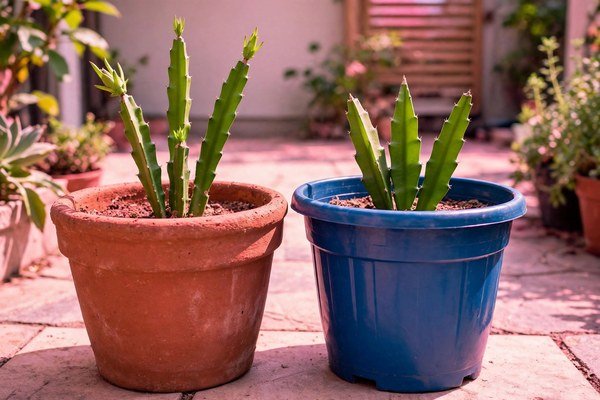
Terracotta is fired clay, and it breathes: water passes slowly through the walls, and air moves the other way, so soil dries from the sides as well as the top. For a cactus like dragon fruit, which hates wet roots, that breathability is a genuine advantage, because the pot helps soil dry.
For the best pot material for dragon fruit terracotta vs plastic debate, terracotta’s main strength is this forgiveness: a heavy watering drains and dries faster, and the roots get more air. The pot is also heavy, which keeps a tall, top-heavy plant stable in wind, and it looks good.
The drawbacks are real. Terracotta dries the soil fast, so in hot weather you may need to water every day or two. The pots are heavy to move when full of wet soil, and they can crack in a hard frost if the soil inside is wet. White salt deposits often appear outside over time, harmless but untidy, and a good terracotta pot costs more than plastic of the same size.
Plastic: How It Behaves
Plastic pots are light, cheap, and everywhere, and they do not breathe at all: water leaves only through the drainage holes and the surface, so the soil stays moist much longer than in terracotta. For a grower who waters lightly or forgets to water, that is a real advantage, and in a hot, dry climate a plastic pot can be the difference between a thriving plant and a thirsty one.
On the other side of the best pot material for dragon fruit terracotta vs plastic question, plastic has three weaknesses. The first is weight: a plastic pot full of soil is far lighter than a terracotta one, and a tall plant with a support post can blow over in a strong gust unless weighted down or placed against a wall. The second is heat: dark plastic absorbs sun and can make the root zone very hot on a sunny patio, which stresses the roots. The third is lifespan: cheap thin plastic becomes brittle in strong sun after a few seasons and can crack when moved.
Good plastic pots exist and are worth buying: thick, UV-stabilised plastic in a light colour lasts far longer than thin black nursery pots. But a thin, dark, cheap pot is the worst of both worlds: light enough to blow over, hot enough to stress roots, and fragile enough to crack.
Drainage and Drying Speed
Drainage is where the best pot material for dragon fruit terracotta vs plastic comparison starts, because dragon fruit roots rot in soil that stays wet, and UF IFAS notes the plant needs well-drained soil. Both need drainage holes, but they behave differently once the holes are there: terracotta drains through the holes and the walls, so the soil dries from all sides, while plastic drains only through the holes, so the bottom can stay damp after the surface looks dry.
In practice, a terracotta pot may need watering twice as often as a plastic pot: good news for a grower who tends to overwater, bad news for one who travels or forgets. Match the material to your habits: water generously, choose terracotta; water sparingly, choose plastic. You can also adjust the soil mix, with more perlite to dry faster in plastic, or more compost to hold moisture longer in terracotta.
Check the soil with your finger before watering: push a finger a few centimetres in, and if it feels dry at that depth, water deeply; if it still feels damp, wait. That test beats any fixed schedule, and it works in both materials.
Weight and Stability in Wind
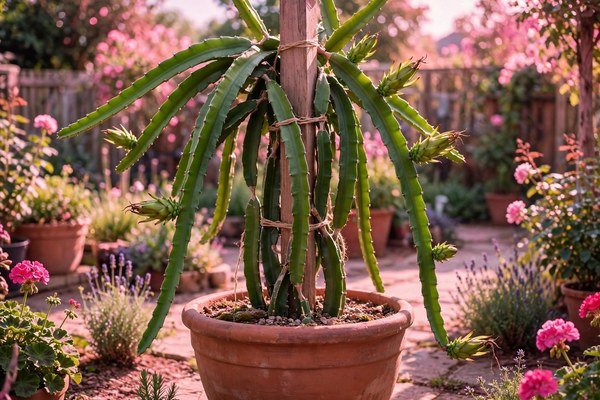
Weight is the second place the best pot material for dragon fruit terracotta vs plastic choice shows up. A mature plant is top-heavy: a tall stem, a support post, and fruit all sit above one pot, and wind pushes on all of it. A terracotta pot of 60 to 100 litres, full of wet soil, holds the plant steady in most winds, while a plastic pot is far lighter, and the same plant can tip over.
On a balcony or a windy roof, weight matters more than anything else: a tipped pot breaks stems, spills soil, and can be a danger to people below. With plastic, add weight with stones in the bottom, a heavier soil mix, or by standing the pot inside a heavier decorative pot, and place it close to a wall where the wind is broken. With terracotta the weight is built in, and moving it usually means a plant trolley or a second pair of hands.
Root Temperature in Summer
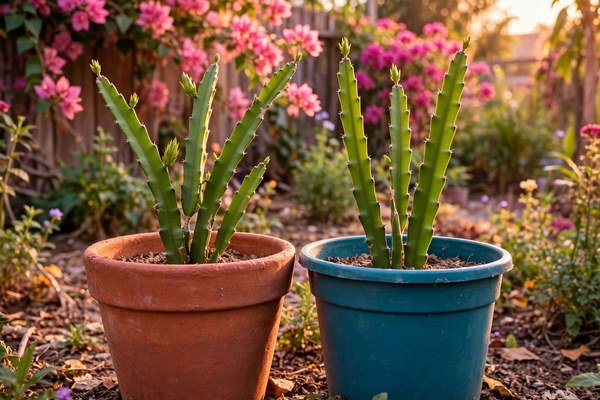
In summer, the best pot material for dragon fruit terracotta vs plastic question turns on root temperature. Roots do their best work in warm soil, but they suffer when it gets very hot, and a pot in full sun can heat up far more than the ground. Terracotta handles heat well: thick clay that breathes, with evaporation from the walls cooling the soil slightly, so a terracotta pot in full sun stays noticeably cooler inside than a dark plastic pot.
Plastic, especially dark plastic, absorbs heat and passes it straight into the soil. On a hot patio, the soil in a black plastic pot can reach temperatures that damage fine roots, and the plant may wilt even when the soil is moist, because hot roots cannot take up water properly. The fix is simple: choose light-coloured plastic, shade the pot itself while the plant stays in the sun, or stand it inside a larger terracotta pot. A pale pot solves most of the heat problem.
Durability, Frost, and Cost
Terracotta lasts a long time if it does not freeze: a good thick-walled pot can serve for a decade or more. Its enemy is frost, since water in the soil and clay expands when it freezes, and a wet pot in a hard frost can crack or flake, so where frosts are hard, move pots to a sheltered spot in winter, or empty them and store them under cover.
Plastic lasts well if it is thick and UV-stabilised, and it never cracks in frost, which makes it safer in cold climates. Thin cheap plastic is the exception: it becomes brittle in strong sun and can split after two or three seasons, so flex the wall when buying: if it bends easily and feels thin, it will not last. Plastic is also much cheaper than terracotta of the same size, though a terracotta pot that lasts ten years can be cheaper per year than plastic replaced every three years.
Which Pot for Which Grower
So which is the best pot material for dragon fruit terracotta vs plastic for you? Start with your climate: in a hot, dry climate, plastic holds moisture longer; in a humid climate, or if you water generously, terracotta’s faster drying protects the roots; and where frosts are hard, plastic is safer, because terracotta can crack.
Next, think about your spot. On a windy balcony or roof, terracotta’s weight is worth the price and the effort of moving it. On a sheltered patio, plastic is fine if weighted down. In full sun on a hot patio, terracotta stays cooler, while dark plastic needs shading or a light colour.
Then think about yourself: if you check the plant daily, terracotta forgives your enthusiasm; if you travel, forget, or water once a week, plastic forgives your absence. If you are on a budget and starting several plants, plastic lets you start now, and you can upgrade your best plant to terracotta later. There is no wrong answer, only a pot that fits your habits better.
Mistakes to Avoid When Choosing a Pot
The first mistake is choosing the best pot material for dragon fruit terracotta vs plastic on looks alone. A beautiful pot too light for a windy balcony or too dark for a hot patio will cause trouble no matter how good it looks. Choose for drainage, weight, and heat first, and looks second.
The second mistake is buying a pot with no drainage holes, or too few. Dragon fruit roots rot in standing water, and no material can save a pot that cannot drain, so check the base before you buy, and drill extra holes if it has only one small hole.
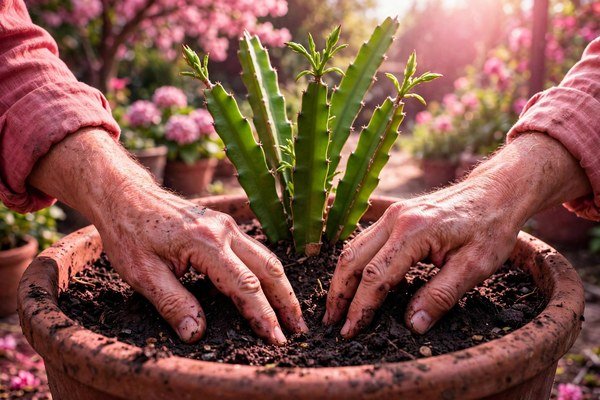
The third mistake is choosing a pot too small because it is cheaper: a small pot dries out daily, blows over easily, and needs repotting within a year. Start with 60 to 100 litres, even if the plant looks lost in it at first.
The fourth mistake is using a thin black nursery pot as a permanent home. It is light, it heats up, and it cracks in the sun, so use it for a young cutting, and move the plant to a proper pot once it grows well.
The fifth mistake is forgetting that a full pot is heavy: a terracotta pot of 100 litres full of wet soil can weigh over 100 kilograms. Put it where it will stay before you fill it, and use a plant trolley to move it later.
Frequently Asked Questions
What is the best pot material for dragon fruit terracotta vs plastic for a beginner?
For most beginners, thick plastic in a light colour is the easiest start: cheap, light to move, holds moisture while you learn how often to water, and frost-proof. Choose 60 to 100 litres with several drainage holes, and weight it with stones at the bottom if your spot is windy. Once you know your watering habits, you can move your best plant to terracotta for faster drying and more stability.
Does terracotta really dry out faster than plastic?
Yes, noticeably. Terracotta is porous, so water passes through the walls and the soil dries from the sides as well as the top, while plastic loses water only through the drainage holes and the surface. In the same weather, a terracotta pot may need watering twice as often as a plastic pot: an advantage if you tend to overwater, and a drawback if you water rarely.
Can I use a plastic pot on a windy balcony?
Yes, but you need to add weight or shelter: put heavy stones in the bottom before adding soil, place the pot close to a wall where the wind is broken, and use a sturdy support post fixed firmly in the pot. Terracotta is the simpler answer on a windy balcony, because the weight is built in, but a weighted plastic pot works too.
Will a dark plastic pot harm my dragon fruit in summer?
It can: dark plastic absorbs sun and heats the soil, and very hot soil damages fine roots, so the plant may wilt even when the soil is moist. Choose a light-coloured pot, shade the pot itself while the plant stays in the sun, or stand it inside a larger terracotta pot. For sunlight needs, see the notes on how much sunlight dragon fruit needs, and for the soil itself, the guide to best soil for dragon fruit plants.
Conclusion
The best pot material for dragon fruit terracotta vs plastic fits your climate, watering habits, and space. Terracotta dries fast, stays cool, and holds the plant steady, but it is heavy, thirsty, and can crack in frost. Plastic holds moisture, costs less, and never cracks in frost, but it is light, can overheat in dark colours, and needs weighting in wind.
Match the material to the grower: generous waterer in a humid climate, choose terracotta; forgetful waterer in a hot, dry climate, choose plastic. Get the size right, make sure it drains.