
A raised bed gives you control over the two things that decide whether a dragon fruit plant thrives or slowly rots: the soil it sits in and the height of that soil above wet ground. In ordinary garden soil, heavy rain can leave the roots sitting in water for days, and a climbing cactus hates wet feet more than almost anything else. A raised bed lifts the roots clear of that water and lets you fill it with a mix you have chosen yourself. Getting dragon fruit raised bed soil mix and depth right on the day you build the bed is far easier than digging a plant out later to fix a soggy, shallow bed underneath it.
This dragon fruit raised bed soil mix and depth guide walks through the whole job in order: why a raised bed suits this plant, how to choose the bed size and position, the mix recipe to fill it with, how deep the bed and soil should be, how to make sure water drains away, and how to plant the cutting and look after it.
In This Guide
- Why a raised bed works for dragon fruit
- Choosing the bed size and position
- The dragon fruit raised bed soil mix recipe that drains well
- Dragon fruit raised bed soil mix and depth: how deep the bed and the soil should be
- Drainage and how to test it
- Filling the bed and planting the cutting
- Watering and feeding in a raised bed
- Common raised bed mistakes to avoid
- Frequently asked questions
Why a Raised Bed Works for Dragon Fruit
Dragon fruit is a climbing cactus, and like most cacti it needs air around its roots. Its roots are shallow and spreading rather than deep, so they explore the top layer of soil and suffer quickly when that layer stays wet. A raised bed suits this root pattern well, because the soil inside it drains downward and outward, and the surface dries between waterings instead of staying cold and soggy.
The second reason is control. When you fill a bed yourself, you know exactly what is in it: how much compost, how much grit, and how much ordinary garden soil. You can keep the mix loose so the roots can spread sideways without hitting a compacted layer, and you can reach the plant without stepping on the root zone. When you plan dragon fruit raised bed soil mix and depth together, you are really planning this control: the mix decides what the roots touch, and the depth decides how much room they have to spread.
Choosing the Bed Size and Position
Start with position, because a dragon fruit raised bed soil mix and depth bed is hard to move once it is full of soil. Choose the sunniest spot you have, with at least six hours of direct sun a day, and shelter from strong wind if you can find it. Avoid the lowest corner of the garden where water collects after rain, and avoid the shade of a large tree, whose roots will creep into the bed. Leave a clear path of at least 60 centimetres around the bed so you can reach the trellis from every side.
For a single plant, a dragon fruit raised bed soil mix and depth bed about 1.2 metres long and 1.2 metres wide is a practical size, with room for one trellis post in the centre and for the roots to spread in every direction. If you plan to grow two plants, build a bed about 2.4 metres long and 1.2 metres wide, with a post for each plant about 1.2 metres apart. The size you choose shapes the whole job, and dragon fruit raised bed soil mix and depth decisions follow from it, because a bigger bed needs more mix and a taller wall to hold the same depth of soil.
The Dragon Fruit Raised Bed Soil Mix Recipe That Drains Well
The mix has one job above all else: to let water pass through quickly while still holding enough moisture and nutrients for the roots. A good starting recipe is three parts good garden soil or loam, two parts well-rotted compost, and one part coarse grit, perlite or small bark chips.
The garden soil gives the mix body, the compost feeds the plant and helps the mix hold moisture, and the grit opens up air spaces so water drains instead of pooling. Mix the ingredients thoroughly before you fill the bed, rather than layering them, because layers can form a barrier that water struggles to cross. For a closer look at soil choices, see our guide to the best soil for dragon fruit, which explains how different soils behave in wet and dry weather.
Avoid using only compost or only potting mix in a raised bed. Pure compost holds too much water in wet weather, sinks as it breaks down, and leaves the bed half empty within a season. Pure potting mix dries out too fast in hot sun.
Test the finished mix by squeezing a handful: it should hold its shape loosely for a moment and then crumble when you poke it, rather than staying in a wet lump or falling apart like dry sand. Do not add fresh manure, because it heats up as it breaks down and can scorch young roots. Getting dragon fruit raised bed soil mix and depth right starts with this recipe, so mix a small trial batch first and water it to see how fast it drains.

Dragon Fruit Raised Bed Soil Mix and Depth: How Deep the Bed and the Soil Should Be
Depth is where many raised beds go wrong, because a bed that looks tall from the outside can still be shallow where the roots actually live. Aim for a bed wall about 30 to 45 centimetres high above the ground, and fill it with soil to within about 5 centimetres of the top edge. That leaves a small rim to hold water when you water by hand, while still giving the roots a full layer of loose mix. A bed shallower than 25 centimetres of soil dries out too fast in hot weather and gives the trellis post too little footing.
The ground underneath the bed matters as much as the wall height. If the bed sits on open soil, the roots can grow down through the mix and into the ground below, which effectively adds depth for free. In that case, loosen the ground under the bed with a fork before you fill it, and remove any paving or plastic sheeting that would block drainage.
If the bed sits on concrete, the soil inside is all the roots will ever get, so build toward the deeper end of the range. Measure the depth as you fill, and top the bed up after the first heavy watering and again after a month, because the mix will settle. That is why dragon fruit raised bed soil mix and depth should be checked with a tape measure while you fill, rather than guessed by eye once the bed is full.

Drainage and How to Test It
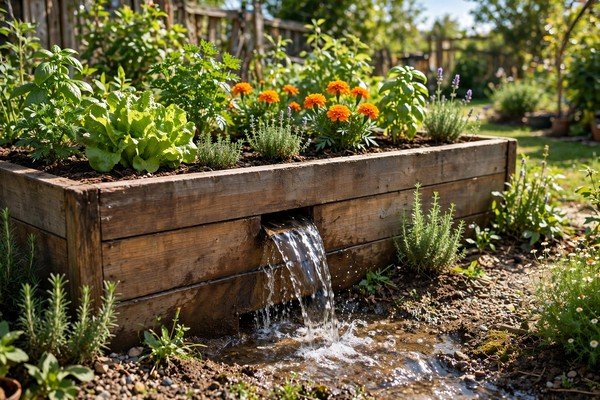
Drainage is not a detail you add at the end of a dragon fruit raised bed soil mix and depth project; it is the reason for building the bed in the first place, and it needs checking before the plant goes in. The simplest test is to fill the bed, water it heavily, and watch. The surface should drain within a few minutes, with no puddles standing on top, and water should seep from the base rather than building up inside. If water stands for more than ten minutes, fork in more perlite or coarse grit and test again.
Keep the base of the bed open to the ground wherever possible, and never line the bottom with solid plastic, because plastic traps water and turns the bed into a shallow pond. The UF IFAS guide to growing dragon fruit in the home landscape notes the importance of well-drained soil for this plant, and it is worth reading if you are planting in a climate with heavy summer rain. A bed that drains well after a storm and still holds moisture in a hot week has proved the point that dragon fruit raised bed soil mix and depth is a drainage decision first and a building decision second.
Filling the Bed and Planting the Cutting
Fill the bed in layers, watering each layer lightly as you go so the mix settles evenly instead of sinking in one corner later. Firm each layer gently with your hands rather than stamping on it, and repeat until you reach the level you marked. Set the trellis post before you plant, while the bed is still easy to work in, and push it down through the mix and into the ground below so it stands firm when the plant grows heavy.
Plant the cutting in the centre of the bed, or beside the post if the post is central, with the base buried about 5 centimetres deep and the cut end calloused and dry before it goes into the soil. A fresh, wet cut planted straight into damp mix is far more likely to rot than a cutting left to dry for a few days. Tie the stem loosely to the post with a soft tie, leaving room for the stem to thicken.
For the wider routine of planting and training a young plant, see our guide on how to grow dragon fruit. Mulch the surface with straw or bark about 5 centimetres thick, keeping it a few centimetres away from the stem, and water thoroughly after planting. The order matters here: fill, firm, post, plant, mulch, and water, and dragon fruit raised bed soil mix and depth work is finished before the cutting ever goes in.

Watering and Feeding in a Raised Bed
A raised bed dries out faster than the open ground, so watering needs a little more attention, especially in the first season and in hot weather. Water deeply and less often rather than lightly every day: a deep watering soaks the whole root zone, while a daily sprinkle only wets the surface. Check the soil with your finger before you water: if the top 5 centimetres are dry but the soil below is still damp, wait another day. Our guide on how often to water dragon fruit explains how to adjust this routine through the seasons.
Feed lightly and regularly rather than in one heavy dose. A small amount of balanced organic fertiliser or well-rotted compost worked into the surface every few weeks during the growing season is safer than a large pile of fertiliser at the base, which can burn the shallow roots. Deep watering on a schedule the plant can rely on is the habit that keeps dragon fruit raised bed soil mix and depth working for you long after the bed is built, since the mix can only drain well if it is watered in a way that lets it dry between waterings.
Common Raised Bed Mistakes to Avoid
The most common mistake in dragon fruit raised bed soil mix and depth is building the bed too shallow and then filling it with a mix that holds too much water. Those two errors together are the fastest route to root rot, and they are both easy to avoid by measuring the depth and testing the drainage before planting. The second mistake is using treated timber of unknown origin or old painted boards, which can leach substances into soil that sits against them for years.
A third mistake is planting more than one cutting in a small bed and letting them crowd each other from the start. Each plant needs its own post and its own space. A fourth mistake is skipping the mulch, which leaves the surface to dry out and crack, so water runs off instead of soaking in. A fifth is tying the stem too tightly to the post, which strangles the stem as it thickens. Avoiding these mistakes is part of getting dragon fruit raised bed soil mix and depth right, because the bed you build on day one is the bed the plant will live in for years.
Frequently Asked Questions
What is dragon fruit raised bed soil mix and depth, and why does it matter for a new plant?
Dragon fruit raised bed soil mix and depth means the recipe of the soil you fill the bed with and how deep that soil layer is, and together they decide whether the shallow roots get air, moisture and room to spread. A loose, free-draining mix in a bed 30 to 45 centimetres deep keeps the roots out of standing water while still holding enough moisture for steady growth.
Can I use ordinary garden soil on its own in a raised bed?
Ordinary garden soil can be part of the mix, but on its own it is rarely ideal. Heavy garden soil holds too much water and sets hard when dry, while very sandy soil drains too fast. Blending garden soil with compost and a drainage material such as perlite or coarse grit gives a mix that holds moisture without staying wet.
How often should I top up the soil in a raised bed?
Top up the bed after the first heavy watering and again after about a month, because the fresh mix will settle by a few centimetres. After that, check the level each season and add compost or fresh mix when the surface has dropped well below the rim, keeping the mulch layer on top.
Do I need drainage holes in a wooden raised bed?
A dragon fruit raised bed soil mix and depth bed on open soil usually does not need drilled holes, because water drains down through the mix and into the ground below. A bed on concrete is different: water has nowhere to go, so leave small gaps between the bottom boards or drill holes near the base, and build toward the deeper end of the range.
Conclusion
A raised bed is a simple structure, but it repays careful building. Choose a sunny spot, build a bed about 1.2 metres across with walls 30 to 45 centimetres high, fill it with a loose mix of garden soil, compost and grit, test the drainage before you plant, and set the post firmly before the cutting goes in. Then water deeply, mulch the surface, and check the ties and the soil level through the first season. That steady routine turns a new cutting into a strong, climbing plant, and it all starts with getting dragon fruit raised bed soil mix and depth right on the day you build the bed.