
How to Grow Dragon Fruit from a Cutting to a Mature Plant
To grow dragon fruit from a cutting is to take a single stem segment from a mature plant and guide it, stage by stage, into a large climbing cactus that can flower and fruit for many years. Cuttings are the preferred way to start dragon fruit: a cutting is a clone of its parent, so it keeps the parent’s fruit colour, flavour, and pollination behaviour, and it reaches fruiting age far sooner than a seedling.
This guide follows the full journey — choosing and curing the cutting, rooting it, training it up a support, building a canopy, and reaching maturity. Each stage has its own needs and its own mistakes to avoid, and understanding the sequence helps you judge whether your plant is on track or needs attention. Timings here are typical ranges from extension sources, not promises: cultivar, climate, soil, and care all shift the pace.
Table of Contents
- What It Means to Grow Dragon Fruit from a Cutting to a Mature Plant
- Stage 1: Choosing and Curing the Cutting
- Stage 2: Rooting the Cutting
- Stage 3: First Growth and the Climb to the Trellis
- Stage 4: Branching and Building the Canopy
- Stage 5: Maturity, Flowering and First Fruit
- Common Setbacks on the Way to Maturity
- How Long Each Stage Usually Takes
- Frequently Asked Questions
What It Means to Grow Dragon Fruit from a Cutting to a Mature Plant
A mature dragon fruit plant is not simply a taller version of a cutting. It is a different structure: a rooted plant with a thick main stem, a strong support, and a spreading canopy of branches that hang down from the top of a trellis. Those hanging branches are where flowers and fruit appear. A cutting, by contrast, is one stem segment, usually 15 to 38 cm long, with no roots and no branches. The journey between the two involves rooting, vertical growth, training, branching, and finally flowering — and the grower’s job changes at each step.
It helps to think of the process in terms of what the plant is investing in. In the first weeks, all energy goes into roots. Then energy shifts to upward growth, as the plant races to reach light and the top of its support. Only when it reaches the top and its growing tip is stopped does energy shift into side branches. And only when the canopy is established and the plant has stored enough energy does flowering begin. Rushing any stage — for example, letting side branches sprout low on the stem before the plant reaches the trellis — wastes energy the plant needs for climbing and delays the canopy that will eventually bear fruit.
Stage 1: Choosing and Curing the Cutting
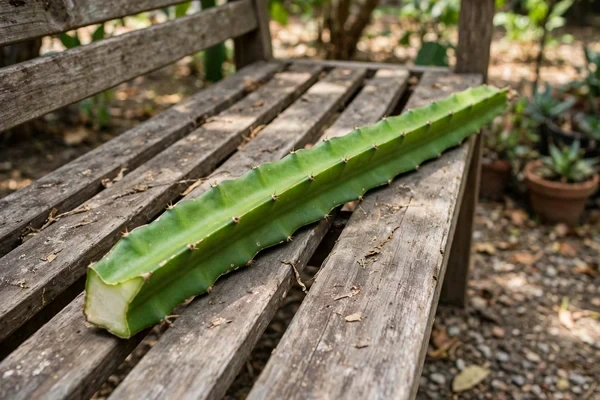
Everything starts with the cutting itself. Choose a healthy, mature stem from a plant whose fruit you have seen or whose variety you trust, because the cutting will be genetically identical to its parent. Getting this first choice right matters, because when you grow dragon fruit from a cutting, the new plant inherits everything about its parent. Look for a thick, firm, deep-green stem segment with no yellowing, soft spots, rot, or pest damage. Segments from the middle or upper part of a healthy stem usually root well. Very young, thin, pale growth is less reliable, and stems from a sick plant can carry disease into your new planting.
Cuttings are usually 15 to 38 cm long, with some sources recommending 15 to 20 cm as a practical size. Make a clean cut with a sharp, clean knife or secateurs, cutting the base at a slant. The slanted cut increases the surface area from which roots can emerge and helps water run off the cut face rather than pooling on it. If you are taking several cuttings, clean the blade between cuts to avoid spreading infection.
Fresh cuttings must be cured before planting. Curing means leaving the cutting in a dry, shady place for about five to eight days so the cut end dries and forms a callus — a tough, healed surface. This step is easy to skip and costly to skip: an uncured cutting planted in moist soil is far more likely to rot from the base. Do not cure cuttings in direct sun, which can scorch them. For more detail on this first step, see our guide to propagate dragon fruit from cuttings.
Stage 2: Rooting the Cutting
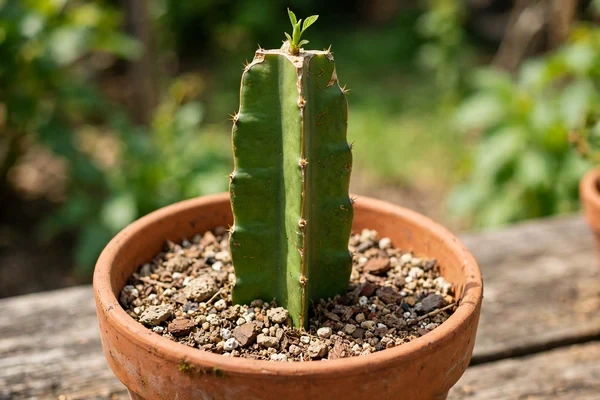
Once cured, the cutting can be planted — this is the moment you truly begin to grow dragon fruit from a cutting into a rooted plant. Most experienced growers root cuttings in pots first rather than planting them directly in the ground. A pot lets you control drainage, protect the young plant from harsh weather, and move it if conditions turn bad. UF IFAS describes this as the highly recommended system: plant cured cuttings in pots, let them develop a good root system over four to six months, and then transplant them into the landscape.
Use a free-draining mix — garden soil mixed with coarse sand or perlite and some compost works well — and a pot with drainage holes. Push the cutting about 5 cm into the mix, upright, and firm the mix gently around it. Water lightly to settle the soil, then water sparingly while roots form. The goal is soil that is lightly moist, never soggy. A cutting with no roots cannot use much water, and wet soil is the main cause of base rot at this stage. Place the pot in bright, indirect light or light shade, not in fierce direct sun, until growth appears.
Stage 3: First Growth and the Climb to the Trellis
When the cutting has rooted and begun growing, it needs its permanent support. Dragon fruit is a climbing cactus that produces aerial roots along its stems, gripping whatever it climbs. In a home garden, a single post trellis with a structure at the top is the standard choice: a sturdy post, typically a 10 to 15 cm diameter pressure-treated pole, with a frame or wheel at the top for the canopy to spread over. A trellis for a mature plant should be about 1.8 to 2 metres tall and strong enough to hold several hundred pounds of stem weight.
Training at this stage is simple but important when you grow dragon fruit from a cutting, because a single straight stem is the foundation of the whole plant: keep one main stem and remove side shoots as they appear along it, tying the main stem loosely to the post as it grows.
Our guide to train dragon fruit on a trellis explains the tying and training technique in detail. Soft ties, cloth strips, or padded wire are best; bare wire can cut into stems as they thicken. The goal is a single clean stem reaching the top of the post, not a bushy plant at the base. Lateral stems low on the plant shade the base, compete for energy, and create a tangled mass that is hard to manage later.
If you are growing in a pot, place the pot beside the trellis at planting time. Trying to add a trellis after the plant is large risks breaking stems and roots, so plan the support before the plant needs it.
Stage 4: Branching and Building the Canopy
This is the turning point when you grow dragon fruit from a cutting: when the main stem reaches the top of the trellis, its tip should be cut. This single cut changes the plant’s behaviour: with the upward growing point removed, the plant redirects energy into side branches. Several new laterals will sprout from near the top of the stem. These are trained outward over the trellis frame and allowed to hang down, forming the canopy.
This is also the stage when the plant begins to look like a dragon fruit plant rather than a single stem. The canopy fills out over several months, and the stems thicken and darken. Feeding matters now: the plant is building a large structure and needs steady nutrition. Light, regular feeding with a balanced fertiliser and compost, starting about a month after planting and continuing through the growing season, supports this growth.

Stage 5: Maturity, Flowering and First Fruit
When you grow dragon fruit from a cutting, the plant is mature once it has a full canopy, thick stems, and the energy reserves to flower. For a cutting-grown plant, the first flowers often appear within the first year or two, and UF IFAS notes many cuttings produce fruit in six to nine months after planting under good conditions. That is a typical range, not a guarantee: a cutting planted late in the season, in a cool climate, or in poor soil may take a full second season before it flowers. See our guide on how long dragon fruit takes to fruit for the factors that speed up or slow down this timeline.
Flowering follows the seasons. Dragon fruit is a long-day plant, so flowering is triggered by longer daylight periods, and in many regions the flowering and fruiting season runs from late spring through autumn, with a peak in the warmest months. Flowers open at night, are very large and fragrant, and last a single night. Some varieties can set fruit with their own pollen; others need pollen from a different variety. If your plant flowers but no fruit follows, pollination — not plant age — may be the problem, and our pollination guide explains how to check and how to hand-pollinate.
First harvests are usually light. A young plant may set only a few fruit in its first season, and that is normal. Production builds as the plant ages: UF IFAS reports that three- to four-year-old plants may produce around 100 kg of fruit per year.

Common Setbacks on the Way to Maturity
Most failures in growing dragon fruit from a cutting happen early, and most are preventable. Base rot is the most common: the cutting turns soft, brown, and mushy from the bottom up, usually because it was planted before curing or the soil stayed wet. If rot is caught early, cut back to healthy tissue, re-cure the cutting, and replant in drier mix.
Slow growth usually has a simple cause: too little light, too little water during hot weather, or cold temperatures. Dragon fruit grows best between about 18 and 25°C and slows sharply in cool weather. A cutting that sits unchanged for weeks in cool spring weather is not necessarily dead — it may simply be waiting for warmth. Check that the stem is still firm and green; a firm stem is alive and will grow when conditions improve.
How Long Each Stage Usually Takes
These are typical ranges from extension sources for anyone who wants to grow dragon fruit from a cutting, and your plant may sit outside them without anything being wrong:
- Curing: 5 to 8 days in a dry, shady place.
- Rooting: first roots in 2 to 4 weeks; a usable root system in 4 to 6 months in a pot.
- Climbing: the main stem reaches a 1.8 to 2 metre trellis top within the first growing season under warm, bright conditions, sometimes faster.
- Canopy building: several months after topping, as laterals grow out and hang down.
- First flowers and fruit: often within 6 to 12 months of planting a cutting in warm climates, sometimes into the second season in cooler regions or with late planting.
Think of the first year as establishment: to grow dragon fruit from a cutting successfully is to invest that year in roots, height, and canopy. Fruit in the first year is a bonus, not a deadline. A plant that spends its first year building a strong structure will usually out-produce one forced into early fruiting on a weak frame. Keep a seasonal routine going once the plant is established; our dragon fruit plant care calendar lays out the year-round tasks.
Frequently Asked Questions
Can I grow dragon fruit from a cutting directly in the ground instead of a pot?
Yes, a cured cutting can be planted directly in its final position, and many growers who grow dragon fruit from a cutting do this in warm climates with well-drained soil. The pot method is recommended mainly because it gives better control over drainage and lets the plant build roots before facing open-ground conditions. If you plant directly, choose the warm season, make sure the site drains freely, water lightly until growth appears, and protect the cutting from intense sun for the first weeks.
How do I know if my cutting is dead or just slow?
Squeeze the stem gently. A live cutting stays firm and green, even if it shows no new growth for weeks. A dead or rotting cutting feels soft, looks brown or yellow, and may smell unpleasant. Firm and green means alive — give it warmth, light, and time. Soft and discoloured from the base usually means rot, in which case cut back to healthy tissue and start the curing step again.
Should I remove the first flowers on a young plant?
Some growers remove the first few flowers so the young plant puts energy into canopy growth rather than fruit. This is a judgement call, not a rule. If the plant is vigorous with a good canopy, letting a few fruit set is harmless. If the plant is small or struggling, removing early flowers can help it establish faster.
How many cuttings should I plant per trellis post?
One cutting per post is the standard for a home garden single-post trellis, and it keeps management simple. Some growers plant two to four cuttings around a single post to fill the canopy faster, but this creates a denser canopy that needs more pruning and airflow management. For a first plant, start with one healthy cutting per post and learn the plant’s habits before trying multi-plant posts.
Disclaimer: DragonFruitGrow.online is an independent gardening information resource. Growing conditions vary by climate, cultivar, and site, so observe your own plants and adapt this general guidance to local conditions.