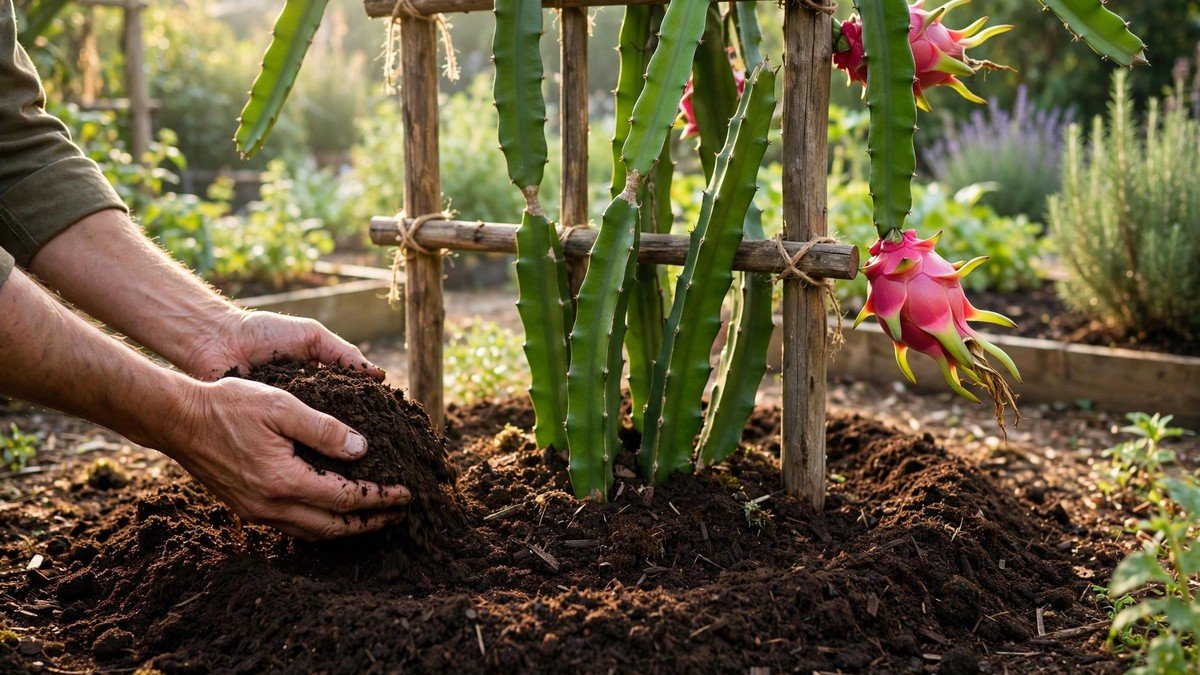
Dragon fruit is a hungry plant with a shallow root system, and it rewards steady feeding far more than occasional heavy doses. The stems grow fast in warm weather, the flowers open at night, and the fruit swells quickly once it sets, so the plant draws on the soil all through the growing season. A steady organic fertilizer routine for dragon fruit plants is the simplest way to meet that demand at home, because it feeds the soil as well as the plant, and it releases nutrients slowly instead of in one sharp rush.
This guide follows the plant through the year, season by season, using only organic materials that most home gardeners can find easily: compost, well-rotted manure, and liquid feeds made from garden waste. The whole plan is built around watching the plant, not the calendar alone, so an organic fertilizer routine for dragon fruit plants stays flexible enough for a warm climate, a cool climate, a pot on a balcony, or a plant in the ground.
In This Guide
- Why organic feeding suits dragon fruit
- The three organic feeds to know
- Spring: starting your organic fertilizer routine for dragon fruit plants
- Summer: organic fertilizer routine for dragon fruit plants through flowering and fruiting
- Autumn: the last feed and restoring the soil
- Winter: rest, mulch and no feeding
- How much and how often: a simple seasonal calendar
- Common mistakes that waste organic fertilizer
- Frequently asked questions
Why Organic Feeding Suits Dragon Fruit
Dragon fruit is a climbing cactus, and its roots are shallow, spreading, and easily damaged by strong salts. A heavy dose of chemical fertilizer can burn those roots, especially in a pot where there is nowhere for the salts to wash away.
That is why an organic fertilizer routine for dragon fruit plants suits home growers so well. The aim is not a single dramatic feed, but a soil that stays rich and alive through the whole season. A plant in rich, crumbly soil with a mulch layer on top copes better with hot days and the long fruiting season than a plant in tired soil that only gets fed when it starts to look pale.
Soil matters before feeding begins. Dragon fruit needs loose, free-draining soil, because roots sitting in wet soil will rot long before hunger becomes a problem. If you are setting up a new plant, read our guide on the best soil for dragon fruit first. The UF IFAS growing guide also describes dragon fruit as a plant that needs well-drained soil and protection from cold.
The Three Organic Feeds to Know
You do not need a shelf full of products. Three materials cover almost everything an organic fertilizer routine for dragon fruit plants needs. Compost is the foundation: broken-down garden and kitchen waste, dark and crumbly, that improves the soil itself while releasing a gentle spread of nutrients over a long period.
Well-rotted manure is the second material, and it is stronger than compost. It must be old and fully rotted, dark and crumbly with no strong smell, before it goes near a plant. Fresh manure is hot, full of salts and weed seeds, and it can burn roots and damage stems. Well-rotted manure is best used in modest amounts in spring and early summer, when the plant is growing fast and can use it.
Liquid feed is the third material, and it is the quickest of the three. It is made by soaking compost, manure, or seaweed in water, then diluting the liquid until it looks like weak tea. Because it is already in liquid form, the roots can take it up quickly, which makes it useful during flowering and fruiting. In an organic fertilizer routine for dragon fruit plants, compost builds the soil, manure adds strength in spring, and liquid feed tops the plant up through the busiest part of the season.

Spring: Starting Your Organic Fertilizer Routine for Dragon Fruit Plants
Spring is when the plant wakes up. The days lengthen, the soil warms, and the first new growth appears at the stem tips, pale green and tender at first, then firming up as it lengthens. This is the moment to start feeding again after the winter rest. Spring is when an organic fertilizer routine for dragon fruit plants begins in earnest, with a fresh layer of compost and, for an established plant, a modest amount of well-rotted manure.
If you are growing a young plant for the first time, spring is also the time to check the basics: the trellis is firm, the ties are not cutting into the stems, and the plant has room to climb. Our guide on how to grow dragon fruit covers the setup in full. Do not rush the first feed: one light compost feed, followed by a liquid feed once the new growth is growing steadily, is enough to start the season.
Summer: Organic Fertilizer Routine for Dragon Fruit Plants Through Flowering and Fruiting
Summer is the busiest season, and it is when feeding matters most. The plant flowers in waves, the flowers open at night and fade by morning, and the fruit that sets after pollination swells over the following weeks. All of that work needs water and nutrients, and the plant will draw heavily on the soil. Through this season, the organic fertilizer routine for dragon fruit plants shifts from building the soil to keeping the plant supplied while it works.
Liquid feed is the main tool in summer in an organic fertilizer routine for dragon fruit plants. Give a diluted liquid feed at regular intervals through the flowering and fruiting period, always onto moist soil, never onto dry soil, and always in the morning or evening rather than in the heat of the day. Water first if the soil is dry, wait for the water to soak in, and then apply the liquid feed, so the nutrients reach the root zone.
Compost still has a role in summer, as a mulch rather than a heavy feed. A fresh layer of compost or straw mulch around the base keeps the soil cool, holds moisture through hot days, and slowly adds nutrients as it breaks down. Water and feeding work together in summer: a plant that is fed but dry cannot take up the nutrients. For the watering side of the routine, see our guide on how often to water dragon fruit.

Autumn: The Last Feed and Restoring the Soil
Autumn is the closing chapter of the year, and the plant slows down as the days shorten and the nights cool. The last fruit ripens, the flowering waves stop, and the new growth hardens off. Autumn is the closing chapter of the organic fertilizer routine for dragon fruit plants, and the job now is to finish the season cleanly, not to push the plant into more growth.
Give one last light feed early in autumn, while the plant is still active, using compost rather than manure or strong liquid feed. A layer of compost around the base will settle in over autumn and be ready for the plant to draw on when spring comes. After that feed, stop: a plant fed late in autumn pushes soft, tender growth that the first cold night will damage.
Autumn is also the best time to restore the soil. Top up the mulch with a thick layer of straw or dry leaves, which will insulate the roots through winter and break down into organic matter by spring.

Winter: Rest, Mulch and No Feeding
Winter is a season of rest, and the organic fertilizer routine for dragon fruit plants stops. The plant is dormant or nearly dormant, the nights are long, and it cannot use the nutrients you give it. Fertilizer sitting in cold soil does nothing for the plant, and it can damage the roots as salts build up. In winter, the organic fertilizer routine for dragon fruit plants pauses, and the gardener’s job changes from feeding to protecting.
The one thing the plant still needs in winter is mulch. A thick layer around the base insulates the roots from cold nights, and it will break down slowly into the soil by spring. Keep it away from the stems, because damp mulch pressed against a stem in cold weather invites rot. Water very little in winter, and only when the soil has dried out. Do not feed at all, however tempting it is on a mild winter day, and wait for the first signs of spring growth before you reach for the compost again.
How Much and How Often: A Simple Seasonal Calendar
The calendar below is a guide, not a rigid rule, and you should adjust it to your own climate, your soil, and your plant. A plant in rich soil in the ground needs less than a plant in a pot in poor soil. The calendar sums up the organic fertilizer routine for dragon fruit plants in one place, so you can see the whole year at a glance.
- Spring: one compost feed as growth starts, plus a modest amount of well-rotted manure for an established plant, followed by diluted liquid feed once new growth is steady.
- Early summer: diluted liquid feed at regular intervals through flowering, with a compost mulch layer to hold moisture.
- Late summer: continue liquid feed while fruit is swelling, and top up the mulch when it thins.
- Early autumn: one last light compost feed, then stop all feeding for the year.
- Late autumn: thick mulch around the base, clear fallen fruit and leaves, and check drainage.
- Winter: no feeding at all, mulch in place, water only when the soil is dry.
The amount matters less than the pattern. A small feed given regularly will do more good than a large feed given once, because the plant can only take up so much at a time. Start with less than you think you need, watch the plant for a few weeks, and increase the amount only if the growth is pale and slow.

Common Mistakes That Waste Organic Fertilizer
The most common way to break an organic fertilizer routine for dragon fruit plants is to use fresh manure. It looks like a good idea, because it is free and it is organic, but fresh manure is hot, salty, and full of weed seeds, and it can burn shallow roots and scorch young stems. Always let manure rot fully until it is dark, crumbly, and free of smell, or buy it ready-rotted, and never pile it against the stems.
The second mistake is feeding a dry plant. Liquid feed in particular should always go onto moist soil: on dry soil, a strong liquid feed can scorch the roots. Water first, wait for the soil to take it up, and then feed. The third mistake is feeding at the wrong time of day or the wrong time of year. Feed in the morning or the evening, and stop in early autumn.
The fourth mistake is piling compost or manure against the stems. Dragon fruit stems rot easily when they stay damp, so always leave a clear gap around the stems and spread the feed in a wide ring over the root zone instead. The fifth mistake is thinking that more is better. A plant fed lightly and regularly grows firm stems with a deep green colour, while an overfed plant grows fast and soft, with pale stems that flop and suffer in the first cold night. If you are unsure, feed less, and let the plant show you what it needs.
Frequently Asked Questions
What is an organic fertilizer routine for dragon fruit plants?
It is a seasonal plan that uses compost, well-rotted manure, and diluted liquid feed, timed to the way the plant grows. Compost builds the soil in spring, manure adds strength while growth is fast, liquid feed keeps the plant supplied through flowering and fruiting, and feeding stops in autumn so the plant can rest through winter.
Can I use only compost and skip manure?
Yes, you can. Compost alone will keep a plant healthy, especially if the soil was rich to begin with and you top the compost up through the season. Manure adds extra nutrients and is useful for a plant in poor soil, but it is not essential. If you do use manure, make sure it is fully rotted and keep it away from the stems.
How do I make a simple liquid feed at home?
Soak a bucket of finished compost in water for a day or two, stirring it now and then, then strain the liquid and dilute it until it looks like weak tea. Use it at once, onto moist soil, in the morning or the evening.
Should I feed dragon fruit in a pot differently from a plant in the ground?
Yes, a potted plant needs smaller, more frequent feeds, because a pot holds less soil and the nutrients wash out faster with watering. Give compost in a thinner layer, use liquid feed more often but more dilute, and watch the plant closely, because a pot dries out and warms up faster than the ground.
When should I stop feeding for the year?
Stop in early autumn, after one last light compost feed, while the plant is still active but the days are shortening. Do not feed through late autumn or winter, when the plant is dormant and cannot use the nutrients. Wait until the new growth is growing steadily in spring before you start again.
What are the signs that I have fed too much?
The stems grow fast but soft and pale, the plant looks lush rather than firm, and the new growth flops instead of standing up. Stop feeding at once and water the soil well to flush it through.
Conclusion
A good organic fertilizer routine for dragon fruit plants is not complicated, and it does not need expensive products. Compost in spring, a little well-rotted manure while the plant is growing fast, diluted liquid feed through flowering and fruiting, one last light compost feed in early autumn, and nothing at all in winter. Follow it, watch the stems, and adjust the amounts to your own garden, and an organic fertilizer routine for dragon fruit plants will keep your plant steady, green, and ready for the next season.