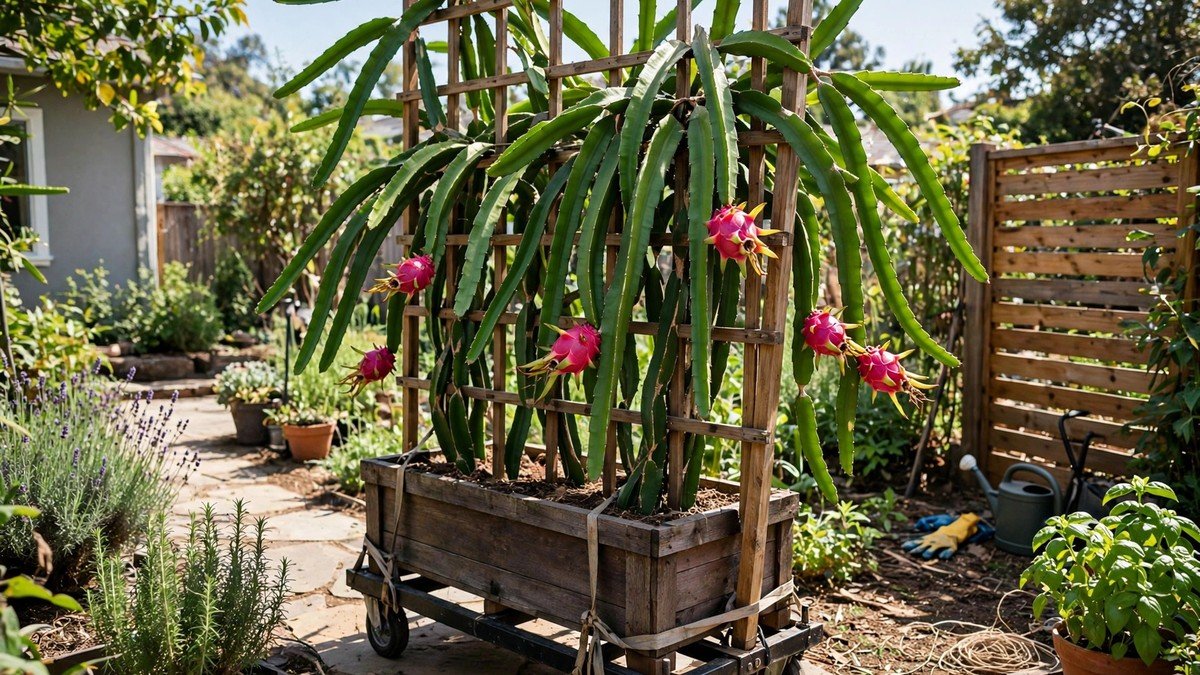
A mature dragon fruit plant is a heavy, sprawling climber with thick fleshy stems, a wide root system and a trellis it has grown around for years. Moving one is very different from moving a young cutting in a pot. The stems are long, the arms are brittle at the joints, and the roots spread further than most gardeners expect. Learning how to transplant mature dragon fruit plant safely starts with accepting that this is a slow, two-person job, not a quick afternoon dig.
Gardeners move mature plants for good reasons: a fence coming down, a tree stealing the sun, soil that stays wet after rain, or a rotting trellis. The plant can survive and fruit again if the timing is right, the root ball stays mostly intact, and the new spot gives it sun, drainage and a strong support from day one.
This guide walks through the whole job in order, from picking the right week to the first signs that the plant has settled in. It is written for a plant growing in the ground on a trellis, the hardest kind to move. If your plant is still small, the general advice in our guide on how to grow dragon fruit will help you decide whether moving it now is even needed.
In This Guide
Before you pick up a spade, read through the plan once so you know what each stage needs. Timing and preparation matter more than strength here, and the notes below explain how to transplant mature dragon fruit plant material without breaking the stems you have spent years growing.
- How to transplant mature dragon fruit plant: when to move a mature plant and which weather to avoid
- How to prepare the new spot, the soil and the trellis before you dig
- Digging out the root ball without cutting the main roots
- How to transplant mature dragon fruit plant: lifting, carrying and protecting the stems on the way to the new spot
- Replanting at the right depth and tying the plant to its new support
- Watering, shade and aftercare through the first weeks
- Mistakes that cause wilting, rot and stem breakage
- Signs that the plant has settled in and started growing again
How to Transplant Mature Dragon Fruit Plant: When to Move It
Timing is the single biggest factor in whether a moved plant recovers quickly or struggles for months. Move in mild weather, when the plant is growing but not under heat stress and not facing cold nights. Late spring and early summer usually work well in warm regions, because the plant is active and can grow new roots fast. Avoid the hottest weeks of summer and cold spells, when a stressed cactus is slow to heal. Timing is the first lesson in how to transplant mature dragon fruit plant stock without losing a season of growth.
Do not move a plant carrying flower buds or fruit. It will drop most of them anyway, and the energy spent holding fruit is energy it cannot spend on new roots. If fruit is nearly ripe, harvest first; if the plant is in full flower, wait for the flush to finish.
Water the plant deeply two or three days before the move so the soil holds together around the roots and the stems are fully hydrated. Do not water on the morning of the move, or the root ball will be heavy and muddy. Trim back only stems that are clearly dead, damaged or in the way; heavy pruning at the same time as moving doubles the shock, so save the main shaping cut for later. Our guide on when to prune dragon fruit explains the right season and the right cuts for a plant that is already settled.

Preparing the New Spot and the Right Soil
Never dig up the old plant before the new spot is fully ready; it should spend as little time as possible out of the ground, ideally under an hour. Pick a spot that gets at least six hours of direct sun and has no low hollow where water sits after rain. Dragon fruit roots rot fast in wet soil, and a moved plant is even more vulnerable, so build a raised mound if your garden has heavy clay. Good drainage is the foundation of how to transplant mature dragon fruit plant material successfully.
The trellis must be in place before the plant arrives: a strong post, at least as tall as the old one, with a solid top frame for the stems to spread over. Use treated wood, metal or concrete, and set the post deep enough that it will not lean once the plant grows heavy with fruit. Do not try to build the support after planting, and do not move a rotting old trellis with the plant still attached to it.
The new hole should be about twice as wide as the root ball you expect to lift, and no deeper than the root ball itself. Loosen the soil at the bottom with a fork, then mix the backfill with coarse sand, perlite or small gravel and well-rotted compost so it drains freely while holding some moisture. For a full breakdown of mixes, drainage and pH, see our guide on best soil for dragon fruit before you start digging.
Digging Out the Plant Without Damaging the Roots
Clear the ground around the base, removing mulch, weeds and stones from a wide circle, at least as wide as the spread of the stems above. Dragon fruit roots are shallow and spread outward rather than diving deep, so a wide, shallow root ball is normal. Cutting the circle too narrow is the most common digging mistake, because it slices off the fine feeder roots the plant needs most. A wide root ball is the heart of how to transplant mature dragon fruit plant roots without major losses.
Tie the longest stems loosely together with soft cloth before you start digging, so they do not flop over and snap while you work. If the stems are attached to the old trellis, untie them carefully one by one and lay them down gently on a tarp. Do not pull a stem that is stuck; cut the tie, not the stem. A stem that tears at the joint loses a whole arm of growth.
Dig the trench in stages, pushing the spade in at the edge of your marked circle and levering the soil outward as you work around the plant. Keep the blade angled slightly inward so the root ball tapers toward the bottom. Small feeder roots can be cut cleanly with sharp secateurs, but save a thick root if possible, because it feeds a large section of the plant. When the trench is deep enough, slide the spade under the root ball and test whether it moves; if it holds firm, dig deeper on one side rather than forcing it.
How to Transplant Mature Dragon Fruit Plant: Lifting and Moving It
Two people are needed for a mature plant, and three are better if the stems are very long, because one person cannot lift a heavy root ball and control long stems at the same time. Before lifting, agree on who holds the root ball, who guides the stems, and where you are walking, and clear the path first. Two people and a clear path are the practical core of how to transplant mature dragon fruit plant specimens safely.
Lift from the root ball, never by pulling the stems. Slide the tarp under the ball, gather the edges, and lift with your legs while the second person steadies the stems and keeps them from dragging on the ground. Keep the plant upright or at a gentle tilt, the same way it grew; turning it upside down bends the stems at weak points and can crack the skin.

Replanting Beside a Strong New Support
Place the plant in the new hole at exactly the same depth it grew before. The crown, where the stems meet the roots, should sit at soil level, not buried and not raised high on a mound of loose soil. Planting too deep buries the base of the stems, which invites rot in exactly the spot you cannot see. Planting too shallow leaves roots exposed to sun and drying wind. Depth and gentle backfilling decide how to transplant mature dragon fruit plant stock so it roots again.
Set the root ball against the new trellis post so the main stems are close enough to tie without bending them sideways. Fill around the ball with your prepared mix, firming it gently with your hands; do not stamp the soil down hard, or compaction will squeeze the air out and slow root growth. Water the soil in layers as you fill, so the mix settles against the roots without air gaps.
Tie the main stems to the post and the top frame with soft cloth ties, holding them upright without pulling them tight against the wood. Leave a little slack so the stems can thicken, and check the ties every few weeks in the first season; a tie that was perfect on moving day can strangle a growing stem within a month. Spread the arms over the top frame so they have room to hang and fruit.

Aftercare in the First Weeks
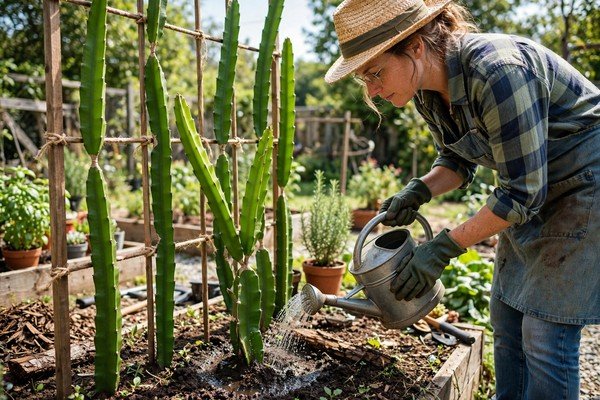
Water the plant deeply on moving day, right after planting, so the soil settles around the roots. Then water little and often for the first two weeks, keeping the soil moist but never soggy; a mature plant with damaged roots cannot use a flood of water, and sitting in wet soil is the fastest route to root rot. Check the soil with your finger before watering: if the top few centimetres are still damp, wait another day. Steady moisture and patience define how to transplant mature dragon fruit plant material through the first month.
Do not feed the plant for at least a month. Fertiliser on damaged roots burns them, and a stressed plant cannot use extra nutrients anyway. Wait until you see new growth, then start with a light feed. Leave the plant alone apart from removing any stem that turns soft, yellow or clearly rotten, cutting it back to healthy green tissue with a clean, sharp knife.
Common Mistakes to Avoid
The most damaging mistake is moving the plant in the wrong season: a move in a heatwave or just before a cold snap leaves the plant with no buffer. The second mistake is cutting the root ball too small; gardeners who dig a tight circle to save effort remove the fine roots that take up water, and the plant then wilts no matter how much it is watered. Most failures in how to transplant mature dragon fruit plant stock come from rushing one of these steps.
Planting too deep is a quiet killer, because the damage happens underground and only shows weeks later as a soft, rotting base. Always match the old soil line on the stem, and check it again after the first watering, when the soil settles. Overwatering runs a close second: a moved plant needs steady moisture, not daily flooding.
Signs the Plant Has Settled In
The first good sign is that the stems firm up again: after a week or two, the slight softness of the first days should fade and the stems should feel plump and springy. Healthy stems are a clear green, and new growth tips appear as small, bright green shoots at the ends of the arms. If the tips stay pale or shrivelled for more than a month, the roots are still struggling. Firm stems and fresh shoots are the proof that how to transplant mature dragon fruit plant work has succeeded.
The clearest sign of all is fresh growth: new shoots, new branches and eventually flower buds show that the plant has finished recovering. That can take a month in good conditions or a whole season after a hard move, and both are normal. Once growth resumes, return to normal watering and feeding and let the plant rebuild its canopy before the next fruiting season. For the background science, the UF IFAS publication is a solid reference.
How often should I water after I learn how to transplant mature dragon fruit plant material in my garden?
Water deeply on moving day, then keep the soil lightly moist for the first two weeks, checking with your finger before each watering. The soil should dry slightly at the surface between waterings, because roots that sit in constant wetness rot quickly. After the first month, return to a normal watering pattern for a mature plant in your climate, watering more in hot dry weather and less after rain.
Can a mature dragon fruit plant be moved in summer?
It can, but summer is the riskiest season. Hot sun and dry wind pull moisture out of the stems faster than damaged roots can replace it, so the plant wilts badly and may lose arms. If summer is the only option, move on a cool, cloudy morning, give light shade for the first week, keep the root ball wrapped and damp, and water little and often.
How big should the root ball be?
Aim for a root ball at least as wide as the spread of the stems above the ground, and deep enough to include the thick roots near the base. A wider ball keeps more fine feeder roots, which is what matters most for recovery, so dig a generous circle rather than cutting the roots short.
Should I cut the stems back before moving?
Cut back only dead, damaged or blocking stems before the move. Leave the healthy arms in place, tied loosely together, because they carry the stored energy the plant needs to grow new roots. Heavy pruning at the same time as moving doubles the shock, so do the main shaping cut later, once the plant shows fresh growth.
Will a transplanted dragon fruit plant fruit in the same year?
It may, but do not count on it. Most moved plants spend the first season growing roots and new shoots, and fruiting often waits until the following season. A plant that flowers in the first year may drop the buds, which is a normal response to stress.
Conclusion
Moving a mature dragon fruit plant is a careful job, not a fast one. Pick mild weather, prepare the new spot and the trellis before you dig, keep the root ball wide and intact, lift with help, and plant at the same depth as before. Then give the plant steady moisture, a little shade and time, without feeding or heavy pruning until new growth shows. Growers who learn how to transplant mature dragon fruit plant stock with patience usually see their plant growing again within a few weeks and fruiting in the seasons that follow.