
A dragon fruit plant can look lonely on its trellis, but the bare soil around its base is a missed opportunity. The right neighbours shade the soil, feed it with nutrients, confuse pests and bring in pollinators, without competing with the cactus for what it needs most. Choosing the best companion plants for dragon fruit is not about filling every gap with greenery. It is about picking plants that share the same love of sun, warmth and free-draining soil, and that stay polite about space and water.
The plants around the cactus shape the whole bed. Low herbs keep the soil cooler on hot afternoons and slow evaporation, so roots stay evenly moist. Flowers draw bees and other pollinators that also visit the dragon fruit blooms. The best companion plants for dragon fruit do all of this quietly, in the background, while the cactus takes centre stage. This guide covers the herbs, flowers and ground covers that work well, the plants to avoid, and how to arrange the bed.
In This Guide
- Why companion planting works for dragon fruit
- Herbs that grow well beside dragon fruit
- Flowers that help your dragon fruit garden
- Legumes and ground covers that feed the soil
- Plants to avoid near dragon fruit
- How to arrange companion plants around the trellis
- Common mistakes to avoid
- Frequently asked questions
Why Companion Planting Works for Dragon Fruit
Dragon fruit is a climbing cactus with shallow, spreading roots and fleshy stems that store water. It likes full sun, warm weather and soil that drains quickly. Because its roots sit close to the surface, anything planted nearby shares the same top layer of soil, so good companions must respect that shallow root zone instead of fighting it.
Companion planting works through a few simple effects. First, low plants cover bare soil, which reduces evaporation and keeps the root zone cooler during heat. Bare soil in a sunny garden can dry out fast and heat up enough to stress shallow roots, while a soft carpet of herbs or ground cover acts like a living blanket. Second, some plants release scents that confuse or repel common garden insects, so pests are less likely to settle on the cactus stems. Third, flowering companions attract pollinators and helpful insects, which supports the whole garden rather than just one plant. The best companion plants for dragon fruit bring at least one of these benefits without asking for much in return.
Dragon fruit does not need heavy shade, constant moisture or rich, soggy soil. The safest choices are sun-loving plants that tolerate dry spells, prefer light, sandy or loamy soil, and stay compact. When the whole bed shares the same preferences, watering and feeding become simple.
Herbs That Grow Well Beside Dragon Fruit
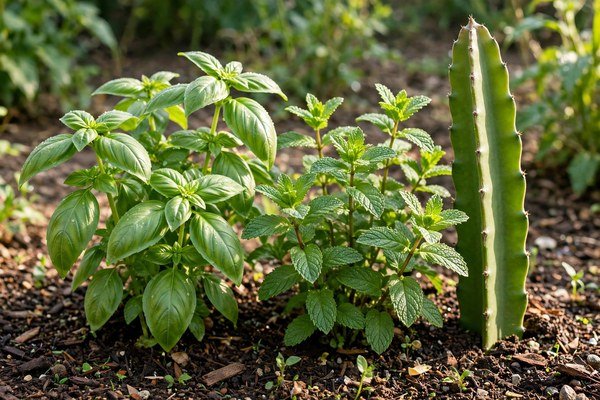
Herbs are some of the easiest and most useful companions for dragon fruit. Basil grows quickly, smells strongly and attracts pollinators when it flowers, yet its shallow, short-lived roots never threaten the cactus. Pinch it often to keep it bushy, and plant it a short distance from the post so its leaves get full sun without crowding the stems.
Mint has a strong scent that many insects dislike, but it spreads fast through underground runners, so always grow it in a buried pot near the trellis to get the benefit without the invasion. Oregano and thyme are safer ground-hugging choices: they spread slowly, form a dense mat that shades the soil, and need very little water once established.
Rosemary also works, but it grows into a woody shrub, so give it its own corner at the edge of the bed where it will not shade the stems. Chives and garlic chives earn their place too, with thin upright leaves that take up little room and a mild onion scent that insects tend to avoid. Among the herbs, the best companion plants for dragon fruit are the low, sun-loving ones that need little water and never climb the post. For general growing steps, see our guide on how to grow dragon fruit.
Flowers That Help Your Dragon Fruit Garden
Flowers do more than decorate the bed. They are the working part of a pollinator-friendly garden, and dragon fruit depends on pollinators for fruit set, since its large night blooms need visitors to move pollen. Marigolds are the classic choice. Their bright orange and yellow flowers bloom for months, their scent is known to discourage soil pests, and they tolerate heat and poor soil without complaint. Plant a ring of French marigolds around the base, leaving a gap near the post so the stems stay clear.
Nasturtiums sprawl low, cover bare soil quickly and attract aphids away from other plants, acting as a trap crop that keeps pests busy elsewhere. Both the leaves and flowers are edible, with a mild peppery taste. Calendula flowers through the cooler months in warm climates and draws hoverflies and bees.
Zinnias and cosmos bring tall colour to the back of the bed and attract butterflies and bees through a long flowering season. Keep taller flowers away from the trellis so they never shade the cactus stems. Short flowers like alyssum can fill the front edge, forming a white or purple carpet that bees visit constantly. The best companion plants for dragon fruit include flowers like these because they support pollination while asking for little water or feeding.

Legumes and Ground Covers That Feed the Soil
Legumes are special because they work with bacteria in their roots to take nitrogen from the air and store it in the soil. That slow, natural feeding suits dragon fruit, which prefers steady nutrition over heavy doses of fertiliser. Bush beans suit the edge of the bed: they grow fast, fix nitrogen and finish in a few months, after which the spent plants can be cut and left as mulch. Keep them away from the post so their leaves do not trap dampness against the stems.
Peas suit the cooler part of the year in warm climates, climbing a small support of their own and leaving the soil richer when they are done. Climbing beans can work too, but only on their own short trellis at the side of the bed, never on the dragon fruit post itself, where they would tangle with the cactus and block light. Pigeon pea is a longer-lived tropical option that fixes nitrogen for years, but it needs space, so plant it well away from the trellis.
Sweet potato vine spreads into a dense leafy mat that shades the soil and suppresses weeds, and it tolerates heat and light watering. Creeping thyme and oregano do double duty as ground covers, and peanut plants fix nitrogen while forming a low green carpet. Whatever ground cover you choose, keep a clear ring of bare soil or gravel around the base of the post so air can move and the stems stay dry. The best companion plants for dragon fruit include these soil feeders, because they improve the bed a little every season. Good drainage matters as much here as anywhere, so read our notes on the best soil for dragon fruit before planting the bed.

Plants to Avoid Near Dragon Fruit
The plants to avoid usually fail in one of three ways: they steal water, they steal light, or they invite the problems dragon fruit is prone to. A tree planted close to the trellis will shade the cactus, drop leaves into the bed and send thirsty roots into the same shallow soil. Bananas and other fast-growing, water-hungry plants demand far more moisture than a cactus bed should hold.
Aggressive spreaders are another group to keep out. Uncontained mint is the best-known culprit, but bamboo, running grasses and vigorous vines can also overwhelm a bed in a single season. Any vine that climbs should have its own support, far from the dragon fruit post, or it will use the cactus as a ladder and block the sun from the stems.
Heavy feeders and thirsty vegetables also cause trouble. Corn, squash and large leafy greens need constant water and rich feeding, which pushes the bed toward damp conditions that can rot cactus roots. Avoid planting anything that needs deep digging right beside the post, because dragon fruit roots sit close to the surface and are easily damaged by a spade. A little distance protects both the cactus and its neighbours. The best companion plants for dragon fruit are always the ones that ask for less, not more, and the plants above ask for far too much.
How to Arrange Companion Plants Around the Trellis
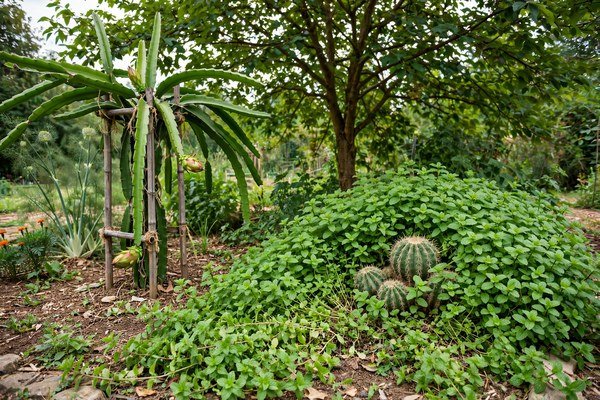
A good layout starts with the post. Keep a clear ring of about 30 to 45 centimetres around its base free of dense planting, so air can circulate, the stems stay dry after watering, and you have room to work.
Beyond the clear ring, plant in layers: low herbs and ground covers closest to the post, such as marigolds, basil, thyme and alyssum; medium plants like bush beans, chives and calendula further out; and taller flowers and shrubs such as rosemary, zinnias and pigeon pea at the outer edge, where they add colour without casting shade on the cactus.
Dragon fruit needs full sun on its stems, so never put a tall plant where it blocks morning light; the tallest companions go at the back of the bed. Group plants with similar water needs together, so the cactus bed stays on its light watering routine while thirstier herbs sit in their own pots nearby. For broader care advice, the UF IFAS publication on dragon fruit in the home landscape is a reliable reference. When you plan the layout this way, the best companion plants for dragon fruit each get the spot where they help most and harm least.
Common Mistakes to Avoid
The most common mistake is planting too much, too close, too soon. A new bed looks empty, but companions grow fast in warm weather and soon crowd the cactus, trapping damp air and hiding pests. Start with a few plants and generous gaps, adding more only after you see how the bed fills in.
The second mistake is overwatering the whole bed to please one thirsty companion. If a plant near the trellis always looks dry, move it to a pot or a separate bed instead of watering the cactus more. Dragon fruit roots rot easily in soil that stays wet, and no companion is worth losing the main plant. Water lightly and let the soil dry between waterings.
A third mistake is forgetting that companions also need care: marigolds left to go to seed, basil allowed to flower and turn bitter, or mint escaping its pot all become problems instead of helpers. Prune the cactus itself on its own schedule, and see our guide on when to prune dragon fruit for the right timing. Finally, do not expect companions to replace good care. They support healthy growth, but they cannot fix poor drainage, deep shade or neglected stems. The best companion plants for dragon fruit work best when the basics of sun, air and attention are already in place.
Frequently Asked Questions
What are the best companion plants for dragon fruit in a home garden?
The best companion plants for dragon fruit in a home garden are basil, marigolds, nasturtiums, oregano, thyme, chives and bush beans. They share the cactus love of sun and free-draining soil, stay compact, and help with soil cover, pest confusion or pollinators. Start with two or three, keep a clear ring around the post, and add more once you see how the bed grows.
Can I plant herbs right next to the dragon fruit post?
You can plant low herbs near the post, but leave a clear ring of about 30 to 45 centimetres around its base so air can move and the stems stay dry. Basil, thyme and oregano work well in the band just outside that ring. Keep aggressive spreaders like mint in buried pots.
Do marigolds really help dragon fruit plants?
Marigolds help in several small ways rather than one dramatic way. Their scent is known to discourage soil pests, their flowers attract pollinators and helpful insects, and their low growth shades the soil and slows evaporation. They support the garden rather than solving every problem on their own.
Should I grow vegetables beside my dragon fruit?
Light, short-season vegetables like bush beans and peas can work at the edge of the bed, where they fix nitrogen and finish quickly. Avoid thirsty, heavy-feeding vegetables such as corn, squash and large leafy greens close to the trellis, because they need far more water and feeding than a cactus bed should have.
What should I do if a companion plant starts taking over the bed?
Cut it back at once and remove any runners or stems that are crowding the cactus. If it is a spreader like mint, lift it out and replant it in a buried pot or a separate container. Check the bed weekly during the growing season so no companion gets the chance to overwhelm the dragon fruit.
Conclusion
Companion planting turns the empty soil around a dragon fruit trellis into a working part of the garden. Herbs like basil, oregano and thyme shade the soil and confuse pests. Flowers like marigolds, nasturtiums and zinnias draw in the pollinators the night blooms need. Legumes like bush beans and peas quietly feed the soil while they grow. The best companion plants for dragon fruit are the ones that share its taste for sun and free-draining soil, stay compact, and ask for little in return.
Keep large trees, thirsty vegetables and aggressive spreaders away from the trellis, leave a clear ring around the post, and water the bed on the cactus schedule. Start small, watch how the bed fills in, and trim anything that leans onto the stems. With a few well-chosen neighbours and a little weekly attention, the bed will stay healthier and support the pollinators that make fruit possible.