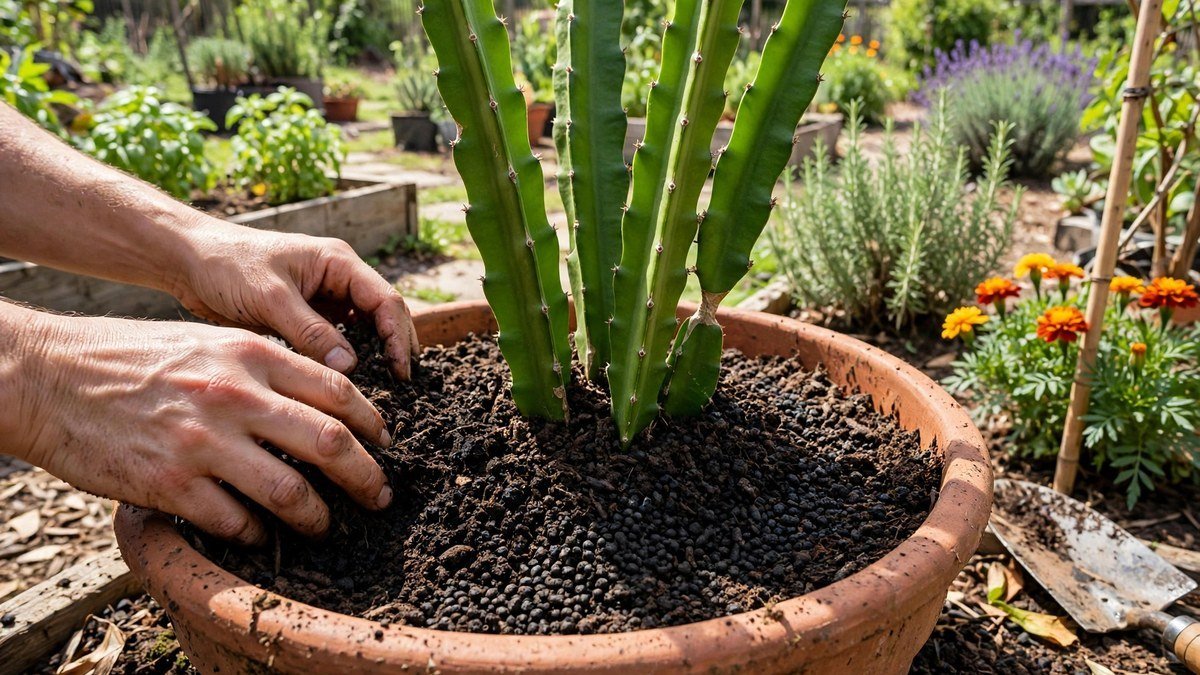
Organic Fertilizer for Dragon Fruit in Pots and How to Feed Monthly
A dragon fruit plant in a pot lives on a fixed ration. Unlike a plant in the ground, it cannot send roots out to find fresh nutrients. Everything it eats comes from the soil in that one container, and every watering washes a little of that food out through the drainage holes. After a few months, the mix is tired, the plant slows down, and the stems turn a pale, hungry green.
Organic feeding fixes that without the risks of strong chemical fertiliser, and a gentle organic fertilizer for dragon fruit in pots is hard to overdo. Compost, worm castings, banana peel, and liquid feeds release nutrients slowly and feed the soil life as well as the plant. This guide covers the best organic fertilizer for dragon fruit in pots, how much to use, and a simple monthly routine you can follow all season.
In This Guide
- Why Potted Dragon Fruit Needs Regular Feeding
- Compost: The Foundation Feed
- Worm Castings: Gentle Food for Steady Growth
- Banana Peel Feed: Potassium for Flowering and Fruit
- Manure: What Works and What to Avoid
- Liquid Feeds: Compost Tea and Seaweed
- A Simple Monthly Feeding Calendar
- Mistakes That Burn Roots or Waste Feed
- Frequently Asked Questions
Why Potted Dragon Fruit Needs Regular Feeding
A pot is a closed system, and that is the whole problem. In the ground, a dragon fruit plant explores a large volume of soil, and fallen leaves, rain, and soil organisms keep topping up the nutrients. In a pot, the plant has only the mix you gave it on planting day, and that mix loses nutrients every time you water.
The signs of hunger are easy to read: growth slows even in warm weather, new stems come out thin and pale instead of thick and deep green, and flower buds drop before opening or set little fruit. These are signs the plant is short of food, not water or sun.
Feeding a potted plant is not about forcing fast growth, and the best organic fertilizer for dragon fruit in pots works by replacing what watering and growth have taken out, so the plant can do what it already wants to do. Organic feeds suit this job because they release nutrients slowly over weeks, which matches the steady way a cactus grows. A single heavy dose of chemical fertiliser can push soft, weak growth and even burn the roots. A regular, gentle organic feed keeps the plant strong without those risks.
For the wider care of the plant, including planting and soil, UF IFAS publishes a practical dragon fruit growing guide that is worth reading alongside this feeding guide.
Compost: The Foundation Feed
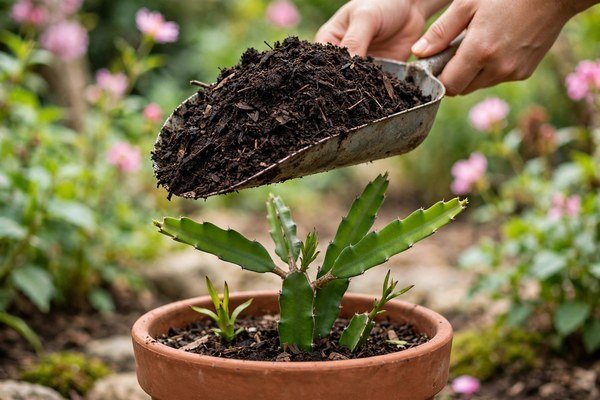
Compost is the single most useful organic fertilizer for dragon fruit in pots, and if you use only one feed, use this one. Well-rotted compost adds gentle nutrients, improves the structure of the mix, and feeds the microbes that help roots take up food. It is almost impossible to overdo, as long as the compost is mature.
Use compost that is dark, crumbly, and smells like forest soil. If it smells sour, sharp, or like ammonia, it is not finished and can burn young roots.
To feed, spread a 2 to 3 centimetre layer of compost over the surface, a few centimetres away from the stem, and water it in lightly. The nutrients wash down slowly with each watering, and the layer also acts as a mulch, keeping the soil cooler. Repeat every four to six weeks through the growing season.
A regular compost top dressing is the simplest organic fertilizer for dragon fruit in pots routine, adding fresh organic matter back into the pot and keeping the mix open and alive.
Worm Castings: Gentle Food for Steady Growth
Worm castings are the droppings of earthworms, and they are one of the richest gentle feeds a home grower can use. They contain nitrogen, phosphorus, potassium, and trace minerals in forms the plant can take up easily, along with helpful microbes. Unlike fresh manure, worm castings never burn roots, even if you use a little too much.
Use about a handful of castings per medium pot as part of your organic fertilizer for dragon fruit in pots routine, scattered over the surface and watered in, once a month through the growing season. For a large pot over 50 litres, use two handfuls. You can also mix castings into the potting mix when you repot, at roughly one part castings to ten parts mix.
Worm castings work slowly, which is their strength. They keep the plant fed steadily for weeks, and the microbes they carry help the roots take up nutrients from the compost and the mix. Growers who use castings regularly often notice a deeper green colour and more reliable fruiting.
You can buy worm castings from a garden centre, or make your own with a small worm bin fed on kitchen scraps. A small bin produces enough for a few pots with very little effort.
Banana Peel Feed: Potassium for Flowering and Fruit
Dragon fruit needs potassium most when it is flowering and filling fruit, and banana peel is the simplest home source. Banana peels are rich in potassium, with smaller amounts of phosphorus and calcium, and they break down quickly in the soil.
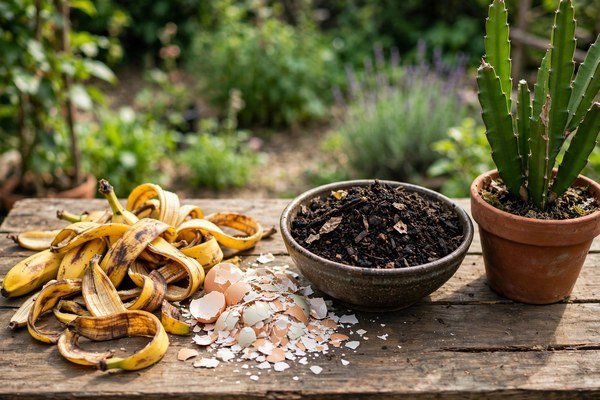
The easiest method is to chop the peels into small pieces and bury them just under the surface of the pot, a few centimetres from the stem. Use one or two peels per pot, once a month, during the flowering and fruiting season. The peels rot down over two to three weeks, releasing potassium as they go. Do not leave whole peels on the surface, because they attract fruit flies.
A second method of using organic fertilizer for dragon fruit in pots is banana peel tea. Soak two or three chopped peels in a litre of water for two to three days, then strain and use the liquid to water the plant. This gives a faster, lighter feed that is useful when buds are forming and you want the potassium available quickly. Use the tea once every two weeks during flowering, and always water the plant with plain water first so the feed reaches damp soil, not dry roots.
Banana peel is a supplement, not a complete feed. It is low in nitrogen, so a plant fed only on banana peel will grow slowly and stay pale. Use it alongside compost and worm castings, not instead of them.
Manure: What Works and What to Avoid
Well-rotted manure is a good organic feed, but it needs care. The rule is simple: only use manure that is fully rotted, dark, crumbly, and free of smell. Fresh manure is hot, salty, and full of ammonia, and it will burn dragon fruit roots. If you are not sure whether manure is rotted enough, do not use it.
Cow and horse manure are the safest choices for pots, once fully rotted. Use a small handful in the top layer once every six to eight weeks. Chicken manure is much stronger and saltier: use half as much, only when fully composted, and never fresh in a pot.
Avoid dog and cat manure completely, since they can carry parasites and diseases that do not belong near food plants. Also avoid manure from animals recently treated with worming medicine, because the residues can harm soil life.
Manure is best used as an occasional boost rather than a monthly routine. Compost and worm castings cover the regular feeding, and a small amount of rotted manure once or twice a season adds extra richness for a plant that is fruiting heavily.
Liquid Feeds: Compost Tea and Seaweed
Liquid feeds are useful because they act fast. When a plant looks hungry and you want food available within days rather than weeks, a liquid feed is the right tool. Two home-made options cover most needs.
Compost tea is made by soaking a bag of mature compost in a bucket of water for a day or two, then straining it. The result is a light brown liquid that carries nutrients and helpful microbes. Water the plant with it once every two to three weeks, in place of a normal watering. One part compost to five parts water is enough, and a tea that is too dark can be diluted further.
Seaweed feed is the second option, especially useful during flowering. Seaweed contains potassium and trace minerals, along with natural growth hormones that help flowers set fruit. Buy liquid seaweed from a garden centre, or soak dried seaweed in water for a few days, and apply once every two weeks during flowering and fruiting.
Liquid feeds wash out of pots quickly, so any organic fertilizer for dragon fruit in pots plan that relies on liquids alone needs repeating every two to three weeks. They are a supplement to solid feeds like compost, not a replacement. A plant fed only on liquids will be hungry again within a week.
A Simple Monthly Feeding Calendar
A routine is easier to follow than a list of options, so here is a simple monthly calendar for the growing season. Adjust it to your climate: start when growth begins in spring, and stop when growth slows in late autumn.
Each month, top dress with a 2 to 3 centimetre layer of mature compost and a handful of worm castings per pot, both kept away from the stem. Once a month during flowering and fruiting, add chopped banana peel under the surface, or use banana peel tea every two weeks instead.
Every two to three weeks, water with compost tea or diluted seaweed feed in place of a normal watering. Once or twice a season, add a small handful of well-rotted manure for a plant that is fruiting heavily.
In winter, when growth slows, stop feeding. The plant is not using nutrients, and feed left in the pot can build up salts and harm the roots. Start again in spring when new growth appears. A hungry plant in winter is usually a plant that needs warmth and light, not food.
This calendar is the heart of a good organic fertilizer for dragon fruit in pots routine: regular, gentle, and easy to remember. It is better than a complicated schedule you will not follow.

Mistakes That Burn Roots or Waste Feed
The most common mistake is feeding a dry plant. Never apply feed to dry soil: the concentrated nutrients can burn the fine roots. Always water with plain water first, wait half an hour, then feed. This one habit prevents most feeding damage.
The second mistake is feeding in winter. A plant that is not growing cannot use the feed, and the salts build up in the pot. The plant may look worse after a winter feed, not better. Feed only when the plant is growing actively.
The third mistake is piling feed against the stem. Compost, manure, or castings heaped against the stem hold moisture there and invite rot. Always keep feed a few centimetres away from the stem, and never bury the stem base under a thick layer of anything.
The fourth mistake is using unfinished compost or fresh manure. Both can burn roots and smell bad. If a feed smells sharp or sour, it is not ready. Good organic feed smells like forest soil.
The fifth mistake is overdoing a good thing. A pot fed every week with rich material can build up salts, and the plant shows it with brown leaf tips and stunted growth. Monthly solid feeding and a liquid feed every two to three weeks is enough. If the plant looks healthy and is fruiting well, do not add more.
For soil and potting, see our guide on the best potting mix for dragon fruit in pots, and for the plant’s sunlight needs, see how much sunlight dragon fruit needs.
Frequently Asked Questions
What is the best organic fertilizer for dragon fruit in pots?
The best organic fertilizer for dragon fruit in pots is a monthly routine of mature compost top dressing plus a handful of worm castings, with banana peel feed during flowering and fruiting. Compost is the foundation feed, worm castings add gentle steady nutrition, and banana peel supplies potassium for flowers and fruit. Liquid compost tea or seaweed feed every two to three weeks adds a faster boost when the plant is growing hard.
How often should I fertilize dragon fruit in pots?
Feed once a month through the growing season with a solid feed like compost and worm castings, and add a liquid feed every two to three weeks. Start when growth begins in spring and stop when growth slows in late autumn. Do not feed in winter, when the plant is not growing and cannot use the nutrients.
Can I use banana peels as fertilizer for dragon fruit?
Yes. Chop one or two peels into small pieces and bury them just under the surface of the pot, a few centimetres from the stem, once a month during flowering and fruiting. You can also soak chopped peels in water for two to three days and use the strained liquid as a feed. Banana peel is rich in potassium but low in nitrogen, so use it alongside compost, not instead of it.
Is cow manure good for dragon fruit in pots?
Fully rotted cow manure is good in small amounts, about a handful mixed into the top layer of the pot once every six to eight weeks. Never use fresh manure, which burns roots. Chicken manure is stronger and should be used in half the amount and only when fully composted. Never use dog or cat manure on food plants.
Why are my potted dragon fruit stems pale even though I feed them?
Pale stems can mean the feed is not reaching the roots, the mix has broken down and holds no air, or the plant is not getting enough sun. Check that you are watering before feeding, that the pot drains freely, and that the plant gets at least six hours of direct sun a day. If the mix is old and dense, repot into fresh mix with compost, and the colour usually returns within weeks.
Conclusion
Feeding a potted dragon fruit plant is a small, regular habit, not a big event. A monthly layer of compost, a handful of worm castings, banana peel when the plant is flowering, and a liquid feed every few weeks will keep the plant deep green, growing steadily, and fruiting well. The best organic fertilizer for dragon fruit in pots is the one you will actually use, month after month. Start in spring, stop in winter, and let the plant show you the results.
