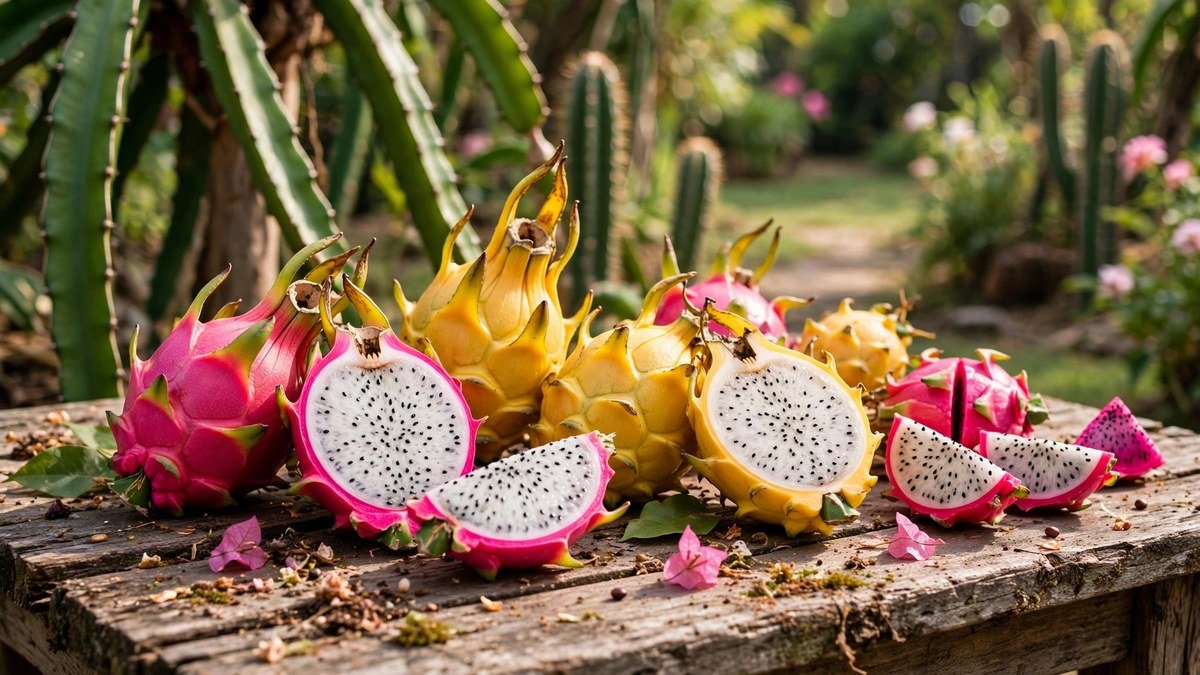
White Flesh Dragon Fruit Varieties to Grow at Home for Beginners
Most dragon fruit in shops has white flesh inside a pink skin: the classic dragon fruit, and the easiest type to grow at home. White-fleshed plants are vigorous, forgiving, and widely sold as cuttings. The catch is that not all white-fleshed plants behave the same. Some need a second variety nearby to set fruit, some grow far more strongly than others, and flavour ranges from mild and watery to surprisingly sweet.
This guide compares the main white flesh dragon fruit varieties to grow at home by fruit size, flavour, vigour, and pollination, so you can pick one that suits your space, climate, and patience. Read the pollination notes carefully: a self-sterile variety planted alone will flower beautifully and set almost no fruit.
In This Guide
- What White Flesh Means for Flavour
- Vietnamese White: The Classic Starter
- David Bowie: Big Fruit, No Pollination Worries
- Lisa: Compact and Self-Fertile
- Thai White: A Sweeter White-Fleshed Option
- Palora: Yellow Skin, White Flesh
- Sin Espinas: Fewer Spines, Easier Handling
- Choosing Among White Flesh Dragon Fruit Varieties to Grow at Home
- Growing Notes for White-Fleshed Plants
- Mistakes to Avoid When Picking a Variety
- Frequently Asked Questions
- Conclusion
What White Flesh Means for Flavour
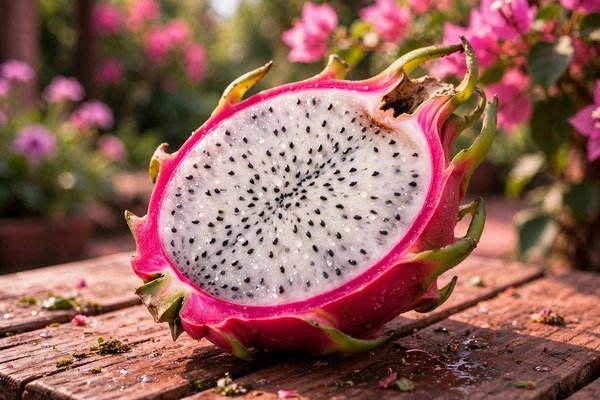
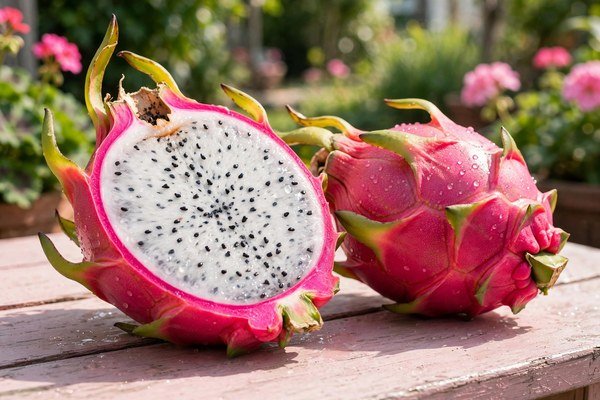
White flesh comes from Hylocereus undatus, the plant most people picture when they hear “dragon fruit”. The skin is bright pink with green-tipped scales, and the flesh inside is white with small black seeds. The flavour is mild, clean, and lightly sweet, a little like a cross between a pear and a kiwi, with a soft, almost melon-like texture.
That mildness is also the main complaint: a fruit picked too early tastes watery and bland, and even a well-ripened one will never match a good red-fleshed variety. Ripeness matters most: a fruit left on the plant until the skin is fully coloured and the scale tips dry tastes noticeably sweeter than one picked at the first blush.
White flesh is also firmer than red flesh when ripe, so it slices neatly and holds its shape in a salad. In practice, white flesh dragon fruit varieties to grow at home are the toughest and most productive plants, while red-fleshed types win on flavour, so most beginners do well starting with one and adding a red one later.
Vietnamese White: The Classic Starter
Vietnamese White is the variety behind most supermarket dragon fruit: the standard Hylocereus undatus, grown commercially across Vietnam and other warm countries, and the cutting most often sold to home growers. The fruit is large, often 400 to 600 grams, with bright pink skin and mild white flesh when fully ripe.
The plant is extremely vigorous, growing fast and flowering heavily once mature, so give it a strong support and plenty of room: it will outgrow a small pot or a flimsy trellis within a season or two. A 60 to 100 litre pot with a sturdy central post suits it.
The one serious drawback of Vietnamese White is pollination: it is self-sterile, so its own pollen will not set fruit, and a flower that receives only its own pollen drops without forming fruit. To get a crop, you need a second variety flowering at the same time, with pollen moved between them by hand or by night-flying moths and bees. Many beginners plant one Vietnamese White, watch it flower, and wonder why nothing follows. If you choose it, grow a second variety beside it from the start, such as David Bowie or Lisa.
David Bowie: Big Fruit, No Pollination Worries
David Bowie is a white-fleshed variety named after the singer, and among white flesh dragon fruit varieties to grow at home it is one of the best choices for a grower who wants fruit without pollination fuss. It is self-fertile, so one plant can set fruit on its own, and the fruit is large, often bigger than Vietnamese White, with a clean, sweet flavour.
The plant is vigorous but more manageable than Vietnamese White, with thick, healthy stems. It flowers reliably once mature, and each flower has a good chance of setting fruit without hand pollination, although hand pollination still improves fruit size, so for a small garden or a single large container, it is often the simplest path to a first harvest.
David Bowie is a named cultivar, so buy it from a seller who can name the variety. Unnamed white-fleshed cuttings sold cheaply are usually Vietnamese White, not David Bowie, and they carry the self-sterile problem above. A labelled cutting costs a little more, but it saves a season of disappointment.
Lisa: Compact and Self-Fertile
Lisa is a smaller, neater white-fleshed variety for growers short on space. It grows less wildly than Vietnamese White, with shorter stem segments and a compact habit, easier to manage on a balcony or in a modest container. It is self-fertile, so a single plant fruits on its own.
The fruit is medium-sized, with pink skin and white flesh that is sweet and pleasant when fully ripe. It is not the largest fruit here, but it makes up for that in reliability, flowering and setting fruit steadily once established, with less pruning through the season. Among white flesh dragon fruit varieties to grow at home, Lisa also works well as a pollen partner: if your Vietnamese White flowers but never fruits, plant a Lisa beside it and move pollen between them on flowering nights.
Thai White: A Sweeter White-Fleshed Option
Thai White is a white-fleshed variety from Thailand that earns its place for flavour. Among white flesh dragon fruit varieties to grow at home, it is one of the sweeter choices, with flesh noticeably more sugary than Vietnamese White grown and picked alike. The fruit has pink skin and white flesh.
The plant is vigorous and productive, much like Vietnamese White. Sellers generally describe it as self-fertile, but reports vary, and some growers find it sets better with cross-pollination, so treat it as partly self-fertile: a single plant will usually fruit, but a second variety nearby and hand pollination on flowering nights gives larger, better-filled fruit.
Palora: Yellow Skin, White Flesh
Palora breaks the usual pattern: yellow skin, white flesh. Sold as yellow dragon fruit, it is one of the sweetest white-fleshed types available. The fruit is smaller than Vietnamese White, usually 200 to 350 grams, with slightly knobbly skin.
The catch is that Palora is slower and more demanding: it grows less vigorously, takes longer to fruit, and prefers steady warmth, doing better in a greenhouse or sheltered sunny spot in cooler climates. It is also usually self-sterile, so it needs a pollination partner and hand pollination for a reliable crop. Choose Palora if you value flavour above all else and will wait an extra season; not as your only plant, and not if your season is short or cool.
Sin Espinas: Fewer Spines, Easier Handling
Sin Espinas means “without spines” in Spanish. Its smooth, nearly spineless stems are a real advantage when pruning, tying, and harvesting, which suits a family garden. It is one of the more unusual white flesh dragon fruit varieties to grow at home, so you may need a specialist supplier. The fruit is medium-sized with pink skin and mild white flesh, and the plant is self-fertile and moderate in growth.
Choosing Among White Flesh Dragon Fruit Varieties to Grow at Home
Start with pollination, because for white flesh dragon fruit varieties to grow at home it decides whether you get fruit at all. For a single plant, choose self-fertile David Bowie or Lisa. If you will grow two varieties and hand-pollinate, Vietnamese White becomes a good option, and pairing it with Lisa gives two kinds of fruit.
Next, think about space: a vigorous variety like Vietnamese White or Thai White needs a strong support, room to spread, and regular pruning. Lisa and Sin Espinas stay smaller and suit containers and balconies better, and for a first plant in a pot, Lisa or David Bowie is the safer pick.
Then consider flavour: for the sweetest white flesh, Thai White or Palora lead, with David Bowie close behind; for a mild, refreshing fruit and heavy crops, Vietnamese White is fine. Ripeness matters as much as variety, so let the skin colour fully and wait a few days after full colour before picking, since any white-fleshed fruit picked too early tastes bland. Finally, buy named varieties: an unnamed cutting is a gamble on pollination, size, and flavour.
For general guidance on pitaya planting and care, the UF IFAS extension publication on dragon fruit is a useful reference on varieties, planting, and care.
Growing Notes for White-Fleshed Plants
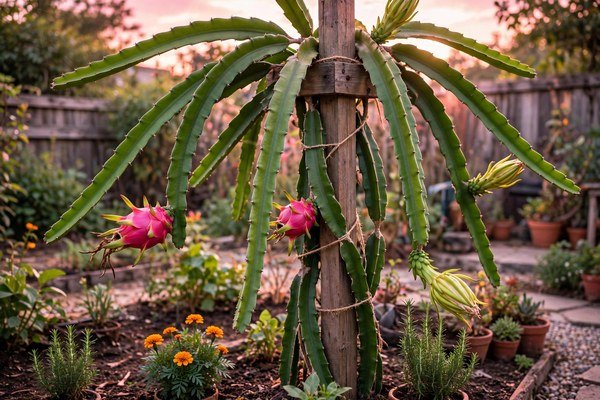
White flesh dragon fruit varieties to grow at home share the same basic needs as other dragon fruit: at least six hours of direct sun a day, a free-draining soil mix, a sturdy support, and deep but infrequent watering. In a pot, 60 to 100 litres with drainage holes suits most of these varieties, and a central post with a small frame at the top lets the stems climb and drape over, which is where flowers usually appear.
Feed lightly through the warm season with a balanced fertiliser or well-rotted compost, and stop as the weather cools. Prune after fruiting to remove spent stems, and tie new growth loosely with soft cloth strips rather than wire, which cuts into stems as they thicken. For containers, the guide to growing dragon fruit in a container on a balcony covers pot size, soil, and balcony checks step by step.
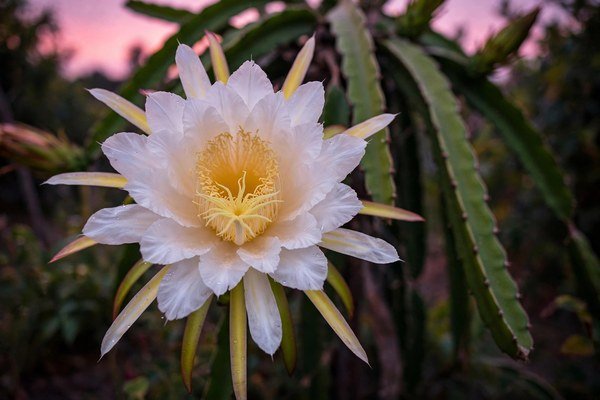
Night flowers are the key event: they open after dark and close by morning, so check the plant in the evening during the flowering season. If your variety is self-sterile, this is when hand pollination matters: dust pollen from a different variety onto the stigma with a soft brush, since one evening of hand pollination can be the difference between a flower and a fruit.
Mistakes to Avoid When Picking a Variety
The first mistake is buying an unnamed cutting and assuming it will fruit alone: most cheap unnamed cuttings are self-sterile Vietnamese White, so ask the seller for the variety name, and if they cannot give one, assume it needs a partner.
The second mistake is expecting red-flesh sweetness from a white-fleshed fruit. White flesh is mild by nature, so pick it fully ripe, and if you want a sweeter fruit, choose Thai White, Palora, or David Bowie rather than blaming the plant.
The third mistake is planting one variety and adding a second a year later. Pollination partners need to flower at the same time, so plant partners together.
The fourth mistake is giving a vigorous variety too small a support: a variety like Vietnamese White will pull over a thin bamboo stake once the stems grow heavy with fruit. Use a solid post fixed firmly from the start.
Frequently Asked Questions
Which white flesh dragon fruit varieties to grow at home are best for a complete beginner?
David Bowie and Lisa are the best starting points. Both are self-fertile, so a single plant can fruit on its own, and both are manageable: David Bowie gives larger fruit, while Lisa stays compact and suits a pot or balcony better. Vietnamese White is the most common cutting, but it is self-sterile and needs a second variety nearby, so it is a poor lone first plant.
Do white flesh dragon fruit varieties to grow at home need a second plant for fruit?
It depends on the variety. David Bowie, Lisa, and Sin Espinas are self-fertile and fruit on a single plant, while Vietnamese White and Palora are self-sterile and need pollen from a different variety. Thai White is usually described as self-fertile but sets larger fruit with cross-pollination. Check the pollination notes before you buy, and plant partners together.
Are white-fleshed dragon fruit less sweet than red-fleshed ones?
Generally yes: white flesh is mild, clean, and lightly sweet, while red flesh is usually richer and sweeter. The gap narrows with the right variety and full ripeness: among white flesh dragon fruit varieties to grow at home, Thai White and Palora are noticeably sweeter than an ordinary white-fleshed fruit, and any white-fleshed fruit tastes better picked fully ripe than at the first blush.
How long does a white-fleshed dragon fruit plant take to fruit?
A plant grown from a cutting usually fruits in its second season, once it has built enough mature stems. A plant grown from seed takes several years, which is why most home growers start with cuttings, and a vigorous variety like Vietnamese White may flower in its first year but often drops those early flowers.
Can I grow white-fleshed dragon fruit in a pot on a balcony?
Yes, especially the compact varieties: Lisa and Sin Espinas suit containers well, and David Bowie works in a large pot of 60 to 100 litres with a sturdy central post. Give the plant the sunniest spot you have, use a free-draining soil mix, and keep the pot close to a wall for stability. For soil and sunlight details, see the guide to the best soil for dragon fruit plants and the notes on how much sunlight dragon fruit needs.
Conclusion
White-fleshed dragon fruit is the classic home-garden choice: tough, productive, forgiving plants. The variety you pick matters, and pollination decides whether a flowering plant becomes a fruiting one.
White flesh dragon fruit varieties to grow at home reward patience: buy named varieties, plant pollination partners together, and let the fruit ripen fully. For a single plant, choose David Bowie or Lisa; for the sweetest white flesh, add Thai White or Palora; and for a big, vigorous plant with a partner, Vietnamese White still earns its place.