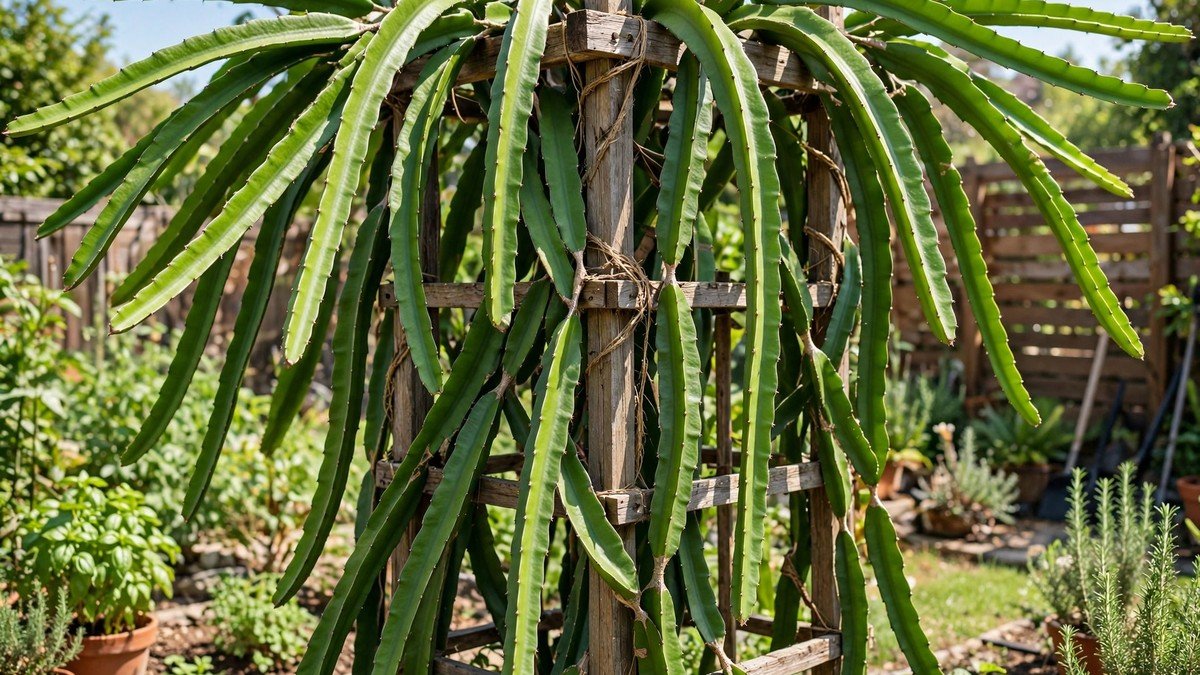
Three years is a long time to water, feed, and train a plant that gives you nothing back, while the stems grow longer every season and no flowers appear, or the flowers open and fall without setting a single fruit. If you are dealing with dragon fruit no fruit after 3 years, this guide explains the causes in order of likelihood and the fixes that work. Most of the time the plant is not broken. It is too young, too shaded, poorly pollinated, or missing the food it needs to flower, and each of those causes has a clear fix.
In This Guide
- First, check whether the plant is old enough
- dragon fruit no fruit after 3 years: the main causes at a glance
- Not enough sunlight
- Poor pollination and missing night visitors
- Feeding and watering mistakes
- Pruning: too much, too little, or wrong time
- Variety and growing conditions
- A practical plan to get fruit next season
- How long to wait before changing the plant
- Answers to the most common questions
First, Check Whether the Plant Is Old Enough
Before you change anything, work out how old your plant really is and how it started life. A dragon fruit plant grown from a cutting of a mature, fruiting stem usually flowers within one to two years. A plant grown from seed is a different story: it can take five years or more to flower, and the fruit may not match the parent plant at all. First, check whether the plant is old enough, because dragon fruit no fruit after 3 years is normal when the plant was grown from seed and simply needs more time.
Cuttings from young, thin growth also fruit later than cuttings from thick, mature stems. If you bought the plant, ask the seller whether it came from a cutting or a seed. Thick, woody stems with a strong main trunk usually belong to a plant ready to fruit, while thin, soft stems belong to a plant still building its frame.
A plant moved, repotted, or badly pruned in the last year may also need time to recover, because dragon fruit puts its energy into growing first and fruiting second, so any setback pushes flowering back by a season. If the plant looks healthy, patience is often the right answer. If it looks weak and pale, the cause is more likely food, light, or roots.
Not Enough Sunlight
Too little sun is a common cause of dragon fruit no fruit after 3 years, and it is the first thing to check after age. Dragon fruit is a sun-loving cactus that needs at least six hours of direct sun a day to flower well. A plant in the shade of a wall, a tree, or a taller plant will grow long green stems but never flower, because flowering needs strong light to trigger it. The stems may look healthy, but without enough sun the plant simply does not get the signal to bloom.
Count the hours of direct sun your plant gets: morning sun helps, but a plant with only two or three hours will rarely fruit. If it is in a pot, move it to the sunniest spot, ideally facing south or west. If it is in the ground, cut back the branches that shade it. One season in full sun often turns a non-fruiting plant into a flowering one.
Light also shapes the stems: shaded stems are thin, pale, and soft and rarely flower, while sun-grown stems are thick, deep green, and firm. Flowers appear on the sunny stems first, so pruning away the weakest shaded stems lets the plant put its energy into stems that can fruit.
Poor Pollination and Missing Night Visitors
Dragon fruit flowers open at night and last only one night, so pollination has a very short window. If the flower is not pollinated that night, it falls without setting fruit, and the plant looks as if it never flowered at all. Poor pollination is another cause of dragon fruit no fruit after 3 years, especially when the plant flowers well but nothing follows. On a rainy or windy night, or in a garden with few moths and bees, many flowers simply go unpollinated.
Some varieties need pollen from a different variety to set fruit, and this is the most common hidden cause of all. If your plant flowers every year and never sets fruit, check whether your variety is self-fertile. The UF IFAS publication on dragon fruit describes the flowering and pollination habits of the plant. Growing a second, different variety nearby is the long-term fix, and it helps both plants.
The short-term fix is hand pollination: on the evening a flower opens, collect the yellow pollen with a small soft paintbrush and brush it gently onto the stigma in the centre. Do it the same night, because by morning the flower is closing. Hand-pollinated flowers set fruit far more reliably. If you have no second variety, ask a neighbour or a local grower for fresh pollen on a flowering night.

Feeding and Watering Mistakes
A plant fed only nitrogen grows long green stems and no flowers, while a plant with no food at all runs out of energy before it can flower. Feeding mistakes can also explain dragon fruit no fruit after 3 years, because flowering needs more potassium and phosphorus than leafy growth does. A lawn fertiliser or a feed high in nitrogen is the wrong choice for a fruiting plant. Once the plant is established, switch to a balanced organic feed with compost, and add a feed higher in potassium as the flowering season approaches.
Watering matters too. A plant that goes through long dry spells in spring, when flower buds are forming, may drop its buds before they open. A plant that sits in wet soil rots its roots and cannot take up food at all. The aim is steady moisture: water deeply when the top few centimetres of soil feel dry, then let it drain freely. Our guide to best soil for dragon fruit explains a mix that drains well and keeps the roots healthy through the season.
Also check whether the pot is too small: a root-bound plant cannot take up enough food and water to flower, no matter how much you feed it. If roots are circling the pot or coming out of the drainage holes, move it into a pot one size bigger with fresh mix. A plant with room for its roots usually grows stronger within a month and flowers next season.
Pruning: Too Much, Too Little, or Wrong Time
Pruning decides where the plant puts its energy, and wrong pruning can leave you with dragon fruit no fruit after 3 years even when everything else is right. Dragon fruit flowers on mature stems, usually stems that are at least a year old and thick enough to hold a flower. If you cut back all the mature stems every year, the plant keeps growing new stems and never gets old enough wood to flower on. Prune lightly, and keep the thickest, healthiest stems.
Too little pruning is also a problem. A tangled plant with dozens of thin stems spreads its food too thinly, and none of the stems gets strong enough to flower. After fruiting, or in early spring, remove the thinnest, weakest, and most crowded stems, and keep a smaller number of strong ones. The plant then puts its energy into stems that can actually carry flowers. Our guide on how to grow dragon fruit covers training and pruning as part of the yearly routine.
Timing matters too: pruning just before the flowering season removes the very stems that were about to flower. Prune in late winter or early spring, before new growth starts. A plant pruned at the right time usually flowers far better than one pruned hard every year or never pruned at all.

Variety and Growing Conditions
Some growers face dragon fruit no fruit after 3 years because the variety needs a pollinator, a warmer climate, or simply a longer time to mature. Some varieties flower only when nights are warm, and in a cool climate they may grow well but never flower. If your summers are short and your nights are cool, choose a variety known to fruit in cooler conditions, or grow the plant in the warmest, most sheltered spot in your garden, against a sunny wall.
Cold damage can also delay fruiting for years: a frosted plant loses its growing tips and spends the next season regrowing instead of flowering. If your area gets frost, protect the plant with frost cloth on cold nights, or grow it in a pot you can move under cover.
The pot or planting spot matters too. A plant in a small pot on a shaded balcony will fruit much later than the same plant in the ground in full sun. If your plant has had three years in a poor spot, moving it to a better one is often the single biggest change you can make. Give it sun, space, and warmth, and the plant will usually respond within one season.
A Practical Plan to Get Fruit Next Season
Start with the simplest checks. First, work out whether the plant is old enough and whether it came from seed or a cutting. Second, count the hours of direct sun and move the plant or clear the shade if it gets less than six hours. Third, feed the plant with compost and a balanced organic feed, and water steadily through spring so the soil never dries out while buds are forming.
Fourth, hand-pollinate every flower that opens, and plan to add a second variety for cross-pollination. Fifth, prune lightly in late winter, keeping the thickest mature stems and removing the thin, crowded ones. This plan is designed to fix dragon fruit no fruit after 3 years within one season, because it covers the five most common causes in one pass, and the fix that works tells you what was wrong.
Keep notes through the season: when the plant flowered, whether you hand-pollinated, and how many flowers set fruit. One season of notes shows clearly whether the problem was pollination, sun, or feeding. If the plant flowers and sets fruit, keep doing what worked. If it still does not flower, the cause is more likely the variety or the climate.

How Long to Wait Before Changing the Plant
Give the fixes one full season. If you still see dragon fruit no fruit after 3 years of trying the plan, consider replacing the plant or grafting a known fruiting variety onto it. Grafting is a good middle step: you keep the strong roots and stems of your old plant, and you add a variety that is known to fruit well in your area. A grafted stem usually flowers within a year or two.
Before you replace the plant, check one more time that it is not simply a seed-grown plant that needs more time. A seed-grown plant can take five years or more to fruit, and replacing it with another seed-grown plant starts the wait again. If you buy a replacement, buy a cutting from a mature fruiting plant, and ask the seller which variety it is and whether it is self-fertile. A named cutting from a fruiting plant is the fastest way to fruit.
Frequently Asked Questions
Dragon fruit no fruit after 3 years — is my plant ever going to fruit?
Most likely yes, if the plant is healthy and growing well. The common causes are a young or seed-grown plant, too little sun, poor pollination, or wrong feeding, and all can be fixed. Work through the plan for one full season. If the plant flowers and sets fruit, the problem is solved. If it never flowers, the plant may be too young or the variety may need a warmer climate.
How long does a dragon fruit plant take to fruit?
A plant grown from a cutting of a mature stem usually fruits within one to two years. A plant grown from seed can take five years or more, and the fruit may not match the parent plant. If you want fruit soon, always start with a cutting from a fruiting plant, and give it full sun and steady care.
Why do my dragon fruit flowers fall off without setting fruit?
The flower was probably not pollinated. Dragon fruit flowers open for one night only, so hand-pollinate on the evening the flower opens. Some varieties also need pollen from a different variety, so growing a second variety nearby helps. Rain, wind, and a lack of night pollinators can all cause flowers to fall unpollinated.
Can a dragon fruit plant fruit in a pot?
Yes, as long as the pot is big enough, the plant gets at least six hours of direct sun, and the soil drains freely. A plant in a small pot that is root bound will flower late or not at all, so move it into a bigger pot with fresh mix if growth has slowed. A potted plant on a sunny balcony can fruit well with hand pollination.
How do I know when a dragon fruit is ripe?
Look for bright, even skin colour and scales that are just starting to dry at the tips. The fruit should feel slightly soft when you press it gently, and the wings on the skin should start to dry. Our guide on dragon fruit skin colour when ripe explains what to look for in the common varieties. Remember that dragon fruit is non-climacteric, so it does not fully ripen after picking, it only softens slightly, so let it ripen on the plant.
Conclusion
Three years without fruit is frustrating, but it is rarely the end of the story. Once you know the cause behind dragon fruit no fruit after 3 years, the fix is usually simple: give the plant sun, feed it well, water it steadily, prune lightly, hand-pollinate the flowers, and add a second variety if yours needs a partner. Work through the plan for one full season and keep notes, because the fix that works tells you what was wrong. A healthy plant that is old enough, sunny, and well pollinated almost always rewards you with flowers and fruit, and the first harvest after a long wait tastes all the better for it.