
The best time to harvest dragon fruit is early in the morning, when the air is cool, the fruit is cool, and the sun has not yet heated the plant. That single choice protects the fruit from rapid water loss, keeps it firmer for longer, and makes the work itself more comfortable. This guide explains why the hour matters, when the alternatives work, and how to handle freshly picked fruit when the weather is hot.
Table of Contents
- Why the Time of Day Matters
- The Best Time to Harvest Dragon Fruit Is Early Morning
- Late Afternoon and Evening: A Workable Second Option
- Why Midday Harvesting Is Best Avoided
- Warm Weather: Extra Care for Freshly Picked Fruit
- How Harvest Time Connects to Storage Life
- Planning a Harvest Day Around the Weather
Why the Time of Day Matters
Harvest timing is about temperature. A dragon fruit sitting in the sun warms up quickly, and warm fruit loses water far faster than cool fruit. UC Davis reports that pitaya loses about 2.6% of its weight per day at 20°C, compared with only about 0.3% per day at 10°C, and the fruit is most vulnerable in the first hours after picking, before it has been cooled. A fruit picked hot and left in the sun can lose a noticeable amount of water before it ever reaches the kitchen, and that loss shows up as shrivelling, soft bracts and a shorter shelf life.
Temperature also affects bruising: warm, soft fruit marks more readily than cool, firm fruit, so handling that leaves a cool morning fruit unmarked can bruise a hot midday one. The plant feels the heat as well — stems are more flexible in the cool morning — and working in the heat is harder on the grower, which leads to rushed, careless picking.
The fruit’s condition at picking also sets the starting point for everything that follows, as UF IFAS explains in its dragon fruit growing guide. Cool fruit goes into storage cool, reaching a safe storage temperature faster and with less stress. Hot fruit has to be cooled from a higher starting point, and during that cooling time it keeps losing water. Choosing the best time to harvest dragon fruit is therefore not a small detail — it is the first storage decision you make, and it shapes how long the fruit will keep.
The Best Time to Harvest Dragon Fruit Is Early Morning
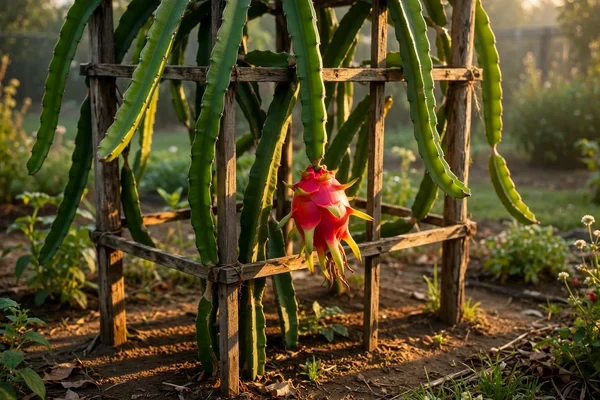
Early morning is the best time to harvest dragon fruit for most growers, and the reasons are practical rather than traditional. Overnight, the plant and the fruit cool down, and the fruit’s water content is at its highest after the cooler night hours. Picking at this point means the fruit starts its post-harvest life cool, firm and full of moisture. The air is cooler too, so the fruit does not warm up while you work, and you can take your time and pick carefully without rushing in the heat.
Morning light is also the best light for judging ripeness: the low, soft sun shows the true colour of the skin without the glare of midday, and you can see the shaded side clearly. Dew is worth noting — if the fruit is wet, let it dry in the morning air before you handle it, or wipe it gently with a dry cloth. Wet skin is more easily damaged, and wet fruit stores worse.
A good morning routine is simple: go out soon after sunrise, while the air is still cool, and walk the plant with your basket and secateurs. Check each fruit that is near ripe, pick only the ones that pass the colour and firmness tests, and carry the basket into the shade as soon as it holds fruit. If you have many to pick, start with the ripest. For the picking technique itself, see our guide on how to harvest dragon fruit.

Late Afternoon and Evening: A Workable Second Option
If morning picking is not possible, late afternoon and early evening offer the next best time to harvest dragon fruit. By then the worst heat has passed, the sun is lower, and the plant has begun to cool, so fruit picked then is usually cooler than midday fruit and keeps better overnight.
Evening picking has one clear advantage: the fruit has had the full day to develop, so one that was almost ripe in the morning may be fully ready by late afternoon. This is useful during a flush of ripening, when fruit changes noticeably within a single day. If a morning check finds fruit that is nearly there, a second check in the late afternoon can catch it at its best.
There are two cautions. First, do not pick in the evening and leave the fruit outside overnight; bring it into a cool, dry place the same evening, and sort it before you finish for the day. Second, light fades quickly, and judging colour in dim evening light is unreliable. Finish picking while there is still good daylight, and check colour in the open rather than under a yellow garden lamp. If a fruit’s colour is doubtful in the evening light, leave it until the morning, when you can judge it properly. The best time to harvest dragon fruit is the morning, but a careful late-afternoon pick is far better than a midday one.
Why Midday Harvesting Is Best Avoided
Midday is the worst time to pick, for the same reasons that make morning the best. Between late morning and mid-afternoon, the sun is at its strongest, the air at its hottest, and both fruit and plant at their warmest. A fruit picked at noon starts its post-harvest life hot and loses water rapidly before it can be cooled. The skin is also warmer and softer, so a grip that is harmless in the morning can leave a bruise at noon.
The plant suffers too. Working among hot, sun-stressed stems is uncomfortable, and tired hands make careless picks: pulled stems, torn bracts and dropped fruit. Sunburn is also a risk for the grower and for exposed stems. A midday pick is not a disaster — a fruit picked at noon and moved into the shade at once is still good fruit — but it will not keep as well as one picked cool, and the work is harder for no benefit.
There are exceptions. If a storm is coming, or a fruit is splitting and must come off the plant now, pick it whenever you can and move it into the shade immediately. In that case, the risk of leaving the fruit is greater than the cost of a midday pick. But when the choice is free, the pattern is clear: the best time to harvest dragon fruit is early, the late afternoon is a fair second choice, and midday is the time to avoid.

Warm Weather: Extra Care for Freshly Picked Fruit
Hot weather does not change the best time to harvest dragon fruit, but it changes how carefully you must handle it once picked. In warm conditions, the first rule is shade: never leave picked fruit in the sun, not even for a few minutes while you finish harvesting. Keep a shaded basket or a cool box near the plant, and move fruit into it as you pick. A light cloth draped over the basket keeps the sun off and lets air circulate, which is better than a sealed plastic cover that traps heat.
Cooling matters more in warm weather than in cool weather. If you have a refrigerator, move the fruit into it as soon as you finish picking, and do not leave it in a warm kitchen. The University of Guam factsheet notes harvested fruit may rot within about 10 days at room temperature, but can keep for up to around 14 days at 10°C and 90% relative humidity. UC Davis gives 10°C as the optimum storage temperature for red pitaya and 6°C for yellow pitaya, with 85-90% relative humidity. Those figures are for storage, but the principle applies from the moment of picking: cooler is better, and every hour in the heat shortens the fruit’s life.
In very hot weather, pick smaller amounts more often rather than one large harvest: a small basket cools quickly, while a large pile of warm fruit in a bucket stays warm in the middle and bruises under its own weight. Wear a hat, drink water, and take breaks — an overheated grower makes mistakes. If the day is extremely hot, pick in the evening instead, when the air has cooled.

How Harvest Time Connects to Storage Life
The link between picking time and storage life is straightforward: the cooler the fruit is when it enters storage, the longer it keeps. Fruit picked in the cool morning starts near the temperature it will be stored at, so it settles quickly and loses little water in the process. Fruit picked hot must shed that heat first, and while it does, it loses moisture through the skin and the stem end. That early water loss is never recovered, and it is the main reason hot-picked fruit shrivels sooner.
Handling damage also connects picking time to storage life. Warm fruit bruises more easily, and every bruise is a place where decay can start. UC Davis notes that susceptibility to decay is greater in tissue showing physical damage, and that abrasion increases water loss and shrivelling. A fruit picked cool, handled gently and stored promptly will therefore outlast one picked hot and handled the same way, even if both looked identical on the plant.
The effect is largest for fruit you plan to keep for several days. If you pick a fruit and eat it the same day, the hour barely matters. If you want it to keep for a week, the hour matters a great deal. This is why commercial growers choose the best time to harvest dragon fruit as a matter of routine, and why home growers who store fruit should do the same. For the full picture on keeping fruit after picking, see our guides on how to store dragon fruit after harvest and how long dragon fruit lasts after harvest.
Planning a Harvest Day Around the Weather
A little planning turns the best time to harvest dragon fruit into a habit. Check the weather the evening before a planned harvest: if the next day will be hot, start at sunrise and finish before the heat builds. If rain is forecast, pick before it rather than after, since wet fruit is more easily damaged and stores worse, and a heavy downpour can split ripe fruit on the plant. If a cool, cloudy day is coming, you have more flexibility, and a late-morning pick will do no harm.
During a ripening flush, when many fruit are ready within a few days, check the plant twice a day — morning and late afternoon. This catches fruit at its best and spreads the work into the cooler hours. Keep a note of which fruit you picked and when, so you know what is left. A simple record also helps you learn your plant’s pattern: if fruit usually ripens a few days after a hot spell, you can plan the next harvest around the forecast.
Finally, fit the harvest around the rest of the day. Pick in the morning, sort and store the fruit before midday, and do heavier garden work in the cooler hours. The best time to harvest dragon fruit is not a rigid rule but a habit that fits your climate and your schedule. Once it becomes routine, it costs nothing and quietly adds days to every fruit you pick.
Frequently Asked Questions
What is the best time to harvest dragon fruit in hot weather?
Early morning, as soon after sunrise as you can, while the air and the fruit are still cool. Move picked fruit into the shade immediately and cool it as soon as possible. In very hot weather, pick smaller amounts more often, and avoid the midday heat entirely.
Can I harvest dragon fruit in the evening?
Yes. Late afternoon and early evening are a workable second choice, once the worst heat has passed. Finish while there is still good daylight so you can judge colour properly, and bring the fruit into a cool, dry place the same evening rather than leaving it outside overnight.
Does it matter what time I pick if I eat the fruit the same day?
Not much. A fruit picked at noon and eaten within hours will taste the same as one picked at dawn. The time of day matters most for fruit you plan to store for several days, because cool-picked fruit loses less water and keeps longer.
Should I pick dragon fruit before or after rain?
Before rain, if the fruit is ripe. Heavy rain can split ripe fruit on the plant, and wet fruit stores worse than dry fruit. If fruit is already wet, let it dry before handling it, or wipe it gently with a dry cloth.
Disclaimer: DragonFruitGrow.online is an independent gardening information resource. Growing results vary with cultivar, climate, soil and plant care, so use this guide as general information and adapt it to your local conditions.