
A healthy dragon fruit plant is a tough plant, but fungi love the same warm, humid conditions it grows in. One wet week, a crowded tangle of stems, or a dirty pair of secateurs can be all it takes for spots, rot and canker to appear. The good news is that most fungal problems are preventable, and these dragon fruit fungal disease prevention tips are mostly simple habits: dry stems, clean tools, free-draining soil and enough space for air to move.
Prevention matters because cure is slow: a stem damaged by rot takes weeks to heal, and a badly infected plant may need heavy pruning that costs a season of fruit. The habits in this guide cost little and take minutes, and they keep the plant strong enough that fungi rarely get a foothold. Good dragon fruit fungal disease prevention tips are not about sprays and chemicals first; they are about giving fungi nowhere damp, dark and dirty to start.
In This Guide
- What fungal disease looks like on dragon fruit
- Airflow: the first line of defence
- Watering habits that keep stems dry
- Clean tools and clean hands
- Soil and drainage
- Spacing and pruning
- Feeding for strong stems
- What to do when disease appears
- A seasonal prevention routine
- Mistakes to avoid
- Frequently asked questions
What Fungal Disease Looks Like on Dragon Fruit
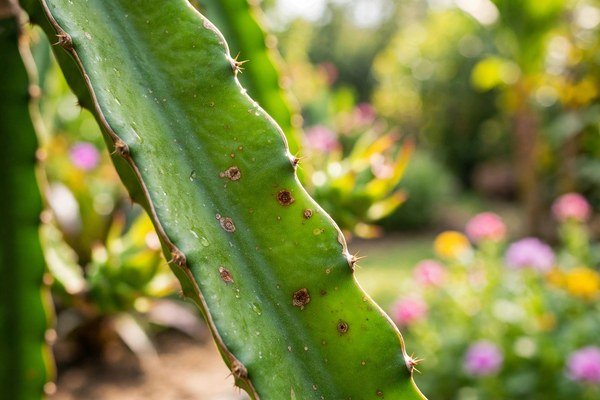
The most common fungal problem is anthracnose, which shows as small brown or black spots on stems and fruit that slowly grow into sunken, dark patches with a pale centre. The spots often start where water sits: in stem joints, under overlapping scales, or on fruit touching a damp surface. Stem rot is the next problem to know: a stem turns yellow, then soft and mushy, usually starting at the base or at a wound, and it may smell sour.
Canker shows as dry, corky, cracked patches that spread slowly along a stem.
Learn to tell fungal damage from sunburn and cold damage: sunburn makes pale, bleached patches on the sun-facing side only, while fungal spots appear anywhere water lingers and often have a dark border. Cold damage turns whole stem tips brown and papery after a frost, while rot makes them soft and wet. The UF IFAS guide on dragon fruit describes the main diseases and their symptoms, and it is worth reading once so you recognise problems early. These dragon fruit fungal disease prevention tips work best when you catch the first spot early, because a small infection is easy to stop and a large one is not.
Check your plant every week in the growing season, looking at both sides of every stem, the joints, and the base where stems meet the soil. A weekly look takes five minutes and catches most problems while they are still one spot on one stem.
Airflow: The First Line of Defence
Fungi need moisture to germinate, and still, humid air around crowded stems is exactly what they want. Airflow is therefore the most important of all dragon fruit fungal disease prevention tips: moving air dries stems quickly after rain or watering, and dry stems rarely get infected.
A plant in a breezy, open spot with space around it stays far healthier than the same plant jammed against a wall in a sheltered corner.
Prune for airflow every season: remove crossing stems, thin the crowded middle so you can see daylight through the plant, and cut away low growth that traps damp air near the soil. Keep the plant off the ground, since stems lying on wet soil rot quickly while hanging stems dry within hours. If your plant grows against a fence or wall, leave at least 20 centimetres behind the stems so air can pass.
Sun helps too. A plant in full sun dries faster after rain than one in shade, so give it the brightest spot you can; check the dragon fruit sunlight requirements for your site. Morning sun is especially valuable, because it dries the overnight dew early in the day, before fungi have hours of dampness to work with.

Watering Habits That Keep Stems Dry
How you water matters as much as how much you water. Always water the soil at the base, never the stems, and never spray water over the whole plant. Overhead watering wets every stem and joint, and in warm weather that wetness lasts for hours, which is exactly the window fungi need. A narrow-spout watering can, a drip hose or a slow soak at the base all keep stems dry.
Water in the morning, so any splashes dry during the day. Evening watering leaves stems and soil wet all night, when most fungal spores germinate. In the rainy season, skip watering for days after rain: the soil is already wet. In winter, water rarely and lightly, because cold, wet soil is the main cause of root and stem rot.
Drainage matters as much as timing. A pot without drainage holes, or a planting spot where water pools after rain, keeps roots wet for days, and a plant with rotting roots cannot fight off stem infections either.
If water sits on the surface for more than a few minutes after watering, the mix is too heavy or the holes are blocked, and fixing that is one of the most useful dragon fruit fungal disease prevention tips of all.
Clean Tools and Clean Hands
Fungi travel on blades. Every cut you make with dirty secateurs can carry spores from an infected stem straight into a healthy one, and pruning is the most common way growers spread disease around their own garden. Clean your tools before you start, between plants, and after every cut into a diseased stem. A wipe with rubbing alcohol or a dip in diluted household bleach, one part bleach to nine parts water, is enough. Let the blade dry for a few seconds before the next cut.
The same rule applies to your hands: wash them after handling diseased material, and do not move from an infected plant to a healthy one without washing. Keep rubbing alcohol and a rag beside your tools so cleaning becomes a habit, and that simple step is one of the easiest dragon fruit fungal disease prevention tips to follow. Sharp tools matter too: a clean, sharp cut heals fast, while a crushed cut from a blunt blade stays open and wet for days. Sharpen your secateurs each season and test them on a scrap stem before you prune.

Soil and Drainage
Fungi live in soil, and wet, airless soil is where the worst rots begin. A free-draining mix is the foundation of prevention: coarse sand, perlite or small bark mixed with compost gives roots air even when the mix is damp, while heavy garden soil or peat-heavy potting mix stays soggy for days.
The mix from our guide to the best soil for dragon fruit is a good starting point, and it is worth getting right before you plant, because repotting a large, established plant is hard work. Good drainage is one of the quietest dragon fruit fungal disease prevention tips, because it works underground where you cannot see it.
Mulch helps, but only the right kind in the right place. A thin layer of coarse bark or gravel around the base stops soil splashing onto stems during rain, a common way fungi reach the plant. Keep mulch a few centimetres from the stem, because mulch piled against it holds moisture where rot starts. Never use fresh grass clippings or kitchen waste as mulch: they stay soggy and feed fungi.
Replace mulch once a year as part of your dragon fruit fungal disease prevention tips routine, and throw away old mulch that smells sour.
Spacing and Pruning
Crowding is a disease risk on its own: close plants shade each other, trap humid air and pass infections through touching stems. Give each plant at least a metre of clear space on all sides, and more in humid climates. On one long trellis, space plants so their stems do not tangle into a single mass.
Prune with prevention in mind, not just shape. Each year after fruiting ends, remove old stems that have fruited for several seasons, any stem with spots or damage, and growth that points inward. Cut back to healthy tissue, making each cut at least a few centimetres below any visible damage, and check the cut surface: clean, pale green flesh means you have cut far enough, while brown or black inside means you need to cut further back.
Take diseased cuttings away in a bag and put them in the green waste bin, never on the compost heap, because a home compost heap rarely gets hot enough to kill fungi. Regular thinning is among the most practical dragon fruit fungal disease prevention tips, because it removes infected material before it spreads and opens the plant to air and sun at the same time.
Feeding for Strong Stems
A well-fed plant fights disease better than a starved one, but the type of feeding matters. Too much nitrogen-rich fertiliser pushes soft, fast growth with thin skin that fungi penetrate easily, so avoid heavy high-nitrogen doses, especially in humid weather. A balanced fertiliser through the season, with potassium to strengthen cell walls, gives firm, resilient stems. Firm stems are the payoff, and that is why feeding belongs among the dragon fruit fungal disease prevention tips, not just in a fertiliser guide.
Compost is a gentler way to feed: a layer of mature compost around the base each spring adds nutrients slowly and encourages the soil life that competes with disease fungi. Avoid fresh manure, which can carry disease and burns young roots. If your plant looks pale and weak despite feeding, check the roots and drainage first, because a plant sitting in wet soil cannot take up nutrients no matter how much you feed it.
What to Do When Disease Appears
Act the day you see the first spot: cut out the affected stem with clean, sharp secateurs, cutting well below the visible damage into healthy tissue. Bag the removed material and dispose of it away from the garden, then clean your tools before touching another stem. Early removal is the most effective response, and a plant that loses one stem in spring can replace it by summer.
For anthracnose spots on otherwise healthy stems, cutting out the worst stems and improving airflow is often enough. If spots keep appearing despite good airflow and dry watering, a fungicide may help: choose one labelled for anthracnose on cactus or fruit crops, follow the label exactly, and spray in the evening.
Do not spray as a routine habit, because it breeds resistant fungi and harms helpful soil microbes. Use it as a backup when cultural control is not enough. After treatment, keep watching weekly, because a second wave often follows. Quick action is one of those dragon fruit fungal disease prevention tips that sounds obvious and still saves more plants than any product.

A Seasonal Prevention Routine
Prevention works best as a calendar, not a reaction. In spring, as growth restarts, clean your tools, inspect every stem, prune out winter damage, and refresh the mulch. In summer, water at the base in the morning, thin crowded growth, and check weekly for spots after rain.
In autumn, after the last fruit is picked, do the main prune, remove old stems, and clear fallen fruit and leaves from under the plant, because rotting fruit on the ground is a source of spores. In winter, water rarely, keep the plant dry, and protect it from frost, since frost-damaged stems are easy entry points for fungi in spring.
Write the routine down and keep it with your tools: a short checklist turns prevention into a habit, and habits keep plants healthy year after year. The full growing picture is in our guide on how to grow dragon fruit.
Mistakes to Avoid
The biggest mistake is ignoring the first spot: a small brown patch snipped off in March becomes a rotted stem by May. The second is watering overhead in the evening, which gives fungi a wet, dark night to germinate.
The third is pruning with dirty tools, which spreads disease faster than rain. The fourth is planting in heavy soil with no drainage, which rots the roots and weakens the whole plant.
Another common error is composting diseased cuttings, which returns the fungi to the garden with the compost. And a quiet one: piling mulch against the stem, which holds moisture exactly where rot starts. These dragon fruit fungal disease prevention tips only work if they become habits, so pick the two or three you are worst at and fix those first.
Frequently Asked Questions
What are the best dragon fruit fungal disease prevention tips for a beginner?
Start with three habits: water the soil at the base in the morning, never the stems; clean your tools with rubbing alcohol before pruning; and prune every year so air moves through the plant. Those three alone prevent most fungal problems.
How do I tell fungal spots from sunburn?
Fungal spots are usually brown or black with a dark border, appear anywhere water lingers, and grow slowly over days. Sunburn makes pale, bleached patches only on the sun-facing side, with no dark border, and it does not spread. When in doubt, improve airflow and watch for a week: fungal spots grow, sunburn does not.
Can a dragon fruit plant recover from stem rot?
Yes, if caught early. Cut the stem back to clean, firm tissue, let the cut dry, and improve drainage and airflow. The plant usually pushes new growth from below the cut. If the rot reaches the base and the whole stem is soft, remove the stem and check the roots.
Should I spray fungicide every month to prevent disease?
No. Routine spraying is not recommended: it breeds resistant fungi, harms helpful soil life, and hides the cultural problems that actually cause disease. Fix airflow, watering and drainage first, and use a labelled fungicide only when spots keep appearing despite good care.
Does rain cause fungal disease on dragon fruit?
Rain itself does not cause disease, but it creates the wet conditions fungi need. Plants with good airflow, dry watering and free-draining soil usually come through rainy seasons fine, while crowded plants in heavy soil suffer. After a long rainy spell, inspect the plant and prune out spotted stems promptly.
Conclusion
Fungal disease on dragon fruit is mostly a problem of dampness, crowding and dirty tools, and all three are within your control. Water the base in the morning, keep stems dry and spaced, clean your blades, and give the plant free-draining soil and full sun. Check it weekly, act on the first spot, and never compost diseased cuttings. Follow these dragon fruit fungal disease prevention tips consistently, and your plant will stay green, firm and productive for years.