
You picked a dragon fruit that looked ready and cut it open two days later to find pale, firm, almost flavourless flesh.
Or maybe you picked one early on purpose, hoping the kitchen counter would finish the job the plant started. Learning how to ripen dragon fruit after picking is really about learning what the fruit can and cannot do once it leaves the plant, because dragon fruit behaves very differently from a banana or a mango.
This guide explains how to ripen dragon fruit after picking step by step, from why the fruit stops developing off the vine to the room-temperature methods that soften it a little. The honest answer comes first: you cannot turn a hard, underripe fruit into a sweet one on the counter. What you can do is give a nearly ripe fruit two or three days to soften slightly.
In This Guide
- Why picked fruit stops ripening
- How to tell if your fruit will soften
- The paper bag method
- Room temperature steps that help
- Bananas and ethylene: what they really do
- How to ripen dragon fruit after picking: how long to wait
- Signs it is ready to eat
- What the flesh tells you
- What to do with underripe fruit
- Mistakes to avoid when learning how to ripen dragon fruit after picking
- Frequently asked questions
Why Picked Fruit Stops Ripening
The first thing to understand about how to ripen dragon fruit after picking is that dragon fruit is non-climacteric: a fruit that does not continue to ripen once it is picked. Bananas, mangoes and avocados are climacteric: they keep producing ethylene gas after picking, their starch turns to sugar, and they genuinely ripen on the counter. Dragon fruit does not do this. Once you cut it from the stem, the sugar level inside the flesh is fixed, and its flavour will not develop further.
What changes after picking is texture, not sweetness. The flesh softens slightly as cell walls break down, and the skin may deepen a little in colour. A fruit picked at the right stage softens into something pleasant within two or three days. A fruit picked far too early stays hard, pale and bland no matter how long you leave it, because there was never enough sugar in it to begin with.
Picking time matters more than anything you do afterwards. The UF IFAS growing guide notes that dragon fruit should be picked when the skin is fully coloured and the fruit gives slightly under gentle pressure. You can read the full guide through UF IFAS. If your fruit was picked green and hard, no method in this guide will rescue it; use it blended rather than eat it fresh.
How to Tell If Your Fruit Will Soften
Before you start, check whether the fruit can soften into something good. Hold it in your palm and press gently with your thumb. A fruit that is ready to soften gives slightly, like a ripe avocado, and springs back. A fruit that feels like a stone, with no give at all, was picked too early.
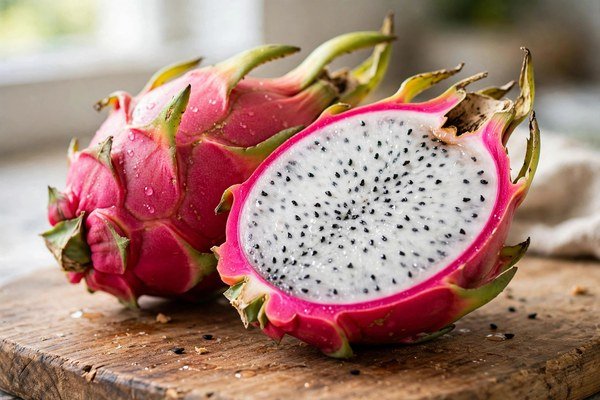
Look at the skin colour next. A ripe or nearly ripe fruit has deep, even pink or red skin with no green patches, and the little scale tips are dry and starting to brown. Green skin, especially around the stem end, means the fruit was picked early. For the full colour stages, see our guide to dragon fruit skin colour when ripe. Full colour but firm flesh is the ideal candidate: it will soften in two or three days.
Smell the stem end. A nearly ripe fruit has a faint, sweet smell, while a hard, underripe fruit smells of nothing. If it smells sour or fermented, it is past its best; put it in the compost and pick a fresh fruit instead.
The Paper Bag Method
The paper bag is the best-known trick for how to ripen dragon fruit after picking, and it works, but only within the limits described above. Put the fruit in a brown paper bag, fold the top closed loosely, and leave it on the kitchen counter at room temperature. The bag traps a little of the fruit’s own ethylene gas and humidity, which helps the flesh soften evenly instead of drying out.
Do not use a plastic bag: it traps too much moisture, the skin sweats, and mould starts in the damp folds within a day or two. Paper breathes just enough to keep the fruit dry while holding the warmth around it. Use one fruit per bag, because two fruits pressed together bruise each other.
Check the fruit daily: take it out, press it gently, and put it back if it is still firm. Most nearly ripe fruit softens within two to three days in a paper bag. If nothing has changed after four days, the fruit was picked too early, and more time in the bag will not help.

Room Temperature Steps That Help
Room temperature is the second part of how to ripen dragon fruit after picking: cold stops softening almost completely. Keep the fruit on the kitchen counter at normal room temperature, ideally between 20 and 25 degrees Celsius. In winter, keep the bag in the warmest part of the room, but never next to a radiator or stove, where direct heat dries the skin and cooks one side.
Keep the fruit out of direct sunlight. A sunny windowsill heats one side while the other stays cool, so the hot side softens unevenly and can start to ferment. A shaded spot on the counter is better. Turn the fruit once a day so every side gets the same air and warmth.
Do not wash the fruit until you eat it. Water on the skin invites mould, especially in the folds around the scales. Wipe the skin with a dry cloth if it is dusty, and wash it only just before cutting.
Bananas and Ethylene: What They Really Do
A banana in the bag is the classic helper for how to ripen dragon fruit after picking, and it does help a little. Ripe bananas give off ethylene gas, which speeds up softening in many fruits. Putting one in the paper bag with your dragon fruit may soften the flesh a day faster than it would on its own.
The banana cannot add sweetness. Ethylene triggers softening, but it cannot create sugar that was never in the fruit. A hard, pale fruit kept with a banana for a week will come out softer but still taste bland. The trick is worth trying on a nearly ripe fruit, where an extra day of softening makes the difference between firm and pleasant. It is not worth trying on a fruit picked green.
If you try it, use one ripe banana with brown speckles, not an overripe black one, which gives off too much gas. Keep the bag loosely closed, check daily, and take the banana out once the fruit starts to give under your thumb. For the wider storage picture, see our guide on how to store dragon fruit after harvest.
How to Ripen Dragon Fruit After Picking: How Long to Wait
Most growers who ask how to ripen dragon fruit after picking want a number of days: two to three for a nearly ripe fruit. Day one, the fruit feels firm with a slight give. Day two, it gives more easily and the skin looks deeper in colour. Day three, it should feel soft enough to eat, with flesh that yields under a spoon.
If the fruit is still hard after three days, give it one more day, then stop: four days is the practical limit. After that, the fruit is either too underripe to improve or starting to spoil from the inside, and you cannot tell which until you cut it. Cut it on day four and decide from what you see.
Temperature changes the timing when you are learning how to ripen dragon fruit after picking: in a warm kitchen above 25 degrees, a nearly ripe fruit may soften in two days, while in a cool house below 18 degrees it may need four. The calendar is only a guide; your thumb is the real test. Eat the fruit the day it feels right.
Signs It Is Ready to Eat
When you are judging how to ripen dragon fruit after picking, trust your hands and your eyes together. The skin should be deep, even pink or red, with the scale tips dry and slightly brown. The fruit should give gently under your thumb and spring back slowly, not stay dented: a dent that stays means the flesh underneath is overripe and turning mushy.
The stem end is another clue: on a ready fruit, the stem area looks dry and a little shrivelled. On an underripe fruit, the stem is still green and firmly attached. Smell the stem end: a ready fruit smells faintly sweet, while an underripe one smells of nothing.
Cut it open and look: ready flesh is bright, evenly coloured, firm enough to hold its shape but soft enough to scoop with a spoon. If it is still hard and pale, give the other half another day in the bag. If it is translucent and watery, it has gone too far; blend it into a smoothie instead.
What the Flesh Tells You
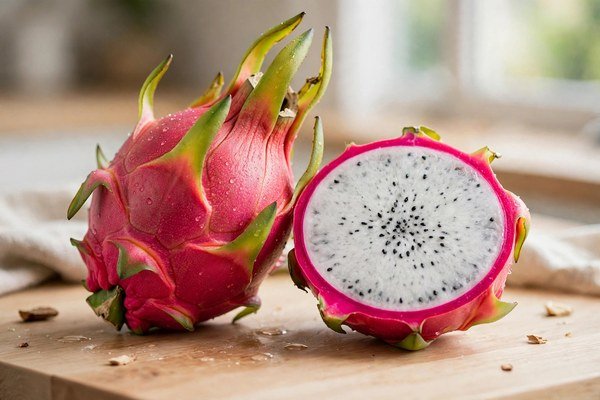
The flesh is the final judge of whether your fruit was picked right. White flesh should be bright white with crisp black seeds; pink or red flesh should be vivid and even, with no pale patches. Pale patches mean the fruit was picked before the colour finished developing, and those patches will taste bland even if the rest is fine.
Texture tells the same story: good flesh is soft, juicy and smooth. Grainy or woody flesh means the fruit was picked too early or stored too cold, and no amount of counter time will fix it now. If the flesh is brown around the edges or smells sour, the fruit is spoiling; compost it.
Taste a small piece before serving. A ready fruit tastes mild and sweet, with a fresh, almost floral note. An underripe fruit tastes like faintly sweet water, with a starchy edge. If it tastes starchy, blend it with banana and yoghurt, where the other ingredients carry the flavour, rather than serving it plain.
What to Do With Underripe Fruit
If the fruit never softens, knowing how to ripen dragon fruit after picking will not save it, but the fruit is not wasted. Cut it into cubes and blend it with a ripe banana, yoghurt and a spoon of honey. The banana and honey supply the sweetness the fruit never developed, and the cubes add colour and a fresh flavour. The same trick works for sorbet: blend the cubes with lime juice and honey and freeze the mixture for an hour.
Underripe fruit also works in cooking, where heat and sugar finish the work the plant never did. Simmer cubes gently with a little sugar and lime juice for a sauce, or stir them into a fruit salad where sweeter fruits carry the flavour. Do not eat large amounts of very underripe fruit plain: the starchy flesh can upset a sensitive stomach.
The lesson is for next season: note the date you picked it and how it looked, and wait longer next time. For how long fruit keeps once it is properly ripe, see our guide on how long dragon fruit lasts after harvest.
Mistakes to Avoid When Learning How to Ripen Dragon Fruit After Picking
The biggest mistake in how to ripen dragon fruit after picking is the fridge. Cold stops softening almost completely, and a fruit that goes in hard comes out hard a week later, with dull flesh and less flavour. Keep it at room temperature until it is ready, and only refrigerate it once it is soft.
The second mistake is a sealed plastic bag. Plastic traps moisture, the skin sweats, and mould starts in the damp folds. Paper breathes, plastic does not, and that one choice decides whether the fruit softens or spoils. The third mistake is waiting too long: a fruit left on the counter for a week does not get sweeter, it gets older, and the flesh turns watery and sour.
Another error is cutting the fruit open to check it, then trying to ripen the halves. Once cut, the flesh dries out and spoils in days, and the cut surface never softens the way a whole fruit does. Judge ripeness from the outside, with your thumb and your eyes, and cut only when you are ready to eat. Finally, do not trust colour alone: a fruit can turn fully pink on the plant while the flesh inside is still firm and bland, especially after a cool spell.
Frequently Asked Questions
How long does it take to learn how to ripen dragon fruit after picking?
The routine takes two to three days for a nearly ripe fruit: keep it in a paper bag at room temperature, check it daily, and eat it the day it gives easily. The real skill is picking right: full skin colour, dry scale tips, and a slight give under your thumb.
Can I ripen dragon fruit in the fridge?
No. Cold stops softening almost completely: a hard fruit stays hard, and its flavour dulls. Keep it at room temperature until it softens, then refrigerate it only once it is ready to eat.
Does a banana really help ripen dragon fruit?
A ripe banana in the paper bag gives off ethylene gas, which can speed softening by about a day. It cannot add sweetness, because dragon fruit does not make sugar after picking. Use it on a nearly ripe fruit, not on a hard green one.
Why is my dragon fruit still hard after a week?
It was picked too early. Dragon fruit is non-climacteric, so it does not ripen off the vine; it only softens slightly. A fruit picked green stays hard and bland no matter how long you wait. Blend it into a smoothie, and pick later next season.
Should I leave dragon fruit in the sun to ripen?
No. Direct sun heats one side while the other stays cool, so it softens unevenly and can start to ferment. Keep the fruit shaded at room temperature, in a paper bag, and turn it once a day.
Conclusion
Dragon fruit does not ripen after picking the way a banana does, and that single fact changes everything about how you handle it. Once you know how to ripen dragon fruit after picking, the job becomes simple: pick at the right moment, keep the fruit at room temperature in a paper bag, add a banana if you like, check it daily, and eat it the day it gives under your thumb. Two to three days is the window, four days is the limit, and the fridge is never part of it.