
A dragon fruit plant without support is a plant in trouble. The stems sprawl along the ground, where they root in the wrong places, pick up rot and fruit poorly. Given something to climb, the same plant grows upward, catches the sun, and drapes its fruiting stems over the top like an umbrella. A wooden trellis for dragon fruit DIY is the simplest way to give it that support: a few lengths of timber, some screws, and an afternoon of work.
This guide shows how to build a wooden trellis for dragon fruit DIY style, from choosing the timber and the right height to setting the post, building the top frame and training the first stems. No welding, no concrete mixer and no specialist tools are needed, and the finished trellis will carry a mature plant for years.
In This Guide
- Why dragon fruit needs a trellis
- Choosing the right timber
- How tall and how wide the trellis should be
- Tools and materials you need
- Building the trellis step by step
- Setting the post firmly in the ground
- Training the first stems
- Keeping a wooden trellis strong for years
- Frequently asked questions
Why Dragon Fruit Needs a Trellis
Dragon fruit is a climbing cactus, and in the wild it scrambles up trees, gripping with small aerial roots. In a garden it needs a substitute tree, and a trellis is that substitute.
Without one, the stems trail on the ground, where they are shaded, damaged by slugs and snails, and slow to flower. A plant on the ground also takes up far more space than the same plant trained upward on a wooden trellis for dragon fruit DIY, which matters in a small garden where every square metre counts.
A good trellis does more than hold the plant up. It lifts the stems into the sun, lets air move through the canopy, and shapes the plant so the fruiting stems hang down over the top frame, where the flowers open at night and the fruit is easy to reach.
The UF IFAS growing guide recommends a strong post with a support at the top for exactly this reason, since a mature plant is heavy and a weak support will fail under it.
You can read the full guide through UF IFAS. For other shapes and layouts before you build, see our guide to dragon fruit trellis ideas, which compares posts, frames and arches for different garden sizes.
Choosing the Right Timber
The timber you choose decides how long the trellis lasts, so do not use the cheapest softwood you can find. A wooden trellis for dragon fruit DIY needs timber that resists rot in damp soil, because the base of the post sits in the ground for years.
Treated pine is the common choice: it is affordable, easy to cut and drill, and the treatment protects it against rot and insects. Hardwood such as teak, jarrah or eucalyptus lasts longer without treatment, but it is heavier, harder to work and more expensive.
Whatever timber you pick, the main post should be at least 10 by 10 centimetres in section, or a round post at least 10 centimetres across. Anything thinner will bend or snap once a mature plant, heavy with water-filled stems and fruit, leans on it.
The top frame can be made from lighter timber, around 5 by 10 centimetres, since it carries the hanging stems rather than the full weight of the plant. Avoid old painted timber or timber that has been in contact with chemicals, and avoid wood that is already cracked, warped or soft in places.
Spending a little more on the right timber is the cheapest decision in a wooden trellis for dragon fruit DIY, because the post is the part you cannot easily replace later. Check each length before you buy: sight along it to make sure it is straight, and reject any piece with large knots where a screw will sit.

How Tall and How Wide the Trellis Should Be
Height is the first decision in a wooden trellis for dragon fruit DIY, and the right answer is lower than most people expect. A post about 1.8 metres above the ground is ideal: tall enough for the stems to climb and drape, low enough that you can reach the fruit and prune without a ladder. A taller post means more fruiting stems, but it also means harvesting from a ladder and pruning at arm’s length above your head, which gets old fast.
The top frame should be about 60 to 90 centimetres across, in a square or a circle. A square frame is easiest to build from straight timber, while a round frame, made from a wheel rim or a hoop of bent timber, spreads the stems more evenly.
Either works for a wooden trellis for dragon fruit DIY, as long as it is wide enough for the stems to drape over without bunching together. If you plan to grow two plants on one trellis, make the frame wider, up to 1.2 metres, and set the plants on opposite sides of the post. A single plant on a single post is the simplest arrangement, and it is the best choice for a first trellis.
Tools and Materials You Need
Gather everything before you start, because a half-built trellis left overnight can warp or shift.
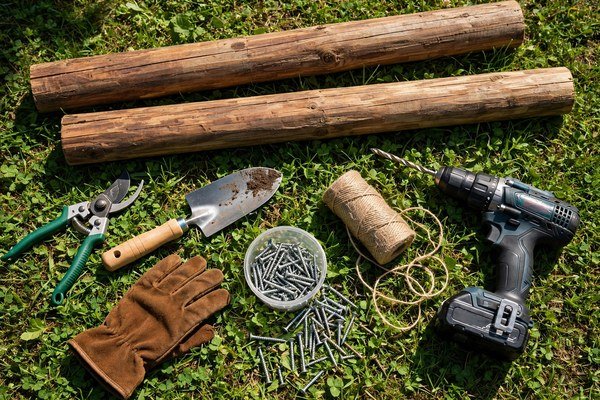
For a wooden trellis for dragon fruit DIY you need: one treated pine post, 2.4 metres long and 10 by 10 centimetres; four lengths of 5 by 10 centimetre timber, each about 90 centimetres long, for the top frame; a bag of quick-setting concrete or a bucket of gravel for the footing; exterior screws, 75 millimetres long; a post-hole digger or a spade; a spirit level; a drill with a wood bit; a saw; a tape measure; and soft plant ties or strips of old cloth for training the stems.
You do not need a cement mixer for a wooden trellis for dragon fruit DIY: a bag of quick-setting concrete mixed in a bucket is enough for one post, and gravel packed firmly around the base works well in free-draining soil. Wear gloves when handling treated timber, and wash your hands before eating. Keep a pencil and the tape measure handy throughout, since measuring twice and cutting once is the habit that saves timber.
Building the Trellis Step by Step
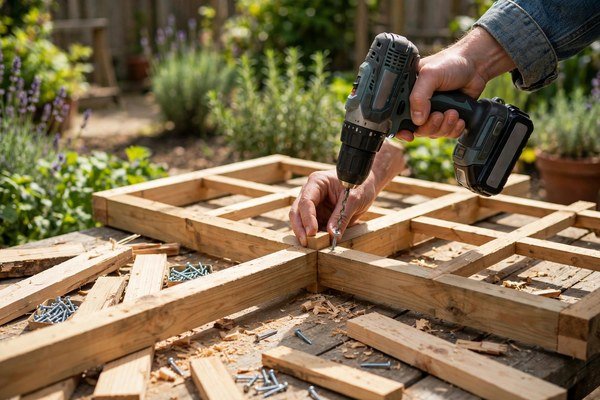
Start by cutting the top frame pieces. A wooden trellis for dragon fruit DIY usually uses a simple cross frame: two lengths of timber crossed at right angles on top of the post, forming a plus shape, with the ends joined to make a square.
Cut the four frame lengths to 90 centimetres each, then lay them out on the ground and check that the square is even by measuring the diagonals: they should match. Screw the corners together with two screws at each joint, pre-drilling the holes so the timber does not split.
Next, fix the frame to the top of the post of your wooden trellis for dragon fruit DIY. Stand the post upright with help, or lay it on sawhorses, and centre the frame on the top end.
Drive two long screws down through the frame into the top of the post, and add a small block of timber under each side of the frame for extra support if the frame feels wobbly. The frame should sit flat and level, with no rocking. Sand off any sharp edges or splinters on the frame, since the stems will rest on it for years and a sharp edge can cut into them as they grow heavy.
Setting the Post Firmly in the Ground
A trellis is only as strong as its footing, and a wooden trellis for dragon fruit DIY fails most often at the base, not the top. Dig a hole about 60 centimetres deep and 30 centimetres wide, deeper in soft or sandy soil.
Set the post in the hole so that 1.8 metres stands above the ground, and check with the spirit level that it is vertical in both directions before you fill the hole. A post that leans even slightly will lean further once the plant grows heavy.
Fill the hole with quick-setting concrete mixed to a stiff consistency, or with gravel packed down firmly in layers. Concrete is the stronger choice and the best option in windy gardens, while gravel drains better and suits wet soil.
Whichever you use, mound the filling slightly above ground level so rain runs away from the post instead of pooling around it. Leave the post alone for at least 24 hours while the footing sets, and do not hang anything on it or train stems to it until it is firm. Plant the dragon fruit cutting at the base of the wooden trellis for dragon fruit DIY post only after the footing has set, so you do not disturb it while you work.
Training the First Stems
Training starts as soon as the young plant has a stem long enough to reach the post. A wooden trellis for dragon fruit DIY works best when the plant is trained early, because a stem that grows straight up the post from the start needs little correction later. Tie the main stem loosely to the post with a soft tie, leaving room for the stem to thicken, and add a new tie every 30 centimetres as it grows. Never use wire or thin string, which cuts into the stem as it swells.
Let one strong stem grow to the top of the post, and pinch out side shoots that sprout low down, since these only compete with the main stem. When the main stem reaches the top frame, let it grow over the edge and hang down: this is the moment the plant changes from climbing to fruiting, because the hanging stems are the ones that flower.
Train two or three side stems over the frame in different directions, spacing them evenly around the top. For the full training routine, see our guide on how to train dragon fruit on a trellis, which covers tying, spacing and the first year of growth in detail.

Keeping a Wooden Trellis Strong for Years
Wood in the ground rots slowly, so inspect the trellis once a year and catch problems early. Check the base of the post where it meets the soil: if the timber feels soft or crumbles when you press it with a screwdriver, the post is rotting and needs replacing before it fails under a heavy plant.
Painting the buried section of a wooden trellis for dragon fruit DIY with a wood preservative before installation adds years of life, and keeping mulch and soil away from direct contact with the post helps too. A wooden trellis for dragon fruit DIY that is checked once a year will last far longer than one that is ignored until it starts to lean.
Check the screws and joints each year, and tighten any that have loosened as the timber dried and shrank. Replace ties that have grown tight before they cut into the stems.
If the top frame starts to sag under the weight of a mature plant, add a diagonal brace from the frame down to the post, or a second post beside the first with a crossbeam between them. For ongoing care of the stems themselves, see our guide on how to support dragon fruit stems, which covers ties, braces and what to do when a heavy stem starts to pull away from its support.
Frequently Asked Questions
What is the best timber for a wooden trellis for dragon fruit DIY?
Treated pine is the best balance of price, strength and rot resistance for most home gardens. Hardwood lasts longer but costs more and is harder to cut and drill. Whatever you choose, use a post at least 10 by 10 centimetres, and avoid untreated softwood, which can rot at ground level within a couple of years.
How tall should a wooden trellis for dragon fruit be?
About 1.8 metres above the ground is ideal for a wooden trellis for dragon fruit DIY. That height lets the stems climb and drape over the top frame while keeping the fruit within easy reach for picking and pruning. Taller posts grow more stems but need a ladder for every job, which most home growers regret within a season.
Can I build a wooden trellis for dragon fruit in a pot?
Yes, with a shorter post and a smaller frame. Use a large pot of at least 50 litres, set a post of about 1.2 to 1.5 metres into the pot, and brace it well, since a potted trellis is top-heavy and can blow over. A heavy pot, a wide base and a sheltered spot matter more in a pot than in the ground.
How long does a wooden trellis last?
A treated pine post set in concrete usually lasts 8 to 12 years, and a hardwood post can last longer. The top frame may need replacing sooner, since it is exposed to sun and rain on all sides. Inspect the base every year and replace the post at the first sign of soft rot, before it fails under the plant.
Do I need concrete for the footing?
Concrete is the strongest option and the best choice in windy gardens, but firmly packed gravel works well in free-draining soil and is easier to replace later. In soft or sandy soil, use concrete. Whichever you choose, dig the hole at least 60 centimetres deep and mound the filling so water runs away from the post.
Conclusion
A wooden trellis for dragon fruit DIY is a small build with a large payoff: one afternoon of work, a few lengths of timber, and a plant that climbs, fruits and stays healthy for years.
Build it from treated timber, keep the height near 1.8 metres, set the post deep and firm, and train the stems early so they grow where you want them. A wooden trellis for dragon fruit DIY is not a complicated project, but it is the project that decides whether your plant becomes a productive, easy-to-manage grower or a sprawling tangle on the ground.