
A tall trellis is one of the best ways to grow dragon fruit, because it gives the climbing stems room to spread and lets the fruit hang where air can move around it. The same height that helps the plant can make picking awkward. To harvest dragon fruit from trellis supports safely, plan the route to the fruit before it ripens, choose the right ladder, and handle each fruit gently on the way down when you harvest dragon fruit from trellis supports.
Table of Contents
- Why Tall Trellises Make Harvesting Harder
- How to Plan Access Before the Fruit Ripens
- Ladders and Platforms That Work Safely Around a Trellis
- How to Harvest Dragon Fruit from a Trellis Step by Step
- Reaching Fruit in the Centre of the Canopy
- Handling and Carrying Fruit Down Safely
- Common Mistakes When You Harvest Dragon Fruit from Trellises
- After the Harvest: Checking the Trellis and Stems
- Frequently Asked Questions
- Related Guides
Why Tall Trellises Make Harvesting Harder
Dragon fruit plants on a tall trellis do not behave like fruit on a low bush. A single post trellis, often built from a four- to six-inch diameter post with a frame at the top, can carry stems that climb well above head height and then drape down in a heavy curtain. Fruit forms on the hanging stems, so the ripest fruit is frequently at the outer edge of the canopy where it gets the most sun, but some of the best fruit hides behind layers of stems near the top.
According to UF IFAS guidance, a mature pitaya plant can become very large and heavy, with stems reaching about 20 feet long, and the trellis must be strong enough to carry several hundred pounds of stem weight.
That weight matters at harvest time, because leaning against the canopy or pulling hard on a stem can shift the whole structure if the post is loose.
Height also changes the way you judge ripeness. From the ground, a fruit that looks fully coloured may still be firm at the top, while a fruit you cannot see at all may already be overripe. The bracts, the leafy scales on the fruit, are one of the best signs of readiness, but they are hard to read from three metres away. When you harvest dragon fruit from trellis plantings, you need a way to get close enough to see each fruit properly, to reach it without stretching, and to bring it down without dropping it when you harvest dragon fruit from trellis plantings.
How to Plan Access Before the Fruit Ripens
The easiest time to make a tall trellis harvestable is weeks before the first fruit ripens. Walk around each trellis and look at it from every side. Notice where the fruit is setting, which side gets the morning sun, and where the ground is flat enough for a ladder.
Clear the ground around the base so you can move a ladder without tripping over pots, hoses, or low branches. Cut back grass or weeds around the post so your feet and the ladder have firm footing. This is also the moment to check the trellis itself: push the post gently and look for wobble, check that the top frame is still firmly attached, and tighten any ties that have loosened.
It helps to plan a route. Start at the lowest fruit and work upward, or pick one side of the trellis completely before moving around to the other side. Keep a pair of clean secateurs and a padded basket within reach of the ladder, not on the ground ten steps away. Some growers hang a small bag from the ladder so the basket sits at waist height while both hands are free. If you plan how to harvest dragon fruit from trellis supports before the fruit is ready, the actual picking day feels straightforward rather than stressful.

Ladders and Platforms That Work Safely Around a Trellis
A tall trellis needs a stable way up, and not every ladder is suitable. A short household step ladder is often enough for a trellis that tops out around two metres, but taller posts need something better. A tripod orchard ladder is a good choice because its three legs make it stable on uneven garden ground and its wide base spreads the weight.
A straight extension ladder can work if it is leaned at the correct angle and tied to the post, but it needs a firm, flat surface and a second person to hold the base. Whatever you use, check the ladder before you climb: the rungs should be sound, the feet should grip the ground, and the top should rest against something solid, not against a soft stem.
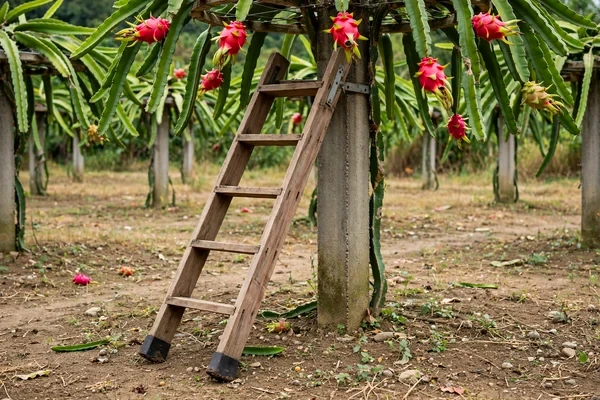
Never lean a ladder against the hanging stems themselves. Stems can snap under the weight, and a snapped stem can drop a whole section of fruit.
Lean the ladder against the post or the frame, and tie the top of the ladder to the post with a short rope or strap. Wear shoes with good grip and avoid climbing when the ground is wet or muddy. If a fruit is genuinely out of reach even from the top of a safe ladder, do not stretch or stand on the top rung.
A fruit picker with a long handle and a small basket is a safer option for those high fruits. Some growers prune the canopy after each harvest so the fruiting zone stays within comfortable reach the following year when they harvest dragon fruit from trellis posts.
How to Harvest Dragon Fruit from a Trellis Step by Step
When the fruit is ready, the picking itself is a short, careful sequence. First, confirm the fruit is ripe. The skin should have developed its full colour, pink or red for most varieties and yellow for yellow-fleshed types, and the bracts should still look fresh and green rather than dry and brown. Give the fruit a gentle squeeze: it should yield very slightly under the fingers, like a ripe avocado, without feeling soft or mushy.
If you are unsure, check the guide on when to harvest dragon fruit for the full list of ripeness signs before you cut anything.
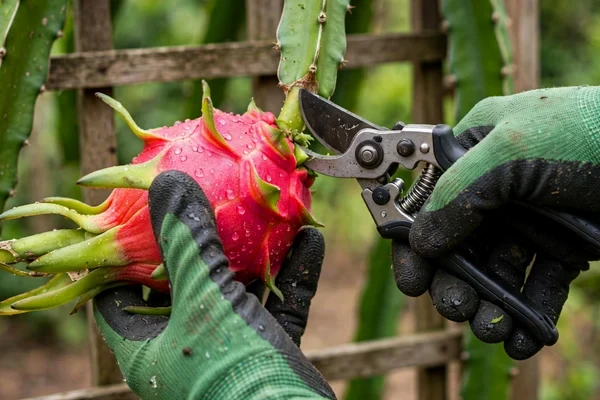
Next, position the ladder so you can reach the fruit with your arm slightly bent, not fully stretched. Hold the fruit in one hand to support its weight, and use clean secateurs in the other hand to cut the stem about two to three centimetres above the fruit. Do not pull or twist the fruit off the stem, because that tears the stem and can damage the plant, and it often bruises the fruit where it was attached.
A clean cut leaves a small piece of stem on the fruit, which helps it keep better after picking. Place each fruit gently into the basket and do not stack fruit more than two layers deep in a hard container. When you harvest dragon fruit from trellis supports this way, you lose almost no fruit to drops and bruises.
Reaching Fruit in the Centre of the Canopy
The fruit in the middle of the canopy is the hardest to reach when you harvest dragon fruit from trellis plantings, and it is often the fruit that gets left behind. Stems grow outward and then hang down, so the centre of a mature plant becomes a dense curtain of green. Fruit that sets deep inside gets less sun, so it may ripen a few days later than the fruit on the outside, and it can be easy to forget it is there. Before you finish a picking session, part the outer stems gently with one hand and look inside the canopy in bright daylight. Do not force the stems apart roughly, because the joints are brittle and can crack.
If the centre of your plant is so dense that you cannot reach the fruit at all, that is a sign the plant needs pruning after the harvest. Production pruning, as described by UF IFAS, involves removing damaged or dead stems, stems that reach the soil, and stems that crowd the canopy so light cannot reach the inner stems.
A more open canopy lets light in, improves air movement, and makes the next harvest much easier. Thin the stems gradually rather than cutting half the plant away at once, and remove pruned stems from the area so they do not harbour pests. Over two or three seasons, a plant pruned with harvesting in mind becomes much easier to pick from, even at the centre, every time you harvest dragon fruit from trellis plantings.
Handling and Carrying Fruit Down Safely
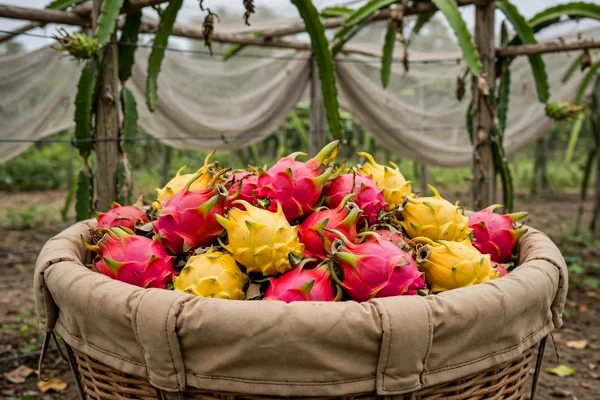
The journey down the ladder is where more fruit is damaged than most growers realise. A basket carried in one hand while you climb down with the other is awkward, and a single slip can send the whole basket to the ground. The simplest fix is a rope: lower the basket to the ground on a rope, climb down empty-handed, and then pick the basket up. If you prefer to carry the basket, use one with a handle that hooks over your arm, and take the steps slowly. Never carry a heavy basket and climb at the same time.
Once the fruit is on the ground, keep it out of direct sun. Dragon fruit loses moisture quickly in heat, and the skin can soften if the fruit sits in a hot pile. Move the basket into shade as soon as you come down after you harvest dragon fruit from trellis posts and sort the fruit there. Handle each fruit by the body, not by the bracts, because the bracts break off easily and damaged bracts make the fruit look older than it is. If you plan to store the fruit, read the guide on how to store dragon fruit so the fruit you worked so hard to pick keeps its quality.
Common Mistakes When You Harvest Dragon Fruit from Trellises
The most common mistake is picking too early because the fruit looks coloured from the ground. Dragon fruit does not continue to ripen normally after harvest, according to UC Davis postharvest guidance, so a fruit picked under-ripe will stay under-ripe.
Always check the fruit up close before cutting. The second mistake is pulling the fruit off instead of cutting it. Pulling tears the stem, leaves an open wound on the plant, and often bruises the fruit at the same time. The third mistake is climbing on a ladder that is not stable, or standing on the top rung to reach one more fruit. It is never worth a fall. Use a fruit picker or leave that fruit for another day.
Another common error is harvesting in the middle of a hot afternoon. The fruit is warm, your hands are sweaty, and the stems are less flexible in the heat. Early morning is better, when the fruit is cool and the light is good enough to judge colour properly.
Some growers also stack too much fruit in one container or leave the basket in the sun while they finish the round. Both cause bruising and moisture loss that no amount of careful storage can undo. A slow harvest with a small basket, emptied into a shaded crate after every few fruits, protects the crop far better than a fast one with a big bucket when you harvest dragon fruit from trellis posts.
After the Harvest: Checking the Trellis and Stems
When the last fruit is down, take a few minutes to look at the trellis and the plant while you are still there. Check the post for lean or wobble, look at the top frame, and retie any stems that are hanging loose.
This is also the right time to notice anything the harvest revealed: stems that are yellowing, soft spots that might be the start of stem rot, or insect damage you had not seen from the ground. If you find damaged stems, plan to deal with them soon after the harvest, and read the guide on what to do after harvesting dragon fruit for the post-harvest care steps, including pruning and feeding for the next flush.
A quick tidy-up now makes the next harvest easier. Remove fallen fruit from the ground, because rotting fruit attracts fruit flies and fungal problems. Put the ladder away dry, and clean the secateurs with soap and water, then dry them so they do not rust.
If you keep a simple harvest record, note the date, the number of fruit, and which parts of the trellis produced the most. Over a few seasons that record tells you which varieties fruit best on your trellis and whether your pruning is opening up the canopy enough.
Frequently Asked Questions
How do I harvest dragon fruit from trellis supports that are too tall for my ladder?
Do not climb beyond the safe height of your ladder or stand on the top rung. Use a long-handled fruit picker with a small basket to cut and catch high fruit, or ask another person to help with a taller tripod ladder. As a long-term fix, prune the canopy after harvest so the fruiting zone stays within comfortable reach.
Should I pick dragon fruit in the morning or the evening?
Early morning is usually best. The fruit is cool from the night, the light is good for judging skin colour, and the stems are less likely to be stressed by heat. Avoid picking in the middle of a hot afternoon, and move the fruit into shade immediately if you must pick later.
Why does the fruit fall off the trellis before I can pick it?
Overripe fruit can drop on its own, especially after heavy rain or wind. If fruit is falling regularly, you may be leaving it too long between picking rounds. Check the trellis every two or three days during the harvest season and pick fruit as soon as the ripeness signs are right.
Can I cut the fruit with a knife instead of secateurs?
A sharp, clean knife works, but secateurs are safer and give a cleaner cut on the stem. Whatever tool you use, keep it sharp and clean it between plants, because a blunt tool crushes the stem and a dirty one can spread disease from one stem to another.
Related Guides
DragonFruitGrow.online is an independent gardening information website and is not affiliated with any nursery, fruit brand, or agricultural supplier. Growing conditions vary by cultivar, climate, soil, and plant age, so treat this guide as general information and adjust the advice to your own garden.