
Dragon Fruit Skin Colour When Ripe and How to Read It
One week the fruit on your plant is plain green. Then a soft pink blush appears on one side, and within days the whole fruit glows bright pink. That change is not decoration. It is the plant telling you the fruit inside is getting ready.
Learning to read dragon fruit skin colour when ripe is the most useful skill a home grower can build at harvest time. Colour is visible from a distance, it costs nothing to check, and it never bruises the fruit. But colour can also mislead you. A fruit that is pink on the sunny side may still be green underneath, and a yellow variety will never turn pink at all.
This guide walks through the colour change step by step, from solid green to full pink, and covers white-flesh and red-flesh types, yellow varieties, and the scales. Extension notes from UF IFAS describe the same colour shift as a main harvest sign.
In This Guide
- Why Skin Colour Is Your Most Honest Ripeness Clue
- The Green to Pink Journey: What Each Stage Looks Like
- Reading the Full Pink: What a Ripe Skin Really Looks Like
- White Flesh vs Red Flesh: Why the Skin Colour Differs
- Yellow Varieties: A Different Colour Language
- What the Scales and Tips Tell You
- Colour Plus Touch and Smell: Confirming Before You Pick
- Picking Too Early vs Picking Too Late
- Common Mistakes When Reading Skin Colour
- Frequently Asked Questions
Why Dragon Fruit Skin Colour When Ripe Is Your Most Honest Ripeness Clue
A dragon fruit does not ripen the way a banana does: once picked, it softens only slightly and its sweetness does not climb much further. Dragon fruit is non-climacteric, which means almost all of its ripening must happen while it is still attached to the plant. That is why dragon fruit skin colour when ripe matters so much. Pick too early, and waiting on the kitchen counter will not rescue the flavour.
The Green to Pink Journey: What Each Stage Looks Like
The colour change follows a pattern that is easy to recognise once you have seen it for a full season. It does not happen overnight. Warm weather moves it faster, cool or cloudy spells slow it down, and each variety keeps its own pace.
At first the young fruit is solid green, the same fresh green as the stem it hangs from. The scales are green too, and the skin looks firm and slightly glossy. At this stage the fruit is still growing and filling out. There is no pink anywhere. If you see a fruit like this, leave it alone.
The first real sign of change is a faint pink blush. It usually starts on the side that faces the sun, often near the top or around the raised ridges. The blush looks like a watercolour wash over the green, soft at the edges and easy to miss. This is the moment to start watching that fruit closely. The change has begun, but the fruit is not ready yet.
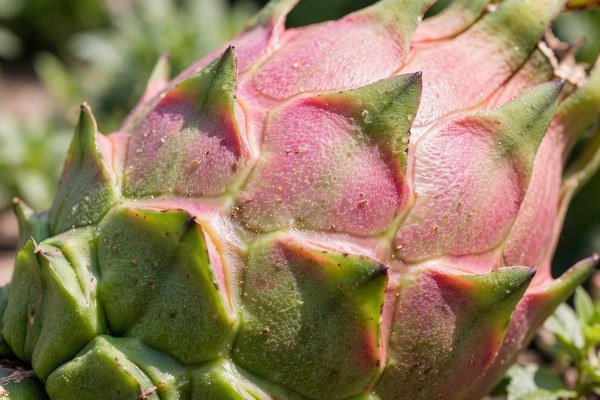
Over the following days the blush spreads. Pink patches grow larger and meet each other, while the green retreats into the valleys between the ridges. The fruit often looks patchy and uneven during this middle stage, and that is normal. Do not judge the fruit by its pinkest patch. Judge it by its greenest patch, because the slowest part is still catching up.
As the fruit nears ripeness the pink deepens into a strong, even magenta or rose red across most of the skin. The remaining green is limited to the very tips of the scales and sometimes a small ring near the stem. The skin also loses some of its hard gloss and takes on a softer sheen. At this point the fruit is close.

Reading Dragon Fruit Skin Colour When Ripe: What a Ripe Skin Really Looks Like
Full pink is not one exact shade — it ranges from bright rose pink to deep magenta red, depending on the variety, the sun, and the season. What matters is recognising the combination of signs that arrive together when the fruit is ripe.
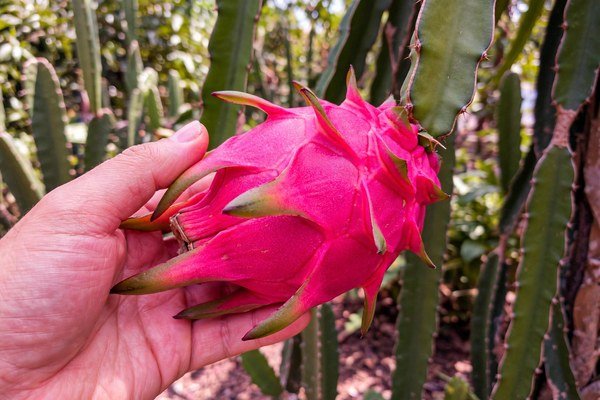
A ripe pink-skinned fruit shows an even, saturated colour over the whole body. The pink reaches from near the stem end right down to the base, with no large green patches left between the scales. Small traces of green may remain on the scale tips, and that is fine. The body of the fruit is what you should read.
White Flesh vs Red Flesh: Why the Skin Colour Differs
White-flesh and red-flesh dragon fruit can look confusingly similar from the outside, yet their skins do not always behave the same way. Knowing which type you grow changes how you read the colour.
White-flesh types are the classic dragon fruit most people know first. Their dragon fruit skin colour when ripe is usually a clear, bright pink, and the colour is often very even. The green fades away quite completely by the time the fruit is ready. Because the change is so clear, white-flesh fruit are forgiving for beginners. When the whole fruit is pink, it is usually safe to pick.
Red-flesh types often colour earlier and deeper. Their skin can take on a rich magenta while the flesh inside is still finishing, so a red-flesh fruit can look ready a little before it truly is. With red-flesh varieties, wait until the colour is not only deep but also even all the way around. Then confirm with the touch and scale checks below before you cut.
Yellow Varieties: A Different Colour Language
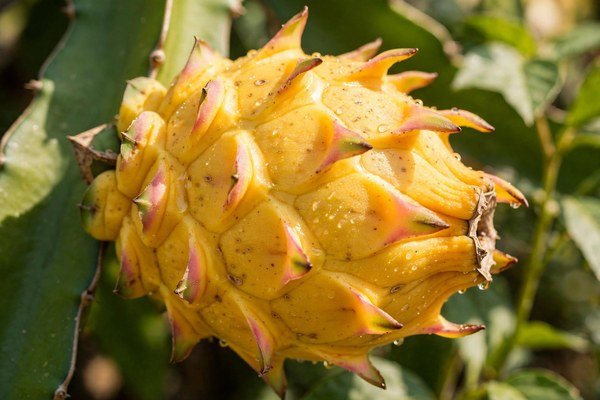
Yellow dragon fruit plays by different rules, and growers who wait for pink will wait forever. A yellow variety, often sold as yellow pitaya, ripens to a golden yellow skin instead of pink. The journey is the same idea in a different palette: green first, then a pale yellow wash, then a full, even golden yellow.
The early stages look similar: the young fruit is green, then a yellow tint appears on the sunny side and spreads. The middle stage can look patchy, with green and yellow mixed across the skin. That patchiness is normal. The fruit is partway there, and the greenest patch is still catching up.
A ripe yellow fruit shows a warm, even golden yellow over the whole body, with no large green areas left. The yellow is deeper than the pale yellow of the middle stage. Some yellow varieties keep faint pink tips on their scales even when ripe. Those coloured tips are part of the variety, not a sign of trouble.
What the Scales and Tips Tell You
The skin is not the only part of the fruit that changes colour. The scales, the leafy flaps that stick out from the skin, carry their own message. They are often the detail that separates a fruit that is nearly ready from one that is truly ready.
On an unripe fruit the scales are green and firm, standing out stiffly from the skin. As the fruit colours, the scales often stay green longer than the skin between them. This is normal and useful. When the skin is fully pink but the scales are still bright green and stiff, the fruit may need a little more time.
As ripeness arrives, the scale tips often turn yellowish, then dry and brown at the very ends. The scales may soften slightly and lie a little flatter against the fruit. A few dry brown tips are a good sign. But there is a difference between a few dry tips and scales that are brown and shrivelled all the way through. The first means ripe. The second usually means the fruit has been left too long, or the plant is stressed.
Colour Plus Touch and Smell: Confirming Before You Pick
Dragon fruit skin colour when ripe is your first check, but it works best with two quick companions: a gentle touch and a short sniff. Neither needs any tools, and both take only seconds.
For the touch check, hold the fruit in your palm and press very gently with your fingertips near the middle, not at the ends. A ripe fruit gives slightly under light pressure, like a ripe avocado, and then springs back. An unripe fruit feels hard all over. An overripe fruit feels soft in patches, or it stays dented after you press it. Press lightly and only once per fruit. Pressing hard can bruise the flesh inside even when the skin looks fine.
Smell is the quieter clue. Hold the fruit close to the stem end and breathe in. A ripe dragon fruit has a faint, sweet, floral scent. It is subtle — check in the cool of the morning, when scents carry better. An unripe fruit smells of almost nothing. A fruit that smells sour or sharp has gone past its best.
Picking Too Early vs Picking Too Late
Picking too early is the more damaging mistake, because it cannot be undone. Remember that dragon fruit is non-climacteric. A fruit picked while still green or only partly pink will not finish ripening on the counter. It may soften a little, but the sweetness inside will stay low. The flesh may look pale and taste watery or bland.
Picking too late has its own problems, but they are gentler. A fruit left on the plant past its best may develop soft spots, wrinkled skin, or a dull, faded colour. The scales may dry out completely, and the skin may split after rain or heavy watering. The flesh can turn mushy, and the flavour may go flat. Overripe fruit also attracts fruit flies, which can then move on to the healthy fruit nearby.
When you are torn between picking now or waiting one more day, look at the whole picture. If the fruit is evenly coloured, the scale tips are starting to dry, and the touch test gives slightly, pick it. If the fruit is pink on one side and green on the other, or it feels hard all over, wait. A day or two of patience now is worth far more than a week of waiting for a picked fruit that will never sweeten.
Common Mistakes When Reading Skin Colour
The first mistake is judging by the sunny side only. The side facing the sun always colours first, sometimes days ahead of the shaded side. Always turn the fruit and check all the way around before you decide.
The second mistake is picking at the first blush. The first pink is exciting, especially on the first fruit of the season, but it is only the start of the change. A fruit with a light blush over green skin is still days away from its best flavour.
The third mistake is treating all varieties the same. A pink variety, a red-flesh variety and a yellow variety each finish in a different colour. Judging a yellow fruit by pink rules leads to fruit picked at the wrong time.
Frequently Asked Questions
What is dragon fruit skin colour when ripe?
Dragon fruit skin colour when ripe is an even, saturated pink or magenta across the whole fruit for pink varieties, and an even golden yellow for yellow varieties. The colour should reach from near the stem to the base, with no large green patches left. A few green or dry tips on the scales are normal. If the fruit is pink on one side and green on the other, it is not fully ripe yet.
How long does the skin take to change from green to pink?
The change in dragon fruit skin colour when ripe is gradual and takes days rather than hours, moving from solid green through a first pink blush to patchy pink and then full colour. Warm, sunny weather moves it faster, while cool or cloudy spells slow it down, so watch the colour itself rather than counting days. As a very general guide, fruit often takes around four to six weeks from flowering to picking, but that range shifts with variety and climate, and colour is always the better judge.
Can a dragon fruit ripen more after I pick it?
Only slightly. Dragon fruit is non-climacteric, so it softens a little after picking but its sweetness does not rise much. The skin may colour a little more on the counter, but that does not mean the flesh inside has sweetened. For the best flavour, pick the fruit when the skin colour, scale tips and touch test all agree it is ready while it is still on the plant.
Why is my dragon fruit pink on one side and green on the other?
The sunny side colours first because sunlight speeds up the pigment change in the skin. The shaded side lags behind, sometimes by several days. This is normal and does not mean anything is wrong with the plant. Turn the fruit gently and check the shaded side. When that side has coloured too, the fruit is ready.
Should I pick a dragon fruit as soon as it turns fully pink?
Fully pink dragon fruit skin colour when ripe is the start of the picking window, not a command to pick at once. Check the scale tips for early drying, press the fruit gently for a slight give, and smell the stem end for a faint sweet scent. If those signs agree with the colour, pick the fruit. If the fruit still feels hard all over, give it another day or two and check again.
Conclusion
Reading dragon fruit skin colour when ripe is a skill you learn by watching. Start with the stages: solid green, first blush, patchy pink, then full, even colour. Learn the finished dragon fruit skin colour when ripe of your own variety — bright pink, deep magenta or golden yellow. Add the scales, touch and scent as confirming checks. And remember the fact that shapes every decision at harvest time: dragon fruit is non-climacteric, so the sweetness you want has to develop on the plant.
7 thoughts on “Dragon Fruit Skin Colour When Ripe and How to Read It”