
A farmers market stall suits dragon fruit well, because shoppers come looking for something fresh, local and a little different. A basket of bright pink fruit catches the eye from across the walkway, and many people stop simply because they have never seen the fruit up close. That first look is only the opening. What turns a glance into a purchase is fruit that looks fresh, a tidy stall, and a seller who answers simple questions without fuss. If you are learning how to sell dragon fruit at farmers market stalls, the work starts before market morning, in the way you pick, sort and pack the fruit at home.
Learning how to sell dragon fruit at farmers market stalls starts with the basics done well. Pick fruit that is truly ripe, sort it so the best fruit is easy to see, set a price by a method you can explain to yourself, build a display that keeps the fruit shaded and clean, pack each sale with care, and talk to buyers in plain words.
In This Guide
- Start With Fruit Worth Selling
- Know Your Market Rules Before You Pack a Single Box
- Grade and Sort Your Fruit at Home
- Work Out Your Pricing Method
- Build a Display That Stops Shoppers
- Pack Fruit So It Arrives Home Looking Fresh
- Talk to Buyers Without Overselling
- Keep Fruit Fresh Through a Market Morning
- After the Market Ends
- Frequently Asked Questions
Start With Fruit Worth Selling
The first step in how to sell dragon fruit at farmers market stalls is picking fruit that is already ripe, because this fruit will not finish ripening once it is off the plant. Dragon fruit is non-climacteric, so it only softens slightly after picking and its sweetness does not climb the way some other fruit sweetens on a kitchen counter. A fruit picked while still green or pale will stay disappointing, so the quality of your stall is decided in the garden, not at the table.
Check the skin before you cut the stem. Look for an even, full colour across the whole fruit, with green faded from the skin between the scales. The guide on dragon fruit skin colour when ripe explains what each shade means, and the UF IFAS publication on dragon fruit also describes colour change as a main harvest sign. Press the fruit very gently in your palm as a second check. A ripe fruit gives slightly under light pressure and springs back. Set aside any fruit with splits, soft patches, mould near the stem, or deep scratches, even if the colour looks good.
Know Your Market Rules Before You Pack a Single Box
Every market has its own rules, and part of how to sell dragon fruit at farmers market stalls is learning those rules before you load the car. Ask the market manager whether you need to book in advance, what the stall fee covers, what size of table and canopy you may bring, and where you may park while you unload. Some markets have a set layout, and some have rules about signs, samples and packaging. Knowing these details early saves you from a rushed and untidy setup on the day.
Ask too about food handling and labelling. Many markets expect sellers to keep fruit clean, to handle samples with care, and to label the variety or flesh type where that is known. Find out whether tasting is allowed and what you need for it, such as a clean knife, a board and a way to keep cut fruit covered and cool. If your market asks for any paperwork or a grower statement, get it ready at home rather than sorting it out beside your stall.
Grade and Sort Your Fruit at Home
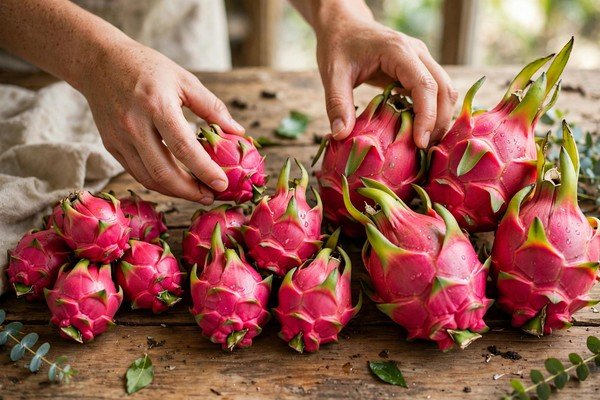
Grading is the quiet work behind how to sell dragon fruit at farmers market stalls, and it is best done at home the day before, in good light, on a clean table. Lay the fruit out in a single layer and sort by size first, putting the largest fruit together, the medium fruit together, and the smallest fruit together. A basket of mixed sizes looks careless even when every piece is ripe. A basket of even sizes looks deliberate and makes choosing easy.
Next, sort by colour and condition. Put the most evenly coloured fruit with the brightest scales in the front baskets, because those are the pieces people see first. Fruit with a faint green patch or a small healed mark can still be good eating fruit, but it belongs in a separate basket. Fruit with soft spots, splits or mould does not belong on the stall at all. Wipe each fruit gently with a clean, dry cloth, and do not wash it just before the market, because damp skin in a closed box can turn dull and mark easily.
Work Out Your Pricing Method
Pricing is where many new sellers feel unsure, and the fix is to use a clear method rather than copying a price you saw elsewhere and hoping it fits. Start with your own costs: what it took to grow the fruit, to pick and sort it, to transport it, and to hold a stall for the morning. Add the time you spend setting up, serving shoppers and packing away. Your price should cover those costs and leave room for the fruit that does not sell and the pieces that get damaged.
Decide whether you will price by the piece or by the basket, and keep that choice simple for the whole stall. Pricing by the piece works well when your fruit varies in size, because each size group can carry its own price. Pricing by the basket works well when your fruit is even in size and you want a quick, easy sale. Whichever you choose, write it clearly on a sign that shoppers can read from a step away, and keep the same price for the whole morning.
Build a Display That Stops Shoppers
A good display does much of the work in how to sell dragon fruit at farmers market stalls, because shoppers decide whether to stop in the first few seconds. Set the fruit at a height that is easy to see and reach, using sturdy boxes or crates under the tablecloth to lift the front baskets. Keep the table clean, with a plain cloth that lets the pink of the fruit stand out. Avoid piling fruit high in a heap. A shallow layer in a wide basket shows each fruit to its best and stops the bottom fruit from being bruised by the weight above it.
Use baskets or trays that suit the fruit, and leave space between them so shoppers can see each basket clearly. A few fresh green leaves tucked around the baskets can make the display look fresh and garden grown, but keep them simple so they frame the fruit rather than hiding it. Place your best fruit at the front and at eye level, and keep the reserve stock under the table, out of sight.

Pack Fruit So It Arrives Home Looking Fresh
Packing matters because how to sell dragon fruit at farmers market stalls does not end when a shopper picks up a fruit. The fruit still has to survive the walk to the car and the trip home looking as good as it did on your table. Pack each sale with the same care you used when grading it. Place the fruit gently into a bag or box rather than dropping it in, and keep the fruit in a single layer where you can. If a buyer takes several pieces, separate them with a little paper or soft lining so the scales do not scratch the skin beside them.
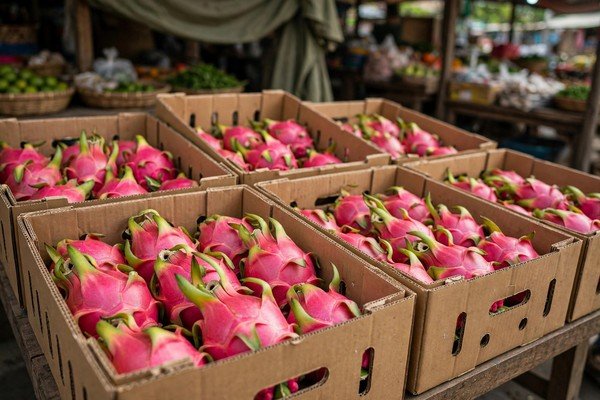
Ventilated cardboard boxes are useful for larger amounts, because the small openings let air move around the fruit and stop moisture from building up inside. Use clean, dry boxes with no strong smell, and do not overload them. A box that is too full presses the fruit at the bottom and leaves the top pieces rattling loose. If you use bags, choose sturdy ones with handles that will not tear, and offer to double bag a heavy load.
Talk to Buyers Without Overselling
The way you talk to shoppers shapes how to sell dragon fruit at farmers market stalls more than any sign can. Greet people warmly, give them room to look, and let them ask the first question. Many buyers want to know how to choose a ripe fruit, how to cut it, how it tastes, and how to keep it at home. Answer in plain words. Explain that the flesh is mild and sweet when ripe, that the fruit is cut in half and the flesh scooped out or sliced, and that it is best kept cool and eaten while fresh.
Be honest about what the fruit will and will not do. Do not tell a buyer that an unripe fruit will sweeten on the counter, because dragon fruit is non-climacteric and only softens slightly after picking. If a piece is less ripe than the rest, say so and point the buyer towards a riper piece. If a buyer asks which fruit to pick, hand them one you would choose yourself and explain why: even colour, a slight give under gentle pressure, and clean, dry scales. That kind of guidance turns a one-time buyer into a regular.

Keep Fruit Fresh Through a Market Morning
Shade and gentle handling are central to how to sell dragon fruit at farmers market stalls on a warm day, because heat and sun wear the fruit down faster than a cool morning does. Keep the display out of direct sun for as long as you can, and move the baskets as the shade moves. Keep a cloth or cover nearby for the reserve stock, and do not leave spare fruit sitting in the sun behind the stall. Fruit that stays cool and shaded keeps its colour bright and its skin firm.
Refill the display in small amounts rather than putting everything out at once. A basket that is topped up little by little always looks fresh, while a basket left out all morning can look tired even if the fruit inside is still sound. When you refill, bring the ripest and best-looking fruit forward. The guide on how to store dragon fruit after harvest covers the longer storage steps for fruit that comes home with you, and the same care applies at the stall: cool, shaded, dry and handled gently.
After the Market Ends
The last part of how to sell dragon fruit at farmers market stalls happens after you pack up, when the unsold fruit needs a decision. Sort it again at home, in good light, just as you did before the market. Put the sound, ripe fruit aside for the next market or for home use, and keep it cool and shaded. Fruit that was handled often at the stall may have small marks, so check each piece rather than assuming it is still in stall condition. The guide on what to do after harvesting dragon fruit gives the wider steps for fruit once it is off the plant, and those steps fit unsold market fruit as well.
Use the least perfect fruit first at home, in the kitchen, while it is still good to eat. Fruit with a soft patch or a split should not go back on a stall, but it can still be eaten soon after if the flesh inside is sound. Keep a short written note of the day: how many baskets you took, how many sold, which size group sold best, and what buyers asked. That note is the most useful thing you will carry home, because it turns one market day into a lesson for the next.
Frequently Asked Questions
How do I start learning how to sell dragon fruit at farmers market stalls?
Start small, with fruit you have picked ripe and graded at home. Check your market rules first, then set up a tidy, shaded display with a clear sign and a few baskets of even-sized fruit. Bring bags and boxes for packing, offer a taste where allowed, and keep a note of what sells and what buyers ask.
Do I need to cut a fruit open for shoppers to try?
Tasting is not required, but it helps a great deal with shoppers who have never tried dragon fruit. If your market allows it, cut one ripe fruit into small pieces, keep them covered, and serve each piece cleanly.
What should I do with fruit that does not sell?
Sort it again at home and keep only the sound fruit for the next market or for home use. Check each piece for soft patches, splits and marks, and use the least perfect fruit first in the kitchen while it is still good to eat. Keep unsold fruit cool, shaded and dry.
How do I keep dragon fruit looking fresh all morning?
Keep the fruit shaded, refill the display in small amounts, and handle each piece gently. Move the baskets as the shade moves, keep the reserve stock covered and out of the sun, and take away any piece that develops a soft patch or a mark during the morning.
Can I sell dragon fruit that is still a little green?
It is better not to. Dragon fruit is non-climacteric, so a fruit picked while still green will only soften slightly after picking and will not grow sweeter on the counter. Wait until the skin colour is even and full, the fruit gives slightly under gentle pressure, and the scales look dry at the tips.
Conclusion
A good farmers market stall is built on simple habits repeated well. Pick fruit that is already ripe, because it will not sweeten after picking. Learn your market rules, grade the fruit at home, price it by a method that covers your costs, build a shaded display that shows the best fruit first, pack each sale with care, and talk to buyers in plain, honest words. Keep the fruit fresh through the morning and look after what is left when the market ends. If you do those things, how to sell dragon fruit at farmers market stalls becomes a steady weekly routine rather than a gamble.