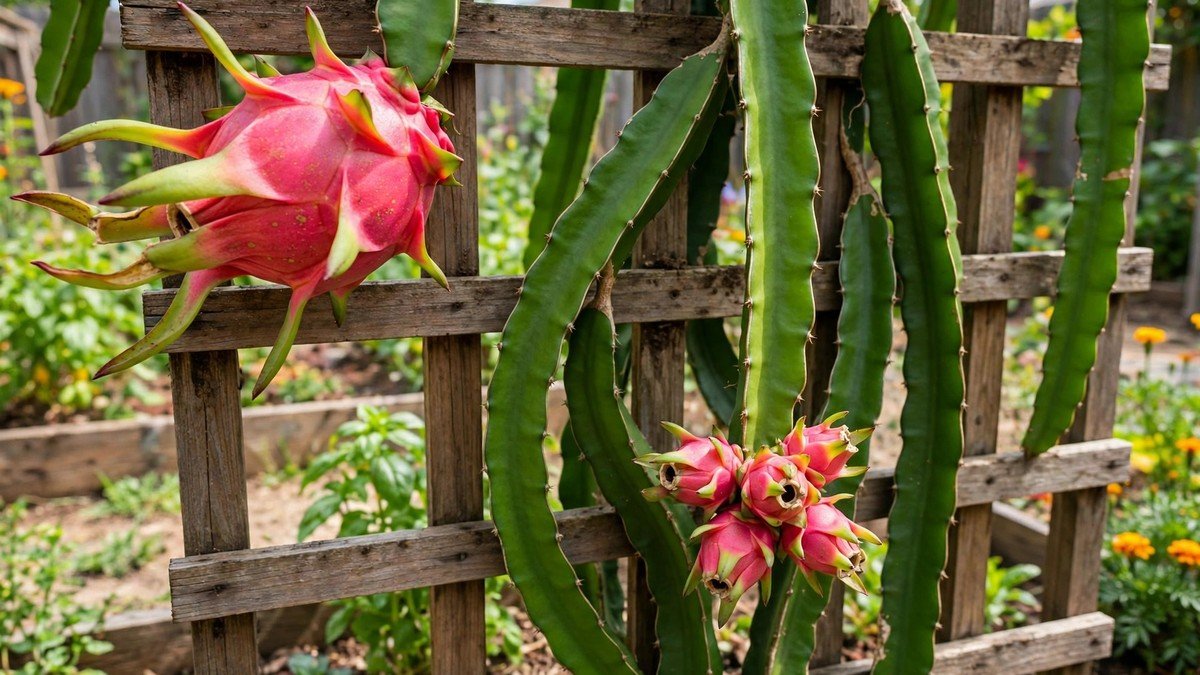
You waited months for your dragon fruit plant to flower, and when the fruit finally appeared, it stopped growing at plum size. It is a frustrating sight, especially when other growers show off fruit as big as a grapefruit. If you are wondering why dragon fruit stays small on your plant, the answer is usually one of a few fixable causes, not bad luck.
Small fruit is the plant telling you something is missing: pollination, room to grow, food, light, or simply time. This guide covers each cause and gives you a practical fix for it, so your next round of fruit has a real chance to reach full size.
In This Guide
- What small fruit really means and when to worry
- why dragon fruit stays small: the main causes at a glance
- Poor pollination and how to fix it by hand
- Too many fruits on one stem
- Weak roots and poor soil: why dragon fruit stays small
- Light, water and feeding mistakes that explain why dragon fruit stays small
- Variety and plant age
- A simple fix plan for bigger fruit
- When small fruit is a warning sign
- Answers to the most common questions
What Small Fruit Really Means
A dragon fruit that stops at a small size is not always a failure. Young fruit grows slowly for the first week or two, and some varieties naturally make smaller fruit. The problem is when the fruit stops growing altogether while it is still far smaller than normal for its variety, then starts to colour up or soften as if it were ripe. That is a fruit that gave up early.
One way to understand why dragon fruit stays small is to compare fruit from the same plant. If one fruit on a stem grows large while another stays tiny, the plant is choosing where to send its energy. If every fruit on the plant stays small, the problem is wider, and the whole plant needs attention.
It also helps to know that dragon fruit is non-climacteric, which means it does not fully ripen after picking, it only softens slightly. So a small fruit picked early will not grow or sweeten on the kitchen counter. The size you see on the plant is close to the size you will get, which is why fixing the cause on the plant matters more than anything you do after harvest. The UF IFAS publication on dragon fruit is a solid reference for what normal growth looks like.
Poor Pollination: The Most Common Cause
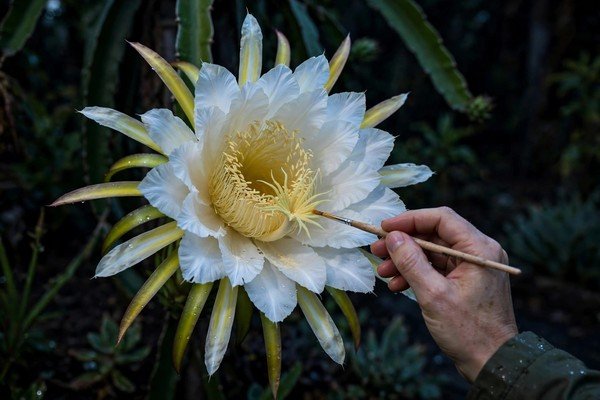
Poor pollination is the most common reason why dragon fruit stays small, and it is also the easiest to miss. Dragon fruit flowers open at night and last only one night. If the flower is not pollinated well that night, the fruit still forms, but it stays small, may grow lopsided, and often drops early or ripens while still tiny. A flower that opens on a rainy night, or on a night with few moths and bees around, can easily end up half-pollinated.
Some varieties are self-fertile, while others need pollen from a different variety to set good fruit. If your plant flowers well but the fruit always stays small, check whether your variety needs cross-pollination, and consider growing a second variety nearby.
The short-term fix is hand pollination. On the evening a flower opens, take a small soft paintbrush, collect the yellow pollen from the anthers, and brush it gently onto the stigma in the centre of the flower. Do it the same night the flower opens, because by morning the flower is already closing. Hand-pollinated flowers usually set much larger fruit, and many growers find this one habit changes their whole harvest.
Too Many Fruits on One Stem
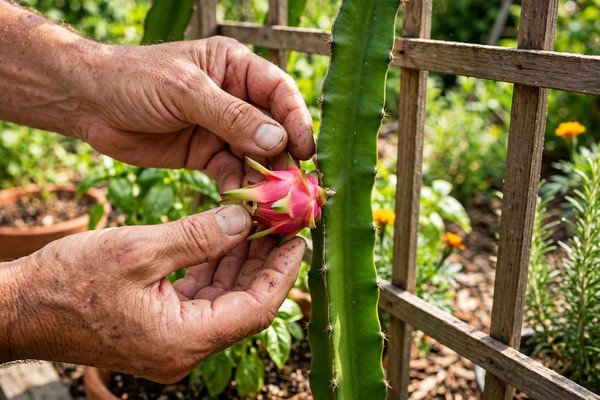
A healthy stem can carry several flowers, but it cannot feed them all to full size. When a stem holds four or five young fruits, the plant spreads its food and water thinly, and every fruit ends up small. Thinning sounds wasteful, but it is one of the fastest ways to get bigger fruit. Leaving two or three of the strongest fruits on a stem and removing the rest lets the plant put its full energy into the ones that remain.
A week after flowering, keep the young fruits that are round, even, and growing fast. Remove the smallest, the lopsided ones, and any that sit in shade under the stem. Use clean secateurs and cut the fruit off close to the stem without tearing the skin. The remaining fruit usually grows noticeably larger within two to three weeks.
This is another common reason why dragon fruit stays small on plants that otherwise look healthy. The plant is not weak, it is simply overloaded. A grower who thins early often gets fewer fruits, but each one is bigger, sweeter, and easier to sell or eat.

Weak Roots and Poor Soil: Why Dragon Fruit Stays Small
Fruit size starts underground, and weak roots are a quiet reason why dragon fruit stays small even when the top of the plant looks green and healthy. A plant with weak, shallow, or crowded roots cannot take up enough water and food to fill its fruit, no matter how much you feed the top of the plant.
Roots suffer in heavy clay soil that stays wet, in pots that are too small, and in soil that has gone hard and dry. If your plant grows slowly, makes thin pale stems, and produces small fruit, the roots are a likely suspect.
Check the soil first: it must drain freely but hold some moisture. If water sits on the surface after watering, or the pot has no drainage holes, the roots may be rotting quietly. Our guide to best soil for dragon fruit explains a mix that drains well and keeps roots healthy. For a plant in the ground, forking compost into the top soil and mulching around the base helps the roots spread and breathe.
A plant left in the same pot for two or three years may be root bound, with roots circling inside and little soil left to feed them. The fix is a bigger pot with fresh mix, and the plant usually responds with stronger growth within a month. Fix the roots first, then feed.
Light, Water and Feeding Mistakes That Explain Why Dragon Fruit Stays Small
Dragon fruit is a sun-loving cactus, and a plant that sits in shade for most of the day will make small fruit, which is one more reason why dragon fruit stays small. It needs at least six hours of direct sun to fruit well, and more is usually better in a warm climate. A plant against a north-facing wall, under a tree, or crowded behind other plants will flower weakly and set small fruit. Moving a potted plant to a sunnier spot is a simple fix. For a plant in the ground, cutting back the branches that shade it can make a real difference in one season.
Watering matters too. Long dry spells while fruit is growing make the plant stop filling the fruit, while wet soil rots the roots. Aim for steady moisture: water deeply when the top few centimetres of soil feel dry, then let it drain. Our guide on how often to water dragon fruit gives a simple routine for pots and ground plants through the seasons.
Feeding is the third piece. A plant that gets only nitrogen grows long green stems and little fruit, while a plant that gets no food at all runs out of energy halfway through fruiting. Once the plant starts flowering, it needs a feed with more potassium and phosphorus to fill the fruit. A balanced organic feed and compost through the growing season usually covers it, given little and often rather than one heavy dose.
Overwatering can also explain why dragon fruit stays small when the stems look swollen and soft. Soft, waterlogged stems are a sign the roots are struggling, and the plant will drop or stunt its fruit to protect itself. If the stems feel soft at the base, let the soil dry out, improve drainage, and hold back on water until the stems firm up again.
Variety and Plant Age
Not every variety makes big fruit: some naturally produce fruit around 300 to 400 grams, while others regularly reach 600 grams or more.
If your plant is healthy and still makes modest fruit every year, you may simply be growing a small-fruited variety. Some growers ask why dragon fruit stays small when they planted a variety that naturally makes smaller fruit, and the honest answer is that no amount of feeding will turn it into a giant-fruited type. If large fruit matters to you, grafting a larger variety onto your plant, or planting a second variety known for big fruit, is the real fix.
Plant age matters too. A cutting takes time to build a strong root system and a thick main stem. In its first year of fruiting, a young plant often makes small fruit while it is still growing its frame. That is normal, and the fruit usually gets bigger in the second and third fruiting years as the plant matures. A plant grown from seed takes even longer, often several years before it fruits well at all. Patience is part of the answer here, as long as the plant is growing strongly.
A Simple Fix Plan for Bigger Fruit
Start with the easiest fixes and work down the list. First, hand-pollinate the next round of flowers and see whether the fruit sets larger. If hand pollination makes a clear difference, pollination was your main problem, and a second variety is the long-term answer. Second, thin the fruit on each stem to the two or three strongest, removing any lopsided or shaded ones.
Third, check the sun and the soil. Make sure the plant gets at least six hours of direct sun, the soil drains freely, and the pot is big enough for the roots. Fourth, feed the plant through flowering and fruiting with compost and a balanced organic feed, and water steadily so the soil never dries out completely while fruit is growing. If you work through this plan, the question of why dragon fruit stays small usually answers itself within one season, because the fix that works tells you what was wrong.
Keep notes as you go: when the flowers opened, whether you hand-pollinated, how many fruits you left on each stem, and how big the fruit got. Most growers find that two or three small changes together, rather than one big one, bring the fruit up to full size.
Pruning also belongs in the plan: old, thin, and crowded stems waste the plant’s energy, so removing the weakest stems after fruiting lets the plant put its strength into the stems that fruit best. Our guide on when to prune dragon fruit explains the timing and which stems to keep. A well-pruned plant with fewer, stronger stems usually makes larger fruit than a tangled plant with dozens of thin stems.

When Small Fruit Is a Warning Sign
Most small fruit is a simple fix, but sometimes it warns of a deeper problem. If the stems turn yellow, feel soft at the base, or develop dark sunken patches, the plant may have root rot or sunburn damage, and the fruit will stay small until the plant recovers. Cut away damaged stems, improve drainage, and give the plant shade during the hottest part of the day until it recovers.
Pests can also stunt fruit, so check the stems and fruit each week for stem-boring insects, scale, and heavy ant activity, and remove the cause early.
A plant that keeps making tiny fruit is telling you to find out why dragon fruit stays small rather than just waiting another year. The causes in this guide cover most cases, and working through them one by one usually finds the answer. If the plant looks weak all over, with thin stems and no new growth, the roots and soil are the place to start. If the plant looks strong but the fruit stays small, pollination and thinning are the place to start.
Frequently Asked Questions
Why dragon fruit stays small even when I water and feed it regularly?
Water and food only help if the plant can use them. Poor pollination, too many fruits on one stem, or weak roots can all keep fruit small even with regular watering and feeding. Hand-pollinate the next flowers, thin the fruit to two or three per stem, and check that the pot or soil drains well. If the fruit grows bigger after those changes, you have found your cause.
How big should a dragon fruit get?
Most common home-garden varieties reach 300 to 600 grams when the plant is healthy, well pollinated, and thinned. Compare fruit from the same plant rather than fruit from other growers, because varieties differ a lot.
Can I still eat small dragon fruit?
Yes, small fruit is safe to eat as long as it is ripe, with bright skin colour and scales just starting to dry at the tips, though it may be less sweet and a little firmer than a full-sized fruit. Remember that dragon fruit is non-climacteric, so a small fruit picked early will only soften slightly after picking and will not grow sweeter. Let it ripen on the plant as long as you can.
Should I remove small fruits or leave them on the plant?
Remove the smallest and weakest fruits early, leaving two or three of the strongest on each stem. The plant then puts its energy into the remaining fruit, and those grow larger. Leaving every fruit on the stem usually gives you many small fruits instead of a few good ones.
How long does it take for fruit to reach full size?
From flowering to harvest usually takes around four to six weeks, depending on the variety and the weather. Fruit grows fastest in the first two to three weeks, then slows as it colours up. If a fruit stops growing in the first two weeks and stays tiny, pollination or thinning is the likely cause, and it is worth fixing before the next round of flowers.
Conclusion
Small dragon fruit is a common problem with a simple cause in most gardens: poor pollination, too many fruits on a stem, weak roots, poor soil, too little sun, or a young plant, often two acting together.
Once you know why dragon fruit stays small on your plant, the fixes are simple: hand-pollinate, thin the fruit, fix the soil and roots, give the plant sun and steady water, and feed it through fruiting. Work through the plan one step at a time and give the plant a full season to show you the result. The next round of fruit will usually tell you whether you found the right cause, and a plant that is fed, watered, and pollinated well rewards you with fruit worth waiting for.