Aphids cluster on the soft tips of dragon fruit stems, mealybugs hide in the joints like tiny clumps of cotton, and a few spider mites can turn a healthy green stem pale and speckled in a matter of weeks.
Most growers reach for a spray at this point, but there is a quieter option that works for free once it is set up: invite the insects that eat the pests. Learning how to attract ladybugs and lacewings to dragon fruit plants is one of the simplest ways to keep pest numbers down without chemicals, and it suits a home garden far better than a regular spray routine.
This guide explains how to attract ladybugs and lacewings to dragon fruit plants step by step, from the flowers that bring them in to the shelter, water and habits that make them stay. You do not need to buy insects or build anything complicated: a few of the right flowers, a small water source, and a decision to stop spraying broad-spectrum insecticides are usually enough to turn a dragon fruit bed into a place where ladybugs and lacewings arrive on their own and stay.
In This Guide
- Why ladybugs and lacewings are worth inviting
- Which pests they actually eat
- How to attract ladybugs and lacewings to dragon fruit plants with flowers
- How to attract ladybugs and lacewings to dragon fruit plants with shelter and water
- Sprays and habits that drive them away
- Releasing bought ladybugs the right way
- How long before you see fewer pests
- Common mistakes to avoid
- Frequently asked questions
Why Ladybugs and Lacewings Are Worth Inviting
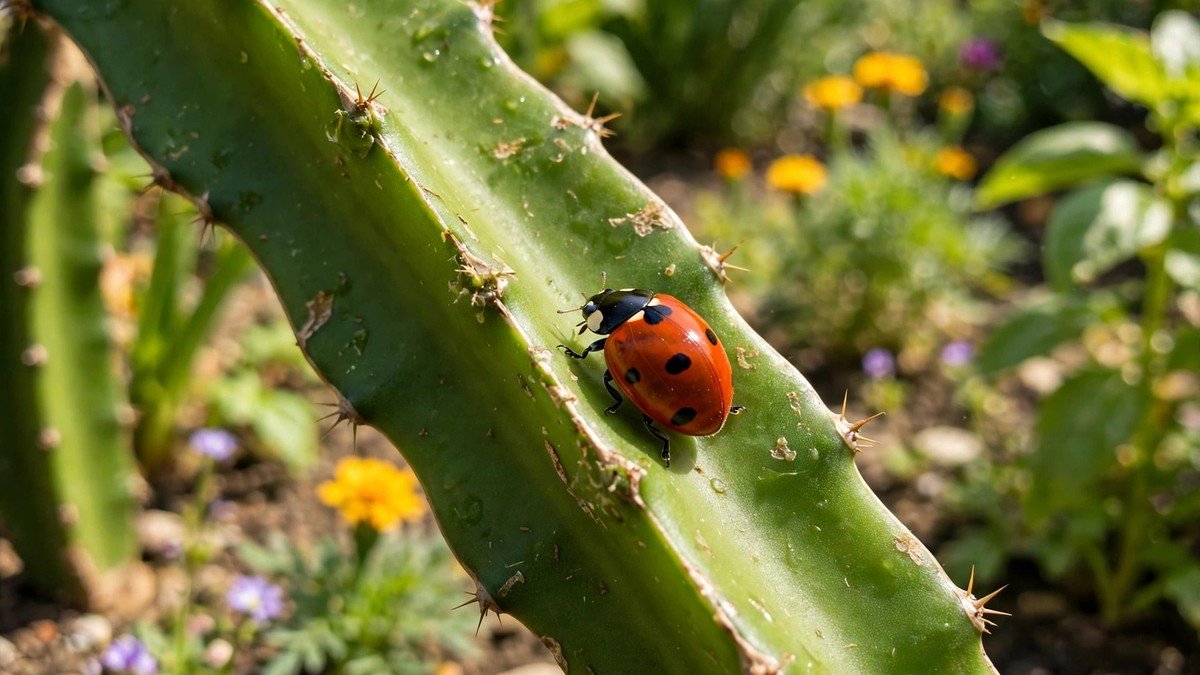
A ladybug is a small beetle with a large appetite: a single adult can eat dozens of aphids in a day, and its larvae, which look like tiny black and orange alligators, eat even more.
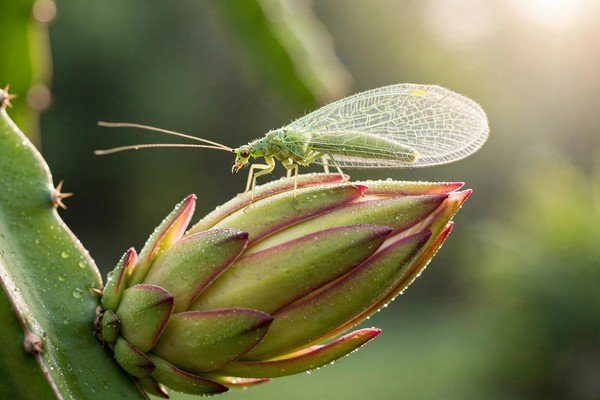
Lacewings are quieter helpers: the adults are delicate green insects with lacy wings, and their larvae are sometimes called aphid lions because they hunt aphids, mealybug crawlers, thrips and mite eggs. Together, the two insects cover most of the small soft-bodied pests that trouble dragon fruit.
The first step in learning how to attract ladybugs and lacewings to dragon fruit plants is understanding why they would come at all. Beneficial insects do not visit out of kindness: they come for food, and they stay where food, water and shelter are close together.
A plant with a few aphids is already a food source, but without flowers nearby for nectar and pollen, and without somewhere safe to hide during the day, the visitors eat and leave. The gardener’s job is to add the missing pieces so the helpers stay.
There is a second benefit that matters just as much: fewer sprays means the fruit stays clean and the soil life stays healthy. The UF IFAS growing guide notes that dragon fruit grows best with good cultural care and attention to pests before they build up, and you can read the full guide through UF IFAS.
For the basics of raising the plant itself, see our guide on how to grow dragon fruit, which covers planting and care from a cutting to a mature plant.

Which Pests They Actually Eat
Ladybugs and lacewings are not a cure for every pest, so it helps to know what they do and do not eat. Aphids are their favourite food by far: they gather on new growth and flower buds, sucking sap and leaving sticky honeydew behind, and a colony can double in a few days. Ladybug adults and larvae both feed on aphids, and lacewing larvae will clear a small colony in a day or two.
Mealybugs are the second pest they help with. The adult mealybug hides under a waxy white coat that most sprays struggle to reach, but the young crawlers that spread to new stems are soft and unprotected, and lacewing larvae eat them readily.
Ladybugs eat mealybug crawlers too, though they are less keen on the waxy adults. The result is not instant removal of every mealybug, but learning how to attract ladybugs and lacewings to dragon fruit plants gives you steady pressure that stops the colony from spreading across the whole plant.
Thrips, whitefly and spider mite eggs are also on the menu, especially for lacewing larvae. What neither insect will fix is a fungal or bacterial problem, scale insects with hard shells, or stem rot. For those, see our guide to dragon fruit plant diseases.
How to Attract Ladybugs and Lacewings to Dragon Fruit Plants With Flowers
Flowers are the main reason beneficial insects visit a garden, because adult ladybugs and lacewings need nectar and pollen as well as prey. Small, open, flat flowers work best, since the insects can reach the nectar without struggling into a deep tube. Dill, fennel, coriander, yarrow, sweet alyssum and marigold are all good choices, and they grow easily from seed in the same bed or in pots beside it.
When you learn how to attract ladybugs and lacewings to dragon fruit plants, plant the flowers in a strip or a ring around the bed, not in a single clump far away, so the insects only have to fly a short distance to reach the stems. A scattered planting gives them cover all around the plant.
The second reason flowers matter is that they feed the insects when pest numbers are low. A garden with no aphids at all is a garden with no food for a ladybug larva, so the adults need nectar to survive until the next pest outbreak. Flowers are the bridge between outbreaks, and they are what turns a one-time visit into a permanent population.
Growers who plan for this often find that knowing how to attract ladybugs and lacewings to dragon fruit plants starts with planting flowers first and worrying about pests second, because the flowers bring the helpers before the pests arrive.

How to Attract Ladybugs and Lacewings to Dragon Fruit Plants With Shelter and Water
Beneficial insects need somewhere to hide during the heat of the day and somewhere safe to spend the night. A bare, tidy bed with no mulch and no ground cover is a desert for a ladybug: nowhere to shelter from the sun and no damp spot to rest. A layer of straw mulch, a few flat stones, and some low ground-cover plants change that completely, holding moisture in the soil and giving the insects cool hiding places.
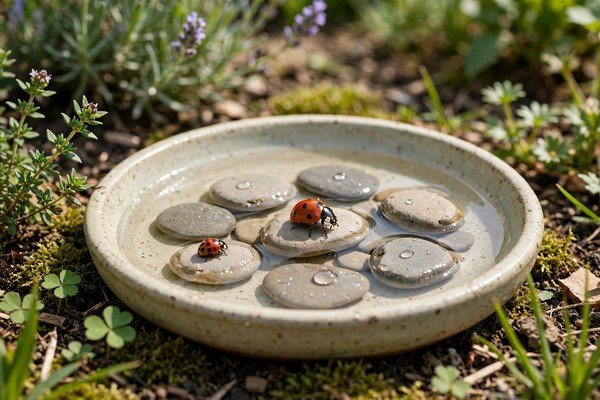
Water matters too when you are learning how to attract ladybugs and lacewings to dragon fruit plants: a shallow dish filled with pebbles and water, topped up every day or two, gives ladybugs and lacewings a safe place to drink without drowning. Place the dish in the shade near the stems, and keep it clean, since a dirty dish breeds mosquitoes instead.
Water and shelter alongside flowers are the heart of how to attract ladybugs and lacewings to dragon fruit plants for the whole season rather than a single week.
Watering habits play a part as well: water gently at the base, since overhead watering washes ladybug larvae off the stems. For the routine that keeps the plant healthy without disturbing its helpers, see our guide on how often to water dragon fruit.
Sprays and Habits That Drive Them Away
The fastest way to lose ladybugs and lacewings is to spray a broad-spectrum insecticide. These sprays kill the pests, but they also kill the ladybugs, the lacewings, the bees and every other insect they touch, and the pests usually return faster than the helpers do. An aphid colony can rebuild in days, while a ladybug population takes weeks to return, so a single spray can set the garden back by a month.
If you must spray while you learn how to attract ladybugs and lacewings to dragon fruit plants, use a targeted option such as a strong jet of water to knock aphids off, or insecticidal soap applied only to the infested stems, and never spray the flowers where the helpers feed.
Other habits matter too. A garden sprayed for weeds loses the wild flowers that feed beneficial insects, and a garden tidied to bare soil loses their shelter. Leave a small wild corner, or at least a strip of flowering weeds such as clover, near the bed: it looks untidy, but it is the nursery that keeps the helper population alive.
Once you stop spraying, the first ladybugs usually appear within a few weeks, drawn by the flowers and the aphids.
Releasing Bought Ladybugs the Right Way
Some growers buy ladybugs and release them, and it can work, but only if the release is done properly. The common mistake is to open the bag in the middle of a hot day and watch the ladybugs fly away within minutes.
Ladybugs fly when they are warm and dry, so release them in the evening, when the air is cool and they are more likely to settle. Water the plants lightly first, so the stems are damp and there is water to drink, and scatter the ladybugs at the base of the infested stems rather than on top of the plant.
Keep the release small and repeat it rather than releasing hundreds at once: a few dozen ladybugs on three evenings settle better than one large bag. Even so, bought ladybugs often fly away, since they were collected from the wild. The real value is that a few lay eggs, and the larvae that hatch stay and feed.
For most home growers, planting flowers and stopping sprays works better than buying insects when learning how to attract ladybugs and lacewings to dragon fruit plants, but a careful release can speed things up in the first season. If you do buy them, check that they are a local species, and never release them near a neighbour’s beehive.
How Long Before You See Fewer Pests
Patience is part of the method, because beneficial insects work slowly at first and faster later. In the first two or three weeks after planting flowers, you will see adult ladybugs and lacewings visiting, but pest numbers may not fall much.
The change comes when the first larvae hatch: a single lacewing larva can eat hundreds of aphids before it pupates, and a batch of ladybug larvae can clear a stem in days. By the second month, a garden with flowers, water and shelter usually holds a steady population, and pest outbreaks become short and small instead of long and damaging.
Watch for the signs that it is working: ladybug larvae on the stems, lacewing eggs on thin stalks under the leaves, and aphid colonies that shrink instead of growing. Count the pests once a week on the same stems, so you can see the trend instead of guessing.
If numbers are still rising after six weeks of learning how to attract ladybugs and lacewings to dragon fruit plants, the problem is usually a missing piece: no flowers in bloom, a recent spray, or no water nearby. Fix the missing piece and give it another few weeks.
Common Mistakes to Avoid
The most common mistake when learning how to attract ladybugs and lacewings to dragon fruit plants is expecting the insects to do the work while the garden still works against them. Planting flowers and then spraying the same week undoes everything in a single afternoon.
The second mistake is planting only one kind of flower, which blooms for two weeks and then leaves the insects with nothing, so mix early, mid and late flowering plants so something is always open.
A third mistake is buying ladybugs and releasing them onto a plant with no pests, no flowers and no water, then wondering why they left: there was nothing to eat and nowhere to drink. The fourth mistake is over-tidiness: removing every weed, raking away all the mulch, and leaving the soil bare, when beneficial insects need the messy edges of a garden far more than a perfect lawn. Keep a little wildness, keep the water dish full, keep the sprays in the shed, and the helpers will do the rest.
Frequently Asked Questions
How to attract ladybugs and lacewings to dragon fruit plants without buying insects?
Plant small open flowers such as dill, fennel, sweet alyssum, yarrow and marigold around the dragon fruit bed, add a shallow dish of water with pebbles, keep a layer of straw mulch for shelter, and stop spraying broad-spectrum insecticides.
The flowers bring the adults in, the water and shelter make them stay, and the pests on the stems give them food, and that combination is the whole answer to how to attract ladybugs and lacewings to dragon fruit plants. Most gardens see the first ladybugs within a few weeks of the flowers opening.
Which flowers work best for ladybugs and lacewings?
Small, flat, open flowers are best, because the insects can reach the nectar easily. Dill, fennel, coriander, yarrow, sweet alyssum, marigold and cosmos are all good choices. Sow them in a strip around the bed and sow a few seeds every two or three weeks, so fresh flowers are always open.
Will ladybugs eat mealybugs on dragon fruit?
They eat the young mealybug crawlers, which are soft and unprotected, and that stops the colony from spreading to new stems. They are less keen on the waxy adults, so ladybugs alone will not clear a heavy mealybug infestation overnight. Lacewing larvae help too, and wiping the adults off with a damp cloth while the helpers eat the crawlers is a good combination.
Should I buy ladybugs or wait for wild ones?
Waiting is usually better, because wild ladybugs that arrive on their own are already adapted to your garden and more likely to stay. Buying can help in the first season if pest numbers are high, but release them in the evening on damp stems, in small numbers over several days, and only after the flowers are open and the sprays have stopped.
Do ladybugs and lacewings harm dragon fruit flowers or fruit?
No. Adult ladybugs and lacewings feed on nectar, pollen and small pests, and their larvae eat aphids, mealybug crawlers and mite eggs. Neither insect damages stems, flowers or fruit, and both are safe around children and pets. They are among the few garden visitors that only ever help.
Conclusion
Keeping pests down without chemicals is less about fighting the pests and more about inviting their enemies, and dragon fruit is a good plant for the method because its pests are exactly the ones ladybugs and lacewings like to eat. Plant the right flowers, offer water and shelter, stop spraying, and give the system a few weeks to build.
Once you know how to attract ladybugs and lacewings to dragon fruit plants, the garden starts to look after itself: the helpers arrive, the larvae hatch, the pest outbreaks shrink, and the fruit grows clean. It is a slow method, but it is a lasting one, and it costs little more than a packet of seeds and a shallow dish of water.