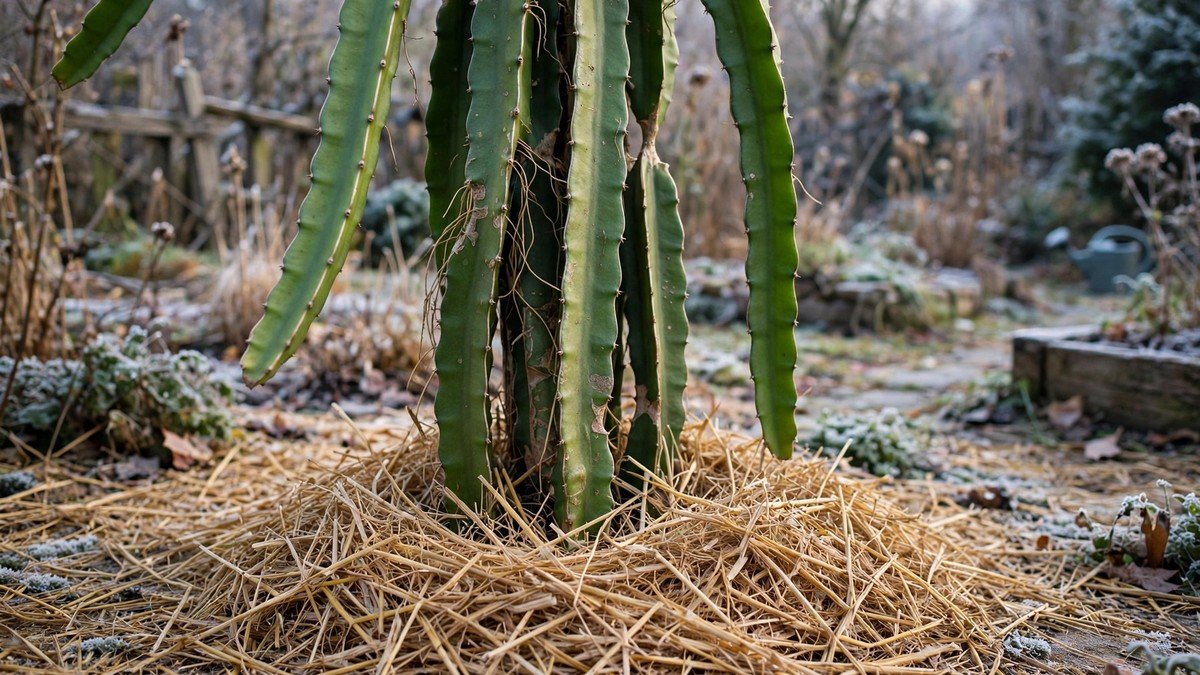
A dragon fruit plant can survive a cold night above ground and still die below it, because the roots are the part that cannot regrow from nothing. The stems may look tough, but they sit on a shallow root system that feels every frost, and once the roots freeze, the whole plant is lost even if the top looks fine for a few days. Mulch is the simplest defence for those roots: a thick, dry layer spread over the soil that holds the day’s warmth in and keeps the cold out. Learning how to mulch dragon fruit plants for winter protection is a small job in autumn that decides whether the plant wakes up healthy in spring.
This guide explains how to mulch dragon fruit plants for winter protection step by step, from why mulch works to which materials suit dragon fruit, how deep and how wide to spread it, when to put it down and when to take it off, and how to look after potted plants and young cuttings through the cold months. The materials are cheap and easy to find, and the whole job takes less than an hour.
In This Guide
- Why mulch protects in winter
- Straw, wood chips and leaves
- How deep and how wide: how to mulch dragon fruit plants for winter protection
- When to mulch and when to remove it
- Mulch and watering in winter: how to mulch dragon fruit plants for winter protection
- Potted plants and young cuttings
- Common mistakes to avoid
- Frequently asked questions
Why Mulch Protects in Winter
Mulch works by slowing the movement of heat, not by making heat. During the day, the soil under a dragon fruit plant soaks up warmth from the sun. At night, that warmth escapes back into the cold air, and the soil temperature falls. A layer of mulch sits between the soil and the cold air and slows that escape, so the soil stays several degrees warmer through the night than bare soil would. Two or three degrees is often the difference between roots that survive and roots that freeze, especially on a night when the air temperature drops just below freezing.
The second job of mulch is to keep the soil temperature steady. Bare soil swings between warm days and freezing nights, and those swings stress the roots and crack the soil surface. Mulched soil changes temperature slowly, which suits a tropical plant that never expected winter at all.
The mulch also keeps the soil moist, since it cuts down evaporation, and moist soil holds far more heat than dry soil. That is why gardeners who know how to mulch dragon fruit plants for winter protection always water the soil well before they spread the mulch, so the layer traps damp, warm soil underneath it.
The UF IFAS growing guide notes that dragon fruit is damaged by cold and needs protection in cool areas, and you can read the full guide through UF IFAS. Mulch protects the roots and the lower stems, which is the part of the plant that matters most: if the roots and the base survive, the plant can regrow from the base in spring even if the top growth is lost.

Straw, Wood Chips and Leaves
Straw is the best all-round mulch for dragon fruit in winter. It is light, it traps air between the stalks, and that trapped air is the insulation that keeps the soil warm. Barley or wheat straw works well, and it breaks down slowly over the season, adding organic matter to the soil as it rots. Spread it loosely rather than packing it down, since packed straw holds water and goes mouldy, while loose straw lets air move and stays dry on top. Straw is also easy to pull back in spring, which matters when the soil needs to warm up again.
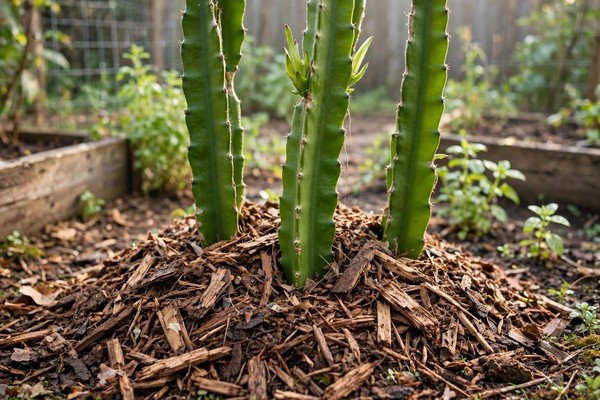
Wood chips are the second good choice, and they suit a permanent bed better than straw. A layer of coarse wood chips or bark lasts all winter and into the next year, and it suppresses weeds at the same time. Use chips that are well aged rather than fresh, since fresh chips can take nitrogen from the soil as they break down. Keep the chips a few centimetres away from the stems themselves, since damp wood against the stem can invite rot.
Dry autumn leaves are the third option, and they work well if they are shredded first: whole leaves mat together when wet and form a soggy layer that air cannot pass through, while shredded leaves stay loose and drain well. Any of the three materials will do the job for how to mulch dragon fruit plants for winter protection, and the best one is usually the one you can get for free nearby. When choosing, remember that how to mulch dragon fruit plants for winter protection depends more on the depth and the coverage than on the exact material, so use what you have and spread it well.
How Deep and How Wide: How to Mulch Dragon Fruit Plants for Winter Protection
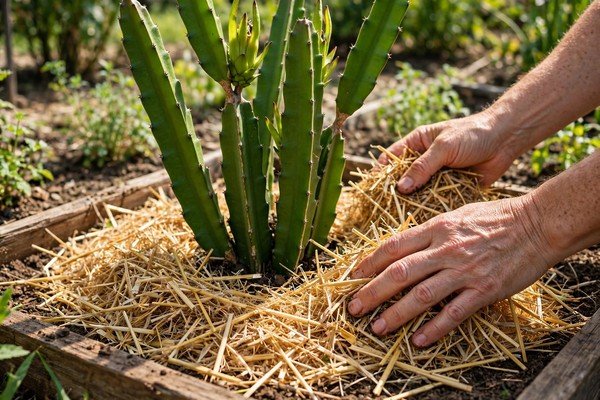
Depth matters more than the material. Spread the mulch 8 to 10 centimetres deep around the base of the plant, which is thick enough to insulate the soil but thin enough that air can still move through it. A layer thinner than 5 centimetres does almost nothing on a frost night, while a layer thicker than 15 centimetres can stay wet underneath and invite rot. Measure the depth with your hand as you spread it, and add more where it settles thin, since mulch always sinks a little after the first rain.
Spread the mulch wide as well as deep: cover the soil out to at least 60 centimetres from the base in every direction, or out to the edge of the canopy, whichever is wider. The roots of a mature plant spread far beyond the stem, and a small ring of mulch around the trunk protects only the centre. If the bed is wide, mulch the whole bed rather than a ring, so the entire root zone is covered.
Leave a small gap of 5 to 10 centimetres between the mulch and the stems themselves: mulch piled against the stem holds moisture there, and a damp stem in winter is a stem that rots. The gap is a small detail, but it is the difference between mulch that protects and mulch that harms.
When to Mulch and When to Remove It
Timing is the part most growers get wrong: put the mulch down in late autumn, after the soil has cooled a little but before the first frost, so it traps the warmth the soil still holds. Mulching too early, while the soil is still warm and the plant is still growing, can keep the soil too warm and delay the plant’s natural slowing down for winter. Mulching too late, after the soil has already frozen, traps the cold in instead of the warmth, and does almost nothing. Watch the forecast: when night temperatures start to fall toward 5 degrees regularly, it is time to mulch.
In spring, remove the mulch gradually rather than all at once. Pull it back from the base first, to let the soil warm up and the stems dry out, and take the rest away once the nights stay above 10 degrees and new growth appears. Leaving thick winter mulch on through a warm spring keeps the soil cold and wet, which slows the plant down just when it should be waking up.
If the mulch has broken down over winter, dig the remains lightly into the top soil, and spread a thinner summer layer of 5 centimetres to hold moisture through the hot months. For the right time to cut back damaged or overgrown stems in spring, see our guide on when to prune dragon fruit, which explains how to prune cleanly and when to wait.
Mulch and Watering in Winter: How to Mulch Dragon Fruit Plants for Winter Protection
Mulch changes how you water, and getting it wrong undoes the protection. Water the soil well in the late afternoon before you spread the mulch, so the layer goes down over damp, warm soil. After that, water far less often than in summer, since the mulch holds moisture in and the plant is barely growing. Check the soil by pushing a finger through the mulch every week or two: if the soil underneath feels damp, leave it alone, and if it feels dry, water gently at the base in the morning so the soil surface dries during the day.
Never water the stems or the mulch late in the day, since wet mulch on a frost night freezes into a cold, heavy blanket that chills the soil instead of insulating it. Water at the base, in the morning, and only when the soil needs it.
For the normal watering routine through the year, see our guide on how often to water dragon fruit, which explains how to keep the roots moist without waterlogging the plant. A plant that is mulched well and watered lightly in winter needs almost no attention until spring, which is exactly the point of how to mulch dragon fruit plants for winter protection: the mulch does the work while you wait for the warm weather.
Potted Plants and Young Cuttings
Potted plants need mulch too, but the method is different. A pot loses heat from its sides as well as its top, so mulch on the surface alone is not enough. Spread a 5-centimetre layer on the surface, then wrap the outside of the pot in bubble wrap, hessian or an old blanket for the coldest weeks, and move the pot against a south-facing wall, which stores heat during the day and releases it at night. On a frost night, carry a small pot into a garage or a bright room, which is warmer than any mulch, and bring it back out in the morning.
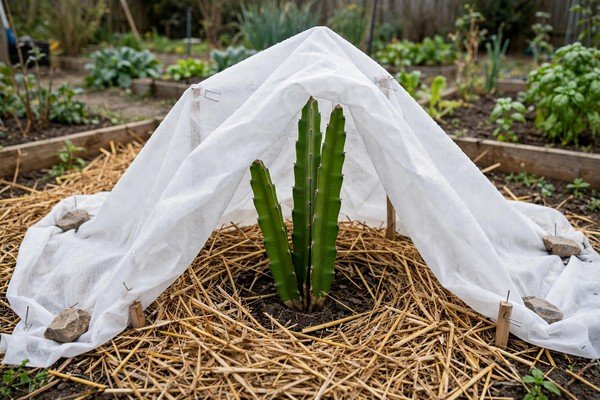
Young cuttings are the most fragile plants in the garden when you learn how to mulch dragon fruit plants for winter protection, and they deserve the most care. A cutting in its first winter should always be mulched, even on a mild frost night, and covered with a frost cloth as well if a hard freeze is forecast. Cuttings have thin stems, shallow roots, and no woody base to regrow from, so one bad night can kill them outright.
Cluster potted cuttings together against a wall for winter, mulch the surface of each pot, and cover the whole group with one large cloth on cold nights. That combination, mulch below and cloth above, is the safest winter shelter a young plant can have, and it costs almost nothing to set up.
Common Mistakes to Avoid
The most common mistake in how to mulch dragon fruit plants for winter protection is piling the mulch against the stems. A thick ring of damp mulch touching the stem holds moisture there all winter, and the stem rots from the base up, which is worse than no mulch at all. Always leave a gap of 5 to 10 centimetres around each stem. The second mistake is using fresh grass clippings or unshredded leaves, which mat into a soggy layer that air cannot pass through and that smells sour within days. Use straw, aged wood chips or shredded leaves, and spread them loosely.
A third mistake is mulching too late, after the soil has frozen, which traps the cold in. A fourth is leaving the winter mulch on all through spring, which keeps the soil cold and wet when the plant needs warmth to grow. A fifth is forgetting that mulch can hide pests and disease: slugs and snails love damp mulch, and a stem rotting under it will not be seen until it is too late. Check under the mulch once a month in winter, and look for soft stems or a sour smell.
For the signs of trouble that mulch can hide, see our guide to dragon fruit plant diseases, which explains what to look for and what to do about it.
Frequently Asked Questions
How to mulch dragon fruit plants for winter protection?
Spread straw, aged wood chips or shredded leaves 8 to 10 centimetres deep over the soil, out to at least 60 centimetres from the base, leaving a 5 to 10 centimetre gap around each stem. Water the soil first, mulch in late autumn before the first frost, and pull the mulch back in spring once nights stay above 10 degrees. That is how to mulch dragon fruit plants for winter protection in one sentence: deep, wide, dry on top, and clear of the stems.
How deep should winter mulch be for dragon fruit?
Eight to 10 centimetres is right for most gardens. Thinner than 5 centimetres does almost nothing on a frost night, and thicker than 15 centimetres can stay wet underneath and invite rot. Measure with your hand as you spread it, and top up anywhere it settles thin after the first rain.
Can I use grass clippings as winter mulch?
Fresh grass clippings are a poor choice for how to mulch dragon fruit plants for winter protection: they mat together when wet, form a soggy airless layer, and smell sour within days. Dry straw, aged wood chips or shredded autumn leaves are all better. If you only have grass clippings, let them dry in the sun first and mix them with straw so they stay loose.
Should I mulch potted dragon fruit plants too?
Yes, but differently. Spread 5 centimetres of mulch on the surface of the pot, wrap the outside of the pot for the coldest weeks, and move the pot against a south-facing wall. A pot loses heat from its sides as well as its top, so surface mulch alone is not enough, and carrying a small pot indoors on a frost night is the safest option of all.
When should I remove winter mulch?
Pull it back gradually in spring, starting at the base so the soil can warm up, and take the rest away once nights stay above 10 degrees. Leaving thick winter mulch on through a warm spring keeps the soil cold and wet and slows the plant down just when it should be waking up.
Conclusion
Winter is the season that tests a dragon fruit plant, and mulch is the cheapest insurance against it. A deep, wide layer of straw, wood chips or shredded leaves holds the day’s warmth in the soil, keeps the temperature steady through the night, and gives the roots the few degrees they need to survive a frost. Put it down in late autumn, keep it clear of the stems, water lightly, and pull it back in spring. Once you know how to mulch dragon fruit plants for winter protection, the cold months stop being a worry and become a routine: mulch in autumn, check it through winter, and watch the plant wake up healthy when the warm weather returns.