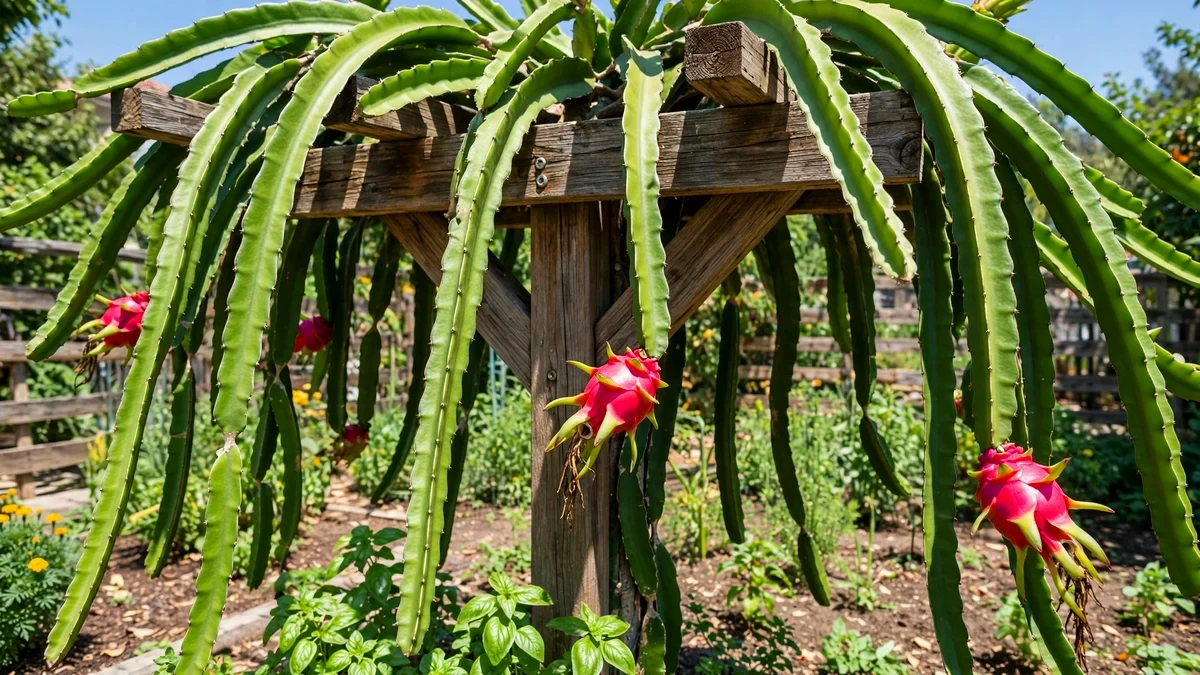
A dragon fruit plant starts as a modest cutting, but within a few seasons it can become a broad, heavy mass of fleshy stems. When you support dragon fruit stems properly, the plant climbs in an organised way, light reaches more of the canopy, and stems are far less likely to snap or slide off the trellis. When support is weak, the same plant can pull a post out of line and become hard to prune or harvest. This guide explains how that weight builds up, what a strong support system looks like, and how to support dragon fruit stems by tying, training, and maintaining them.
Table of Contents
- Why Mature Dragon Fruit Stems Become So Heavy
- How a Dragon Fruit Plant Grows and Where the Weight Sits
- Choosing a Trellis That Can Carry a Mature Plant
- How to Support Dragon Fruit Stems on a Post Trellis
- Tying Materials and Techniques That Protect Stems
- Training Heavy Branches and Managing the Canopy
- Seasonal Checks, Storm Preparation and Trellis Repairs
- When to Prune Back Weight Instead of Adding More Support
- Frequently Asked Questions
Why Mature Dragon Fruit Stems Become So Heavy
Dragon fruit stems are thick, fleshy, and full of water. One segment may not feel heavy, but a mature plant carries dozens of them, and the total adds up quickly. UF IFAS notes that a strong trellis should withstand several hundred pounds of stem weight, and that a weak trellis may buckle under a mature plant. Dragon fruit is a fast-growing, vine-like cactus, and its stems can grow more than 20 feet long when left unchecked.
Weight also grows in ways that are easy to miss. New stems branch from the tips of older ones, so the canopy spreads outward and downward at the same time. Rain adds temporary weight, fruit adds weight in the fruiting season, and hanging stems that branch again press on the stems below. A stem that was easy to lift in spring may be hard to move by late summer. That is why the best time to support dragon fruit stems is before the plant becomes heavy, not after a branch has slipped.
How a Dragon Fruit Plant Grows and Where the Weight Sits
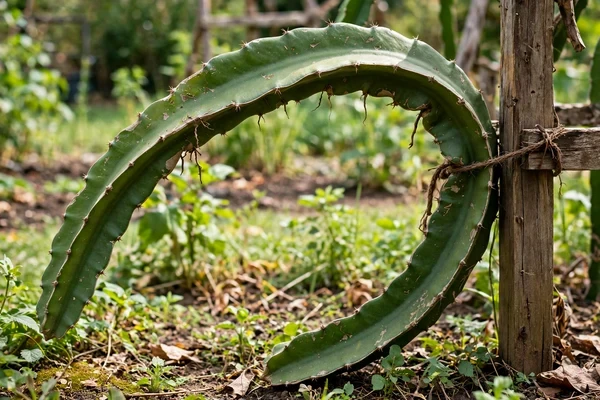
Dragon fruit is a climbing cactus with triangular, jointed stems. Each segment has three flat, wavy wings, and the plant produces aerial roots that grip the surface it climbs. In a garden, the usual pattern is a single main stem trained up a post, followed by branching at the top, where stems arch outward and hang down. That hanging canopy is where most of the weight ends up, while the upright stem carries the plant upward and the roots anchor it below.
This pattern shows where ties help you support dragon fruit stems. Ties near the top stop the main stem from pulling away, ties on the upper frame spread the weight of hanging branches, and ties lower down keep the climbing stem close to the post. Stems allowed to grow sideways from the lower plant add weight low down, shade the base, and can reach the soil, where they may root or rot. Removing those low side shoots early keeps the load where the trellis is strongest and keeps the plant simple enough to inspect.
Choosing a Trellis That Can Carry a Mature Plant
A trellis for dragon fruit is not a light garden stake. It is a small structure that must hold a large, wet, fruiting plant for many years, in sun, rain, and wind. The classic home-garden design is a single sturdy post, about 6 to 7 feet tall, with a frame or wheel at the top from which stems hang. The IFAS guide recommends a four- to six-inch diameter pressure-treated pole with a strong metal grid at the top, and warns against planting next to houses, buildings, or utility poles.
Wood, metal, and concrete posts can all work, but each has a weakness to plan for. Wood can rot at ground level in wet soil, so a post set in concrete or on a raised, well-drained base lasts longer. Metal can rust at joints, and concrete posts are durable but hard to move later.
For the top frame, a ring, cross, or square grid helps support dragon fruit stems by giving them several resting points instead of one sharp edge. Avoid bare wire as a resting surface, because thin wire can cut into fleshy stems as they thicken; cover any wire with plastic hose, as the IFAS guide advises. The guide on dragon fruit trellis ideas compares common layouts and what makes a support strong.
How to Support Dragon Fruit Stems on a Post Trellis
To support dragon fruit stems on a post trellis, start with the main stem. While the plant is young, keep one strong upright stem and remove side shoots below the top of the post, so energy goes into climbing rather than spreading low down. Tie the main stem to the post at intervals as it grows, using loose ties that hold it close without squeezing it. When the tip reaches the top, cut it to encourage branching, then guide the new branches outward over the top frame and let them hang down.
Hanging stems need support where they bend over the frame, because that bend is a stress point: the stem’s weight pulls down on one side, and the frame edge presses against the other. A wide, smooth frame spreads that pressure, and a tie just below the bend can stop the stem from sliding.
Do not tie a hanging stem tightly at several points along its length, because it needs room to thicken and move slightly in wind. One or two well-placed ties per branch are usually enough. Fruiting branches deserve extra care, so check them in the fruiting season and add a temporary soft sling if a branch droops sharply. The guide on how to train dragon fruit on a trellis covers the training sequence for young plants.
Tying Materials and Techniques That Protect Stems
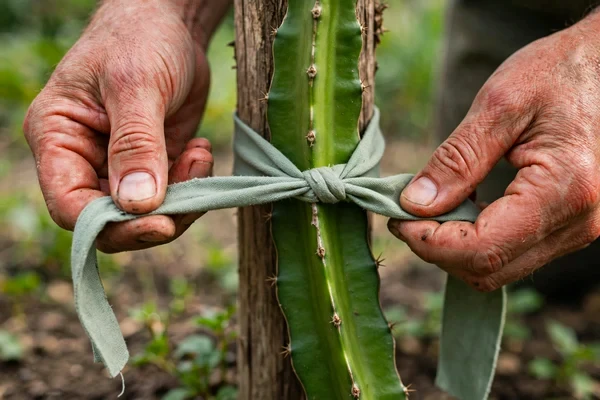
The tie you choose matters as much as where you place it. Dragon fruit stems are soft and fleshy, so a thin, hard tie can cut into the stem as it grows, leaving a wound that weakens the branch and can become an entry point for rot. Wide, soft, flexible materials are safer: fabric strips, soft plant ties, old cotton cloth cut into strips, or purpose-made garden tape. Avoid thin string, fishing line, and bare wire against the stem. If you must use wire for strength, thread it through a length of hose so the stem never touches bare metal.
To support dragon fruit stems safely, tie loosely, and always leave room for growth. A good tie holds the stem close to the post or frame but allows it to thicken and shift slightly. A useful check is to slip a finger between the tie and the stem: if you cannot, the tie is too tight. Check ties every few weeks during the growing season, because a tie that was loose in spring can become tight by late summer. Replace ties that have become brittle in the sun, and cut away any tie that has started to cut into the stem rather than trying to loosen it in place.
Training Heavy Branches and Managing the Canopy
Training is the ongoing work of deciding which stems stay and which direction they grow, and it is how you support dragon fruit stems over time without overloading the trellis. A mature plant produces far more stems than it needs, and if every new shoot is kept, the canopy becomes a dense mass. The IFAS guide warns that without pruning, the plant becomes a dense tangle that reduces light penetration, interferes with harvesting, and increases insect and disease problems. Support alone cannot fix that: a trellis can hold the weight, but it cannot create airflow or light inside a crowded canopy.
A practical routine is to walk around the plant once a month during the growing season and look for stems that cross over others, hang so low they touch the ground, grow inward toward the centre, or press hard against a neighbouring stem. Those are the first candidates for removal or redirection. Keep stems that are healthy, well-spaced, and growing outward or downward in an open pattern, with gaps that let light and air pass through. When two stems rub against each other in the wind, one should usually be removed or tied apart, because repeated rubbing wounds the surface.
Seasonal Checks, Storm Preparation and Trellis Repairs
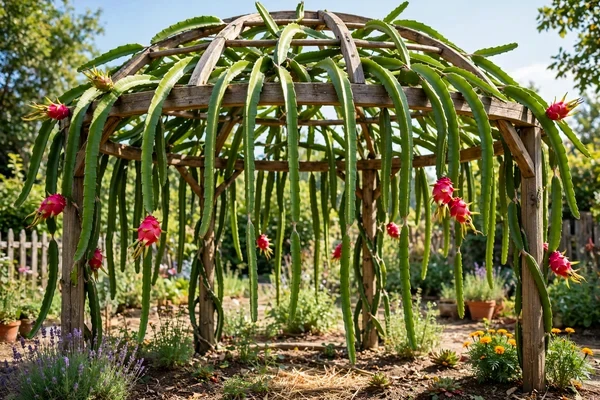
Learning to support dragon fruit stems is not a one-time job. Posts shift, ties wear out, and the plant’s weight changes through the year. A short seasonal check takes only a few minutes and prevents most failures. In early spring, before the main growth flush, check that the post is still upright and firm, that the top frame is secure, and that no tie has become tight over winter. During the growing season, check ties monthly and add support to fruiting branches as needed. After harvest, remove temporary ties and look for damage hidden by the canopy.
Before a storm, the risks are wind and water. A balanced canopy catches less wind than a one-sided mass, so the training work you do through the season is also storm preparation. Check that no branch hangs so low that wind can swing it into the post, and make sure the post has not loosened in wet soil. If the soil around the base is soft after heavy rain, avoid leaning a ladder against the trellis until the ground firms up, because a loose post can tilt under a sudden load. Repair small problems promptly: a leaning post can often be straightened and braced, while a post rotted at ground level usually needs replacing.

When to Prune Back Weight Instead of Adding More Support
There is a point where adding more ties, props, and slings stops helping. If the canopy is so dense that you cannot see the frame, if branches are layered three deep, or if the post is leaning despite bracing, the problem is too much plant, not too little support. Pruning back weight is the safer and more lasting answer. Removing selected stems reduces the load on the trellis, opens the canopy to light and air, and makes the remaining stems easier to tie and inspect.
Prune soon after harvest, when the fruiting load has already been removed and you can see the structure clearly. Remove damaged, diseased, or dead stems first, then stems that reach the soil, then stems that crowd the centre or cross over healthy branches. Keep healthy, strong stems that are well spaced and well supported. Cuts should be clean, made with sharp, clean tools, and removed stems should be taken away from the plant rather than left piled at the base, where they hold moisture and shelter pests.
The IFAS guide notes that pruning cuts may be treated with a fungicide to reduce stem rot. The guide on when to prune dragon fruit explains timing, and the dragon fruit plant care calendar fits pruning, training, and support checks into a seasonal routine.
Frequently Asked Questions
How do I know if my trellis can support dragon fruit stems?
Look for warning signs: a leaning post, a bending or creaking top frame, ties that snap repeatedly, or stems that slide off the frame. A trellis built for a mature plant should hold the full canopy plus fruit without visible movement when you gently push a hanging branch. Strengthen the weak part before the next fruiting season, not after a failure.
Can I support dragon fruit stems with a fence or a tree instead of a post?
A fence or a tree can hold a plant for a while, but both create problems as it grows. A fence may not carry several hundred pounds, and stems that grow through it become hard to prune. A tree shades the plant and competes for water. A freestanding post trellis is the usual recommendation because it gives access from all sides and keeps the load centred.
How often should I check and replace the ties on heavy stems?
Check ties at least once a month during the growing season and after strong wind or heavy rain. Replace a tie as soon as it feels tight, brittle, or frayed, or if it has marked the stem. A tie fitted in spring can become tight by late summer as the stem thickens. Keep a small stock of soft, wide ties so this stays a quick job.
What should I do if a heavy stem snaps off the trellis?
First, support the remaining canopy so no other branch is pulled down. Then inspect the break: trim a clean break with a clean cut and let the plant heal, but remove a stem that has torn or crushed. Take the fallen stem away, check the tie or frame that failed, and fix that weak point before retraining the rest. Do not tape a heavy broken stem back into place and expect it to rejoin.
DragonFruitGrow is an independent gardening information resource. Growing results vary with cultivar, climate, soil and plant age.