
A single cold night can undo a year of growth on a dragon fruit plant. The thick green stems look tough, but they are full of water, and when that water freezes, the cells burst, the stems turn black, and whole branches die back to the trellis. Learning how to protect dragon fruit from frost with frost cloth is the one skill that lets you grow this tropical cactus in a garden where winter nights drop near freezing.
This guide explains how to protect dragon fruit from frost with frost cloth step by step, from choosing the right fabric and knowing when to cover, to draping it properly, securing it against the wind, and taking it off safely each morning. A frost cloth is cheap, simple, and effective when used the right way, and it is the difference between a plant that survives winter and one that has to regrow from the base in spring.
In This Guide
- Why frost hurts dragon fruit
- Choosing the right frost cloth
- When to cover
- How to cover the plant
- Securing the cloth
- Removing the cloth in the morning
- Extra protection for hard freezes
- Potted plants and young cuttings
- After a frost: what to do next
- Frequently asked questions
Why Frost Hurts Dragon Fruit
Dragon fruit comes from the tropics, where nights rarely drop below 10 degrees, so it has no real defence against cold. Damage starts at about 0 degrees, when frost forms on the stems, and a hard freeze below minus 2 degrees can kill whole stems in one night. The fleshy stems hold a lot of water, and when that water freezes it expands, bursting the cells inside.
That is why knowing how to protect dragon fruit from frost with frost cloth matters in any garden where winter nights drop near freezing. The cloth does not heat the plant; it traps the warmth rising from the soil and slows the loss of heat from the stems, keeping the air around the plant a few degrees warmer than the open air. Two or three degrees is often the difference between a light frost that the plant shrugs off and a killing freeze.
Young plants and new growth are the most at risk. Fresh stems are softer, thinner, and full of water, so they freeze first, while older, woody stems at the base can survive a light frost. Fruit is even more sensitive: a frosted fruit turns soft and spoils within days. Cover the youngest plants and any fruit first, and protect the mature plants when the forecast turns colder. The UF IFAS growing guide notes that dragon fruit is damaged by cold and needs protection in cool areas, and you can read the full guide through UF IFAS.
Choosing the Right Frost Cloth
Choosing the right cloth is the first step in how to protect dragon fruit from frost with frost cloth, and the fabric matters more than the brand. Buy a proper horticultural frost cloth, also called row cover or garden fleece, in a weight of 30 to 50 grams per square metre. That weight protects against a light frost while still letting some light and air through, so the plant can breathe under it.
Never use plastic sheeting, old blankets, or tarpaulins. Plastic traps moisture, and when the temperature drops, water condenses on the inside of the plastic and freezes against the stems, which is worse than no cover at all. Heavy blankets are also a problem: they crush the soft stems under their weight and stay wet for days, inviting rot. Frost cloth is light, breathable, and made for this job.
Buy a piece large enough to drape over the whole plant and reach the ground on every side, with extra length to spare. A cloth that only covers the top leaves the lower stems exposed, and cold air pours in from below. Measure your plant from the top of the trellis down to the ground on the widest side, then add at least a metre.

When to Cover
Timing is the second part of how to protect dragon fruit from frost with frost cloth, and the rule is simple: cover before sunset, not at bedtime. The cloth works by trapping the warmth the soil collected during the day, so it must be in place while the soil is still warm. A cloth put on at 10 pm, after the soil has already cooled, traps cold air instead of warm air and does almost nothing.
Check the forecast every evening from late autumn through early spring, because knowing how to protect dragon fruit from frost with frost cloth starts with knowing which nights will be cold. Cover when the forecast says the night will drop to 2 degrees or below, and definitely cover at 0 degrees or below.
Water the soil around the plant in the late afternoon before a frost night, because moist soil holds far more heat than dry soil and releases it slowly through the night. Do not water the stems or the leaves; wet stems freeze faster. For the normal watering routine through the year, see our guide on how often to water dragon fruit, which explains how to keep the roots moist without waterlogging the plant.
How to Cover the Plant
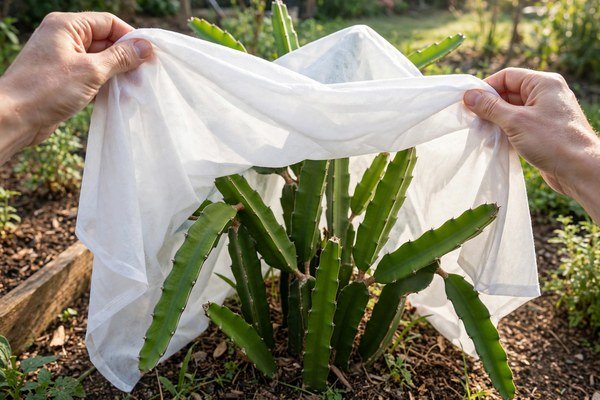
Covering is the hands-on part of how to protect dragon fruit from frost with frost cloth, and the method matters as much as the material. Start at the top of the trellis and drape the cloth down over the plant, letting it fall naturally over the stems. Work slowly and gently: dragon fruit stems are brittle in cold weather and snap easily if you pull the cloth roughly across them.
Let the cloth hang all the way to the ground on every side, and spread it out so it does not rest tightly on the top stems. A little air gap between the cloth and the stems is good, because the cloth itself gets cold, and any stem pressed hard against frozen fabric will freeze where they touch.
Do not tie the cloth tightly around the stems or the trellis. A loose drape is better than a tight wrap, because it leaves air inside to hold warmth and does not crush the plant. The edges are dealt with in the next section, by weighing them down rather than tying them.
Securing the Cloth
The cloth only works if it stays on, which is why securing is a real part of how to protect dragon fruit from frost with frost cloth. Frost nights are often calm, but a wind that picks up after midnight can lift a loose cloth and leave the plant bare at the coldest hour, which is usually just before dawn.
Weigh the edges down with bricks, stones, or bags of sand, placing one every half metre around the base. The weight should hold the cloth to the ground without pulling it tight across the stems. Do not use pegs driven through the fabric into the soil, because the holes tear and the cloth becomes useless after one season.

Removing the Cloth in the Morning
Knowing how to protect dragon fruit from frost with frost cloth includes knowing when to take the cloth off, and the answer is in the morning, once the frost has melted and the sun is on the plant. A cloth left on through a sunny day heats up underneath, the stems sweat, and the damp warmth invites disease. Remove it by mid-morning at the latest, even on a cold day, as long as the frost is gone.
Lift the cloth off gently, starting from one side, and fold it neatly while it is dry. A cloth folded wet and stored damp will go mouldy in a few weeks, so if it is wet from dew or frost, hang it over a line or a fence to dry before you fold it away.
Check the plant as you remove the cloth. Look for stems that have gone pale, soft, or black at the tips, and note them, but do not cut anything yet. The full extent of frost damage takes a few days to show, and cutting too early removes stems that might have recovered.
Extra Protection for Hard Freezes
For a hard freeze, combine the cloth with extra steps, because how to protect dragon fruit from frost with frost cloth alone is not always enough below minus 2 degrees. The first extra step is a second layer of cloth, draped over the first with a small air gap between them. Two layers trap far more warmth than one thick layer, and the air gap between them is the insulation.
The second extra step is heat. A string of old-fashioned incandescent Christmas lights, the kind that give off warmth, wrapped loosely around the trellis under the cloth, can raise the temperature by a few degrees. Never use a heater, a candle, or any open flame under a cloth, because the fire risk is real and the plant is not worth it.
The third extra step is mulch. A thick layer of straw or dry leaves around the base of the plant insulates the roots and the lower stems, and it also keeps the soil warmer through the night. Mulch is cheap insurance, and it helps the soil hold moisture in summer too.
Potted Plants and Young Cuttings
Potted plants are easier: the same steps for how to protect dragon fruit from frost with frost cloth apply, but you can also move the pot. On a frost night, carry a small pot into a garage, a shed, or even a bright room, and bring it back out in the morning. A pot on wheels makes this a one-person job, and it is the safest option of all, because an indoor night is warmer than any cloth.
Young cuttings are the most fragile plants in the garden, and learning how to protect dragon fruit from frost with frost cloth matters most for them, so they deserve the most care. A cutting in its first winter should always be covered, even on a mild frost night, and it should be moved indoors if a hard freeze is forecast. Cuttings have thin stems, shallow roots, and no woody base to regrow from, so one bad night can kill them outright.
If you grow cuttings in pots, cluster the pots together against a south-facing wall for winter. The wall stores heat during the day and releases it at night, and the cluster of pots protects the plants in the middle. Cover the whole group with one large cloth, weighed down at the edges, and you have a simple winter shelter that costs almost nothing.
After a Frost: What to Do Next
After a frost, wait before you do anything. Frost damage takes three to five days to show fully, as the dead tissue turns black and soft and the boundary between living and dead stem becomes clear. Pruning too early cuts away living tissue, and it also opens fresh wounds in cold weather, which invite dragon fruit plant diseases into the plant.
Once the damage is clear, cut the dead stems back to healthy, firm, green tissue, using a clean, sharp knife. Cut a few centimetres into the healthy part, to make sure no damaged tissue is left behind, and let the cut ends dry and callous in the sun for a few days before you water again. Do not feed the plant until new growth appears in spring, because fertiliser on a damaged plant pushes soft growth that the next frost will kill.
A plant that loses its top growth in a frost will usually regrow from the base in spring, as long as the roots and the lower stems survived. That is why the base matters most: protect the lower stems and the roots first, and the plant can rebuild. For the right time to cut back damaged or overgrown stems, see our guide on when to prune dragon fruit, which explains how to prune cleanly and when to wait.

Frequently Asked Questions
How to protect dragon fruit from frost with frost cloth?
Cover the plant with a breathable frost cloth before sunset, drape it to the ground, secure the edges, and remove it in the morning after the frost melts. That is how to protect dragon fruit from frost with frost cloth in one sentence: cover early, drape to the ground, and take it off in the morning.
How cold can dragon fruit survive without cover?
Damage starts at about 0 degrees, and a hard freeze below minus 2 degrees can kill whole stems in one night. Young plants and new growth freeze first. Cover when the forecast says 2 degrees or below, and always cover at 0 degrees or below.
Can I use plastic instead of frost cloth?
No. Plastic traps moisture, water condenses on the inside, and the condensation freezes against the stems, which is worse than no cover at all. Use a proper breathable frost cloth of 30 to 50 grams per square metre, which lets the plant breathe while holding warmth in.
Should I leave the cloth on all winter?
No. The cloth goes on before sunset on frost nights and comes off in the morning once the frost has melted. A cloth left on through sunny days overheats the plant, traps moisture, and invites disease. Cover only on cold nights, and store the cloth dry between uses.
Will a frosted plant recover?
Often, yes. If the roots and the lower stems survived, the plant will regrow from the base in spring. Wait three to five days for the damage to show fully, then cut the dead stems back to firm, healthy tissue.
Conclusion
Once you know how to protect dragon fruit from frost with frost cloth, a cold night stops being a crisis and becomes a routine: check the forecast, cover before sunset, weigh the edges down, and take the cloth off in the morning. A good frost cloth costs little and lasts for years, and it is the simplest insurance a dragon fruit grower can buy. Keep one ready from late autumn, use it on every cold night, and your plant will still be there in spring, ready to grow again.